Model Moat Collapses as AI Power Shifts to Infrastructure and Government Control
Episode Summary
STRATEGIC PATTERN ANALYSIS This week, four interlocking developments revealed a single underlying truth: the AI industry's center of gravity is shifting away from the model itself. The artifact ev...
Full Transcript
STRATEGIC PATTERN ANALYSIS
This week, four interlocking developments revealed a single underlying truth: the AI industry's center of gravity is shifting away from the model itself. The artifact everyone spent three years trying to own is becoming the least defensible thing in the stack. **1.
The Collapse of the Model Moat — From Distillation to State Power** Tuesday's Qwable-v1 story looked like a developer curiosity. By Friday it had become a Senate Banking Committee testimony, with Anthropic alleging Alibaba ran a 25,000-account, 29-million-query distillation campaign against Claude — and Alibaba shares hitting a 16-month low. Watch the arc.
On Tuesday we framed behavioral distillation as a legal gray zone — capability leaking through observable API behavior rather than stolen weights. The strategic point was that the moat was never the weights; it was time and talent. By Friday, that abstract thesis had hardened into geopolitics.
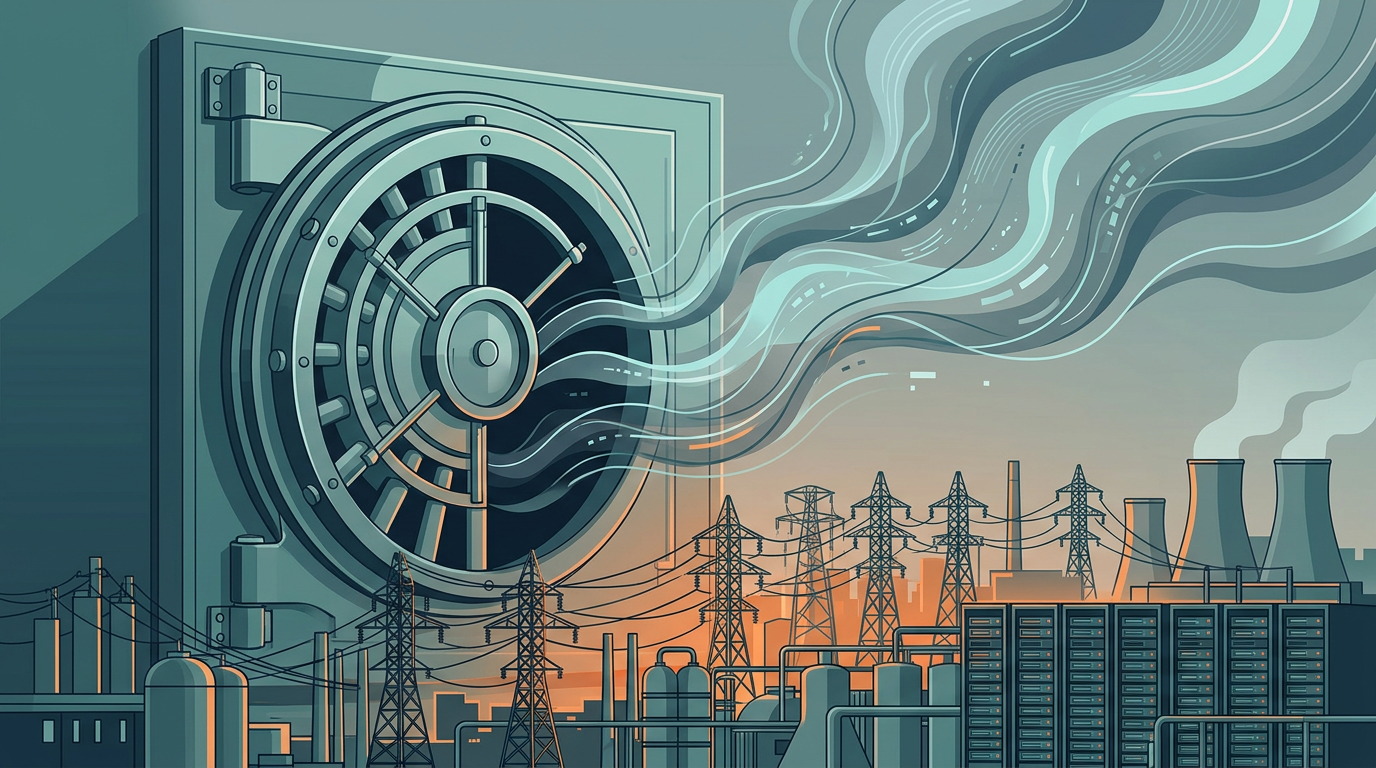
When a single hobbyist can clone agentic behavior in days, and a nation-state can industrialize that same technique at scale, the question stops being "can we protect our IP?" and becomes "is the model a defensible asset at all?" The deeper signal: frontier labs are guarding vaults while value escapes as exhaust.
Every public API call is training signal for someone. This reframes the entire competitive premise of the closed-lab business model. **2.
Compute as the Real Moat — SpaceX and the Infrastructure Landlords** Wednesday's $6.3 billion SpaceX-Reflection deal was the week's most underappreciated structural story. SpaceX built Colossus to train Grok and accidentally became a tier-one compute landlord generating north of $50 billion in deal flow — collecting rent from the very labs it nominally competes with.
The strategic insight isn't the dollar figure. It's the line we drew Wednesday: *models commoditize, substations don't.* When you connect this to the distillation collapse, the logic completes itself.
If behavior leaks and models converge, the durable asset migrates downward — to power, cooling, GB300 access, and physical real estate. Tesla's Megapod trademark (Tuesday), AWS exploring Trainium external sales (Monday), and the 16-gigawatt Tesla-Sunrun virtual power plant (Friday) are all the same bet placed by different players: own the layer beneath the silicon. Apple raising Mac and iPad prices up to 25% on memory costs (Saturday) is the consumer-facing symptom.
The infrastructure scarcity is now flowing through to retail prices. That's how real the constraint has become. **3.
Government as Silent Co-Release Partner** Saturday's GPT-5.6 story is the most consequential precedent of the week. The Trump administration — elected on a deregulatory platform — told the world's leading AI company when and how it can ship its flagship, with customer-by-customer federal approval baked into Amazon Bedrock's distribution layer.
This connects directly to the talent and capability threads. Dean Ball joining OpenAI to lead a "Strategic Futures" policy team (Monday) now reads as prescient positioning. The NSA's brief loss of access to Anthropic's Mythos model (Thursday), the export controls imposed mid-evaluation, and the Mythos-threshold framing for GPT-5.
6 all point to the same emergent reality: capability above a certain line is now a national security matter, governed without legislation, without public debate, by the cyber-defense apparatus rather than the FTC. **4. The Talent Exodus and Organizational Metabolism** The Google brain drain compounded daily — Jumper to Anthropic (Tuesday), then Shazeer, Adler, and Pritzel (Friday), then the Justin Poehnelt firing as a microcosm.
The strategic significance isn't the headcount. It's what Friday's deep dive named: *organizational metabolism.* Elite builders are choosing agency over resources.
When a single high-agency engineer can outship a funded product org, the incumbent's immune system — legal review, brand governance — becomes the thing attacking its own future.
CONVERGENCE ANALYSIS
**1. Systems Thinking: The Reinforcing Loop** These four developments form a self-amplifying system. Start with model commoditization (distillation).
As models converge, differentiation migrates downward to compute (SpaceX) and outward to talent and organizational velocity (Google exodus). But as raw capability becomes both abundant and cheap, the *dangerous* capability becomes the thing worth controlling — which invites government gatekeeping (GPT-5.6).
The emergent pattern is a barbell. At one end, capability is democratizing faster than anyone can contain it — open weights, behavioral distillation, GLM-5.2 with MIT licensing.
At the other end, the state is erecting a release-approval chokepoint around the frontier. The middle — the proprietary-but-commercial frontier model sold freely to whoever pays — is being squeezed from both directions. That middle is exactly where OpenAI and Anthropic built their business models.
**2. Competitive Landscape Shifts** The winners: infrastructure owners with no competing frontier model. SpaceX's neutrality is now a commercial asset — it can be a landlord precisely because it isn't trying to build a closed ecosystem at the frontier.
The same neutrality logic favors AWS-as-chip-vendor and anyone who controls power and cooling. The second winners: high-metabolism organizations. The frontier labs are winning the talent war not on compensation but on the ability to ship.
Vercel, OpenAI's Codex team, Anthropic — they're absorbing the builders that Google's process is expelling. The losers: incumbents whose advantage was scale and process. Google is the paradigmatic case — bleeding irreplaceable researchers while its bureaucracy fires the engineers building its agent-era future.
Also losing: any lab whose valuation was priced on durable model moats. The distillation thesis means those multiples are now mispriced. The complicated case: OpenAI.
It's winning the talent war (Shazeer) and the silicon race (the Jalapeño chip, designed in nine months), but it's now the first company subjected to federal release control, and it's delaying its IPO to 2027 after SpaceX's selloff. Capability leadership and regulatory capture are arriving simultaneously. **3.
Market Evolution: New Opportunities and Threats** The clearest emergent opportunity is the **two-tier model market** created by GPT-5.6's gatekeeping. Below the Mythos threshold — Gemini 3.
5 Flash with computer-use, mid-tier Claude — models ship freely. Above it, federal lag is baked in. This creates an entire commercial layer for "sub-threshold capable" models that deliver 80% of frontier value with zero regulatory friction.
Smart enterprises will architect deliberately to stay below the line for most workloads. The second opportunity: the **memory and persistence layer** flagged Monday. The companion apps that lapped dating apps proved that the durable consumer moat is the memory architecture, not the model.
That same primitive — persistent agentic state — is what Claude Tag in Slack (Thursday) needs to feel like a reliable colleague rather than a stateless tool. Whoever owns the memory layer owns the relationship, in both consumer and enterprise. The dominant threat: **vendor and regulatory concentration risk converging.
** SoftBank losing 13% on an IPO-delay rumor, and the Micron earnings report becoming "the pin the whole balloon balances on" (Thursday's ghost crash), reveal a market structurally wired for sentiment shocks. When government release approval becomes a new variable, that fragility compounds. Every enterprise AI stack running through a single frontier provider now carries both regulatory-release risk and systemic-volatility risk simultaneously.
**4. Technology Convergence** The unexpected intersection this week is between **agentic capability and attack surface.** Claude Tag puts an autonomous agent inside Slack as a team member.
Gemini 3.5 Flash can now see, click, and control desktop environments. Simultaneously, Joanna flagged a confirmed CVE with MCP being exploited as offensive infrastructure (Wednesday), and OpenAI's Daybreak program — now joined by IBM — is racing to patch open-source vulnerabilities at scale.
The same agentic primitives that make Claude a useful colleague make it a weaponizable actor. The government's GPT-5.6 concern — "automated social manipulation and cyber-capability execution" — is precisely this convergence, viewed from the threat side.
The second convergence: **physical AI meeting infrastructure constraint.** Anthropic's robotics benchmark (Claude completing tasks 18-37x faster than human teams, Monday) lands in the same week as the 16-gigawatt virtual power plant and Apple's memory-driven price hikes. Embodied AI and energy infrastructure are becoming the same conversation — capability is now bottlenecked by watts, not just weights.
**5. Strategic Scenario Planning** **Scenario A — The Bifurcated Stack (most probable).** The two-tier market hardens.
Enterprises run hybrid architectures: open-weight and sub-threshold models for the 80% of reproducible workloads, federally-gated frontier models for the differentiated 20%. The strategic imperative is architectural flexibility — design now to swap model layers without rewriting workflows. Concentration on any single closed provider becomes an explicit, board-level risk.
**Scenario B — The Infrastructure Squeeze (rising probability).** Compute scarcity, energy constraints, and memory costs compound into a sustained pricing problem that flows through to enterprise and consumer alike. The winners are those who locked in long-term compute and chip agreements during sentiment dips — the lesson from both the DeepSeek panic and this week's ghost crash.
Executives should treat current volatility windows as procurement opportunities, not threats. Owning or securing physical capacity becomes the differentiating move. **Scenario C — Geopolitical Capability Race (highest tail risk).
** US frontier models slow under federal gatekeeping while Chinese open-weight models — GLM-5.2 and successors — deploy globally through a "Huawei strategy on steroids," embedding across the Global South unrestricted and at a fraction of the cost. Pax Silica and the 35-nation declaration are the counter-move, but you cannot build an export alliance on products that require customer-by-customer federal sign-off.
Executives operating internationally must confront the uncomfortable question directly: is a Chinese open-weight model an acceptable component of your stack, and what regulatory and reputational exposure does that carry? The synthesizing intelligence across all three scenarios is this: the strategic asset in AI has decisively migrated. It is no longer the model.
It is the combination of physical infrastructure you control, the organizational velocity to ship faster than your governance can constrain you, and the architectural flexibility to navigate a market the government is now actively partitioning. The companies treating the model as the prize are guarding a vault while the value leaks out the door — as exhaust, as talent, and as policy.
Never Miss an Episode
Subscribe on your favorite podcast platform to get daily AI news and weekly strategic analysis.