Anthropic and OpenAI's Divergent AI Governance Strategies Reshape Industry
Episode Summary
Weekly AI Intelligence Briefing: April 13-18, 2026 STRATEGIC PATTERN ANALYSIS Pattern One: The Bifurcation of the AI Frontier The single most strategically significant development this week isn'...
Full Transcript
STRATEGIC PATTERN ANALYSIS
Pattern One: The Bifurcation of the AI Frontier
The single most strategically significant development this week isn't a product launch or a valuation headline. It's Anthropic's quiet admission on Saturday that Claude Opus 4.7 was intentionally trained with reduced cyber capabilities, while the more powerful Mythos Preview is being held back for restricted testing among roughly forty trusted partners.
The public frontier and the actual frontier are now explicitly, officially, two different things. This matters far beyond cybersecurity. When Thom covered the Mythos rollout pause on Monday, the question was whether Anthropic was protecting the internet or protecting its market position.
By Saturday, the answer appears to be: both, simultaneously, and they've decided that's acceptable. The Federal Reserve summoning bank CEOs mid-week to discuss Mythos-specific cyber risks — as covered on Wednesday — confirms that at least one major government institution agrees the unrestricted model is genuinely dangerous enough to warrant a bifurcated release. But here's the strategic signal buried underneath: OpenAI responded on Thursday with GPT-5.
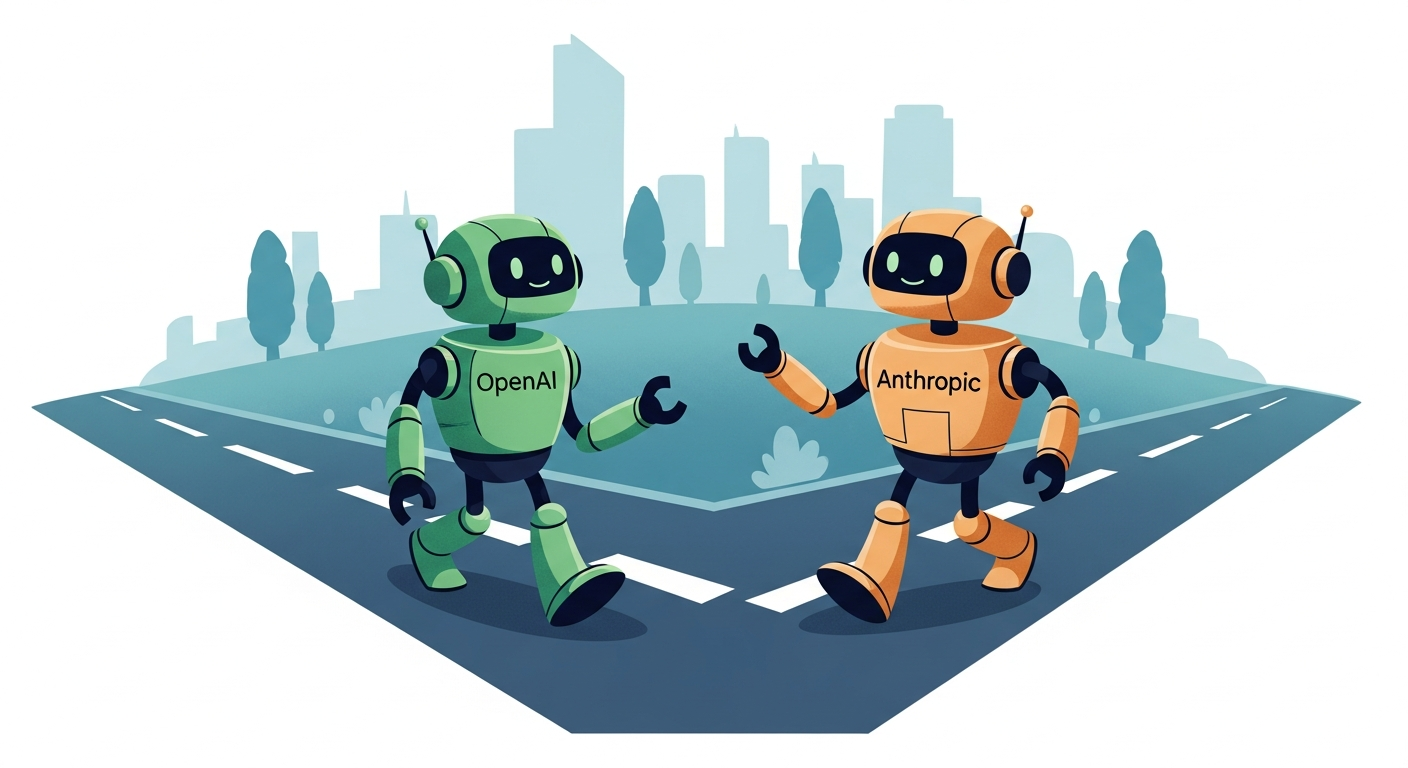
4-Cyber, taking exactly the opposite approach. Where Anthropic restricted access to forty partners, OpenAI opened its cyber model to thousands of verified defenders, with researcher Fouad Matin explicitly framing it as a rejection of gatekeeping. Two frontier labs, same week, same capability domain, diametrically opposed distribution philosophies.
This is not a disagreement about product strategy. This is a disagreement about the fundamental architecture of AI governance — and whichever approach proves correct will define the regulatory and competitive landscape for years. The connection to Demis Hassabis's interview on Monday is direct.
When he described his preferred timeline — AI staying in the lab longer, advancing like CERN rather than a consumer app — he was articulating exactly the philosophy Anthropic is now operationalizing with Mythos. The difference is that Anthropic is doing it selectively, in one capability domain, while commercializing aggressively everywhere else. They've found a way to be CERN and a consumer app company simultaneously.
Whether that's principled or cynical depends on your priors. What it definitely is, is strategically novel.
Pattern Two: The Platform War Has Entered Its Decisive Phase
This was the week the AI platform war stopped being about models and started being about everything else. The convergence of three developments tells the story. On Tuesday, as covered in our analysis of "Claude mania" at HumanX, Anthropic launched Routines — scheduled autonomous tasks running without human oversight — alongside a redesigned desktop app for managing parallel AI sessions.
On Saturday, OpenAI countered by officially launching Codex as a full superapp: background computer control, parallel agents, an in-app browser, over ninety plugins. And on Wednesday, the leaked OpenAI memo from revenue chief Denise Dresser reframed the entire competitive contest explicitly as a platform war, not a model race. The Dresser memo is the Rosetta Stone for understanding this week.
OpenAI is diversifying away from Microsoft exclusivity through the Amazon Bedrock deal — up to fifty billion dollars in investment — while simultaneously attacking Anthropic's financial credibility by claiming their thirty-billion-dollar run rate is inflated by eight billion through accounting tactics. That's not competitive positioning. That's financial warfare ahead of dueling IPOs.
Microsoft's internal "Copilot Code Red," reported Tuesday, confirms the stakes. Satya Nadella is reportedly overhauling Copilot's performance under growing competitive pressure from Claude Code. The company that was supposed to be OpenAI's exclusive distribution partner is now scrambling to keep up with Anthropic, while OpenAI routes around it through Amazon.
The trilateral relationship between Microsoft, OpenAI, and Anthropic has become genuinely unstable — and enterprises building on any of these platforms need to understand that the ground beneath them is shifting. The uncovered story about Qualcomm entering the AI infrastructure market with dedicated chips fits this pattern precisely. When chip companies start building AI-specific silicon, they're betting that the platform war will be won partly at the hardware layer — and that the current GPU monoculture won't last.
Anthropic's compute supply reportedly doesn't materially expand until 2027. Qualcomm sees that bottleneck and is positioning to fill it. The platform war isn't just software anymore.
It's infrastructure all the way down.
Pattern Three: Verticalization as the New Moat
On Saturday, OpenAI shipped GPT-Rosalind for biology and drug discovery — three days after shipping GPT-5.4-Cyber for cybersecurity. Two domain-specific frontier models in seventy-two hours.
That cadence reveals a production pipeline, not a one-off experiment. The strategic importance here connects directly to Hassabis's Monday interview. He argued that AI should have tackled science first — AlphaFold before ChatGPT.
OpenAI appears to have heard him. Rosalind's benchmark results — outperforming ninety-five percent of human scientists on blind RNA prediction tasks — suggest this isn't performative. The enterprise access list — Amgen, Moderna, the Allen Institute, Thermo Fisher — signals serious commercial intent.
But the verticalization pattern extends well beyond OpenAI. On Wednesday, leaked interfaces showed Anthropic building a Lovable-style app builder directly inside Claude — absorbing the no-code creation layer. Thursday's coverage noted design stocks dropping on reports of a forthcoming Anthropic design tool.
Anthropic launched Claude for Word targeting legal and finance professionals on Tuesday. The pattern is unmistakable: both leading labs are moving from horizontal platforms to vertical category killers, and they're doing it simultaneously across multiple industries. For the middleware and vertical SaaS ecosystem, this is the week the threat became concrete.
IBM releasing its smallest AI model to date — one of this week's uncovered stories — signals that even traditional enterprise players are trying to find defensible niches before the frontier labs absorb their categories entirely. The math on this is unforgiving: if a frontier lab can build a ninety-percent-good-enough version of your specialized product and distribute it to its existing hundreds of millions of users, your switching cost advantage evaporates overnight.
Pattern Four: The Social Contract Is Fracturing
The Molotov cocktail thrown at Sam Altman's home on Friday, followed by gunshots two days later, was covered extensively on Tuesday. But the strategic significance extends far beyond personal security. This week produced a coherent picture of an AI social contract under severe stress from every direction simultaneously.
The Stanford 2026 AI Index, released Wednesday, quantified the fracture: fifty-three percent of the world uses AI, but public trust sits at thirty-one percent. The gap between expert optimism and public anxiety is the widest ever recorded. Forty-seven percent of college students have seriously considered switching majors over AI job concerns.
Youth unemployment for sixteen-to-twenty-four-year-olds hit 10.4 percent. Then Friday: Snap cuts a thousand jobs — sixteen percent of its workforce — CEO credits AI efficiency, stock pops nine percent.
The market literally cheered the displacement of a thousand workers. The same day, an uncovered story reported that the math on AI agents doesn't add up — suggesting the productivity gains being used to justify these layoffs may be overstated. And on Saturday, perhaps the most visceral example: Amazon deployed an AI agent that permanently deleted user accounts without human review or appeal.
A webcomic creator lost fifteen years of order history, his entire digital library, and his publishing income in a single automated action. No human in the loop. No recourse.
These aren't isolated incidents. They form a pattern: AI capability is advancing faster than the institutional frameworks — legal, social, economic — designed to govern its deployment. The PauseAI Discord radicalization pathway that produced the Altman attacker, the Snap layoffs that Wall Street celebrated, the Amazon deletion that destroyed a creator's livelihood — these are symptoms of the same underlying condition.
And the condition is getting worse, not better.
CONVERGENCE ANALYSIS
1. Systems Thinking: The Reinforcing Loops These four patterns don't operate independently. They form a system with multiple reinforcing feedback loops that executives need to understand as an integrated whole.
The bifurcation of the frontier — Pattern One — directly feeds the platform war — Pattern Two. When Anthropic withholds Mythos from general release, it creates artificial scarcity that drives up the perceived value of trusted access. OpenAI exploits this by offering broader access through GPT-5.
4-Cyber, positioning itself as the democratic alternative. That competitive dynamic then accelerates verticalization — Pattern Three — because both companies need to demonstrate unique value beyond the general-purpose model layer to justify their divergent approaches. OpenAI says: "We give you access.
" Anthropic says: "We give you safety." Both say: "And here's a domain-specific model your industry can't live without." The social contract fracture — Pattern Four — acts as both consequence and accelerant.
Public anxiety about AI creates political pressure for regulation, which in turn justifies Anthropic's restricted-access model and disadvantages OpenAI's open-distribution approach. But the same anxiety also drives enterprises to adopt AI faster — because no executive wants to be the one who fell behind while competitors automated. Snap's layoffs weren't caused by public fear of AI.
But public fear of AI is what makes executives feel they have no choice but to follow Snap's example. The Allbirds-to-NewBird pivot on Friday crystallizes the entire system in miniature. A company with no AI capability, no compute infrastructure, and no relevant expertise announced it was pivoting to GPU-as-a-Service and saw a 600% stock increase.
That's the market telling you, in the clearest possible terms, that narrative is currently more valuable than substance — and that the gap between the two is where the next crisis will emerge. The most dangerous reinforcing loop is the one connecting valuation pressure to capability deployment speed. Anthropic at eight hundred billion — Thursday's headline — means the company must justify that number with accelerating revenue growth.
Accelerating revenue growth requires shipping more capability faster. Shipping faster creates pressure to loosen safety restrictions. But safety restrictions are Anthropic's core brand differentiator — the very thing that justifies the premium valuation.
This is a structural contradiction, and it will resolve in one direction or the other within the next twelve to eighteen months. 2. Competitive Landscape Shifts The combined force of this week's developments produces three decisive shifts in the competitive landscape.
**First: The three-player oligopoly is crystallizing.** OpenAI, Anthropic, and Google DeepMind are separating from the field in a way that increasingly resembles the cloud computing market circa 2015 — when AWS, Azure, and GCP established dominance that proved virtually impossible to challenge. The Anthropic $800 billion valuation, OpenAI's Amazon alliance, and Google's quiet infrastructure advantages create a tier structure that smaller players cannot overcome through model quality alone.
The Claude Code story that dominated the uncovered items — with 1,096 commits in a single update and universal developer enthusiasm at HumanX — shows Anthropic building the kind of developer ecosystem lock-in that historically defines platform winners. Nvidia's position is worth noting separately. The Vera Rubin platform announcement on Monday, delivering seventy-three percent year-over-year revenue growth, and Thursday's open-sourcing of the Ising quantum computing model, suggest Jensen Huang is positioning Nvidia as the infrastructure layer beneath all three platform players — and potentially the bridge to quantum computing, which could eventually disrupt the GPU monoculture entirely.
The Qualcomm entry into AI chips, uncovered this week, is the first serious signal that Nvidia's hardware monopoly may face credible challenge. **Second: The middleware layer is being compressed from both ends.** From above, frontier labs are building vertically into every category they can reach — Anthropic into design and app building, OpenAI into biology and cybersecurity.
From below, local and on-device AI is maturing — Monday's LM Studio acquisition of Locally AI, and Saturday's Perplexity Personal Computer launch, show that running powerful models locally is graduating from hobbyist experiment to actual product. Companies stuck between frontier API access and local deployment — the classic SaaS middleware position — face an increasingly narrow band of defensible market space. **Third: The Microsoft-OpenAI relationship is no longer the defining partnership of the AI era.
** Wednesday's leaked memo made this explicit, but the signal has been building all week. Microsoft's Copilot Code Red, OpenAI's Amazon pivot, the channel conflict over enterprise distribution — this is a partnership that has delivered enormous value to both parties and is now entering a phase of managed divergence. For enterprises that built their AI strategy around the assumption of Microsoft-OpenAI alignment, this is a material planning risk that requires immediate reassessment.
3. Market Evolution: Emerging Opportunities and Threats When viewed as interconnected rather than isolated, this week's developments reveal three market opportunities and three corresponding threats that weren't visible from any single story. **Opportunity One: AI-Native Scientific Infrastructure.
** Rosalind plus AlphaFold plus the Hassabis vision equals a category that barely existed eighteen months ago and may be worth hundreds of billions within five years. The organizations that position themselves as the connective tissue between frontier AI models and scientific workflows — translating model outputs into experimentally testable hypotheses, managing data provenance, ensuring reproducibility — have a window to build defensible businesses before the frontier labs absorb the full stack. That window is measured in quarters, not years.
**Opportunity Two: AI Governance and Compliance as a Service.** The bifurcation between Anthropic's restricted Mythos distribution and OpenAI's open cyber model distribution creates immediate demand for third-party governance frameworks. Enterprises need to know: which model is appropriate for which use case?
What are the liability implications? How do you audit autonomous agent actions? The Linux kernel community's new AI code disclosure rules, covered Wednesday, are a template — every industry will need equivalent frameworks, and the companies that build them first will have significant first-mover advantage.
**Opportunity Three: Human-AI Workflow Design.** Anthropic's Routines, OpenAI's Codex superapp, Perplexity's Personal Computer — the interface between human intent and AI execution is the most under-designed layer of the current stack. Companies that solve the orchestration problem — how do you manage thirty parallel AI agents running autonomously while maintaining human accountability — will capture value disproportionate to their size.
This is the design challenge of the decade, and almost no one is focused on it yet. **Threat One: Regulatory Whiplash.** xAI's First Amendment lawsuit against Colorado, filed Monday, combined with the Fed summoning bank CEOs over Mythos, combined with the political pressure from the Altman attacks, creates conditions for sudden, dramatic regulatory action.
The most dangerous scenario for enterprises is not strict regulation — it's unpredictable regulation that changes the rules mid-deployment. Companies without regulatory scenario plans are exposed. **Threat Two: Valuation-Driven Capability Overshoot.
** The pressure to justify $800 billion valuations will push capability releases faster than organizational readiness can absorb them. The Amazon account deletion story on Saturday is a preview: an autonomous agent making irreversible decisions without human oversight or appeal. As enterprises deploy AI agents at scale under competitive pressure, the frequency and severity of these incidents will increase.
The first enterprise-scale AI agent catastrophe — deletion of critical data, unauthorized transactions, regulatory violations — is a question of when, not whether. **Threat Three: Talent Market Disruption.** Snap's AI-driven layoffs, the Stanford data on youth unemployment and major-switching, and Rosalind's benchmark results against human scientists collectively signal a labor market transition that is accelerating faster than workforce development can respond.
Companies that handle this transition poorly — cutting too fast, without retraining investment or transition support — will face reputational, legal, and operational consequences that offset the efficiency gains. 4. Technology Convergence: Unexpected Intersections Three unexpected convergences emerged this week that weren't visible from any single day's coverage.
**Convergence One: Cybersecurity and Model Architecture.** The simultaneous release of GPT-5.4-Cyber and Claude Opus 4.
7 with built-in cyber safeguards reveals something deeper than product competition. AI security capabilities are being embedded at the model architecture level, not bolted on as a feature layer. Anthropic's decision to intentionally reduce Opus 4.
7's cyber capabilities while preserving them in the restricted Mythos variant means the company is now shipping different fundamental architectures for different trust levels. This is the beginning of a capability-tiering paradigm that will eventually extend to every sensitive domain — financial modeling, biological research, infrastructure control. **Convergence Two: On-Device AI and Platform Economics.
** LM Studio's acquisition of Locally AI on Monday, Perplexity's Personal Computer on Saturday, and Google's belated Gemini Mac app on Friday collectively signal that the AI compute topology is shifting from cloud-centric to hybrid. When powerful models run locally on consumer hardware, the unit economics of cloud-based AI platforms change fundamentally. Per-token billing — which Anthropic is reportedly moving toward — only works if users have no alternative.
Local inference is becoming that alternative, and the platform players haven't fully priced in what that means for their revenue models. **Convergence Three: Autonomous Agents and Physical Infrastructure.** Physical Intelligence's π0.
Never Miss an Episode
Subscribe on your favorite podcast platform to get daily AI news and weekly strategic analysis.