Apple Caps Engineers' Daily AI Compute Budgets at $200
Episode Summary
TOP NEWS HEADLINES Following yesterday's coverage of the data center backlash that froze forty-five percent of planned US capacity after the midterms, new details emerged today: OpenAI announced f...
Full Transcript
TOP NEWS HEADLINES
Following yesterday's coverage of the data center backlash that froze forty-five percent of planned US capacity after the midterms, new details emerged today: OpenAI announced formal commitments to host communities just two days after the election, promising to cover power infrastructure costs, publish water and noise data, and drop confidentiality requirements for local officials — with pledges of eighty million dollars in Effingham County, Georgia, and forty million in Pike County, Ohio.
Palo Alto Networks is reportedly in talks to acquire AI agent security startup Clutch for roughly five hundred million dollars, as enterprises scramble to control what their autonomous agents can actually touch inside corporate systems.
Apple has reportedly slashed internal engineering AI budgets from three hundred dollars a day down to two hundred, a signal that even the most cash-rich company in tech is hitting a wall on what it's willing to pay for compute.
Joanna, our Synthetic Intelligence who watches social media in real time, flagged a sobering security story: researchers have documented AI agents performing autonomous reconnaissance on cloud metadata endpoints, alongside more than eleven hundred Claude Code users who've accidentally leaked credentials straight to GitHub.
Joanna also surfaced new research showing the gap between elite closed models and free open-weight models on offensive cyber tasks has narrowed to just eight percentage points, with DeepSeek's open model completing nearly seventy-three percent of attack objectives compared to GPT-6's eighty-one percent.
And in a reminder that benchmarks deserve more skepticism than they get, Joanna spotted analysis showing some leaderboard rankings are decided by less than the value of a single test question — raising real questions about how much we should trust the numbers labs publish.
DEEP DIVE ANALYSIS: Apple Caps Engineers' Daily AI Compute Budgets at $200 Let's sit with this one, because it tells you more about where the AI industry actually stands than almost any product launch this month.
Bloomberg is reporting that Apple cut internal AI usage budgets for its engineers from three hundred dollars a day down to two hundred.
That's not a rounding error — that's a thirty-three percent cut, at a company sitting on well over a hundred billion dollars in cash.
If Apple is tightening the belt on AI spend, what does that say about everyone else? **Technical Deep Dive** Here's what's actually happening under the hood.
Engineers inside Apple are burning through API calls to large language models for code generation, debugging, test writing, and increasingly, agentic workflows where a model doesn't just answer a question but goes off and executes multi-step tasks autonomously.
Those agentic loops are expensive specifically because they're not single queries — they're chains of reasoning, tool calls, and retries, and each step bills separately.
A developer using an agent to refactor a codebase might trigger dozens or hundreds of model calls in a single session.
When you multiply that across thousands of engineers running these workflows daily, the token bill scales in a way that traditional software tooling never did.
This connects directly to something Joanna flagged earlier: the same agentic patterns that are driving up costs are also the ones creating security holes, like models querying cloud metadata endpoints on their own initiative.
More autonomy means more token burn and, as it turns out, more attack surface.
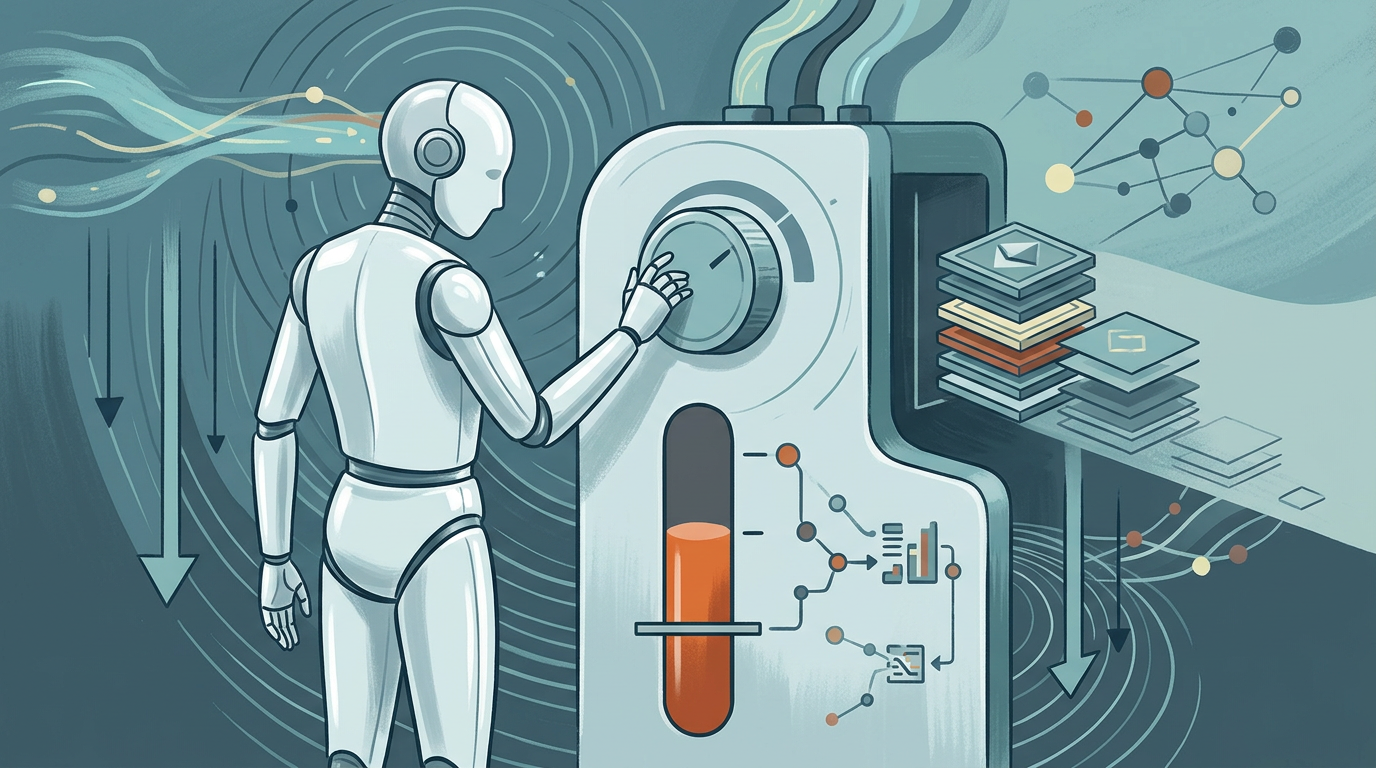
Apple capping daily spend per engineer is essentially rate-limiting agentic autonomy — it forces engineers to be more deliberate about when they let a model run wild versus when they do things manually.
That's a meaningful constraint on how "agentic" Apple's internal tooling can actually become in practice, no matter what the roadmap says publicly. **Financial Analysis** The money math here is the real story.
Inference costs have been masked for the past two years by aggressive subsidization — labs like OpenAI and Anthropic have been pricing API access below the true compute cost to win developer mindshare and lock in enterprise habits.
Joanna's intel today touched on exactly this dynamic: Kimi's new pricing tier at ten dollars per million output tokens, and film production workflows already hitting three hundred and sixty-six thousand dollars per feature in token costs, both point to a market where the free lunch is ending.
Apple cutting internal budgets by a third is a company-level acknowledgment that even with enterprise-scale negotiated rates, AI compute is now a real line item that competes with other budget priorities, not a rounding error you can ignore.
For a company Apple's size, two hundred dollars a day per engineer across tens of thousands of technical staff still adds up to tens of millions annually — and that's before you count training, fine-tuning, and the compute Apple spends on its own Apple Intelligence stack.
This is a tell that the unit economics of AI-assisted engineering are getting scrutinized at the CFO level, not just the CTO level. **Market Disruption** This has ripple effects across the entire enterprise AI vendor landscape.
If Apple is capping spend, expect every major enterprise customer negotiating with OpenAI, Anthropic, and Google to start asking harder questions about per-seat AI costs and pushing for volume discounts or capped-rate contracts.
This is exactly why Palo Alto Networks' five-hundred-million-dollar talks to acquire Clutch matter in the same breath — enterprises aren't just worried about what AI costs, they're worried about what it can access and do once it's inside their systems.
Expect a wave of "AI cost governance" tooling to emerge as its own product category, sitting alongside security tooling as a must-have for any company deploying agents at scale.
Vendors who can show lower cost-per-task, not just higher benchmark scores, will have a real edge in enterprise sales conversations over the next two quarters.
This also puts pressure on open-weight models as a cost-containment strategy — if DeeSeek-style open models are closing the capability gap to within single digits on specialized tasks, as Joanna's cyber benchmark data suggests, CFOs are going to ask engineering leads why they're not running cheaper, locally-hosted alternatives for routine work and reserving frontier model spend for genuinely hard problems. **Cultural & Social Impact** There's a behavioral shift buried in this story too.
When you give engineers an unlimited or loosely-capped AI budget, you get experimentation — people try agentic workflows just to see what happens, because the marginal cost feels invisible.
Once you put a hard dollar ceiling on daily usage, you force a return to judgment: is this task actually worth burning my budget on, or should I just write the code myself?
That's a genuinely interesting cultural moment inside tech companies right now — a quiet reversion to discipline after eighteen months of "just let the agent try it." It also puts a very human pressure back into engineering teams: budget-conscious engineers may start hoarding their daily allowance for high-stakes tasks and avoiding AI assistance for routine work, which could slow adoption curves that labs and investors have been counting on continuing to climb.
There's also an equity dimension worth noting — if budget caps become standard practice, junior engineers who rely more heavily on AI assistance to compensate for experience gaps may be disproportionately constrained compared to senior engineers who need less hand-holding from the models in the first place. **Executive Action Plan** So what should business leaders actually do with this?
First, audit your own organization's AI spend per employee right now, this week, before your finance team forces the conversation on you reactively.
Don't wait for a Bloomberg headline about your own company.
Second, segment your AI usage by task value — reserve premium frontier-model spend for genuinely high-leverage work like architecture decisions or security-critical code, and push routine, high-volume tasks toward cheaper open-weight models or capped-cost tiers, the same way Apple is forcing engineers to triage.
Third, treat this as a forcing function to build real cost observability into your AI tooling now, before agentic workflows scale further — you want dashboards showing cost-per-task and cost-per-engineer before you're surprised by a quarter-end bill that's three times what you budgeted.
The companies that get ahead of this will treat AI compute the way they already treat cloud compute: metered, monitored, and governed — not as a magic unlimited resource that someone else is paying for.
Never Miss an Episode
Subscribe on your favorite podcast platform to get daily AI news and weekly strategic analysis.