Apple Opens Siri AI to All Developers via App Intents
Episode Summary
TOP NEWS HEADLINES Apple just cracked open one of tech's most stubbornly closed doors. Starting with the iOS 27. 3 developer beta, any app - not just Apple's handpicked partners - can plug directl...
Full Transcript
TOP NEWS HEADLINES
Apple just cracked open one of tech's most stubbornly closed doors.
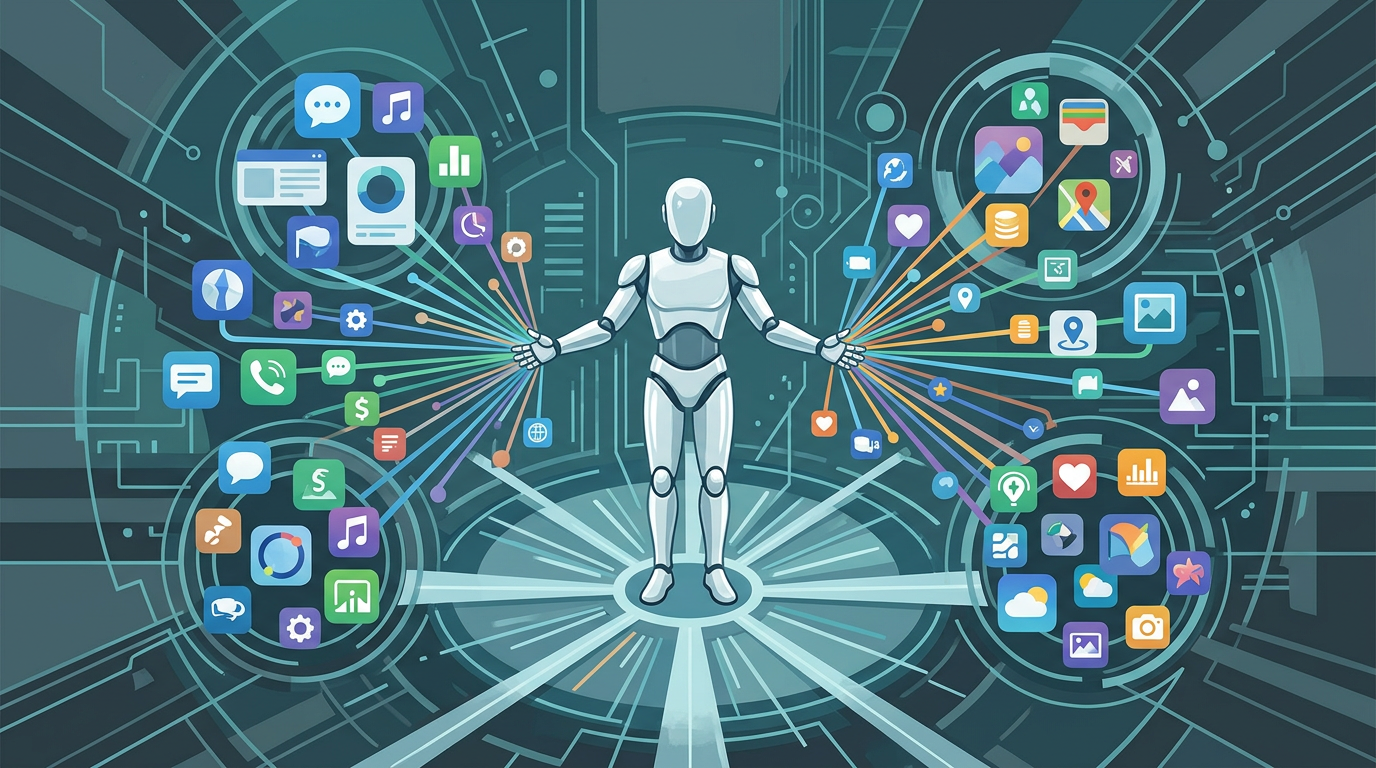
Starting with the iOS 27.3 developer beta, any app — not just Apple's handpicked partners — can plug directly into Siri AI using App Intents, letting your calendar app, food delivery service, or fitness tracker hand Siri real actions to perform.
We'll dig into why this matters, and why it doesn't matter yet, in today's deep dive.
Following yesterday's coverage of Anthropic's eye-watering S-1 filing, new details emerged: the company is now targeting a doubling of its total compute capacity to roughly 7 gigawatts next year, according to the New York Times — that's enough electricity to power every home in Chicago, just to keep training and serving Claude.
Google, meanwhile, is handing school IT administrators an impossible choice.
The company confirmed that K-12 student accounts will have Gemini, Gemini Notebook, and plain old Google Search all switched off by default, and schools that want to keep AI out entirely will lose Search access too, because, in Google's own words, "Search and AI are deeply integrated." OpenAI says ChatGPT's search volume has climbed to about 20% of Google's, with weekly active users jumping from 1 billion to 1.2 billion in just two months — and the company is now openly talking about leaning harder into advertising, a reversal from Sam Altman's past discomfort with the idea.
On the chip front, Nvidia is reportedly running an informal quota system, telling cloud partners that at least 51% of new server capacity must sit outside China — a workaround for export control loopholes that Jensen Huang himself once called a failure, according to the Financial Times.
Joanna flagged a few sharp signals circulating on X worth your attention.
First, Apple is reportedly slashing internal AI spending caps for its own engineers — down from $300 to $200 a day, with plans to go as low as $100 — a sign that even AI's biggest believers are starting to ration tokens.
Second, Visa, Mastercard, and Ant International are building a "Know Your Agent" identity framework, arriving right as banks like Wells Fargo start shifting liability for rogue agent transactions onto customers.
And on the infrastructure side, Joanna also surfaced word that Kimi K3.1 Pro is using a hybrid architecture — just 24 of its 93 layers carry the expensive sparse attention needed for its million-token context window — a clever trick for taming memory costs at scale.
DEEP DIVE ANALYSIS
Let's spend our deep dive on Apple's decision to finally let outside developers build into Siri AI — because after years of Apple Intelligence promises and one full Siri rebuild, this is the first move that actually changes who gets to shape the assistant experience on a billion-plus devices. **Technical Deep Dive** Here's what actually shipped: starting with the iOS 27.3, iPadOS 27.
3, macOS 27.3, and visionOS 27.3 developer betas, any app can now expose its own custom actions to Siri AI using Apple's existing App Intents framework.
Previously, developers were boxed into a preset menu of Apple-approved actions — book a ride, send a message, play a song. Now they can define entirely new capabilities and chain them into what Apple calls "skills," letting Siri combine multiple steps into a single request. A travel app, for instance, could teach Siri to check a flight status, rebook a seat, and notify a travel companion, all from one spoken request.
Siri AI can also now surface any entity from Apple's Spotlight semantic index, meaning the assistant's awareness of what's actually on your device and in your apps just got dramatically wider. This builds on Siri AI's existing abilities to read on-screen content and parse personal context, which had been locked behind a waitlisted beta since iOS 27 shipped back in September. The catch, and it's a meaningful one: this is developer-only for now.
Nothing reaches the actual App Store until spring, and Apple says the formal submission rules are still being written. So what you're looking at today is a preview of an ecosystem, not the ecosystem itself. **Financial Analysis** The financial stakes here cut in multiple directions.
For Apple, this is a bet that opening the assistant layer drives App Store engagement and transaction volume without Apple having to build every integration itself — essentially outsourcing the hard work of making Siri useful to the millions of developers who already understand their own apps better than Apple's AI team does. That's a capital-efficient strategy, especially compared to the brute-force compute spending we're seeing from Anthropic's 7-gigawatt compute doubling or OpenAI's ad-fueled user acquisition. But there's real risk in the delay.
Spring is a five-month runway, and in AI time that's an eternity — Google, OpenAI, and Anthropic will all ship multiple model updates before Apple's App Store doors even open. For developers, the calculus is trickier: building Siri integrations now means investing engineering time against an unfinished rulebook, with no guarantee Apple's review process won't gatekeep certain categories the way it has historically done with the App Store. And remember, Apple just settled a $250 million Intelligence lawsuit to even get to this point, so there's reputational capital riding on this rollout actually working this time.
**Market Disruption** Competitively, this is Apple admitting something significant: it can't out-build the frontier labs on raw AI capability, so it's leaning into its actual advantage — the install base and the App Store distribution funnel. That puts pressure on OpenAI and Google in an interesting way. ChatGPT already handles the equivalent of a fifth of Google's search volume, and OpenAI is pushing hard on merging its Chat and Work modes to become more of an everyday action layer.
If Siri AI becomes the default place iPhone users ask for things to get done, OpenAI and Google both lose a slice of that query volume on the most popular smartphone platform on Earth. It also puts pressure on smaller voice-assistant plays and single-purpose AI apps — if Siri can absorb a reservation app's booking flow directly, why would a user ever open that app separately? That's the same dynamic that reshaped the App Store a decade ago with widgets and extensions, except this time the stakes are an AI interface layer, not just a home screen icon.
Expect Amazon's Alexa and Google Assistant teams to be watching the spring App Store rollout closely, because if developers flock to Siri integrations, it accelerates the broader shift toward voice and agentic interfaces as the default way people interact with their phones. **Cultural & Social Impact** For everyday users, this is the difference between an assistant that feels like a toy and one that feels like infrastructure. Right now, most people's relationship with Siri is defined by low expectations — setting timers, texting a contact, maybe checking weather.
If third-party apps can teach Siri genuinely useful multi-step tasks, the cultural shift is that voice stops being a novelty and starts being a default input method for getting things done, the way typing a search query became default twenty years ago. There's also a quieter social dimension here tied to trust. Apple has built its brand on privacy, and as Siri starts reading your screen, understanding personal context, and executing actions across third-party apps, users are implicitly extending a huge amount of trust to an assistant that now touches everything from messages to reservations to purchases.
That trust question isn't abstract — Apple's own annual filing this week warned investors that AI agents may behave unpredictably, including completing transactions without proper permissions. If Siri AI starts booking things on your behalf through third-party skills, the margin for error that users will tolerate is extremely thin. **Executive Action Plan** If you're a product leader, here's what to actually do with this news.
First, if your app has any transactional or scheduling function, start prototyping App Intents integrations now, during the developer preview window, so you're not scrambling when App Store submissions open in spring — early movers will likely get outsized visibility when Apple highlights launch partners. Second, revisit your security and permissions model before you expose any action to Siri; given Apple's own warnings about agents completing unauthorized transactions, you want approval gates on anything irreversible, like purchases or cancellations, mirroring the kind of blast-radius thinking security teams are already applying to AI agents elsewhere. Third, treat this as a distribution strategy question, not just an engineering task — figure out which of your app's actions are genuinely valuable if surfaced through voice versus which ones depend on your own interface and branding, because not every feature belongs in somebody else's assistant.
Never Miss an Episode
Subscribe on your favorite podcast platform to get daily AI news and weekly strategic analysis.