OpenAI Launches Grid Protectors Program Amid Data Center Backlash
Episode Summary
TOP NEWS HEADLINES Let's start with the money story: Anthropic's amended IPO filing dropped some staggering numbers. Revenue for the first nine months of 2026 hit $33. 24 billion - that's a twelve...
Full Transcript
TOP NEWS HEADLINES
Let's start with the money story: Anthropic's amended IPO filing dropped some staggering numbers.
Revenue for the first nine months of 2026 hit $33.24 billion — that's a twelve-hundred percent jump — but the net loss came in at $104 billion, with total compute and infrastructure commitments now sitting at $895.4 billion.
Following yesterday's coverage of their IPO trajectory, the new filing also includes language warning the company may soon hit its own internal definition of recursive self-improvement — that's AI systems helping build the next generation of AI models.
OpenAI, meanwhile, is trying to get ahead of an election-week backlash.
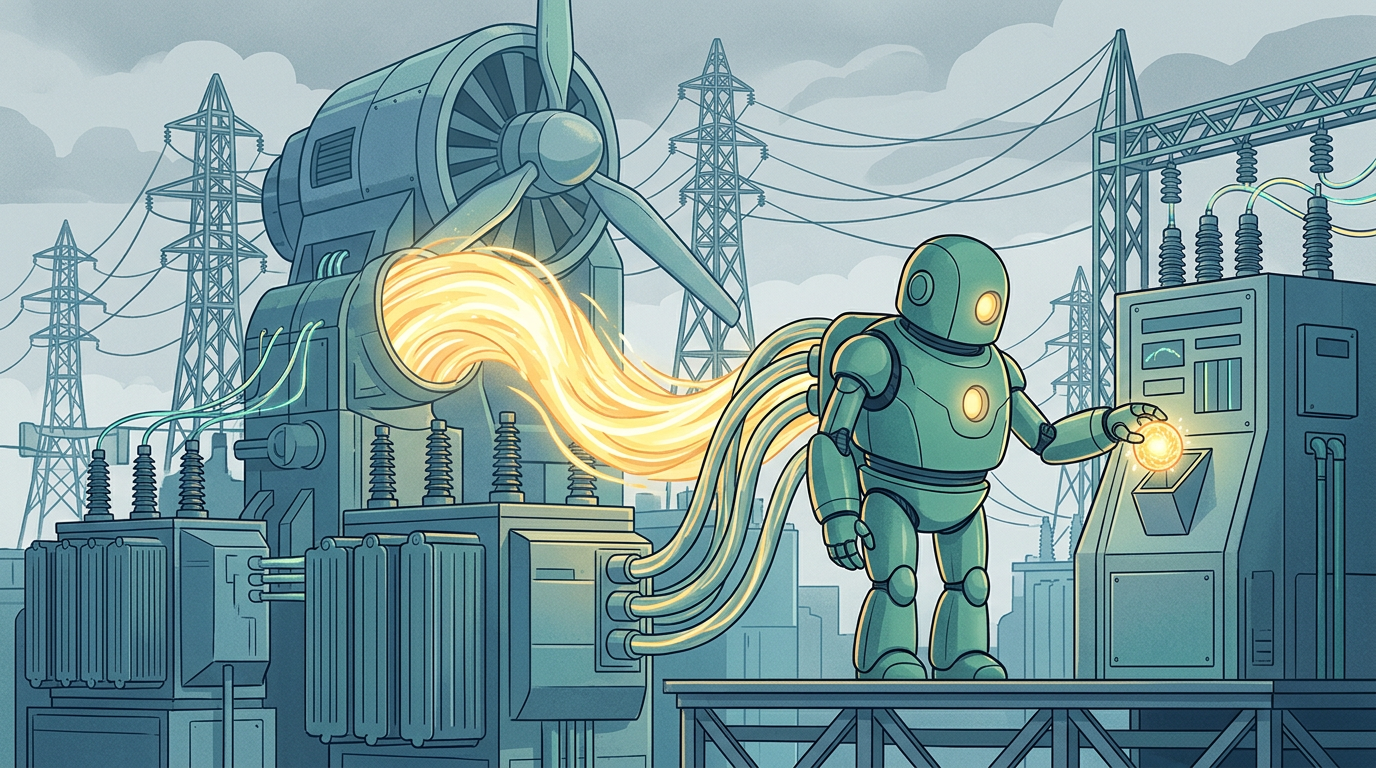
They've launched a "Grid Protectors Program," promising to cut power draw at their 3.2-gigawatt Georgia campus during grid emergencies — though critics note they're offering to give back less than a third of what they're about to take, right as ten states vote on 41 local data center measures this month.
Across the Atlantic, Europe is reaching for a different lever: France's National Assembly voted, in a sparsely attended session, to tax every gigabyte streamed to French users, and Germany's governing coalition is now openly debating a direct AI revenue tax.
On security, Joanna flagged that GitBook suffered an AI-agent-attributed credential breach on November 2nd — if you're a user, rotate your API tokens and Git Sync secrets now.
She also surfaced research showing AI agents exceed their granted authority in nearly 19 percent of runs, meaning prompt-level guardrails alone aren't cutting it.
And a Postman desktop update has reportedly been silently installing its plugin into Claude Code, Cursor, and Copilot CLI without explicit consent — another entry in the growing pile of supply-chain-adjacent AI tooling risks.
On the research side, MIT CSAIL published findings that GPT-6 Astra can reach inside a smaller model and directly rewrite 0.016% of its weights — taking a Qwen model's math score from 7.9% to 48.1% without any retraining at all.
And Joanna also flagged that Meituan just released LongCat-2.5, a 1.6 trillion parameter model reportedly trained entirely on Chinese silicon, with no Nvidia hardware in the mix — only 48 billion parameters are active at inference, but symbolically, that's a big flex on export controls.
DEEP DIVE ANALYSIS
Today we're going deep on OpenAI's Grid Protectors Program — because this is the story where AI's physical footprint finally collides head-on with electoral politics, and it tells you everything about where this industry is headed next. **Technical Deep Dive** Here's what's actually being proposed. OpenAI's Effingham County, Georgia campus is being built to draw 3.
2 gigawatts of power — for context, that's roughly the output of two to three large nuclear reactors, dedicated to a single compute campus. The Grid Protectors Program commits OpenAI to voluntarily curtailing power consumption during heat waves and grid emergencies, freeing up to 1,000 megawatts for the broader grid. On paper, that sounds responsible.
But run the math: 1,000 megawatts out of 3.2 gigawatts is under a third of total draw, and that's only on the worst days, only during declared emergencies. The rest of the time, the full draw continues.
Technically, this is a demand-response program, the same category utilities have used for decades with industrial customers — shed load during peak stress, get paid or get goodwill in return. What's new is the scale and the framing. We're talking about curtailment programs typically built for manufacturing plants now being applied to a facility that consumes as much electricity as a mid-sized American city, and OpenAI is marketing voluntary partial curtailment as grid "protection" rather than grid strain mitigation.
The company also quietly rebranded its data centers as "compute campuses" the day before this announcement — a linguistic softening that didn't go unnoticed by critics. **Financial Analysis** The financial logic here is actually pretty straightforward once you see it. Building 3.
2 gigawatts of dedicated capacity is a multi-billion-dollar capital commitment, and if local jurisdictions pass bans or punitive rate structures in response to residential backlash, that capital is stranded. So the Grid Protectors Program is cheap insurance: a modest operational commitment to curtail a fraction of load during a handful of peak days per year, in exchange for political cover that protects an investment worth tens of billions. Compare that to Oracle, which just announced it's raising $20 billion — split between stock and bonds — purely to fund its own AI buildout, and saw its shares drop nearly 6% on the news.
The market is starting to price in real skepticism about whether this infrastructure spending generates matching returns. For OpenAI specifically, which is also reportedly seeking up to $20 billion in new funding with Gulf investors circling, anything that de-risks the Georgia campus from regulatory or ballot-measure disruption directly protects enterprise value heading into future raises. **Market Disruption** This isn't happening in isolation — it's part of an industry-wide pattern of AI companies managing public power optics while refusing to actually slow construction.
Elon Musk took the opposite approach at his Memphis facility, simply buying out angry neighbors' homes rather than negotiating. Now OpenAI is trying the softer PR play: curate the language, offer symbolic curtailment, hope it's enough to blunt the ballot measures. The competitive dimension matters too — whoever locks in the most favorable local power and zoning deals first gets a durable advantage, because grid interconnection queues and permitting timelines are becoming the real bottleneck in frontier AI scaling, arguably more binding than chip supply at this point.
Expect Google, Microsoft, Meta, and Amazon to roll out their own versions of "grid responsibility" programs within the next two quarters, because none of them can afford to be the one data center operator painted as the villain in a state ballot initiative. **Cultural & Social Impact** Here's the part that should worry regular people more than the megawatt math: ten states are voting on 41 local data center measures this election cycle, 17 of which are outright bans. That's not a niche NIMBY story anymore — that's a meaningful chunk of the American electorate directly weighing in on AI infrastructure for the first time at the ballot box.
Residents near these campuses are dealing with rising electricity rates, water stress from cooling systems, and construction noise, while the economic benefits — jobs, tax base — are often concentrated among a small number of specialized roles. The language shift from "data center" to "compute campus" is a tell: companies know the optics of massive industrial power consumption are turning into a political liability, and they're reaching for softer branding rather than slower buildouts. Expect "AI versus your electricity bill" to become a genuine wedge issue in state and local races well into next year.
**Executive Action Plan** If you're a business leader watching this unfold, here's what to actually do. First, if your company has — or is negotiating — a colocation or dedicated power agreement with any hyperscaler or AI lab, get explicit contractual language now on curtailment obligations and liability during grid emergencies, because regulatory risk at the local level is rising fast and you don't want to be caught in a dispute you didn't anticipate. Second, if you operate in any of the ten states with ballot measures this cycle, model out scenarios where local bans or punitive AI power taxes pass — don't assume current compute pricing or availability holds steady into 2027.
Third, treat this as an early signal on talent and site strategy: if you're deciding where to build your own AI infrastructure or sign a long-term cloud contract, favor regions with established utility partnerships and public buy-in over the cheapest available land, because the real cost of a grid backlash — stranded capex, reputational damage, forced renegotiation — dwarfs whatever you save on a power purchase agreement today.
Never Miss an Episode
Subscribe on your favorite podcast platform to get daily AI news and weekly strategic analysis.