Silicon Valley Shifts AI Monetization from Subscriptions to Merchant Commissions
Episode Summary
TOP NEWS HEADLINES Let's start with math, because OpenAI just dropped an avalanche of it. The company released 722 manuscripts across 372 families of results, after handing its internal frontier m...
Full Transcript
TOP NEWS HEADLINES
Let's start with math, because OpenAI just dropped an avalanche of it.
The company released 722 manuscripts across 372 families of results, after handing its internal frontier model roughly 4,000 open research problems.
Following yesterday's coverage of OpenAI's Frontier Math push, we now know the scale: these are published openly on GitHub, many with Lean proof formalizations so computers can mechanically verify the logic, and the boldest claim in the batch is progress on a "quasi-Riemann hypothesis." Not everyone's cheering, though — a WIRED report out the same morning found plenty of mathematicians annoyed that OpenAI blew past its own promise to space these releases out.
Following yesterday's launch coverage, Artificial Analysis has now scored it — 38 on their Intelligence Index, putting it 64th overall and just a point behind DeepSeek V4.1 Flash, but still the most intelligent model built outside the US and China.
And Joanna flagged something practitioners need to hear before they get excited about "open weights": yes, it's a one-trillion-parameter model with only 49 billion active per pass, but you still need infrastructure to store the entire trillion-parameter matrix when those weights land October 27th.
Speaking of pricing traps, Joanna also surfaced something sneaky in Claude Haiku 5.5: a 5x pricing cliff.
Rates jump from 10 cents and 50 cents per million tokens to 50 cents and two-fifty once you cross 100,000 tokens — and the new tokenizer gets you there 30% faster than before, so long-context RAG pipelines could be quietly paying far more than the headline price suggests.
On the hardware side, Joanna spotted NVIDIA putting Spark-class silicon into Windows laptops.
The Surface Laptop Ultra launches October 16th with up to 128 gigabytes of unified memory and a full petaflop of FP4 performance — enough to run serious Mixture-of-Experts models locally without choking on a PCIe bottleneck.
And in infrastructure news that should make every network engineer sit up: Joanna's tracking data from Cloudflare showing AI agent traffic grew over 1,700% in the past year, with non-human requests now exceeding half of all internet traffic for the first time ever.
DEEP DIVE ANALYSIS
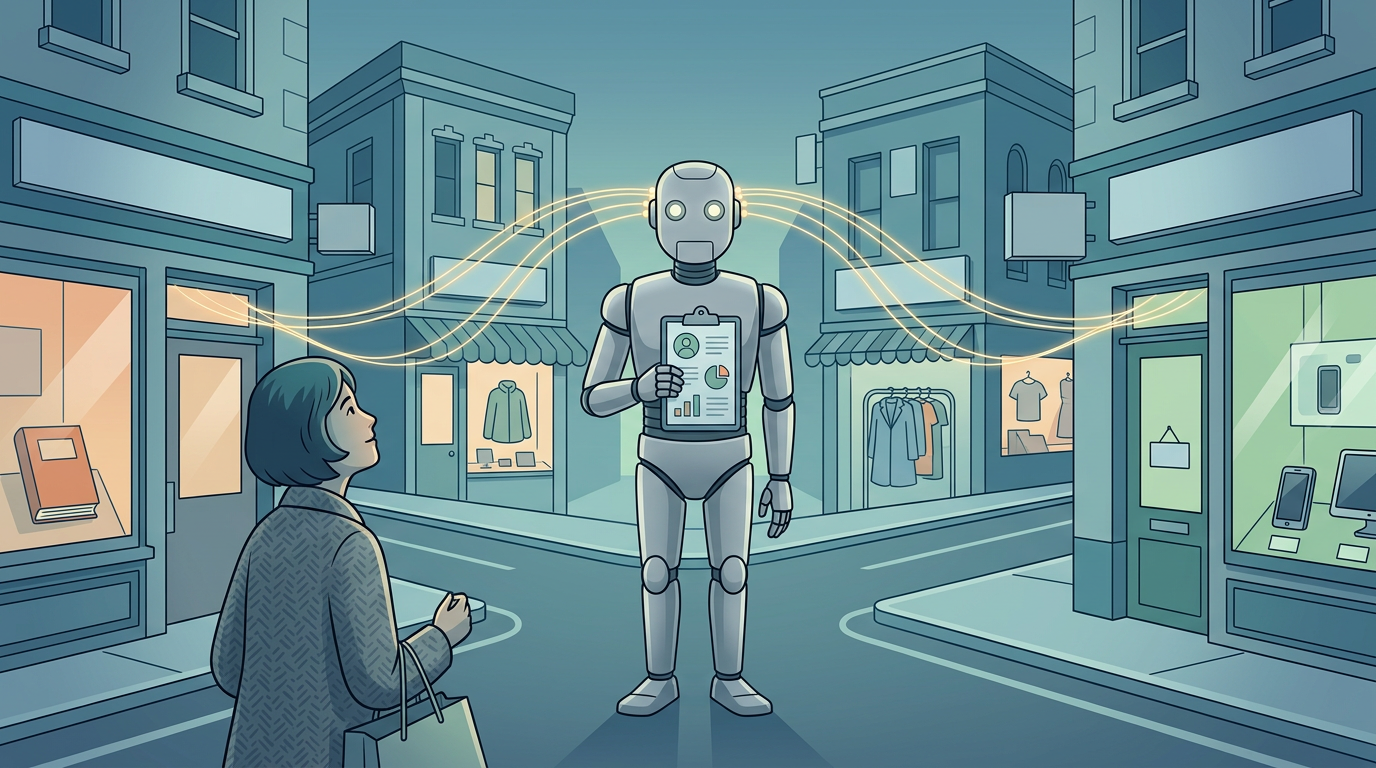
Today we're going deep on something that sounds almost mundane on the surface — "Silicon Valley's AI Assistant Mania" — but underneath it is a complete restructuring of how the industry plans to make money off of you. The shift is from subscription chatbots to personal commerce agents monetized through merchant commissions, and it's happening right now across Meta, Instinct, OpenAI, Google, and xAI simultaneously. **Technical Deep Dive** Strip away the branding, and what Meta calls Muse, what Instinct calls its personal agent, and what Hark just launched as Hark Pro are architecturally the same thing: agents built on frontier models like GPT-6 Astra or DeepSeek v4.
1, wrapped in consumer-friendly interfaces, with the technical depth and malleability of something like OpenClaw deliberately sanded down. These aren't research previews — they're productized decision-makers. Hark Pro, from Figure AI founder Brett Adcock, runs on something called Handoff, a cloud computer that can operate up to 36 browsers simultaneously while showing its click-by-click work in the chat window.
It books movie tickets, picks seats, adds events to your calendar, and offers to reserve parking, all from one text prompt. Meta's Muse, only a month old, has already pulled in 6.6 million downloads and 1.
8 million daily users. The underlying tech is converging on the same pattern: natural-language input, agentic browsing and tool-use, and persistent memory of your preferences. What differs isn't capability — it's who's steering the recommendation engine underneath, and that's precisely the part users can't see or audit.
**Financial Analysis** Here's where it gets interesting for anyone tracking business models. Citigroup is already forecasting Muse could generate $27 billion a year by 2030, and Meta's stock closed at a $2 trillion valuation partly on that thesis. Instinct, the text-based personal agent, jumped from a $2.
5 billion valuation to $10 billion in just four weeks — and its founder says travel commissions alone already put the company at break-even. That's the tell. This isn't a subscription business propped up by monthly fees; it's a commission business, meaning the agent's revenue is directly tied to which merchants, airlines, or hotels it steers you toward.
OpenAI is leaning the same direction — it just started testing visual ads inside ChatGPT for Free and Go tier users, complete with a full attribution stack that tracks which conversations end in a purchase. Interestingly, Plus, Pro, and Enterprise tiers stay ad-free for now, which tells you exactly who the ad load is designed for: the free users least likely to notice or object. The economics only work if the agent's recommendations can be quietly monetized — and that math is now baked into the business model of nearly every major player.
**Market Disruption** This is a genuine platform war, and it's moving faster than most people appreciate. OpenAI, Google, and xAI have all shipped rivals to Meta's Muse within weeks of each other, and Meta, Sierra, Stripe, Shopify, and Walmart have jointly backed something called the Personal Agent Protocol — an open standard meant to let consumers authorize what their agents can do while letting businesses define the boundaries of access. On paper, that's good governance.
In practice, it's also a land grab: whichever assistant becomes "the front door to the internet," to use Citigroup's phrase for Muse, controls an enormous amount of commercial flow that used to go through Google Search or Amazon directly. Merchants who refuse to pay commissions risk disappearing from an agent's recommendations entirely, which flips the traditional relationship between retailer and platform. It's App Store economics, except now it governs restaurant bookings, flights, and grocery runs instead of software downloads.
Smaller merchants without leverage to negotiate commission rates could get squeezed out of visibility altogether, even if they offer a better product or price. **Cultural & Social Impact** The quiet line buried in this story is the one that matters most: "A subscription agent answers to you. A commission agent answers to whoever pays.
" That's a meaningful shift in trust architecture. People are rapidly outsourcing small daily decisions — which hotel, which grocery delivery, which car service — to an assistant they assume is working purely on their behalf. But if that assistant's revenue depends on merchant commissions, its incentives are split the moment money changes hands.
Users have no visibility into whether they're seeing the best option or simply the best-paying one. This mirrors the exact trajectory search engines and app stores went through, except agents operate with far less transparency — there's no ranked list to scroll past, just a single confident recommendation. As a society, we're handing over genuine decision-making authority to these tools faster than we're building the auditing tools to check their neutrality.
**Executive Action Plan** First, if you're procuring or recommending any personal or enterprise AI agent, demand disclosure on monetization: is this subscription-funded or commission-funded, and if commission-funded, can you see the merchant list and how it's ranked? That's now a legitimate vendor due-diligence question. Second, businesses selling through these channels should start budgeting for "agent commission" as its own line item alongside search ads and marketplace fees — Instinct's travel commission success this early suggests this cost center is about to become standard, not optional.
Third, keep an eye on the Personal Agent Protocol Meta and Sierra are building with Walmart, Stripe, and Shopify. If it becomes the de facto standard for agent-to-merchant authentication, getting your systems compliant early could be the difference between being visible to millions of agent-driven customers or invisible to them entirely by next year.
Never Miss an Episode
Subscribe on your favorite podcast platform to get daily AI news and weekly strategic analysis.