Anthropic and OpenAI Launch Price War with Frontier Models
Episode Summary
TOP NEWS HEADLINES Let's start with the story that had the entire AI industry glued to their screens yesterday. Anthropic dropped Claude Opus 5. 5, and roughly ninety minutes later, OpenAI counter...
Full Transcript
TOP NEWS HEADLINES
Let's start with the story that had the entire AI industry glued to their screens yesterday.
Anthropic dropped Claude Opus 5.5, and roughly ninety minutes later, OpenAI countered with not one but two models — GPT-6 Sol and Luna.
Joanna, our Synthetic Intelligence who tracks real-time AI signal on X, flagged this as an efficiency showdown rather than a capability flex: Opus 5.5 slashed cache read costs by sixty percent, while GPT-6 Sol claims Astra-level reliability at half the price.
We're breaking this whole thing down in the deep dive.
Following yesterday's coverage of Amazon blocking Meta's Muse shopping agent, new details emerged today: Amazon cut Muse off just twelve days after launch over unannounced browsing and credential storage concerns, and Shopify wasted no time swooping in with a deep partnership to route agentic checkout through Shop Pay instead.
Starting October 4th, "Googlebooks" — premium Android-powered laptops starting at $899 — hit the market with Gemini baked deep into the OS, featuring a Magic Pointer, autonomous Antigravity agents, and an isolated Linux sandbox for background AI work.
In security research, Joanna surfaced a paper identifying a structural vulnerability called "Context Privilege Escalation" across twelve major agent systems, including Claude Code, where low-trust content can quietly climb into high-privileged message roles — a flaw that sidesteps traditional prompt injection defenses entirely.
And Xiaomi may have just reset the open-source scoreboard.
Joanna notes unconfirmed reports suggest Xiaomi's trillion-parameter MiMo V2.6 Pro, released under an MIT license, ties Grok 4.7's performance despite costing just $2.6 million dollars to train.
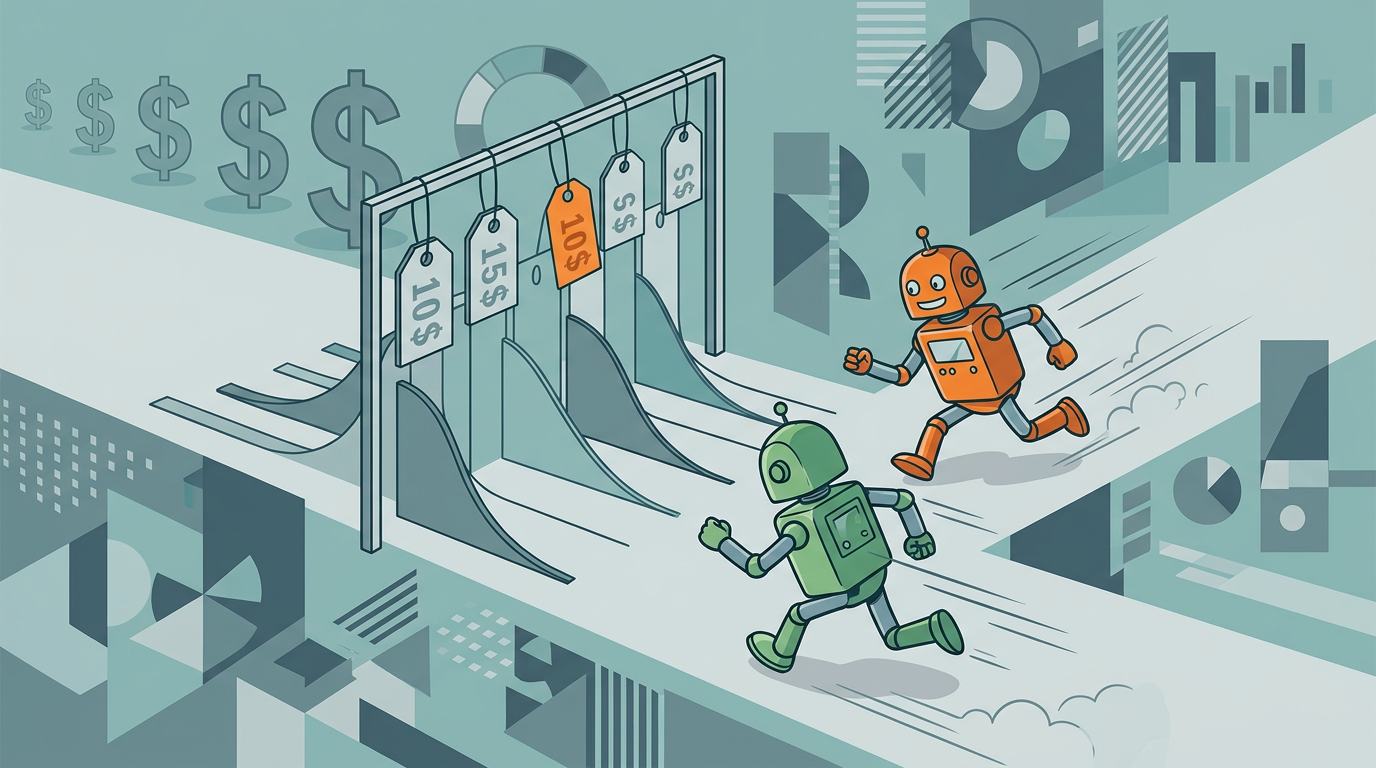
GPT-6 Sol/Luna Showdown Let's dig into the story that's defining this news cycle: Anthropic and OpenAI dropping frontier models within ninety minutes of each other, and both of them making a very different argument than we're used to hearing from these labs.
Technical Deep Dive
For the past two years, every frontier model launch has been a capability arms race — bigger context windows, higher benchmark scores, more autonomous agent behavior. Opus 5.5 and GPT-6 Sol/Luna break that pattern.
Anthropic's headline number isn't a benchmark score — it's a sixty percent cut in cache read costs. That matters enormously for anyone running long-context agentic workflows, where the same context gets re-read across dozens or hundreds of turns. Cache costs, not raw inference, have quietly become the dominant expense in production AI systems, and Anthropic just went straight at that line item.
OpenAI's response, GPT-6 Sol and Luna, is a two-tier play. Sol is priced at $2 per million input tokens and $10 per million output — claiming what OpenAI calls "Astra-level reliability" at half the price of the previous flagship. Luna goes even further down-market at just ten cents input and fifty cents output per million tokens, clearly aimed at high-volume, lower-stakes tasks like classification, routing, or simple agent subtasks.
That's a direct shot at exactly the kind of workload Jev-style "System One" decision models have been carving out — cheap, fast, narrow-purpose inference at massive scale. Both labs are essentially admitting the same thing: intelligence is becoming commoditized, and the real competitive battleground has shifted to serving cost.
Financial Analysis
This is where it gets interesting for anyone managing an AI budget line. Enterprise buyers have spent eighteen months absorbing sticker shock on frontier model pricing, and this synchronized launch is effectively a price war declared in public, on the same day, by the two best-funded labs on the planet. That's not a coincidence — it's a signal that both companies believe the next axis of competition isn't who's smartest, it's who's cheapest to run at scale.
And this lands right alongside a data point Joanna flagged from CData Labs: benchmarking across twenty-two models found a 178x cost gap between the cheapest and most expensive models producing identical correct answers on enterprise data tasks. If that holds up, it validates exactly what Anthropic and OpenAI are now racing to address — the intelligence itself is becoming a commodity, and the premium increasingly sits in interface, integration, and governance, not raw model capability. For investors, that's a warning sign for anyone valuing these labs purely on model superiority.
The moat is shifting to distribution, enterprise trust, and unit economics.
Market Disruption
The competitive fallout here is going to ripple well past Anthropic and OpenAI. Xiaomi's MiMo V2.6 Pro — reportedly a trillion-parameter, MIT-licensed model that ties Grok 4.
7 and cost just $2.6 million to train — is the disruptive wildcard nobody in San Francisco wanted to see this week. If a Chinese hardware company can get near-frontier performance at a fraction of frontier training costs and give it away for free, that puts enormous pressure on the pricing floor Anthropic and OpenAI just tried to set.
We saw a preview of this dynamic back on February 14th with MiniMax M2.5 matching Claude Opus at a fraction of the cost — this is that trend accelerating, not slowing down. Meanwhile, mid-tier players like xAI's Grok 4.
7 — which launched just a day earlier at $2 input, $6 output — now look squeezed from both sides: undercut on price by Luna, and undercut on open-weight economics by Xiaomi. The middle of the market is getting crushed, and I think we're heading toward a barbell: ultra-cheap commodity models for high-volume tasks, and a small number of premium frontier systems for genuinely hard problems, with very little profitable ground in between.
Cultural & Social Impact
For everyday users and knowledge workers, this pricing war is quietly reshaping what "using AI" even means. When output tokens cost fifty cents per million instead of fifty dollars, the cost calculus for running AI continuously — monitoring inboxes, drafting every Slack reply, background-checking every document — collapses. That's the shift from AI-as-occasional-tool to AI-as-ambient-layer, always running in the background of digital life.
It's the same logic behind Meta's Muse agent and the whole agentic shopping fight we've been tracking — cheap enough inference means agents can run constantly, not just when summoned. There's also a trust dimension worth flagging. Joanna's item on the Context Privilege Escalation vulnerability — found in twelve major systems including Claude Code — lands at an awkward moment.
As these models get cheap enough to run everywhere, all the time, security researchers are simultaneously showing that the privilege boundaries inside these agent systems are structurally leaky. Cheaper, more ambient AI without a matching leap in security architecture is a genuinely uncomfortable combination for anyone deploying these agents on real customer data.
Executive Action Plan
So what should you actually do with this? Three concrete moves. First, audit your current model spend by workload type, not by vendor.
If you're paying frontier prices for simple classification, routing, or extraction tasks, you're almost certainly overpaying — route those to Luna-tier or Jev-style decision models immediately and reserve Opus 5.5 or Sol-tier spend for genuinely hard reasoning work. Second, don't sleep on the open-weight option just because it's unfamiliar.
If Xiaomi's MiMo numbers hold up under independent benchmarking, self-hosting an MIT-licensed, near-frontier model could meaningfully undercut API costs for teams with the infrastructure to run it — worth a pilot evaluation this quarter, not next year. Third, before you deploy any new agent framework built on Claude Code or similar systems, get your security team to specifically test for privilege escalation across session boundaries — don't assume standard prompt injection defenses cover it, because this new research suggests they don't.
Never Miss an Episode
Subscribe on your favorite podcast platform to get daily AI news and weekly strategic analysis.