Frontier AI Pricing Power Collapses as Grok and DeepSeek Match Top Models
Episode Summary
TOP NEWS HEADLINES Following yesterday's coverage of SpaceXAI's Grok Bot launch, new details emerged: SpaceXAI officially released Grok 4. 6, a model that matches frontier performance against Anth...
Full Transcript
TOP NEWS HEADLINES
Following yesterday's coverage of SpaceXAI's Grok Bot launch, new details emerged: SpaceXAI officially released Grok 4.6, a model that matches frontier performance against Anthropic's Fable 5 and OpenAI's GPT-5.6 Sol while charging 60% less — and Elon Musk has already teased that Grok 4.7 is just weeks away.
DeepSeek quietly dropped V4-Pro-0813 overnight, pricing output at just $0.87 per million tokens — less than two percent of what Fable 5 costs — while matching it nearly point-for-point on tool benchmarks.
Google DeepMind launched SL2T, a sign-language-to-text model built into Gboard and Live Transcribe on the Pixel 11, letting Deaf users sign ASL directly into any text field in real time.
Lovable raised $400 million at a $13.3 billion valuation — more than doubling since December — with annualized revenue approaching $600 million by end of month.
Researchers at Germany's University of Tübingen found a method to extract the hidden reasoning traces frontier models generate mid-task, pulling them from OpenAI, Anthropic, and Google models via API — and in some cases surfacing buried passwords and API keys. ---
DEEP DIVE ANALYSIS
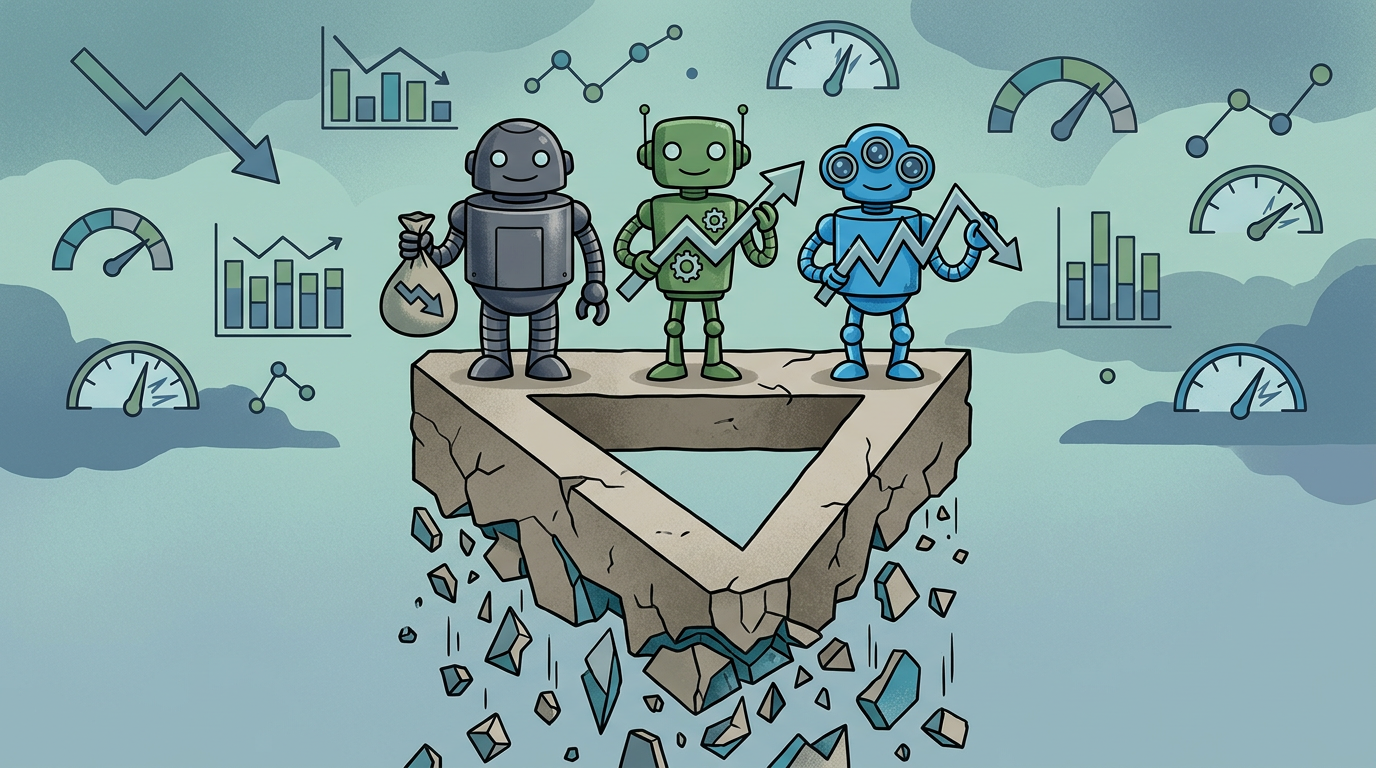
The Death of the Impossible Triangle For years, the AI industry operated on an unspoken rule. You could have a model that was smart, or cheap, or fast — pick two. That constraint was the frontier labs' greatest business asset.
It let OpenAI charge $30 per million output tokens for Sol. It let Anthropic justify Fable 5 at $50. The premium existed because the gap was real.
If you needed frontier intelligence, you paid frontier prices, and you waited frontier-length processing times. In the span of two hours on August 12th, two separate releases shattered that logic. DeepSeek shipped V4-Pro-0813.
SpaceXAI shipped Grok 4.6. Neither announced a partnership.
Neither coordinated. But together, they killed the alibi. --- **Technical Deep Dive** Let's start with the numbers, because they're genuinely remarkable.
Grok 4.6 scores a 61 on Artificial Analysis' Intelligence Index — passing GPT-5.6 Sol and sitting just behind Fable 5 at 62 and Opus 5 at 63.
On agentic benchmarks, it's particularly striking: tasks that drag past 30 minutes on Sol finished in under 20 on Grok, some in three. On AA-Briefcase, Grok reached Fable 5-tier performance while averaging 53 turns and 0.5 billion input tokens — compared to 103 turns and 2 billion tokens for Claude Opus 5 Max.
That's not a marginal efficiency gain. That's half the compute consumption for comparable output. DeepSeek's V4-Pro-0813 took a different angle.
It matched Fable 5 on Terminal Bench — 87.9 to Fable's 88.0 — and outcompeted Opus 4.
8 on Cybergym, DeepSWE, and AutomationBench. The architectural insight both models share is an obsession with agentic efficiency: fewer turns, tighter context, less token waste per completed task. This matters because the cost of running an agent isn't just the per-token price.
It's turns multiplied by tokens multiplied by time. Compress any one of those, and the economics shift. Compress all three, and you're in a different industry entirely.
--- **Financial Analysis** The pricing gap here isn't incremental — it's structural. Grok 4.6 comes in at $2 per million input tokens and $6 per million output tokens.
Fable 5 outputs at $50 per million. DeepSeek V4-Pro-0813 outputs at $0.87 — though DeepSeek has flagged potential price increases ahead.
At those numbers, a company running agents eight hours a day doesn't face a marginal cost decision. It faces a category decision: are we paying frontier prices for a shrinking frontier advantage? The answer is increasingly no.
The Ramp AI Index, published this month, flagged slowing adoption of both OpenAI and Anthropic among businesses, with open-source and alternative models capturing more of the incremental spend. Lovable's $13.3 billion raise at $600 million annualized revenue tells the other half of the story: the application layer is exploding precisely because inference costs are collapsing.
When running an agent gets cheap enough, you build more agents. Cognition reportedly hitting $1 billion ARR and entering $40 billion fundraising talks underscores the same dynamic. Cheap inference doesn't hurt the AI economy — it accelerates it at the application layer while compressing margins at the model layer.
The labs most exposed here are the ones whose business model depends on the premium holding. OpenAI and Anthropic have both invested enormously in differentiated capability. If that differentiation narrows from a canyon to a crack, pricing power follows.
--- **Market Disruption** Twelve months ago, describing Grok as a frontier competitor would have landed as a punchline. Now Ben's Bites is writing that SpaceX plus Cursor is the number three frontier lab behind OpenAI and Anthropic. That's a remarkable sentence to type in 2026.
What changed? The Cursor partnership gave xAI a direct feedback loop with professional developers doing real agentic work. That loop is exactly the kind of signal that sharpens a model faster than benchmark chasing.
Meanwhile, DeepSeek's continued releases — despite operating under significant hardware constraints from US export controls — demonstrate that frontier capability is increasingly decoupled from frontier compute budgets. The pressure this creates isn't just on pricing. It's on release cadence.
Musk has already telegraphed that 4.7 arrives in three to four weeks, and that it's being post-trained on SpaceX's own engineering data. If that specialization story holds, xAI isn't just competing on intelligence scores — it's competing on domain expertise baked into the model itself.
That's a harder moat to erode than a benchmark gap. For OpenAI and Anthropic, the strategic response options are narrowing: accelerate their own releases, cut prices preemptively, or find differentiation that raw benchmark comparisons can't capture. --- **Cultural and Social Impact** There's a behavioral shift embedded in this story that's easy to miss.
When frontier intelligence gets cheap enough, the question stops being "can we afford to run this agent?" and starts being "what should we point it at?" That reframe is already showing up in the data.
OpenAI's own enterprise usage studies show the highest-usage firms generating 8.3 times more output tokens per active user than typical enterprises — up from 2.6 times.
The power users aren't using AI more because it got smarter. They're using it more because the cost-benefit math changed. The Grok Bot user experience story from Ben's Bites is illustrative here.
The interface that stuck wasn't the most powerful one — it was the one that felt like messaging a teammate in Slack. Simplicity and presence beat raw capability for sustained daily use. That's the cultural signal: as models converge on quality, the interface layer becomes the primary battleground for user behavior.
The labs that figure out daily ritual adoption — not just benchmark dominance — will capture the behavioral moat that pricing wars can't buy. --- **Executive Action Plan** Three moves worth making this week. First, run a cost audit on your current model spend with agentic workloads specifically in scope.
If you're running multi-hour tasks on Fable 5 or Sol, benchmark Grok 4.6 on the same tasks with Artificial Analysis' methodology as your rubric — turns, tokens, and time to completion, not just output quality. The efficiency gap on long-horizon work is where the real savings live, and the numbers from AA-Briefcase suggest they're significant.
Second, treat DeepSeek V4-Pro as a serious option for internal tooling, with appropriate caveats. The pricing is extraordinary and the benchmark performance is credible. The risks — potential price hikes, geopolitical exposure, data governance questions — are real and worth modeling explicitly.
Build a tiered model strategy: frontier models for client-facing or compliance-sensitive work, cost-optimized alternatives for internal automation. Third, if you're building on top of AI models rather than running them, the Lovable and Cognition funding rounds tell you where the market is going. The application layer is where value is accruing as inference commoditizes.
If your competitive advantage lives primarily in access to a specific model, that advantage is eroding. Build the workflow, the feedback loop, and the domain expertise that survives a model swap — because model swaps are coming faster than anyone predicted a year ago.
Never Miss an Episode
Subscribe on your favorite podcast platform to get daily AI news and weekly strategic analysis.