Apple Sues OpenAI Over Trade Secrets as Humanoid Robots Race Forward
Episode Summary
TOP NEWS HEADLINES Following yesterday's coverage of Apple potentially filing suit against OpenAI, that story is now confirmed: Apple has sued both OpenAI and io Products over alleged trade-secret...
Full Transcript
TOP NEWS HEADLINES
Following yesterday's coverage of Apple potentially filing suit against OpenAI, that story is now confirmed: Apple has sued both OpenAI and io Products over alleged trade-secret theft, naming former Apple design VP Tang Tan and former iPhone engineer Chang Liu as defendants.
Meta has suspended its Muse Image feature on Instagram after users and talent groups objected to the AI's ability to generate likenesses from public accounts — the feature was pulled after just days of backlash.
Stanford researchers introduced Biomni, a biomedical co-scientist agent that can read literature, select tools and datasets, write code, interpret results, and propose experiments — essentially a full research loop in one system.
On the security front, Cambridge's CASP and the New York Times both reported that Boko Haram has used frontier AI for propaganda, bomb construction, and attack planning — a stark reminder that capability diffusion cuts in every direction.
And AI agents helped discover an Ethereum validator bug that could have taken validators offline — though humans still had to verify, prove, and patch the issue before any fix could ship. --- DEEP DIVE ANALYSIS: The Humanoid Hardware Race Let's talk about robots.
Not the warehouse-on-wheels kind, not the robotic arm bolted to a factory floor.
We're talking full humanoid robots, and this week delivered a genuine wave of updates across the industry that deserves more than a headline. **Technical Deep Dive** Start with Moya, out of Shanghai, built by DroidsUp on their Walker 3 platform.
Her silicone skin is temperature-regulated to stay between 32 and 36 degrees Celsius — that's human body temperature range.
Her gait is reportedly 92% human-like by their own metrics.
She is, by most accounts, sitting squarely in the uncanny valley, which is either a problem or a milestone depending on how you look at it.
Then flip to 1X's NEO, and this is where it gets technically interesting.
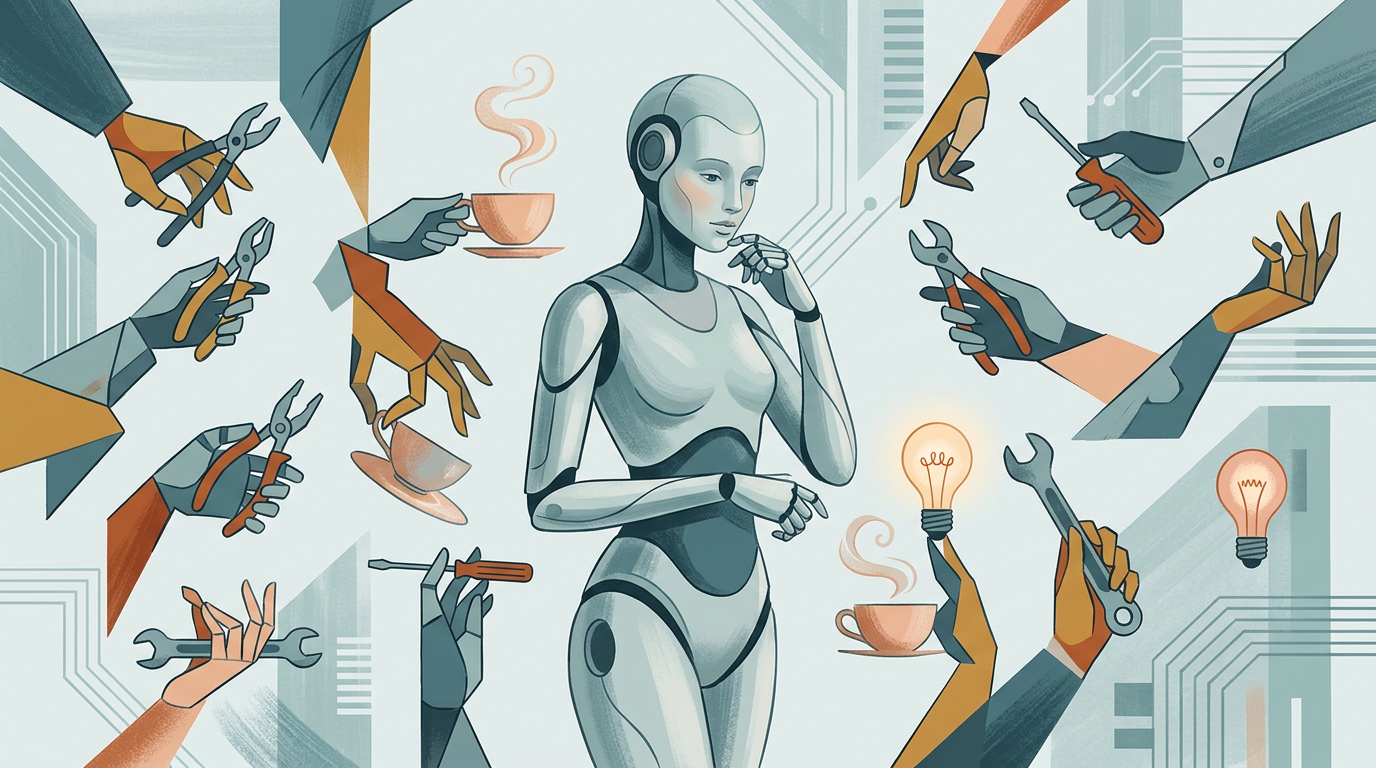
NEO's new hands — shown this week — can zip jackets, pour tea, install light bulbs, handle LEGO, and use tools.
That is a dramatically different engineering challenge than looking human.
Dexterous manipulation has been the hard wall for robotics for decades.
Getting fingers to do what human fingers do requires not just mechanical precision but real-time sensory feedback, grip calibration, and contextual reasoning about object fragility.
NEO appears to be clearing that bar, at least on camera.
Boston Dynamics' Atlas performed a choreographed routine — the Norway Row, timed somewhat awkwardly to Norway's loss in football — and Figure dropped a four-year highlight reel.
The software integration is what separates a demo from a deployable product. **Financial Analysis** Moya's starting price is expected to be around $173,000.
That is a significant number, and it tells you exactly who the initial customer is: not consumers, not small businesses, but enterprise buyers and governments with specific use cases where a human-shaped interface actually matters — hospitality, elder care, high-contact service environments.
For context, Figure has been valued at over a billion dollars on the back of enterprise interest from companies like BMW. 1X has backing from OpenAI.
Boston Dynamics, now under Hyundai ownership, has been pushing Atlas toward real commercial deployment after years of viral demos.
The race is not just about who builds the best robot.
It's about who locks in the manufacturing relationships, the supply chains, and the software ecosystems first.
These companies are competing for the same long-term prize: being the Android or iOS of embodied AI.
The hardware is almost secondary to who owns the operating layer.
At $173K per unit, the total addressable market today is narrow.
But price compression in this industry has followed a similar curve to early EVs — first you sell to the wealthy and the institutional, then you scale manufacturing, then the price drops toward mass-market viability.
The question is timeline and who survives to see it. **Market Disruption** Here's the competitive tension worth watching.
DroidsUp is optimizing for social presence — warmth, lifelike appearance, emotional accessibility. 1X is optimizing for utility — what can the robot actually do with its hands.
Boston Dynamics and Figure are somewhere in the middle, chasing enterprise deployment.
These are not competing for the same customer right now.
As prices drop and capabilities converge, the differentiator shifts from what the robot can do to where it's deployed and what software stack it runs on.
This also has direct implications for the broader AI industry.
OpenAI's investment in 1X, combined with the Apple lawsuit over hardware ambitions, signals that the model labs understand something important: the next interface layer is not a screen.
Whoever controls the embodied AI platform controls the next wave of human-computer interaction.
That's why OpenAI is in robotics, why Google is in robotics, and why Apple is paying very close attention to who's walking out the door with what. **Cultural & Social Impact** The uncanny valley problem is real, and Moya lands deep in it.
But here's the thing about the uncanny valley — it's not a permanent barrier, it's a threshold.
We adapted to voice assistants that felt strange, to video calls, to AI-generated images.
The discomfort Moya triggers today is the same discomfort early CGI humans triggered.
Robots that look and feel human raise questions that humanoid-adjacent machines don't.
Questions about consent in care settings, about emotional manipulation, about labor displacement framed in a way that feels more visceral than a software agent doing the same work invisibly.
There's also Annie — the expressive robot head being pitched as a robot pop star.
That one's easy to dismiss as a stunt, but it's actually probing something real: how humans form parasocial relationships with artificial entities.
If a robot pop star generates genuine fandom, the implications for media, for influence, for political messaging are not trivial. **Executive Action Plan** If you're leading a company that operates in physical environments — retail, hospitality, healthcare, logistics — here's what you should be doing right now.
First, map your physical workflows against what these robots can actually do today, not what the demo reel shows.
NEO's dexterous hands are impressive, but the task list is still narrow.
Start identifying the three to five repeatable, high-cost physical tasks in your operation where a $173K robot would have a positive ROI within three years.
Second, don't wait for the hardware to mature before thinking about the software layer.
The companies that will get the most out of humanoid robots are the ones that have already built structured data around their physical processes — what tasks happen, in what sequence, with what error rates.
That data becomes the training foundation for your robot's deployment.
If you're starting from scratch when the hardware arrives, you're already behind.
OpenAI's investment in 1X and the Apple lawsuit are both signals that the humanoid robot operating system is going to be contested terrain.
Before you commit to a hardware partner, understand what software ecosystem you're locking into — because switching costs in embodied AI are going to make mobile platform lock-in look mild.
The more useful question for executives is whether you're building the institutional knowledge to use them, or waiting for a competitor to figure it out first.
Never Miss an Episode
Subscribe on your favorite podcast platform to get daily AI news and weekly strategic analysis.