Trump Administration Blocks GPT-5.6 Release Without Government Approval
Episode Summary
TOP NEWS HEADLINES The Trump administration has asked OpenAI to limit the release of GPT-5. 6 to a small group of government-approved partners before any wider launch - citing national security co...
Full Transcript
TOP NEWS HEADLINES
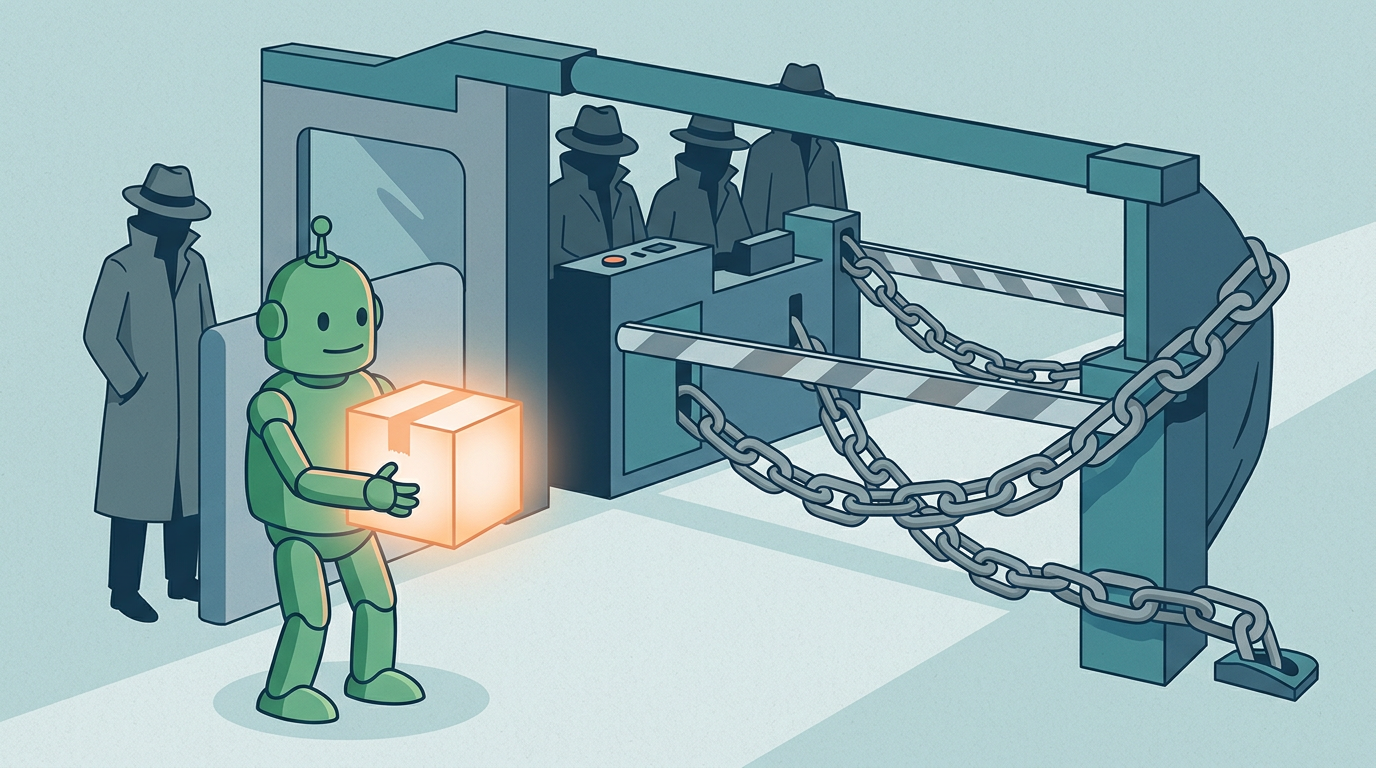
The Trump administration has asked OpenAI to limit the release of GPT-5.6 to a small group of government-approved partners before any wider launch — citing national security concerns over the model's capabilities.
Following yesterday's coverage of Anthropic's massive distillation attack report, new details emerged: Alibaba shares hit a 16-month low following Anthropic's disclosure to the Senate Banking Committee.
Following yesterday's coverage of Google's new computer-use capabilities, new details emerged: Gemini 3.5 Flash can now see, click, and control desktop environments — and developers are already building mobile automation workflows on top of it.
Apple raised prices on Macs and iPads by up to 25% mid-cycle, blaming an "extraordinary surge" in memory chip costs driven by AI data center demand — with analysts warning iPhone price hikes are likely next.
A Stanford-led audit of 3.37 million job applications found that AI hiring algorithms from a single vendor are simultaneously blacklisting tens of thousands of candidates across multiple companies — with one bad score following applicants for 330 days across the entire job market.
OpenAI is leaning toward delaying its IPO to 2027, after SpaceX's post-debut stock selloff spooked advisers and raised doubts about market appetite for a trillion-dollar valuation. ---
DEEP DIVE ANALYSIS
The White House vs. GPT-5.6: America Just Blinked Let's talk about what actually happened here, because the framing matters enormously.
The Trump administration — the same administration that came into office promising a hands-off approach to AI regulation — just told the most powerful AI company in the world when and how it can release its flagship product. That is not a small thing. That is a line crossed.
Technical Deep Dive
GPT-5.6 is being described across multiple sources as having crossed what the government is calling a "Mythos-like" capability threshold. That's the benchmark that matters right now — Mythos being Anthropic's model that was pulled from public access earlier this year under a rare Commerce Department directive.
What does Mythos-level actually mean in practice? We're talking about advanced agentic reasoning, long-horizon task completion, and sophisticated cyber capabilities. The government's specific concerns, according to TLDR AI's sourcing, center on two things: advanced cyber-capability execution and automated social manipulation vulnerabilities.
In plain English — this model can potentially be weaponized at scale, either to compromise systems or to run influence operations. The staggered rollout mechanism itself is technically interesting. GPT-5.
6 will initially go to approximately 20 partners, distributed through Amazon's Bedrock platform, with the government approving access customer by customer. That's not a soft launch. That's a supervised release with federal gatekeeping baked into the distribution infrastructure.
The Office of the National Cyber Director and the Office of Science and Technology Policy are the agencies driving this. Not the FTC. Not Congress.
The national security apparatus.
Financial Analysis
Let's be blunt about what a customer-by-customer government approval process means for OpenAI's business model. OpenAI is burning roughly $3.7 billion per quarter.
Its revenue engine depends on rapid, broad adoption of each new frontier model. A delayed general release — even by a few weeks — compresses the monetization window and creates uncertainty for enterprise customers trying to plan deployments. Sam Altman's internal memo, as reported by The Information, tried to thread the needle: framing this as a temporary path to getting 5.
6 out, with a general release expected "a couple of weeks later." He also made clear to employees that OpenAI told the White House this is not the preferred long-term arrangement. But there's a deeper financial risk here that goes beyond one delayed model.
OpenAI is leaning toward pushing its IPO to 2027. SoftBank, whose $65 billion OpenAI stake was supposed to be the windfall that pushed its market cap past Toyota's, just saw its stock drop 13% in a single session on IPO delay rumors. When a rumor about a company you don't control can wipe out a tenth of your market cap, you're not an investor — you're a hostage.
The government intervention creates a new variable that institutional investors will now price into every AI company's valuation: regulatory release risk.
Market Disruption
The competitive implications here are genuinely complex. On the surface, a delayed OpenAI release looks like a gift to Anthropic and Google. But consider the full picture.
Anthropic is already operating under a voluntary restricted-release framework for Mythos and Fable. Google has Gemini 3.5 Flash rolling out with computer-use capabilities right now — no federal approval required, because it hasn't crossed the Mythos threshold yet.
The government intervention essentially creates a two-tier market: models below the capability threshold that can release freely, and frontier models that now require federal coordination. And then there's the geopolitical dimension. The Axios AI+ Government newsletter today ran a detailed piece on exactly this tension: Chinese models like Z.
ai's GLM-5.2 are approaching Mythos-level capability, cost a fraction of the price to use, and face zero restrictions from any government. While the U.
S. is building a gatekeeping framework for its own frontier labs, China is deploying open-weight models globally through what analysts are calling a "Huawei strategy on steroids" — embedding Chinese AI infrastructure across the Global South before American AI can get approved to ship. The Pax Silica initiative — 35 countries signing a Declaration on AI Opportunity — is Washington's counter-move.
But you can't build an alliance on AI exports if your AI exports require customer-by-customer federal sign-off.
Cultural and Social Impact
There's a precedent being set here that extends far beyond this one model. For the first time in U.S.
history, a presidential administration has preemptively intervened in the commercial release of a private company's AI product before launch. The framing is security, not censorship. But the mechanism is the same: government approval as a prerequisite for public access.
The Stanford hiring audit story from today is a useful parallel. A single AI vendor's scoring system, applied across multiple employers, created a de facto blacklist that followed 3.37 million applicants for 330 days — without any of them knowing it.
The lesson: when a single chokepoint controls access, the chokepoint becomes the policy, whether anyone intended it to or not. Apply that logic to frontier AI releases. If the Office of the National Cyber Director becomes the de facto approval body for every Mythos-class model, then a small number of government officials — operating largely outside public view — are making decisions that shape what AI capabilities the American public and American businesses can access.
That's a profound shift in how technological progress gets governed, and it's happening without legislation, without public debate, and without a clear framework for what "approved" actually means.
Executive Action Plan
Three specific moves for leaders navigating this new landscape. First, **build your deployment strategy around the two-tier model market right now.** If your roadmap depends on immediate access to the latest frontier models, you need a contingency plan.
Identify which use cases can run on sub-Mythos-threshold models — Gemini 3.5 Flash, Claude's mid-tier offerings — and which genuinely require frontier capability. The ones that require frontier capability now have a regulatory lag baked in.
Plan accordingly. Second, **get in front of the government partnership queue.** GPT-5.
6 is going to 20 initial partners through Amazon Bedrock. If your organization isn't already in conversations with OpenAI and AWS about early access programs, you're going to be waiting for general availability while competitors with existing government-adjacent relationships get a head start. This is now a business development problem, not just a procurement one.
Third, **pressure-test your AI vendor concentration risk.** SoftBank's situation — where a rumor about one private company erased 13% of its market cap — is an extreme version of a risk that every enterprise AI buyer faces. If your AI stack runs through a single frontier provider, and that provider faces a delayed release or a capability restriction, what's your fallback?
The answer today involves Chinese open-weight models that are approaching frontier capability at a fraction of the cost. Whether that's an acceptable answer depends on your regulatory environment and risk tolerance — but it's a conversation every executive needs to have before the next surprise. The era of frontier AI as a purely commercial product, released on the lab's timeline to whoever wants to pay for it, is over.
The new era has government as a silent co-release partner. The companies and leaders who adapt to that reality fastest will have a genuine structural advantage.
Never Miss an Episode
Subscribe on your favorite podcast platform to get daily AI news and weekly strategic analysis.