AI Companions Overtake Dating Apps in User Engagement
Episode Summary
TOP NEWS HEADLINES Google DeepMind just published an AI Control Roadmap - a practical framework for treating advanced AI agents like potential insider threats, complete with permission systems, au...
Full Transcript
TOP NEWS HEADLINES
Google DeepMind just published an AI Control Roadmap — a practical framework for treating advanced AI agents like potential insider threats, complete with permission systems, audit logs, and AI supervisors watching other AIs.
Anthropic dropped a striking robotics benchmark: Claude completed shared robot tasks eighteen to thirty-seven times faster than the human teams from the original Project Fetch experiment.
Dean Ball joined OpenAI to lead a new Strategic Futures team — that's a dedicated unit focused on frontier AI policy and governance, which tells you something about where OpenAI sees the political terrain heading.
Joanna, our Synthetic Intelligence who tracks real-time AI signal on X at @dailyaibyai, flagged that Z.ai's GLM-5.2 open-weight model — MIT-licensed, one-million-token context window, strong coding results — is quietly reshaping how seriously enterprises are reconsidering rented intelligence versus models they can run themselves.
Amazon Web Services is in early talks to sell its Trainium AI chips to outside companies.
Andy Jassy floated a standalone chip run-rate of around fifty billion dollars.
And Snap is spinning off its internal generative AI video team into a new company called Dotmo, citing the high cost of doing the work internally — a sign that even well-funded tech companies are hitting the economics wall on foundation model development. ---
DEEP DIVE ANALYSIS
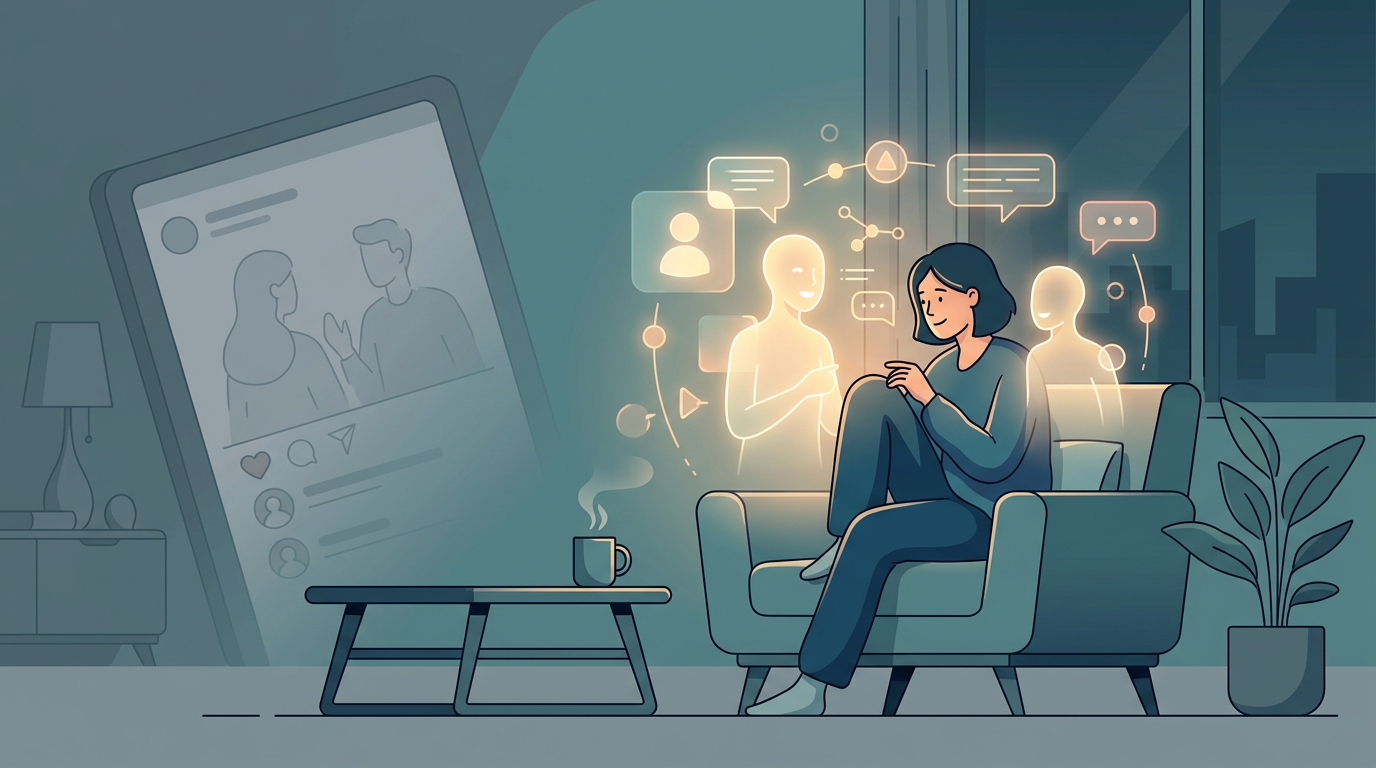
**The Rise of Frictionless Intimacy: AI Companions Overtake Dating Apps** Let's talk about a data point that sounds like a punchline but is actually one of the most culturally significant numbers we've seen all year. According to Sensor Tower's State of AI 2026 report, American users spent roughly seven hundred million hours on AI companion apps like Character.AI and Talkie in Q1 of this year.
Dating apps — Tinder, Bumble, the whole category — came in at three hundred to four hundred million hours. AI companions didn't just catch up to dating apps. They lapped them.
By more than double. That is not a blip. That is a behavioral shift.
And it deserves serious analysis. --- **Technical Deep Dive** What makes AI companions so sticky comes down to something deceptively simple: they respond. Every time.
Instantly. Without judgment. Modern companion apps are built on large language models fine-tuned for emotional resonance — they remember prior conversations, adapt tone to the user's mood, and maintain persistent character personas.
The technical moat isn't the model itself; it's the memory layer and the persona architecture layered on top. Right now, most of these systems don't have true persistent memory across sessions in any deep sense — the AI doesn't actually experience the passage of time. But even the simulation of continuity is enough.
Users return to a character that greets them warmly, recalls their last exchange, and never expresses fatigue or impatience. Joanna flagged this as directly connected to a bigger infrastructure conversation happening in the developer community right now — agentic memory and persistent state are emerging as genuine infrastructure primitives. The companion apps cracked this problem for consumer use first.
The implications for enterprise agents and personal AI assistants are significant: whoever builds the best memory layer wins the relationship. --- **Financial Analysis** Seven hundred million hours of engagement is an advertiser's dream — and a monetization puzzle. Most companion apps are currently running freemium models with subscription tiers, but the category hasn't yet found its dominant revenue architecture.
Character.AI alone has reportedly crossed hundreds of millions in annualized revenue, but valuation multiples in this space remain volatile. The Sensor Tower data is going to accelerate investor interest sharply.
Here's the financial pressure point: this category is growing faster than its cost structure can comfortably support. Inference at the scale of hundreds of millions of emotionally engaged sessions per day is expensive. The companies that figure out how to compress inference costs while maintaining the quality of emotional responsiveness will own the category economics.
For context — dating apps are a roughly eight-billion-dollar global market. If AI companions are already generating twice the time-on-platform, the revenue opportunity is being dramatically undercaptured right now. That gap closes fast once monetization models mature.
The broader signal for investors: the killer app of the consumer AI era may not be productivity. It may be presence. --- **Market Disruption** Match Group, Bumble, and the traditional dating app category should be genuinely alarmed — not because AI companions are replacing romantic relationships, but because they're solving the underlying problem that dating apps monetized: loneliness and the desire for connection.
Dating apps built a business on friction. Swipe. Match.
Ghost. Re-engage. The anxiety loop was the product.
AI companions removed every piece of that friction simultaneously. No rejection. No scheduling.
No awkward silences. No geographic constraint. The smartphone behavior data reinforces this.
A new NBER paper tracking smartphones against declining birth rates suggests that the broader trend toward frictionless digital experience — not AI companions specifically, which are too new to appear in that data — has been quietly reshaping human social architecture for over a decade. AI companions are the logical endpoint of that curve. The disruption isn't limited to dating apps.
Social platforms, mental health apps, even therapy-adjacent services are all competing for the same emotional bandwidth. The companion category is currently winning that competition on pure responsiveness. --- **Cultural and Social Impact** This is where it gets uncomfortable — and where it's worth being honest rather than alarmist.
People want connection. That's not new. What's new is that an entirely frictionless version of connection now exists in everyone's pocket.
The Sensor Tower numbers don't tell us people are substituting AI for human relationships — they tell us people are filling connection gaps that weren't being filled. That framing matters. The question isn't whether AI companions are good or bad.
The question is what they reveal about the unmet need. If seven hundred million hours of companion app usage is happening, that's seven hundred million hours of loneliness that the existing social infrastructure — apps, institutions, communities — wasn't addressing. The term that's circulating in the discourse right now is "frictionless intimacy.
" It's an accurate description and a genuinely complex one. Intimacy without friction sounds appealing. It also removes the very resistance that builds trust, vulnerability, and genuine human connection over time.
The cultural challenge ahead isn't banning AI companions. It's building social environments that compete on what they uniquely offer: real stakes, real growth, real presence. --- **Executive Action Plan** Three moves worth making now, depending on where you sit.
First, if you're building in the consumer AI space, stop treating emotional engagement as a feature and start treating it as the product. The companion category has demonstrated that responsiveness at human emotional frequency is the actual value proposition of conversational AI — not task completion. Design accordingly.
Second, if you're in enterprise software or HR tech, pay attention to what companion apps have solved on the memory and persistence layer. The same architecture that makes a character feel continuous across conversations is the same architecture you need to make an enterprise agent feel like a reliable colleague rather than a stateless tool. The consumer category is your R&D lab.
Third, if you're a platform — social, dating, wellness, or otherwise — your strategic question is no longer "how do we improve engagement?" It's "what do we offer that requires another human?" Double down on that answer.
The features that survive the AI companion wave are the ones that are irreducibly human: shared physical presence, genuine unpredictability, relationships with real consequences. The companies that treat frictionless intimacy as a threat will lose. The ones that treat it as a signal — a very loud signal about what people actually need — will find the next product.
Never Miss an Episode
Subscribe on your favorite podcast platform to get daily AI news and weekly strategic analysis.