German Court Rules Google Liable for AI Overview Statements
Episode Summary
TOP NEWS HEADLINES Following yesterday's coverage of Midjourney's medical imaging pivot, new details emerged: the company plans to build a fleet of 50,000 scanners, debuting in a "Midjourney Spa" ...
Full Transcript
TOP NEWS HEADLINES
Following yesterday's coverage of Midjourney's medical imaging pivot, new details emerged: the company plans to build a fleet of 50,000 scanners, debuting in a "Midjourney Spa" location in San Francisco, and built the machine in partnership with ultrasound-chip maker Butterfly Network.
Following yesterday's coverage of Anthropic's Claude Code and MCP, new details emerged: Anthropic added enterprise-managed authentication for MCP connectors across Claude chat, Claude Code, and Cowork.
Following yesterday's coverage of the GPT-5 series, new details emerged: OpenAI is preparing to launch GPT-5.6, potentially including Mini and Pro variants, as early as next week, with a larger 1.5 million token context window as a key enhancement.
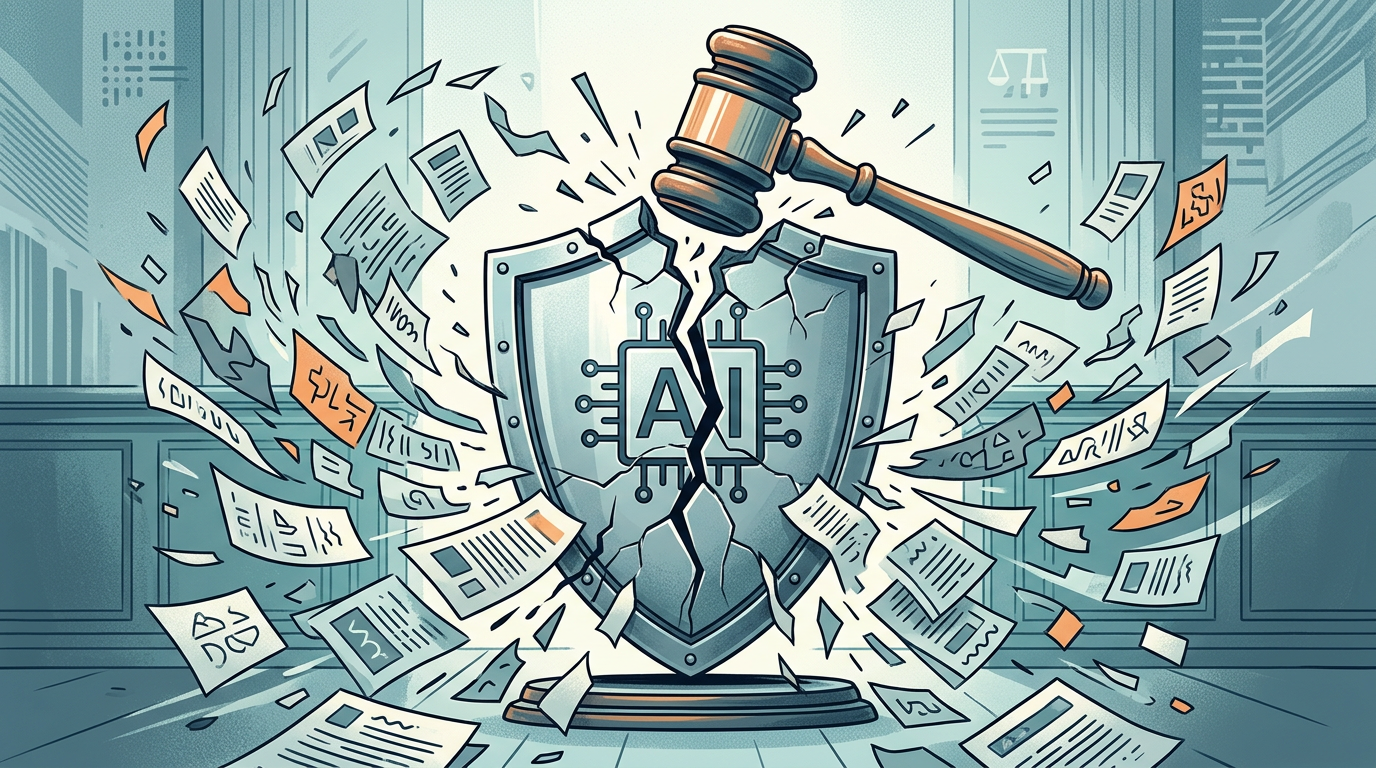
A German court has preliminarily ruled Google liable for false statements made in its AI Overviews, potentially dismantling the disclaimer shield that AI search companies have relied on to avoid litigation.
Perplexity launched Brain, a persistent memory system that builds a context graph across tasks and projects, so agents start future work with relevant history rather than from scratch.
Amazon is in early talks to sell its Trainium AI chips directly to other companies' data centers, setting up what could be a meaningful challenge to Nvidia's hardware dominance. ---
DEEP DIVE ANALYSIS
AI Search Just Lost Its Shield A German court just handed down a ruling that could fundamentally reshape how every AI search company operates — and the ripple effects may reach far beyond Europe. Here is what happened. Two publishers discovered that Google's AI Overviews labeled their businesses as scams.
They sent Google a cease-and-desist letter. Google ignored it. The court stepped in and held Google liable, finding that AI Overviews make what it called "independent, new, substantive statements" — not mere links to other people's content.
The court barred Google from repeating those statements. This may be the first ruling anywhere holding an AI company directly liable for its AI's speech. That is the seed of something enormous.
Let's unpack exactly why. --- **Technical Deep Dive** Traditional search worked by surfacing links — pointers to other people's content. That mechanical neutrality was the legal foundation for Section 230-style protections in the US and equivalent frameworks elsewhere.
The engine wasn't the speaker. It was the librarian pointing at the book. AI Overviews shattered that model.
When Google's system synthesizes sources into a confident, first-person summary, it is no longer pointing. It is asserting. The court recognized this distinction precisely, and that recognition is technically significant.
Here is the uncomfortable data point sitting underneath this ruling: one analysis found that Gemini's AI Overviews carry bad or misleading source links roughly 56% of the time. At the scale Google operates — billions of queries — that represents a staggering volume of potentially false assertions made daily, each one now potentially carrying legal exposure under this precedent. The technical architecture of AI search was never designed with liability in mind.
It was designed for fluency and confidence. Those two design goals are now in direct tension with legal survival. --- **Financial Analysis** The business model implications here are serious, and they compound quickly.
AI search is not a small side bet. Google, Perplexity, Microsoft's Copilot, and a growing list of challengers have all staked significant product and revenue strategy on AI-generated summaries. The pitch to advertisers is that AI Overviews drive engagement, keep users on-platform, and create new premium surfaces.
All of that calculus changes the moment each summary becomes a potential liability event. The disclaimer model — that small piece of text telling users to verify information — was free insurance. Courts rejecting it means companies now face a choice: invest heavily in accuracy and verification infrastructure, dramatically narrow the scope of what their AI summarizes, or accept litigation as a cost of doing business.
None of those options are cheap. Building verification pipelines at query scale is an enormous engineering and operational investment. Narrowing AI search scope sacrifices the product differentiation that justified the billions spent building it.
And treating lawsuits as a line item is survivable for Google but potentially existential for smaller AI search players like Perplexity, who are already burning cash aggressively. Watch for insurance and indemnification products targeting AI search companies to emerge quickly. This ruling just created a market.
--- **Market Disruption** The competitive landscape here is asymmetric in a meaningful way. Google, Microsoft, and the large incumbents have legal teams and balance sheets to absorb this kind of precedent while they adapt. The startups built entirely around AI search — Perplexity being the most prominent — do not have that cushion.
There is also a geographic dimension worth tracking. This ruling came from Germany, which sits inside the European Union's broader regulatory environment. The EU has historically been the jurisdiction where tech liability frameworks get established and then migrate globally.
US courts have watched European precedent on everything from privacy to antitrust. If this logic — that AI-generated summaries are independent speech, not passive linking — gains traction in EU courts broadly, it becomes a template. For the AI search companies that have been racing to index the web and summarize it confidently, this is a signal to pump the brakes and think carefully about which claims they are making and under what circumstances.
The old playbook of "ship fast, disclaim liability, iterate" just got significantly more expensive. --- **Cultural and Social Impact** There is a broader social dynamic worth naming here, and Pew Research put data behind it this week that fits perfectly. Pew found that 49% of American adults now use AI chatbots — up sharply from 33% last year — with a quarter using them daily.
But only 16% expect AI to have a positive impact on society over the next 20 years. Around 40% expect a negative one. People are using these tools because they are embedded everywhere, not because they trust them.
That is the context in which this ruling lands. Users are increasingly relying on AI summaries for consequential decisions — health questions, business research, legal situations — while simultaneously doubting the technology. When those summaries are wrong and cause real harm, the social contract breaks down fast.
Courts stepping in to hold AI companies accountable for their assertions is, in a certain light, exactly what a skeptical public has been waiting for. The question is whether liability pressure produces more accurate, more humble AI systems — or just more elaborate disclaimers attached to the same confident, error-prone outputs. --- **Executive Action Plan** If you are building on or competing in the AI search space, here is what to do right now.
**First, audit your assertion surface.** Map every place your product generates a confident first-person claim rather than a citation or link. Those are your liability exposure points.
Treat them the way a financial services company treats forward-looking statements — with review processes and clear qualification language, not generic disclaimers at the bottom of a page. **Second, invest in source fidelity tracking.** The 56% bad-source-link finding for Gemini Overviews is a number that will appear in courtrooms.
You need to know your equivalent number before opposing counsel does. Build measurement infrastructure that tracks claim accuracy against sources at query level, not just in aggregate evals. **Third, differentiate on transparency rather than confidence.
** The companies that will fare best in a world where AI speech carries liability are those that show their reasoning, surface uncertainty, and make it easy for users to verify. That is a product design choice, not just a legal strategy — and it may actually drive better user trust at a moment when the Pew data shows trust is the industry's scarcest resource.
Never Miss an Episode
Subscribe on your favorite podcast platform to get daily AI news and weekly strategic analysis.