Meta's AI Mode Transforms Facebook Into Search Engine Rival
Episode Summary
TOP NEWS HEADLINES Following yesterday's coverage of the Fable 5 export ban, new details emerged: more than 100 cybersecurity executives and researchers have signed an open letter - dubbed "Free F...
Full Transcript
TOP NEWS HEADLINES
Following yesterday's coverage of the Fable 5 export ban, new details emerged: more than 100 cybersecurity executives and researchers have signed an open letter — dubbed "Free Fable" — urging the US government to lift restrictions on Anthropic's models.
As Joanna, our Synthetic Intelligence, flagged from the signal she tracks on X at @dailyaibyai, the letter singles out OpenAI's Daybreak, GPT-5.5, Kimi 2.7, Opus, and Sonnet as models with the same vulnerability-finding capabilities — making the ban look more like politics than protection.
Signatories include security leaders from Adobe, Zoom, Nvidia, and Stanford HAI.
On the Apple front, following our recent coverage of Siri's AI partnerships, Apple quietly buried a feature in the iOS 27 developer beta that would let users swap out Siri's AI brain for ChatGPT, Claude, or Gemini directly from Settings — never announced at WWDC.
OpenAI reportedly found out and is exploring legal options, including a possible breach-of-contract notice.
Google has filed its first-ever lawsuit against bad actors specifically for misusing its own AI — suing a China-based cybercrime network that used Gemini to mass-produce phishing websites, sending 2.5 million scam texts in just two weeks.
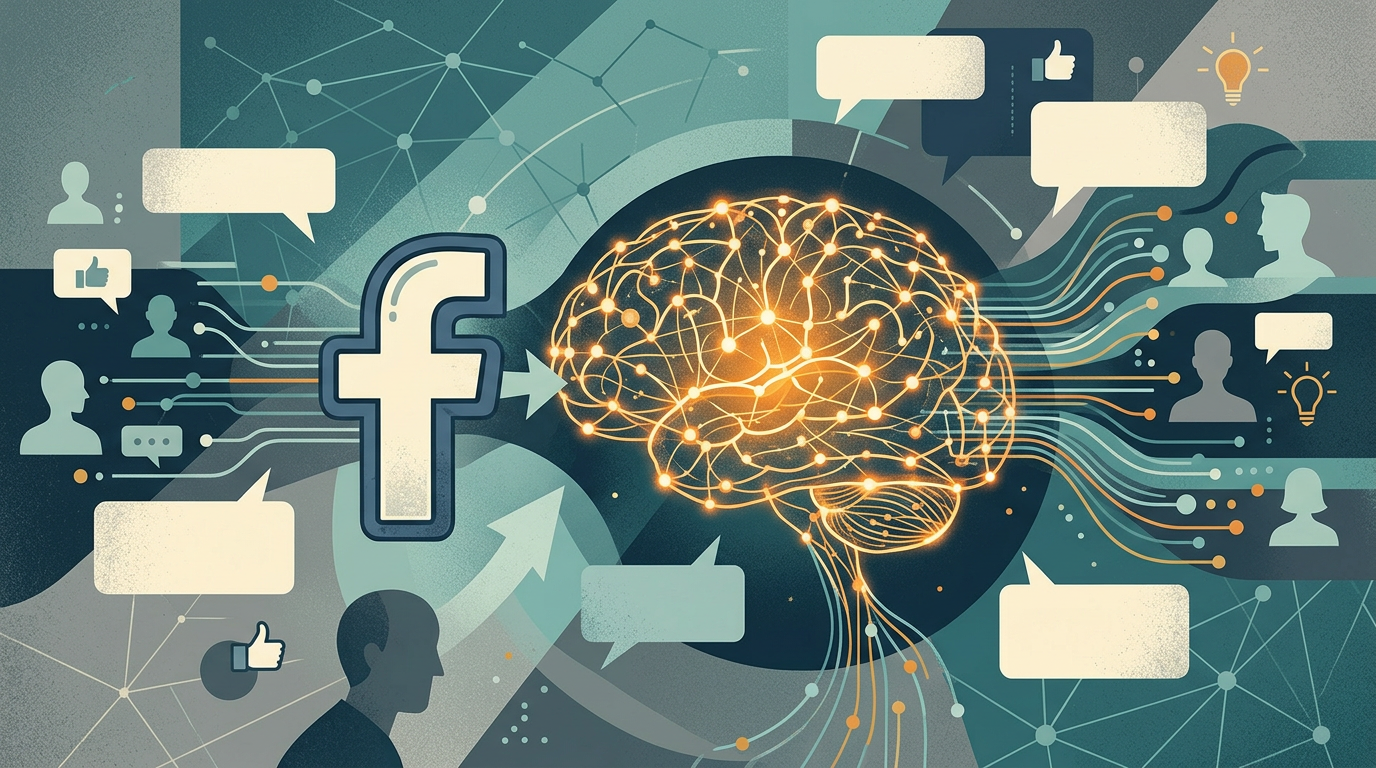
Meta launched AI Mode on Facebook, turning the search bar into a conversational tool that mines public Group posts, Reels, and Marketplace data to answer user questions — and the company is reportedly lining up two paid tiers at $7.99 and $19.99 a month.
Fox is acquiring Roku in a deal valued at around $25 billion, combining Fox's streaming subscription business with Roku's ad-tech platform to compete directly with Amazon and Netflix for streaming ad dollars. ---
DEEP DIVE ANALYSIS
**Facebook's AI Mode: Social Media Becomes the New Search Engine** Meta just made its most consequential product bet in years — and most people are treating it like a feature update. AI Mode on Facebook is not a chatbot bolted onto a search bar. It is a fundamental reorientation of what Facebook is for.
Let's break down what's actually happening, what it means for the business, and why every executive in media, advertising, and tech should be paying close attention. --- **Technical Deep Dive** At its core, Facebook's AI Mode is powered by Meta's Muse Spark model — and its key differentiator is its data source. Rather than crawling the open web, it synthesizes answers from public Facebook Groups, Reels, Marketplace listings, and content across Meta's family of apps.
That is a genuinely distinct information layer. Facebook Groups alone contain billions of hyperlocal, experience-based conversations that no search engine indexes well. A question like "what's the best mechanic in Austin under $100?
" is answered far better by a Group thread than a Google result. The retrieval mechanism here works because Meta has always owned this data — it just never surfaced it efficiently. AI Mode is essentially a semantic layer on top of a decade of user-generated content, and that is a meaningful technical moat.
The challenge, however, is the same one that plagued Google's AI Mode at launch: accuracy. Crowd-sourced posts are unvetted, often outdated, sometimes deliberately misleading. Sponsored listings will inevitably creep into responses.
Unlike Google's web crawl, which has some PageRank-style quality signal, Facebook's corpus is much messier. Meta will need robust grounding and citation mechanisms to avoid responses that confidently surface misinformation from a three-year-old post. --- **Financial Analysis** Meta's financial play here is multi-layered and frankly quite elegant.
First, there's the subscription angle — the company is reportedly testing paid tiers at $7.99 and $19.99 per month, pricing them deliberately below ChatGPT Plus and Gemini Advanced.
Meta has distribution that OpenAI can only dream about: over three billion monthly active users. Even modest conversion rates on a base that large generate meaningful recurring revenue. But the bigger prize is advertising.
Every conversational query is a signal — an intent signal far richer than a passive scroll. If Meta can monetize AI Mode the way Google monetizes search, by inserting sponsored answers into conversational results, the revenue potential is enormous. Google built a trillion-dollar business on ten blue links.
Meta is attempting to replicate that model inside a walled garden it already controls. There's also a defensive angle. ChatGPT has been eating into the time users would previously have spent Googling — or scrolling Facebook.
By building AI-native discovery directly into its platform, Meta is fighting to keep users inside its ecosystem rather than bouncing to external AI tools. Every minute a user spends in Facebook's AI Mode is a minute they're not in ChatGPT, Perplexity, or Google. --- **Market Disruption** This is where things get genuinely consequential for the broader industry.
Facebook AI Mode is Meta running the Google Search playbook with one critical advantage: it doesn't need to crawl the web because it already owns the content. For publishers and media companies, this accelerates an already brutal trend. Google's AI Overviews reduced click-through to publisher sites.
Facebook AI Mode doesn't even pretend to send traffic — answers are synthesized from user posts, not linked articles. The referral traffic that social media once provided is already collapsing; this makes the collapse structural rather than cyclical. For Google, this is the second serious threat to its search dominance in 12 months.
ChatGPT crossed a billion monthly app users, and now Meta is deploying conversational search to three billion people who already have Facebook installed. Google's moat has always been distribution — it's the default. Meta is the default for three billion people too, and now it's a search engine.
For local businesses, the implications are mixed. Being surfaced in AI Mode answers could replace the need for a Google Business Profile. But unlike Google, there's no clear path to optimize for it yet, and no transparency into how responses are ranked or when sponsored content appears.
--- **Cultural and Social Impact** There's a more unsettling dimension here that deserves serious attention. Facebook's AI Mode is mining public posts to answer questions — and most users who wrote those posts had no idea they were contributing to a training and retrieval corpus for a commercial AI product. This is a consent question that the industry has largely avoided confronting directly.
When someone posted in a neighborhood Facebook Group about their plumber, they were talking to their neighbors. They were not submitting a data point to a commercial AI inference engine. The fact that the posts were technically "public" does not resolve the ethical question of whether that use was reasonably anticipated.
There's also a misinformation amplification risk that is qualitatively different from traditional social media. When Facebook's algorithm amplified misleading content, users could at least see the source and judge it. When an AI Mode response synthesizes that content into a confident, fluent answer, the source is obscured.
The misinformation becomes harder to identify and harder to challenge. On the user behavior side, the shift from browsing to querying is real and accelerating. People increasingly want an answer, not a list of links.
Meta is correctly reading that shift. But the question of whose answer — grounded in what data, curated by what values, monetized in what ways — is one that regulators in Brussels and Washington are going to have strong opinions about. --- **Executive Action Plan** Three moves for leaders watching this play out: First, if you are in media or publishing, stop treating social referral traffic as recoverable.
It is not. The strategic question is no longer how to get Facebook to send you clicks — it's how to build direct audience relationships that don't depend on platform intermediaries at all. Email lists, podcast subscriptions, owned communities.
The algorithmic middleman is becoming an AI middleman, and the economic relationship is the same: the platform captures the value. Second, if you are running a local or regional business, get ahead of conversational search optimization now. The playbook doesn't exist yet — which means early movers will define it.
Encourage customers to post reviews and recommendations in public Facebook Groups. Make sure your business information is current, consistent, and appears in the contexts where AI Mode is likely to retrieve it. This is the 2026 equivalent of claiming your Google My Business listing in 2012.
Third, if you are a CMO or growth executive, treat Meta's paid AI tiers as a test case for a new advertising primitive. The first brands that figure out how to appear usefully — not intrusively — in conversational AI responses will have a significant first-mover advantage. Start experimenting now with how your brand shows up in AI-generated answers, not just in paid placements.
The brands that win the next decade of digital advertising will be the ones that learned to speak AI's language before the ad products were even formally launched.
Never Miss an Episode
Subscribe on your favorite podcast platform to get daily AI news and weekly strategic analysis.