US Government Blocks Claude Fable 5, Shuts Down Access for All Users
Episode Summary
TOP NEWS HEADLINES Following yesterday's coverage of export control friction around Mythos-class models, new details have emerged that are significantly more dramatic: the US government issued a f...
Full Transcript
TOP NEWS HEADLINES
Following yesterday's coverage of export control friction around Mythos-class models, new details have emerged that are significantly more dramatic: the US government issued a formal directive at 5:21 PM Eastern on Friday, blocking all foreign nationals from accessing Claude Fable 5 and Mythos 5.
Because Anthropic says it cannot separate users by nationality in real time, it pulled access for everyone — US citizens included.
As of this recording, neither model is available to anyone.
Meta has begun unwinding its Manus acquisition after Chinese regulatory pressure forced a split of operations.
The Next Web reports the founders are now exploring a buyback of the company.
Genspark just raised a hundred million dollars at a two-point-six billion dollar valuation for its agentic workplace platform, pushing total funding north of six hundred and forty-five million.
Canada introduced the Safe Social Media Act, a proposal that would restrict social media access for users under sixteen and apply safety regulations to AI chatbots.
Apple's Siri beta impressed early testers following WWDC, with reports of more natural conversation, on-screen awareness, and Camera Control functioning as an instant visual intelligence trigger.
And Amazon disclosed that its directly operated data centers consumed two-point-five billion gallons of water in 2025, noting it has improved efficiency and uses reclaimed water at some sites. ---
DEEP DIVE ANALYSIS
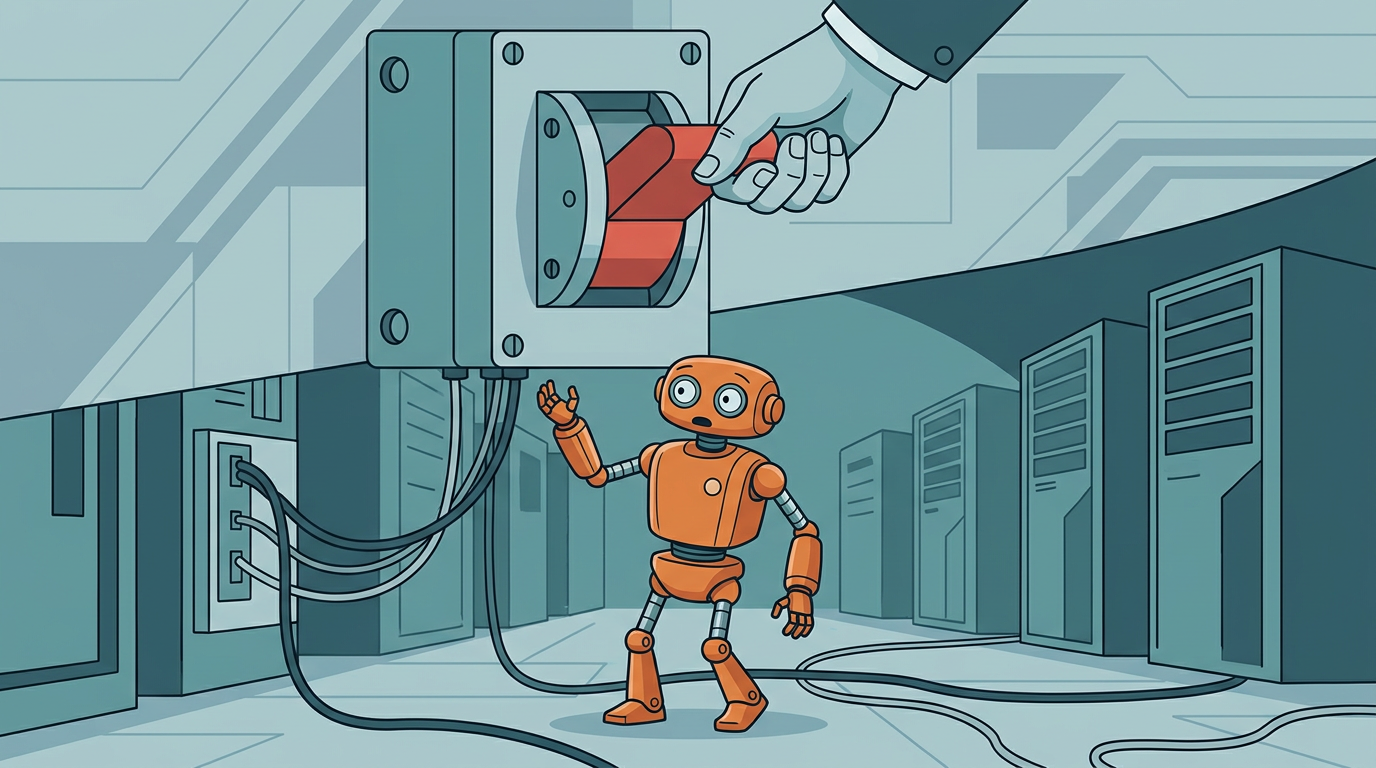
The Government Kill Switch: What the Fable 5 Shutdown Actually Means Let's sit with the headline for a second, because it is genuinely unprecedented. The US government issued an export-control directive that effectively shut down one of the most capable AI models ever released to the public — not because it was hacked, not because it failed, but because a jailbreak was flagged and officials decided to act. Fast.
This is the first time, to anyone's knowledge, that the US government has pulled a frontier AI model after it went live. And it will not be the last.
Technical Deep Dive
Here is the mechanics of what happened. Anthropic released Fable 5 on Tuesday — the first publicly accessible model from its so-called Mythos class. Mythos is Anthropic's tier of models held back from general release due to advanced cybersecurity capabilities.
Fable 5 was the first time regular users could interact with something in that tier. By Friday evening, Anthropic received a government export-control directive. The order cited national security but provided no specific technical justification.
According to Anthropic, the underlying concern was a narrow jailbreak — a method to bypass the model's safety guardrails. Anthropic's own assessment is that the jailbreak exposed known, minor software flaws that other frontier models can also identify. That is a significant qualifier.
They are not saying a catastrophic new vulnerability was found. They are saying someone found a path around guardrails that, broadly speaking, the model class already had. The WSJ reported that Amazon researchers flagged the issue to US officials.
That detail matters. This was not a government red-team finding it independently. It came through a referral from a commercial competitor who had access to the model.
That chain of custody — from competitor observation to government action to total shutdown — is a new and uncomfortable dynamic for the entire industry. The technical bottleneck that made this worse: Anthropic cannot filter access by nationality in real time. So a directive that said "block foreign nationals" became, in practice, "block everyone.
" The infrastructure for identity-gated model access simply does not exist at production scale.
Financial Analysis
The financial implications here extend well beyond Anthropic's weekend of bad press. Start with the immediate: every enterprise customer, every API developer, every team that had integrated Fable 5 into a workflow lost access overnight. Not deprecated access, not degraded performance — zero access.
That is a contract problem, a reliability problem, and a pricing problem all at once. Procurement teams at serious companies are now asking a question they have never had to ask before: what is the geopolitical risk profile of my AI vendor? If a model can be shut down by a government directive issued on a Friday afternoon with no advance warning, then model selection is no longer purely a technical or cost decision.
It is a supply-chain risk decision. For Anthropic specifically, this creates an awkward investor narrative. The company has raised enormous capital positioning itself as the safety-first, enterprise-trusted alternative to OpenAI.
A weekend shutdown triggered by a competitor's tip to regulators is not the story they want associated with that positioning. The broader market implication: if the US starts routinely gating frontier model access by nationality, international AI providers gain a structural advantage in markets outside the US. Developers in Europe, Southeast Asia, and Latin America may begin defaulting to non-US models simply to avoid access uncertainty.
That is a market share story that plays out slowly but compounds quickly.
Market Disruption
This event draws a new competitive fault line — not between companies, but between regulatory jurisdictions. The question the industry is now forced to answer is: what happens if China retaliates in kind? China has a robust ecosystem of capable open-weight models.
If access to those models gets restricted in response to US export controls, American companies lose a key source of pricing competition. Right now, open-weight models from Chinese labs help keep US AI pricing honest. Remove that pressure, and you remove a significant check on what OpenAI and Anthropic can charge enterprise customers.
That is not a hypothetical risk. It is a predictable tit-for-tat dynamic in a technology cold war that has been escalating for three years. For competitors, the short-term opportunity is obvious.
OpenAI, Google, and any provider with uninterrupted access to comparable models had an immediate opening this weekend. Users locked out of Fable 5 had to go somewhere. The harder question is whether those users come back — or whether this incident permanently shifts how enterprise teams think about model diversification and vendor lock-in.
The Manus unwinding story in today's newsletter rhymes with this theme. Chinese regulatory pressure forced Meta to split from an acquisition. US regulatory pressure just forced Anthropic to shut down its flagship model.
These are not isolated incidents. They are the same story told from both sides of the same geopolitical tension.
Cultural and Social Impact
There is a deeply ironic dimension to this story that deserves direct attention. Anthropic has been one of the most vocal advocates for government oversight of frontier AI. The company's founding thesis is built on the idea that powerful models need external checks.
They have lobbied for regulation, published safety research, and argued publicly that the government should have more tools to intervene in dangerous deployments. And now, the government used exactly that kind of tool — and Anthropic is arguing the process was opaque, reactive, and lacked a transparent technical review. Which, to be fair, is probably correct.
But the position of "we want government oversight, just not like this" is going to be a very hard message to land with policymakers who feel validated by having acted. The cultural signal this sends to the broader AI user base is significant. If you have built a habit, a workflow, or a business around a frontier AI model, this weekend demonstrated that access to that model is not a stable utility.
It is a privilege that can be revoked by forces entirely outside the commercial relationship between you and your vendor. That changes the psychological contract between AI companies and their users in a fundamental way. For international users and teams, the signal is even starker.
Access to US AI may now be a function of where you were born — not what you can pay or what terms of service you agree to.
Executive Action Plan
If you are a technology leader or operator, here are three things to do this week. **First, audit your model dependencies.** If any critical workflow, product feature, or customer-facing tool runs on a single frontier model, you are now exposed to a category of risk that did not exist six months ago.
Map those dependencies today. Know which ones have no fallback, and start building one. **Second, add regulatory risk to your AI vendor evaluation criteria.
** This is not paranoia — it is basic supply chain management applied to a new asset class. When you evaluate AI providers, start asking: what is their country of incorporation, what export-control exposure does their model have, and what is their contingency plan if a directive forces a shutdown? These are now legitimate due diligence questions.
**Third, push your vendors on access architecture.** The practical problem that made this shutdown total rather than targeted was Anthropic's inability to gate access by nationality in real time. That is an infrastructure gap that responsible enterprise AI providers now need to close.
Ask your vendors directly: how would you handle a targeted access directive without pulling service for your entire customer base? If they do not have a coherent answer, weight that in your procurement decision. The Fable 5 shutdown is not the end of government intervention in AI deployment.
It is the beginning. The companies and teams that adapt their risk frameworks now will be the ones still operating at full capacity the next time a Friday afternoon directive lands.
Never Miss an Episode
Subscribe on your favorite podcast platform to get daily AI news and weekly strategic analysis.