Chan Zuckerberg's Free Protein Database Reshapes Drug Discovery Economics
Episode Summary
TOP NEWS HEADLINES Microsoft's Copilot super app is about to get real - leaked screenshots show a unified shell with a GitHub Copilot coding tab, a Cowork collaboration tab, and Scout, an always-o...
Full Transcript
TOP NEWS HEADLINES
Microsoft's Copilot super app is about to get real — leaked screenshots show a unified shell with a GitHub Copilot coding tab, a Cowork collaboration tab, and Scout, an always-on AI agent, all rolling into one interface ahead of Build 2026 this week.
Fewer than four-and-a-half percent of Microsoft's 450 million 365 customers currently pay for any Copilot feature, which tells you exactly why they're consolidating.
Nvidia is heading into Computex with its N1X laptop chip — 20 ARM cores, up to 128 gigabytes of RAM, and RTX 5070-class graphics.
Paired with Microsoft's push, this is the hardware stack that makes local AI agents on Windows actually viable.
MiniMax just dropped M3, an open-weights model hitting frontier-level performance on coding and agentic tasks, with a new attention architecture that scales to one million token context windows and can natively operate a desktop computer.
Google's AI-first search overhaul is driving users to the exits — DuckDuckGo saw US app installs jump 30 percent in the week after Google I/O, with iPhone installs spiking nearly 70 percent in a single day.
Ex-DeepMind researchers came out of stealth with 50 million dollars for Inherent Labs, building what they call the Faraday platform — an AI system designed not just to answer scientific questions, but to identify which questions are actually worth asking.
And Nvidia's RTX Spark superchip is promising one petaflop of AI performance in a laptop with all-day battery life — the kind of number that, two years ago, required a server rack. ---
DEEP DIVE ANALYSIS
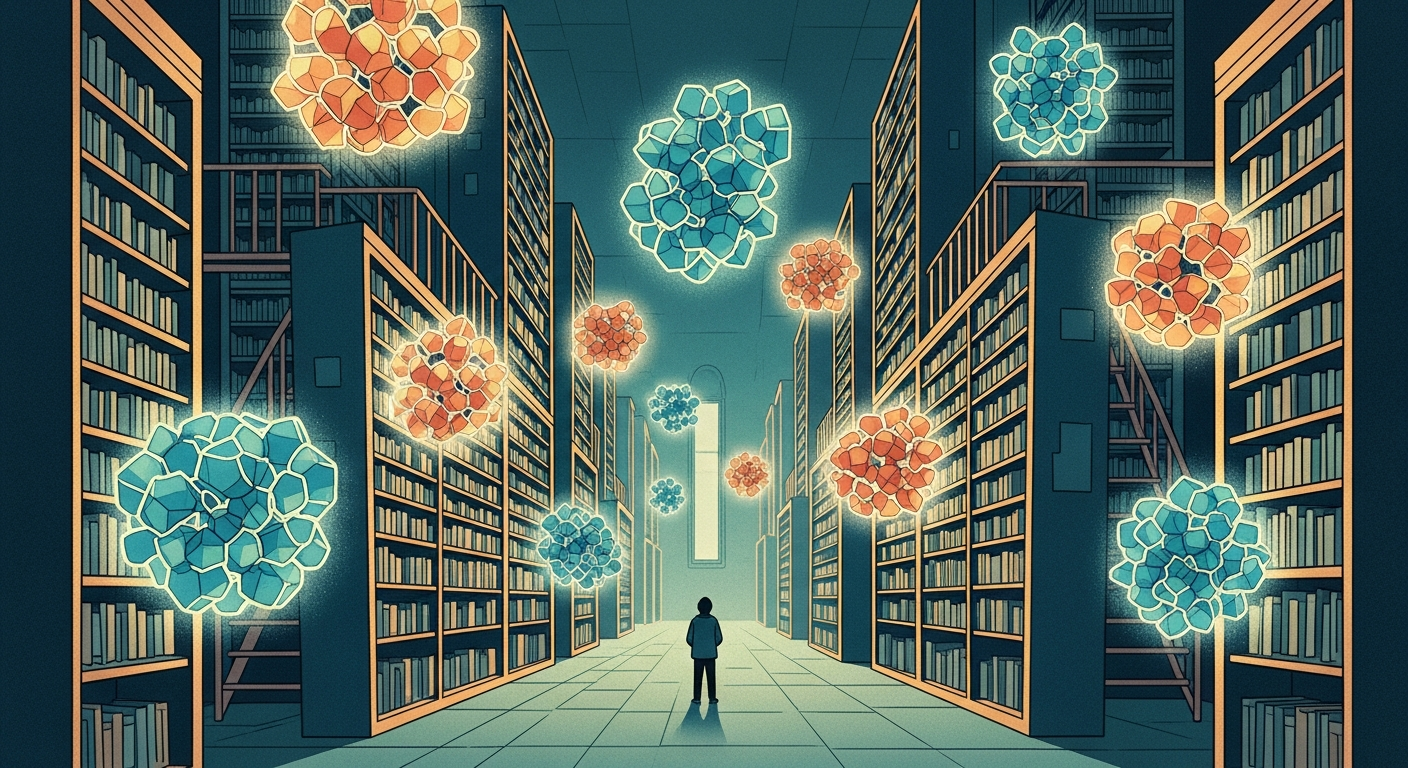
ESM Atlas: When the Nobel Prize Goes Open Source The biggest story today isn't a model launch or a funding round. It's a database — and what it signals about who actually controls the future of AI-powered biology. Chan Zuckerberg Biohub just released ESM Atlas: 1.
1 billion predicted protein structures, fully open-source, zero commercial restrictions. The underlying model is ESMFold2, and it was trained on billions of metagenomic sequences that AlphaFold never touched. Lab-validated designs from the system have hit cancer and immune targets at high rates.
Nature published the research the same day. Let's put the scale in context: DeepMind's AlphaFold database, the one that won the Nobel Prize in Chemistry, contains roughly 200 million protein structures. ESM Atlas is five times larger.
And it's free. **Technical Deep Dive** ESMFold2's core advantage is its training data. AlphaFold was largely trained on known, catalogued protein sequences — the sequences science has been collecting and organizing for decades.
ESMFold2 went deeper into metagenomic data: genetic material sampled directly from environments like soil, ocean water, and the human gut, without ever isolating individual organisms. This is the dark matter of biology. Most of these sequences have never been studied in a lab.
They represent an enormous, largely uncharted space of protein shapes and functions that evolution has been experimenting with for billions of years. The new attention architecture in ESMFold2 also enables more efficient context scaling, meaning the model can handle longer sequence inputs without the computational cost ballooning. That matters enormously when you're working with complex, multi-domain proteins that don't fit neatly into shorter windows.
The result is a system that can predict structures for proteins science has never formally seen before — and do it at a scale and speed that individual research teams couldn't replicate with wet-lab methods in ten lifetimes. **Financial Analysis** DeepMind's strategic bet with AlphaFold was elegant: publish the science, win the Nobel, then monetize the tooling through AlphaFold3's closed-source commercial tier. The weights for AlphaFold3 remain proprietary.
The business logic was that any serious pharma or biotech company needing cutting-edge protein prediction would eventually pay for access. ESM Atlas breaks that model in the same way Llama broke GPT-4's pricing power. When an open alternative is not just free but measurably larger, the question stops being "can we afford the closed tool?
" and starts being "why would we pay for it?" For drug discovery companies, this matters immediately. Protein structure prediction is a core step in target identification — figuring out which proteins are worth designing drugs against, and what shape a drug molecule needs to take to bind to them.
Access to 1.1 billion structures, including structures from metagenomic sequences, dramatically expands the target universe. Companies that have been licensing structure prediction tools now have a free, unrestricted alternative that covers more biological territory.
The competitive pressure on any company selling protein structure prediction as a service just increased significantly overnight. **Market Disruption** The competitive map here runs in multiple directions. First, there's the direct impact on computational biology platforms — companies like Schrödinger, Recursion Pharmaceuticals, and any biotech relying on proprietary structure data as a competitive advantage.
An open, larger dataset doesn't erase those advantages, but it raises the floor for what any well-resourced competitor can access for free. Second, and more importantly, this is the Llama moment for biology. When Meta open-sourced Llama, it didn't kill OpenAI — but it changed the leverage dynamic permanently.
Labs and companies that couldn't afford frontier model access suddenly could build on something nearly as capable. ESM Atlas does the same for structural biology. Academic labs, biotech startups, and researchers in lower-resource countries now have access to a dataset that, weeks ago, didn't exist publicly at this scale.
The third disruption is strategic. DeepMind's commercial moat was predicated on the assumption that the best protein structure data would remain proprietary. That assumption is now outdated.
The new moat isn't the data — it's who builds the best applications, workflows, and drug pipelines on top of the data first. **Cultural and Social Impact** There's a philosophical statement being made here, and it's worth naming directly. DeepMind won the Nobel Prize — the most prestigious validation science can offer — and then restricted the most powerful version of that work behind commercial gates.
That's a legitimate business decision, but it created a real tension: a scientific breakthrough, funded in significant part by the broader research community's decades of protein data contribution, becoming a proprietary asset. ESM Atlas is a direct rebuttal to that model. Zuckerberg's Biohub is effectively arguing that the most transformative biological AI tools should be public infrastructure — the same way the Human Genome Project's data was made public, enabling an entire generation of genomic medicine.
The social implication is significant. Drug discovery is expensive, and one major reason is that the tools required to do it at the frontier are expensive. Open datasets and open models lower the barrier for smaller institutions, academic researchers, and scientists in developing countries to participate in the earliest stages of drug discovery.
That doesn't guarantee cheaper drugs — the clinical trial process remains brutally expensive regardless — but it does mean the target identification and early-stage research that determines what drugs get developed at all becomes less gated by institutional wealth. **Executive Action Plan** If you're leading a life sciences company, a biotech startup, or a research organization working in drug discovery, here's where to focus: First, audit your current protein structure prediction stack immediately. If you're paying for proprietary access to structure prediction tools, you need to evaluate ESM Atlas as a replacement or supplement.
The dataset is larger, it's free, and it covers biological territory your current tools may not. This isn't a "wait and see" — your competitors are running this analysis right now. Second, invest in the application layer, not the data layer.
The data just became a commodity. The value now sits in who can build the best pipelines to turn that data into actionable drug targets, validated hits, and clinical candidates. If your competitive strategy relied on proprietary data access, you need to shift investment toward proprietary workflows, wetlab validation capabilities, and domain expertise that can extract signal from an open dataset faster than anyone else.
Third, reconsider your partnerships with closed-source biology AI platforms. Any vendor whose core value proposition is "we have better protein structure data than you can access elsewhere" just had their leverage significantly reduced. This is a negotiation moment — and if you're locked into long-term contracts, it's worth having a conversation about what you're actually paying for.
Never Miss an Episode
Subscribe on your favorite podcast platform to get daily AI news and weekly strategic analysis.