Robinhood Gives AI Agents Real Money to Trade Autonomously
Episode Summary
TOP NEWS HEADLINES Tesla's Optimus robot factory is officially under construction at Gigafactory Texas - the facility adds over 5. 2 million square feet of industrial space, with production target...
Full Transcript
TOP NEWS HEADLINES
Tesla's Optimus robot factory is officially under construction at Gigafactory Texas — the facility adds over 5.2 million square feet of industrial space, with production targeting July or August this year and high-volume output by Summer 2027, aiming for a staggering 27,000 robots per day.
The OpenAI Foundation just committed $250 million to help workers and economies navigate AI-driven disruption — funding will support job retraining, economic impact tracking, and long-term security exploration including tax shifts from labor to capital.
Cognition raised over a billion dollars at a $26 billion valuation for its Devin AI software engineer — the company reports more than ten times growth since January, with annualized revenue hitting $492 million, and clients like Mercedes-Benz cutting eight-month projects down to eight days.
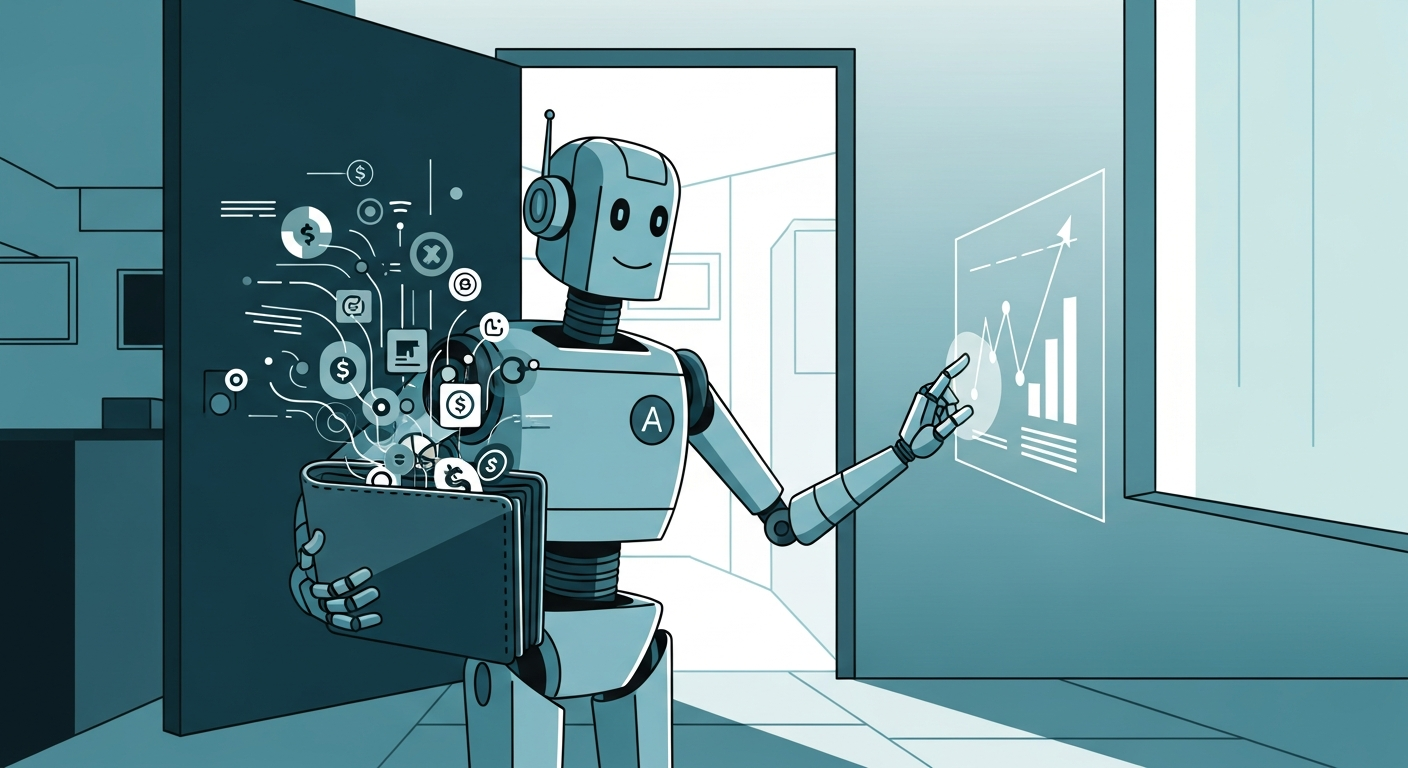
Robinhood is rolling out agentic trading in beta, letting users connect AI agents to a dedicated brokerage account with a set budget to autonomously execute stock trades — Gold Card users also get agentic virtual cards for AI-managed purchases.
Biohub, backed by Mark Zuckerberg and Priscilla Chan's CZI, released a world model of protein biology featuring ESMFold2, which claims state-of-the-art performance on structure prediction and is already showing hit rates of 36 to 88 percent against cancer and immune disease targets.
ElevenLabs launched Music v2, a generation model that can switch genres mid-track, handle fast rap delivery, embed sound effects, and maintain full compositional coherence — with pricing cut up to 50 percent on the API tier. --- DEEP DIVE ANALYSIS: Robinhood's Agentic Trading — When AI Gets a Wallet Let's dig into the story that carries the most downstream consequence for how we all interact with AI going forward.
Robinhood just handed AI agents the keys to a brokerage account.
This is the moment the agentic AI conversation stops being theoretical and starts being personal.
Technical Deep Dive
The mechanics here are worth understanding precisely. Robinhood's agentic trading system connects through MCP — the Model Context Protocol — which has rapidly become the standard plumbing for how AI assistants plug into external applications. Think of MCP as a universal adapter: it lets Claude, ChatGPT, or any compatible agent authenticate with and send instructions to a Robinhood account without requiring custom integrations on the developer side.
The architecture involves a dedicated account structure — not your main portfolio — paired with user-defined budget caps. Agents can analyze holdings, generate strategy recommendations, and execute trades within those limits. The agentic virtual card for Gold subscribers extends the same logic to purchases: the agent operates inside a pre-authorized spending envelope.
What makes this technically significant is the permission model. Robinhood is essentially introducing a financial trust hierarchy for AI — define what the agent can do autonomously, what it must flag for approval, and what it can never touch. That three-tier permission structure is something every enterprise deploying agents in any sensitive domain is going to need.
Robinhood is building it in public, in a highly regulated context, which means the design decisions they make here will likely become a reference architecture for the broader industry. Planned expansion into options, crypto, futures, and prediction markets signals this is foundational infrastructure, not a feature.
Financial Analysis
From a business perspective, Robinhood is making a calculated bet that agentic capabilities become a primary driver of platform stickiness and premium conversion. If your AI agent lives inside Robinhood, you have a powerful reason not to move your assets elsewhere. This is the financial services equivalent of what Microsoft did by embedding Copilot into Office — make the AI native to the workflow, and the workflow becomes sticky.
The revenue implications branch in two directions. First, increased trading volume driven by agent activity translates directly to payment-for-order-flow revenue and options commissions. Agents executing systematic strategies will almost certainly trade more frequently than passive human investors.
Second, the agentic virtual card creates a new layer of interchange revenue and positions Robinhood to compete more aggressively with fintech platforms like Cash App and even traditional banks. The risk surface is equally significant. A single high-profile agentic trading loss — or worse, a coordinated exploit — could trigger regulatory scrutiny that reshapes the entire product category.
FINRA and the SEC have not yet issued clear guidance on AI-executed trades, and Robinhood is essentially writing the compliance playbook in real time. For competitors, the window to respond is narrow. Schwab, Fidelity, and Webull will be watching this beta extremely closely.
Market Disruption
Zoom out and the competitive picture is striking. Robinhood is not the first to experiment with AI in finance, but it may be the first consumer-facing brokerage to make agentic execution a mainstream product rather than an institutional offering. Algorithmic trading has existed for decades, but it required Bloomberg terminals, Python scripts, and dedicated quant teams.
Robinhood just democratized the concept for anyone with a phone. The disruption is not limited to traditional brokerages. This puts direct pressure on wealth management platforms, robo-advisors like Betterment and Wealthfront, and the emerging class of AI financial assistant apps.
If your agent can trade directly inside Robinhood, why pay a separate service to recommend trades it cannot execute? The integration advantage collapses the value chain. There is also a second-order effect on AI platform competition.
The more financial institutions build MCP integrations, the more valuable the underlying agent platforms — Claude, ChatGPT, and their successors — become. Anthropic and OpenAI are not just selling inference; they are becoming the operating layer for consequential real-world actions. Every new MCP integration is a node in that network.
Cultural and Social Impact
The cultural shift here is subtle but profound. For the past two years, AI has been a tool that helps you think, draft, summarize, and plan. Robinhood just crossed a line: AI now acts on your behalf with your money.
That is a fundamentally different relationship with an automated system. For younger investors who grew up on Robinhood's gamified interface, handing a budget to an AI agent may feel natural — almost like setting a Spotify playlist to autoplay. But the consequences of a bad trade are not skippable in the way a bad song recommendation is.
The normalization of AI financial delegation will accelerate across demographics, and with it will come the first wave of mainstream agentic failures that shape public trust for a generation. There is also a labor displacement narrative embedded here. If AI agents can manage portfolios, execute trades, and optimize spending, the question of what human financial advisors are for becomes considerably sharper.
The answer is not that advisors disappear — it is that the value proposition shifts entirely toward judgment, relationships, and scenario planning that agents cannot yet replicate. The middle layer — routine order execution and basic portfolio rebalancing — erodes quickly.
Executive Action Plan
If you are a business leader evaluating how agentic AI touches your operations, Robinhood's launch is a forcing function. Here are three specific moves to make now. First, write a permission brief for every agent you are considering deploying against sensitive systems.
The Neuron's prompt framework is genuinely useful here — define what the agent can do autonomously, what requires human approval, what it is never permitted to do, what spending or data limits apply, where logs must live, and what the rollback procedure looks like. Do this before you connect any agent to production systems, customer data, or financial accounts. The brief is not bureaucracy — it is the difference between a controlled pilot and an incident.
Second, audit your current vendor stack for MCP exposure. If you use platforms that have launched or are building MCP integrations — and that list is growing fast — understand what permissions those connections carry. An agent that can read your CRM can also write to it.
An agent that can query your database can potentially exfiltrate it. The attack surface is expanding faster than most security teams are tracking. Third, and most practically: pilot agentic tools now in low-stakes environments, because the learning curve is real and the competitive disadvantage of falling behind is compounding.
Start with internal workflows — meeting summaries, report generation, code review — and build your organization's intuition for where agents add value versus where human judgment remains non-negotiable. When the higher-stakes use cases arrive, and they are arriving quickly, you will want that institutional knowledge already in place.
Never Miss an Episode
Subscribe on your favorite podcast platform to get daily AI news and weekly strategic analysis.