Musk Loses Lawsuit as NextEra Bets Sixty-Seven Billion on AI Power
Episode Summary
TOP NEWS HEADLINES Elon Musk's blockbuster lawsuit against OpenAI, Sam Altman, and Microsoft has been dismissed - a nine-person jury rejected all claims in under two hours, finding Musk filed year...
Full Transcript
TOP NEWS HEADLINES
Elon Musk's blockbuster lawsuit against OpenAI, Sam Altman, and Microsoft has been dismissed — a nine-person jury rejected all claims in under two hours, finding Musk filed years past the statute of limitations.
He's vowing to appeal, calling it a "calendar technicality," but OpenAI's IPO path just got a lot cleaner.
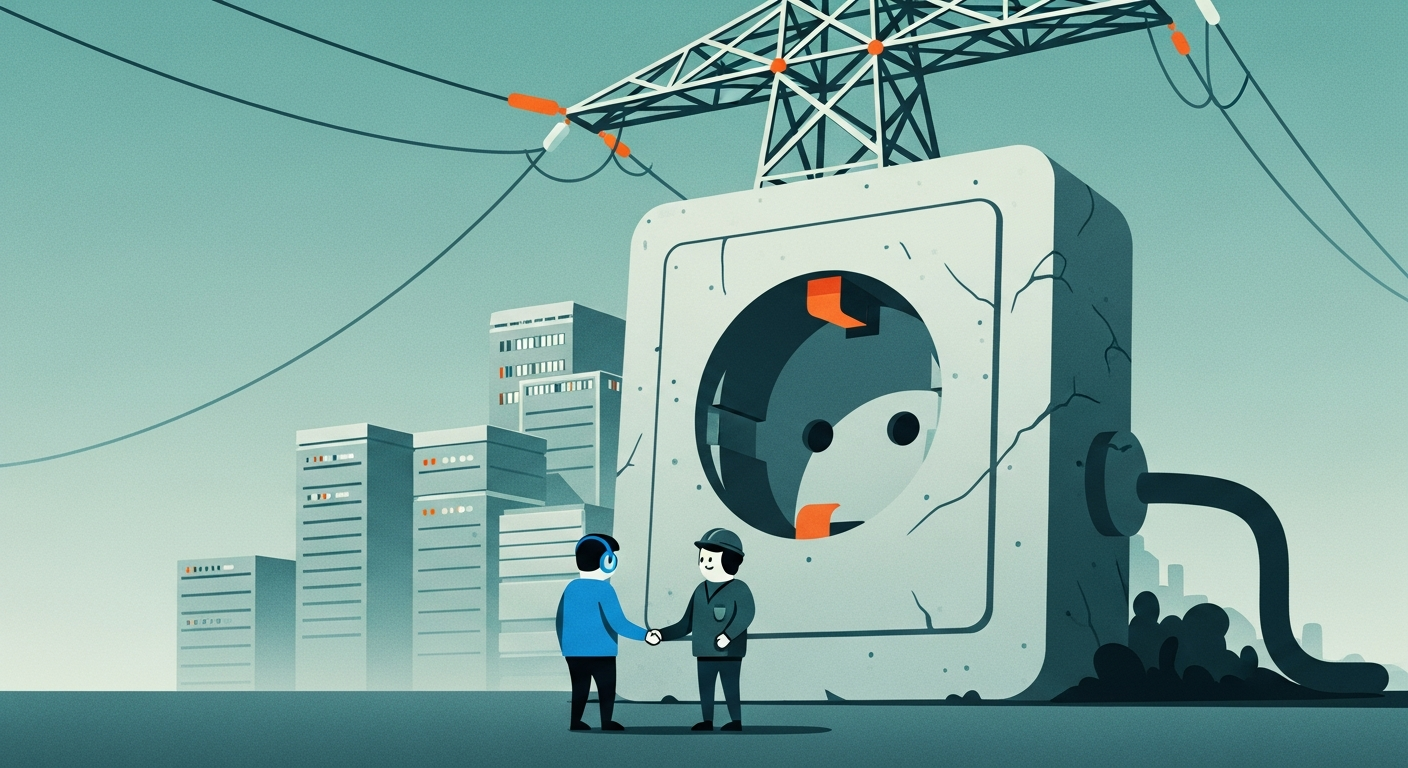
NextEra Energy is buying Dominion in a sixty-seven billion dollar deal — the largest utility merger in U.S. history — and it's essentially a bet that whoever controls the power socket closest to Northern Virginia's data center corridor controls the future of AI infrastructure.
Meta is reshuffling seven thousand employees into four new AI-native organizations with flatter management structures, while simultaneously laying off up to eight thousand more workers — Zuckerberg is going all-in on AI and trimming everything else.
Pope Leo the Fourteenth is publishing his first encyclical on AI and human dignity on May 25th, with Anthropic co-founder Christopher Olah seated on the lay panel — the Vatican just picked a side in the AI safety debate.
Anthropic acquired Stainless, the startup that built its official TypeScript and Python SDKs, doubling down on agent connectivity as the platform battleground heats up.
And Cursor dropped Composer 2.5, a near-frontier coding model built on Moonshot's Kimi K2.5 that matches Opus 4.7-class benchmark scores for under a dollar per task — compared to eleven dollars for the competition. ---
DEEP DIVE ANALYSIS
The Sixty-Seven Billion Dollar Power Play: Why the AI Race Just Became an Energy War Let's talk about the story that most people are sleeping on this week. While everyone was watching Elon Musk lose in court, NextEra Energy quietly announced the largest utility merger in American history — sixty-seven billion dollars to acquire Dominion Energy. On the surface, it's a power company buying another power company.
Underneath, it's the moment the AI infrastructure race officially became an energy war.
Technical Deep Dive
Here's what makes this deal technically significant. Dominion sits directly on top of Northern Virginia's Data Center Alley — the single densest concentration of compute infrastructure on the planet. That corridor holds fifty-one gigawatts of signed data center demand.
To put that in perspective, that's roughly the output of fifty nuclear plants. And Virginia's DOM zone load is projected to grow a hundred and twenty-one percent by 2045. NextEra isn't acquiring poles and wires — it's acquiring the most strategically positioned power infrastructure in the world relative to AI workloads.
NextEra brings a formidable stack: clean power generation, grid-scale storage, natural gas peakers, nuclear exposure, and regulated financing mechanisms. Dominion brings the geography and the queue. Together, they control the physical chokepoint between electricity generation and the GPUs running frontier models.
The technical reality that's driving this deal is stark. Global data center demand jumped seventeen percent in 2025 while overall electricity consumption grew just three percent. PJM wholesale prices — that's the grid operator covering the mid-Atlantic — just spiked seventy-six percent in a report that used the word "irreversible.
" Sixty Virginia data centers tripped offline last winter when they dumped fifteen hundred megawatts of surplus load in seconds. The grid, as currently configured, was not built for this.
Financial Analysis
Sixty-seven billion dollars is a number that demands serious unpacking. This is not a traditional utility acquisition driven by rate-base growth and regulated returns. This is NextEra making an explicit bet that AI capex — currently running around four hundred billion dollars annually across the hyperscalers — has a second invoice that hasn't been fully priced by the market.
That second invoice is the grid itself. PowerLines estimates that residential customers may absorb up to seven hundred billion dollars in AI-driven grid upgrade costs through their utility bills over the coming decades. "Large load tariffs" — utility-speak for mechanisms that shift transmission buildout costs onto hyperscalers — are quietly being structured into new interconnection agreements.
That means NextEra can monetize AI infrastructure demand on both ends: charging the hyperscalers for access and passing grid upgrade costs downstream. For investors, this signals something important. The market spent two years pricing the GPU layer — Nvidia's run is the obvious example.
It is now beginning to price the grid layer. Utilities with strategic positions adjacent to major data center corridors are going to look very different in a discounted cash flow model once analysts fully internalize the load growth projections. NextEra, already the largest renewable energy company in the world, just locked in the most valuable real estate in that emerging asset class.
Market Disruption
The competitive implications here extend well beyond the utility sector. This deal accelerates a dynamic that's been building quietly: the hyperscalers — Microsoft, Google, Amazon, Meta — are losing leverage over their own power supply. When one company controls both the generation assets and the interconnection queue for the geography where you've already committed tens of billions in data center capex, your negotiating position changes fundamentally.
Watch for Google, Microsoft, and Amazon to respond by accelerating their own direct power procurement strategies — long-term power purchase agreements, dedicated nuclear offtake deals, and potentially vertical integration into generation assets themselves. Microsoft's deal with Constellation to restart Three Mile Island was an early signal. This NextEra-Dominion merger is the confirmation that the playbook has gone mainstream.
There's also a geopolitical dimension. Northern Virginia is not just the center of commercial AI infrastructure — it's where significant U.S.
government and defense computing lives. The consolidation of power control over that corridor into a single corporate entity is going to draw regulatory scrutiny, and rightly so. Expect the FERC review of this merger to be one of the most consequential regulatory proceedings of the next two years.
Cultural and Social Impact
Here's the part of this story that doesn't show up in the deal memos. The seven hundred billion dollar residential cost estimate is not an abstraction — it's a monthly bill. Every household within Dominion's service territory is, in a meaningful sense, subsidizing the compute infrastructure that's being built to automate significant portions of the knowledge economy.
Public trust in AI is already fraying. Axios polling data out this week shows that sentiment is breaking down specifically around data centers, hiring impacts, surveillance, and electricity costs. The NextEra-Dominion merger drops a very large, very visible symbol into that debate.
It's one thing to feel vaguely uneasy about AI's societal impact. It's another to open your utility bill and see it. This is the dynamic that The Neuron newsletter captured well this week — the next AI race is about consent as much as capability.
Companies that treat public buy-in as guaranteed are going to run into resistance that no amount of lobbying can fully neutralize. The communities in Louisiana being reshaped by Meta's five-gigawatt facility, the Virginia suburbs watching their power bills climb — these are constituencies that have political voice.
Executive Action Plan
So what should leaders actually do with this information? Three things. First, if you're a CTO or infrastructure lead at any company running significant cloud workloads, you need a power risk assessment in your capacity planning today.
Not in two years — today. The assumption that compute capacity is infinitely elastic and that energy costs are a line item to be optimized later is no longer defensible. Model out your power dependency, understand which regions you're concentrated in, and start diversifying before the queue closes.
Second, if you're in a board or C-suite role, the NextEra-Dominion deal should prompt a direct conversation about your AI infrastructure strategy relative to geography. Northern Virginia is getting more expensive and more constrained. The emerging alternatives — Texas ERCOT territory, the upper Midwest, nuclear-adjacent sites in the Southeast — each carry different risk profiles, but they're increasingly worth the switching costs.
Third, and this is for the policy and government affairs teams: engage now on large load tariff structures in your operating jurisdictions. The rules being written in state utility commissions over the next eighteen months will determine how AI infrastructure costs get allocated for the next two decades. That's a regulatory window that closes quietly and has enormous long-term financial consequences.
The grid is no longer background infrastructure for AI. It is the constraint. The companies that internalize that first will have a structural advantage that compounds.
Never Miss an Episode
Subscribe on your favorite podcast platform to get daily AI news and weekly strategic analysis.