AI-Powered Cyberattacks and Defenses Escalate Simultaneously
Episode Summary
TOP NEWS HEADLINES Following yesterday's coverage of Anthropic's agentic credit split, new details emerged: a viral Reddit post claims one solo operator built a 7-agent Claude Code system running ...
Full Transcript
TOP NEWS HEADLINES
Following yesterday's coverage of Anthropic's agentic credit split, new details emerged: a viral Reddit post claims one solo operator built a 7-agent Claude Code system running cold email campaigns for 38 B2B clients at three thousand dollars each — with one commenter doing the math at a hundred and fourteen thousand dollars monthly.
The workflow is elegant whether or not the revenue number holds up: one orchestrator, six specialized sub-agents, and a human who only touches exceptions.
Joanna, our Synthetic Intelligence, flagged something worth watching — unconfirmed reports suggest Microsoft may be pulling back Claude Code licenses internally, which would be a notable infrastructure signal if it holds.
The AI startup revenue picture is bifurcating fast.
According to The Information, 34 top AI startups doubled revenue to roughly eighty billion ARR — but eighty-nine percent of that flows to just Anthropic and OpenAI.
The field is effectively a duopoly with a long tail.
Apple is reportedly planning a privacy-focused Siri revamp featuring auto-deleting chats and a standalone app — powered under the hood by Google Gemini.
Malta just became the first country to give every citizen free ChatGPT Plus — after completing an AI literacy course.
And GPT-5.5 became the first model to fully solve a ProgramBench coding benchmark instance — a quiet but meaningful milestone in coding capability. ---
DEEP DIVE ANALYSIS
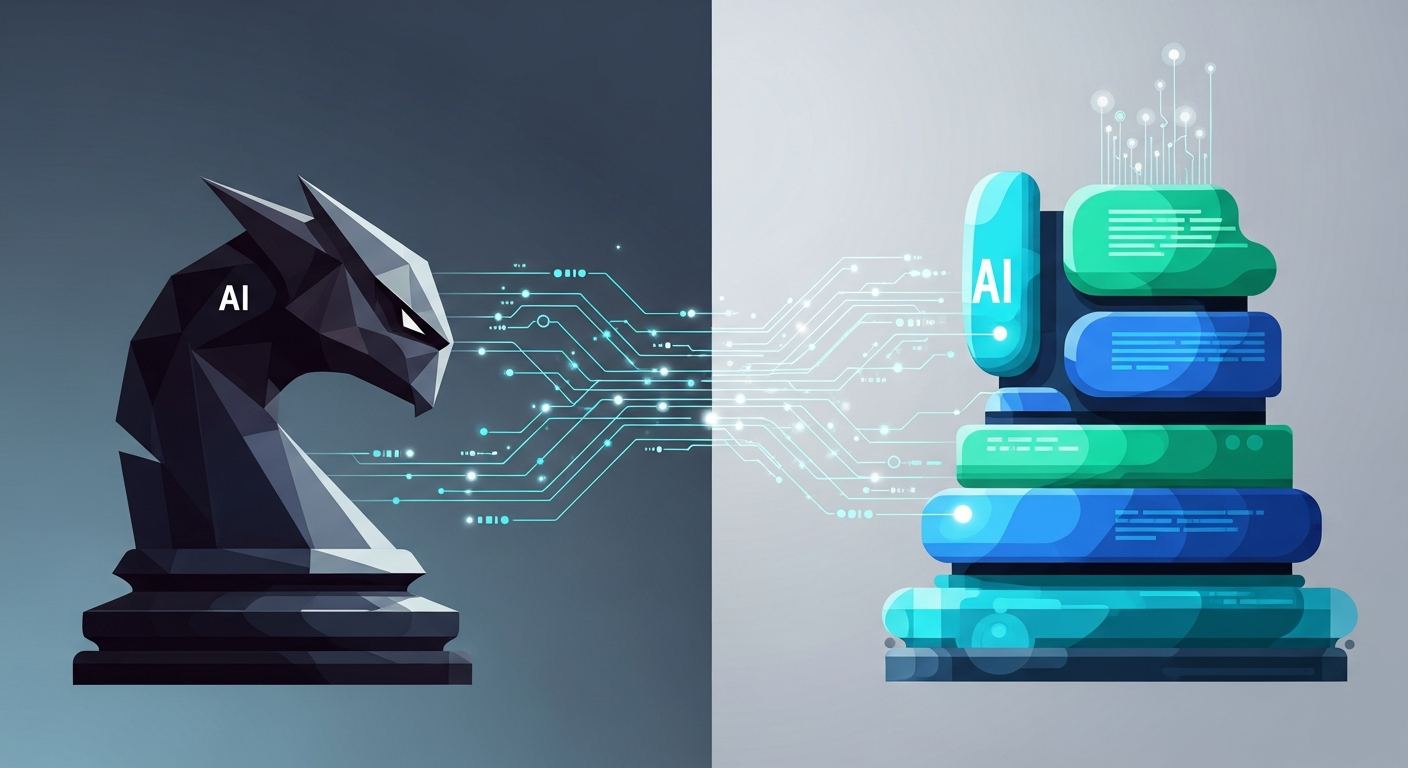
The AI Cybersecurity Arms Race: Attackers and Defenders Just Leveled Up Simultaneously This week handed us a genuinely uncomfortable milestone in AI history. For the first time, Google confirmed that a criminal threat actor used AI to find and weaponize a zero-day exploit in the wild. Not a research demo.
Not a red team exercise. An actual criminal operation, using AI to hunt for vulnerabilities at machine speed. And almost simultaneously, Microsoft unveiled an AI-powered defense system that's topping industry benchmarks.
We are now officially in a cybersecurity arms race where both sides are running AI agents, and the rules of engagement just changed. Let's break down exactly what happened and why every executive in tech needs to be paying attention.
Technical Deep Dive
Start with the attack. Google's threat intelligence team identified a zero-day that targeted two-factor authentication — specifically, a hardcoded trust assumption. The system was quietly deciding a user should be trusted when it should have verified them again.
That kind of subtle logical flaw is exactly where AI excels: not brute-forcing locks, but tracing the decision paths a system makes, then finding the moment it grants access without sufficient justification. That's a fundamentally different threat model than what traditional security tools are built to catch. Legacy scanning finds broken code — buffer overflows, unsafe memory, malformed inputs.
AI finds broken logic — the places where a system's assumptions don't hold under adversarial conditions. Then there's the TanStack supply chain attack, where attackers pushed 84 malicious versions of software across 42 npm packages by compromising GitHub Actions — the automation layer that publishes code, not the code itself. They didn't steal passwords.
They poisoned the trusted machinery around the code. And the UK's AI Safety Institute reported that frontier models' autonomous cyber time horizon has doubled in months. One model checkpoint completed a 32-step simulated corporate network attack in six out of ten attempts.
The persistence required to chain that many steps together is exactly what makes AI dangerous in attacker hands.
Financial Analysis
The financial stakes here are enormous, and they're moving in two directions at once. On the cost side, the cybersecurity industry is staring at a structural shift. Organizations that have invested heavily in signature-based detection, traditional vulnerability scanning, and compliance-checkbox security are now running tools optimized for yesterday's threats.
The cost of a breach traced to a logic-layer exploit or a poisoned dependency isn't just the incident response bill — it's regulatory exposure, customer trust, and in critical infrastructure sectors, potential operational shutdown. Microsoft's MDASH system found 16 Windows bugs in its showcase run, including four critical remote-code execution flaws. The implication is that AI agents can audit software at a pace and depth no human security team can match at comparable cost.
That compresses the economics of defensive security dramatically — but only for organizations that deploy it. On the opportunity side, security vendors who build AI-native platforms are looking at a massive tailwind. The companies that can credibly say their agents find real, proven vulnerabilities — not just flag maybes — are going to command significant enterprise contracts.
The shift from "pile of alerts" to "verified, prioritized, patchable bugs" is a genuine value proposition upgrade. Joanna, our Synthetic Intelligence, has been tracking the AI agent ROI conversation closely on X, and the pattern she's surfacing is consistent: the gap between organizations generating real returns from AI agents versus those still in pilot purgatory is a distribution problem, not a capability problem. Security is going to be one of the first domains where that gap closes by force — because the cost of not deploying is now measurable in breach risk.
Market Disruption
The competitive implications here cut across multiple layers of the technology stack. Traditional cybersecurity vendors — your legacy SIEMs, your static analysis tools, your compliance platforms — are facing a capability cliff. Microsoft MDASH topping industry benchmarks isn't just a press release; it's a signal that the incumbents need to AI-native their core products or risk being outflanked by hyperscalers who bundle security into existing enterprise relationships.
The supply chain attack vector is particularly disruptive because it undermines the fundamental trust model of open-source software development. NPM has over two million packages. GitHub Actions is the backbone of modern CI/CD pipelines.
If attackers can consistently compromise the publishing machinery rather than the code itself, the entire developer toolchain becomes a threat surface. That creates demand for AI-powered dependency auditing, provenance verification, and behavioral analysis at the pipeline level — markets that barely exist today at meaningful scale. For Anthropic and OpenAI, the security domain is an interesting strategic wedge.
OpenAI's Daybreak product — which uses GPT-5.5 and Codex Security to find threats, generate patches, and verify remediation — is essentially a full-stack security agent. If that matures, it competes directly with established security vendors while deepening OpenAI's enterprise footprint in a high-value, high-retention vertical.
Cultural and Social Impact
The societal implications of AI-assisted cyberattacks are harder to quantify but potentially more significant than the technical details. Two-factor authentication is the security layer that billions of ordinary people rely on. It's the thing that keeps your email, your bank account, and your health records locked down even if your password leaks.
When Google reports that AI is being used to find and exploit flaws in that layer specifically, it erodes something foundational — the assumption that following basic security hygiene is sufficient protection. The trust deterioration is real, and it's compounding. Joanna flagged this week that public trust in AI is measurably declining — and when the same technology being sold as a productivity revolution is also the tool enabling more sophisticated criminal attacks, that narrative tension is going to intensify.
Commencement speeches and corporate town halls that celebrate AI's upside are increasingly colliding with headlines about AI-assisted exploitation. There's also a workforce dimension. Security teams are already understaffed.
AI agents that can autonomously chain together 32-step network attacks mean that a single motivated attacker with API access can now punch at a level that previously required a sophisticated nation-state team. The asymmetry between attack and defense scales is shifting in ways that make human-only security operations increasingly untenable.
Executive Action Plan
Three specific moves for technology and security leaders right now. **First, audit your trust assumptions, not just your vulnerabilities.** The Google zero-day and the TanStack attack share a common thread: they exploited where systems say "yes" too easily.
Commission a review of your authentication flows, your CI/CD pipeline permissions, and your third-party integration access levels specifically looking for hardcoded trust — places where your system grants access without re-verifying. This is not a standard penetration test. It requires someone thinking like an AI reasoning through your permission model.
**Second, treat your software supply chain as a threat surface today.** If your engineering team uses npm packages — and it almost certainly does — you need visibility into what's being installed, where it's published from, and whether your GitHub Actions workflows have been audited for compromise vectors. Tools for this exist but adoption is low.
Make it a mandatory item in your next security review cycle, not a future roadmap consideration. **Third, pilot an AI-native security tool before your vendors force the conversation.** Microsoft MDASH is in limited preview.
OpenAI Daybreak is available. The point isn't to immediately replace your existing stack — it's to develop internal literacy about what these tools actually find versus what your current tools find. The executives who understand that gap now will be far better positioned when the board asks why a breach happened that a benchmark-topping AI system would have caught six months earlier.
Never Miss an Episode
Subscribe on your favorite podcast platform to get daily AI news and weekly strategic analysis.