OpenAI's Codex Goes Mobile, Reshaping Developer Workflows Permanently
Episode Summary
TOP NEWS HEADLINES OpenAI just went mobile with Codex - the AI coding agent is now available in preview inside the ChatGPT iOS and Android apps across all plans, letting developers monitor, steer,...
Full Transcript
TOP NEWS HEADLINES
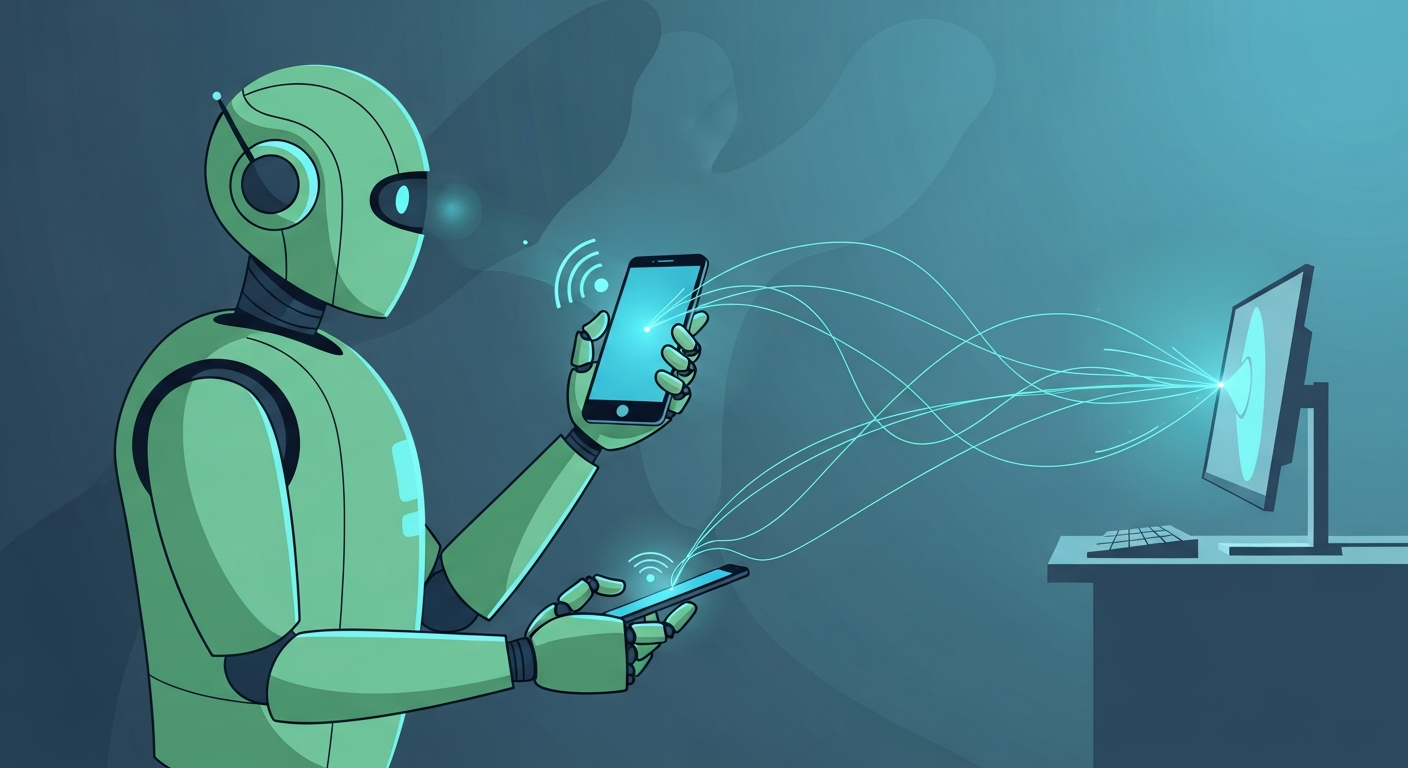
OpenAI just went mobile with Codex — the AI coding agent is now available in preview inside the ChatGPT iOS and Android apps across all plans, letting developers monitor, steer, and approve long-running coding tasks from their phones while the heavy lifting happens back at their desk.
The OpenAI-Apple relationship is officially on thin ice — Bloomberg reports OpenAI has enlisted an outside law firm to explore legal options, including a potential breach-of-contract notice, after the 2024 ChatGPT-Siri integration failed to deliver the subscriber growth OpenAI expected.
Apple is now reportedly planning to open Siri to Claude and Gemini in iOS 27. xAI is bleeding talent — TechCrunch reports that SpaceXAI has been losing top staff across coding, world models, and Grok voice since its merger, with rivals like Meta and Thinking Machines Lab scooping up departures.
Cerebras went public in a massive debut — the AI chipmaker's stock more than doubled from its opening price, marking the biggest IPO of the year so far and spotlighting OpenAI's complex financial stake in the company through a billion-dollar loan and warrants representing roughly ten percent ownership.
Anthropic just angered its most loyal users — starting June 15th, the company is splitting agent usage into a separate credit pool, giving Pro users just twenty dollars a month in agentic credits, triggering a wave of public subscription cancellations from power users.
A new Gallup poll finds seven in ten Americans oppose AI data centers in their local communities, with nearly half strongly opposed — making data centers less popular as neighbors than nuclear plants, as the compute land-grab collides with local politics. ---
DEEP DIVE ANALYSIS
The Codex Goes Mobile Story — And Why It's Bigger Than You Think Let's dig into the Codex mobile launch, because on the surface it looks like a feature update, but underneath it's a strategic chess move in the fastest-moving market in tech right now. **Technical Deep Dive** Here's what OpenAI actually shipped. Codex — their cloud-based coding agent that can run autonomously for hours — is now accessible through the ChatGPT iOS and Android apps.
But the key technical detail is *how* it works. The work doesn't run on your phone. It keeps running on your laptop, a devbox, or a remote environment.
Your phone becomes a control surface — you can review active threads, look at terminal output, code diffs, test results, approve or reject commands, and kick off new tasks. OpenAI built what they're calling a secure relay layer that syncs your phone with the running session without exposing your machine to the open internet. They also shipped Remote SSH support, hooks — which are programmable rules that trigger at specific moments in a task — programmatic access tokens for Business and Enterprise teams, and HIPAA-compliant local use for eligible Enterprise healthcare workspaces.
TechCrunch confirmed the rollout and noted that Codex has now crossed four million weekly active users. That's not a niche developer tool. That's infrastructure-scale adoption.
**Financial Analysis** The timing here matters enormously. OpenAI is fighting Anthropic for the coding tool market, and this launch is a direct answer to Anthropic's Remote Control feature — which launched in February — and their Dispatch feature in March. Here's the financial logic.
Coding agents burn tokens at a rate that breaks traditional subscription economics. The more capable Codex gets, the more usage it drives, and the more revenue flows to OpenAI's API business. Going mobile doesn't just add convenience — it removes the single biggest friction point in agent adoption, which is that users had to stay tethered to their machines.
Meanwhile, Anthropic just handed OpenAI a gift. By capping Pro users at twenty dollars a month in agentic credits and restricting third-party agent access, Anthropic is signaling that the current subscription model can't absorb unlimited agent usage. OpenAI is doing the opposite — raising Codex limits and expanding access.
That's a classic land-grab while a competitor retreats. The question is whether OpenAI can monetize the usage profitably before Anthropic figures out its own pricing architecture. **Market Disruption** Let's talk about who this threatens.
Cursor just shipped cloud agent development environments — multi-repo, parallelized, governance-controlled fleets of coding agents. That's a serious enterprise product. But Cursor doesn't have a mobile app with four million weekly users already attached to it.
OpenAI does. xAI launched Grok Build, their terminal-based coding agent now in early beta for SuperGrok Heavy subscribers. It supports subagents, hooks, MCP servers, and headless mode.
It's technically competitive. But again — no mobile surface, no existing mass consumer distribution. The platform advantage OpenAI has built through ChatGPT's consumer footprint is starting to matter in ways that pure developer tools can't easily replicate.
When you already have the app on a hundred million phones, adding Codex access is a distribution moat, not just a feature. What's also notable is what this signals about the *interface wars*. Google DeepMind's experimental Gemini-powered cursor — turning your mouse into an AI control surface — points in the same direction.
The battle is moving from chatbots to control layers. Who owns the surface between human intent and every object on screen, or every line of code in a repo? **Cultural and Social Impact** There's something worth pausing on here that The Neuron's team captured well this week.
Developers are always the canary in the coal mine for how normal people will use technology twelve to eighteen months later. The hooks and goals framework that developers are using today — rules that trigger automatically at the right moments, and goal definitions that tell an agent what *done* looks like — these are going to become everyday user features. Think about it: "Before sending this email, check whether I sound too harsh.
" "Before booking this flight, check my budget." "Plan the family trip, compare three options, and only ask me when it's time to book." The deeper cultural shift is about *continuity* — humans staying meaningfully in the loop without being chained to a screen.
The image that circulated this week of developers keeping laptops open in cafes to babysit running agents? That's over. Mobile control of persistent agents changes the relationship between knowledge workers and automation in a fundamental way.
And there's a geopolitical parallel here that shouldn't be ignored. The Trump-Xi summit in Beijing this week included discussions of an AI safety protocol — a framework for preventing powerful models from reaching non-state actors. That's governments trying to stay in the loop on AI's continuity too.
Different stakes, same underlying anxiety. **Executive Action Plan** Three things you should do with this information right now. First, if you're a technical leader and your team isn't already using Codex or a comparable agentic coding tool, you're falling behind on a productivity curve that your competitors are already climbing.
The four-million-user weekly figure isn't a vanity metric — it means workflows are being reshaped in real time, and the gap compounds. Second, if you're evaluating your AI tooling stack, pay close attention to the Anthropic credit split happening June 15th. If your team relies on third-party agentic tools built on Claude, that twenty-dollar monthly cap is going to create real friction.
Model your actual usage now and decide whether you need to migrate workflows, negotiate enterprise terms, or diversify your model provider mix before you hit the wall. Third, think about the mobile control layer as a product design principle, not just a developer tool feature. Whatever your business builds — internal tools, customer products, automation workflows — the expectation is shifting toward asynchronous, mobile-accessible agent management.
Users will expect to delegate a task, walk away, and check in from their phone. Build your AI product architecture with that assumption baked in, not bolted on later.
Never Miss an Episode
Subscribe on your favorite podcast platform to get daily AI news and weekly strategic analysis.