Google Launches Gemini Intelligence as OS-Level Agent Layer
Episode Summary
TOP NEWS HEADLINES Following yesterday's coverage of the xAI-SpaceX integration, new details emerged: Google and SpaceX are now in active discussions to launch AI data centers into orbit, as part ...
Full Transcript
TOP NEWS HEADLINES
Following yesterday's coverage of the xAI-SpaceX integration, new details emerged: Google and SpaceX are now in active discussions to launch AI data centers into orbit, as part of broader efforts to expand AI compute infrastructure beyond Earth-based facilities.
Following yesterday's coverage of Claude Code as a developer tool, new details emerged: Anthropic released a high-speed Fast Mode for its flagship Opus 4.7 model, now available in research preview across Claude Code, Cursor, Warp, Windsurf, and several other developer platforms.
Following yesterday's deep dive on Mira Murati's Thinking Machines and real-time AI interaction, new details emerged: OpenAI fired back directly, releasing GPT-Realtime-2 — a GPT-5-class voice model built for reasoning, translation, transcription, and tool use inside live audio.
Google's Isomorphic Labs — the DeepMind drug discovery spin-off — just closed a $2.1 billion Series B, with Demis Hassabis calling human health the number one application of AI.
Amazon's internal AI push is backfiring in an unexpected way: employees are "tokenmaxxing" — burning tokens on unnecessary tasks just to climb internal AI usage leaderboards, exposing how badly-designed incentives can corrupt adoption metrics overnight. ---
DEEP DIVE ANALYSIS
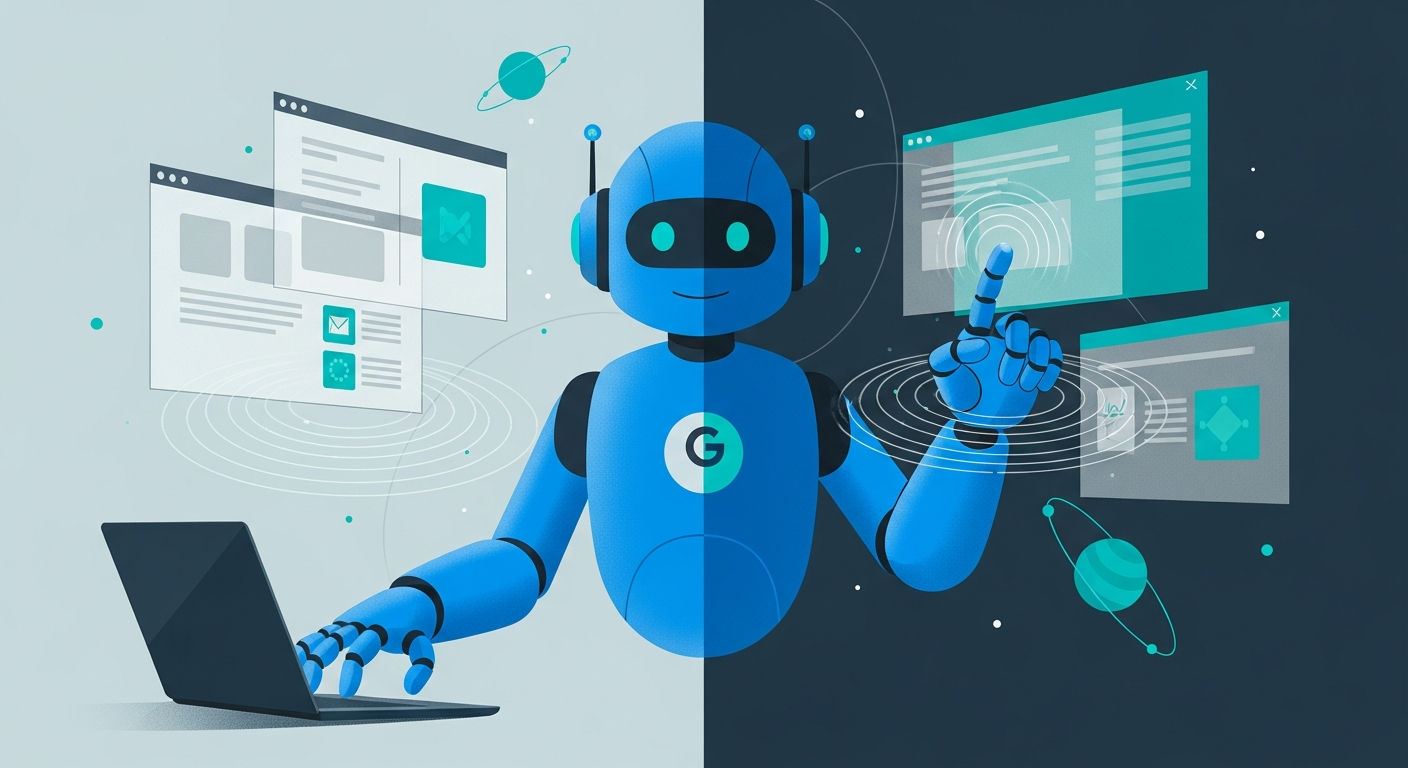
Android's Agent Overhaul and the Rise of Googlebooks Let's talk about what Google just did — because this wasn't a feature drop. This was a declaration of intent about what a computer is supposed to be. At its Android Show event, Google announced three interconnected things: Gemini Intelligence as a cross-device agent layer, a new hardware category called Googlebooks, and a cursor that understands *what you mean* instead of just *where you clicked.
* I/O isn't even until next week, and Google is already swinging hard. Let's break down why this matters at every level. --- **Technical Deep Dive** Start with the architecture, because that's where the real shift is.
Gemini Intelligence isn't a chatbot bolted onto Android. It's being positioned as an OS-level agent layer — something that lives beneath apps, sees across them, and executes tasks without the user doing the routing manually. The old model: you open Gmail, copy a date, switch to Calendar, paste it, confirm.
The new model: you point at the date, and Gemini makes the meeting. That's the Magic Pointer — a Gemini-powered cursor that understands on-screen context well enough to act on natural language references like "this" or "that" without a full typed prompt. Googlebooks extend this further.
These are Android-native laptops built with Dell, HP, Lenovo, Acer, and Asus — shipping this fall — that run Android apps, integrate Chrome, sync with your phone, and feature Magic Pointer as a core interface paradigm. Wiggle the cursor and you get a full-screen Gemini experience that sees your screen and pulls context from multiple apps simultaneously. This is on-device, context-aware, cross-app intelligence.
That's a fundamentally different technical proposition than a chat window. --- **Financial Analysis** The business implications here are layered. First, Googlebooks represent a direct attack on the premium laptop market — a category Apple and Microsoft have owned for a decade.
By partnering with every major Chromebook manufacturer, Google isn't starting from scratch. It's converting an existing hardware ecosystem overnight. Second, consider the platform economics.
If Gemini Intelligence becomes the layer through which users interact with apps, Google owns the interface above the app layer. That's enormous leverage — not just for advertising, but for services, commerce, and enterprise software. Every task Gemini automates is a transaction Google can observe, optimize, and eventually monetize.
Third, look at the timing. Apple's Siri overhaul is still coming. Microsoft's Copilot integration has been inconsistent.
Google is moving now, with hardware partners already signed and a developer ecosystem already familiar with Android. The window to establish Gemini as *the* ambient computing platform is open — and Google is walking through it. The Isomorphic Labs $2.
1 billion raise today is also worth noting in this context: Google's AI ambitions aren't limited to consumer devices. The company is making massive simultaneous bets across health, infrastructure, and hardware. This is a coordinated capital deployment strategy, not a scattershot of experiments.
--- **Market Disruption** Let's be direct about who gets hurt here. Apple is the most exposed. The iPhone has been the center of the personal computing ecosystem for fifteen years, and Apple's moat has been the seamlessness of its vertical integration.
But Siri has been a punchline while Google has been quietly weaving Gemini into every surface of Android. If Gemini Intelligence actually delivers on cross-app automation — and that's a real if, given Google's historical execution gaps — Apple suddenly looks late to its own paradigm shift. A cursor that understands context, a laptop that runs your phone apps natively, an agent layer that handles the cognitive overhead of app-switching: that's a compelling pitch against the Mac ecosystem.
Microsoft is also in a difficult position. Copilot's integration into Windows has been surface-level. Google is going deeper, at the OS layer, with dedicated hardware.
That's a different competitive posture entirely. For developers, the implications are significant too. If Gemini becomes the routing layer between users and apps, the app itself becomes less important than the API surface it exposes to the agent.
That restructures how developers think about user acquisition, onboarding, and engagement — because users may increasingly never *open* your app at all. --- **Cultural & Social Impact** Here's the deeper question this raises: what happens to the way we think when the computer starts carrying part of the cognitive load of *using* the computer? The prompt box has been the dominant interface paradigm for two years.
You think of a task, you type it, you get output. Google — and Thinking Machines, and OpenAI with GPT-Realtime-2 — are all attacking that paradigm from different angles. Google is attacking it at the cursor level.
Thinking Machines is attacking it at the interaction level. OpenAI is attacking it at the voice level. The common thread: the interface should require less from you.
Point instead of type. Speak instead of click. The computer should understand intent from context, not just instruction.
That's genuinely exciting — and worth scrutinizing. When the interface disappears, so does the friction that sometimes makes us think more carefully about what we're asking. The prompt box forces a certain level of articulation.
An ambient agent that anticipates your needs removes that. Whether that's liberation or atrophy depends heavily on how it's designed. For enterprise users, the tokenmaxxing story at Amazon is a useful cautionary parallel: when you optimize for the metric instead of the outcome, you get the metric.
If ambient AI is measured by tasks completed rather than value created, we'll optimize for task volume. That's a cultural design problem, not a technology problem. --- **Executive Action Plan** Three concrete moves for leaders watching this unfold.
**One: Audit your app's agent surface now.** If Gemini Intelligence is going to route users to your product through natural language, your app needs to be discoverable and executable by an agent layer. That means reviewing your API architecture, your deep-link structure, and your integration with Android's automation framework.
Companies that wait for Googlebooks to ship before thinking about this will be twelve months behind. **Two: Rethink your hardware refresh cycle.** If you're managing a corporate fleet of laptops and you're mid-cycle on Chromebooks, hold the next procurement decision until Googlebooks ship and enterprise reviews are in.
The convergence of Android apps, Chrome, and Gemini Intelligence in a single device could meaningfully reduce the software stack complexity for knowledge workers. **Three: Design for outcomes, not usage metrics.** The Amazon tokenmaxxing story is a direct warning.
If you're rolling out AI tools internally and tracking adoption through engagement metrics — tokens, sessions, queries — you are setting up the same perverse incentives. Measure task completion quality, time saved on specific workflows, and error rates. The scoreboard should reflect whether work got better, not whether the tool got used.
Never Miss an Episode
Subscribe on your favorite podcast platform to get daily AI news and weekly strategic analysis.