OpenAI Faces $130 Billion Lawsuit as Anthropic Surpasses Valuation
Episode Summary
TOP NEWS HEADLINES Following yesterday's coverage of OpenAI and Microsoft's partnership, new details emerged: Microsoft has amended their exclusivity agreement, allowing OpenAI to now serve its pr...
Full Transcript
TOP NEWS HEADLINES
Following yesterday's coverage of OpenAI and Microsoft's partnership, new details emerged: Microsoft has amended their exclusivity agreement, allowing OpenAI to now serve its products on other cloud providers — and OpenAI wasted no time, landing on AWS Bedrock the very next day with GPT-5.5, Codex, and Managed Agents all going live on Amazon's platform.
Following yesterday's coverage of Anthropic's massive valuation, new details emerged: Anthropic has now crossed one trillion dollars and reportedly passed OpenAI in total valuation — on the same day OpenAI missed its own revenue targets and had its CFO publicly questioning whether the company can fund its infrastructure commitments.
Anthropic also launched Claude Connectors for creative tools — native integrations with Adobe Creative Cloud, Blender, Autodesk, Ableton, and more — letting Claude orchestrate multi-app design workflows in plain English.
Google quietly signed a classified AI deal with the Pentagon, opening its models to any lawful government purpose — even as over six hundred Google employees sent CEO Sundar Pichai an open letter asking him to refuse exactly that.
And Google revealed its AI music lab, Flow Music, powered by the Lyria 3 model — born from a stealth acquisition of a startup called Producer AI, previously advised by The Chainsmokers. ---
DEEP DIVE ANALYSIS
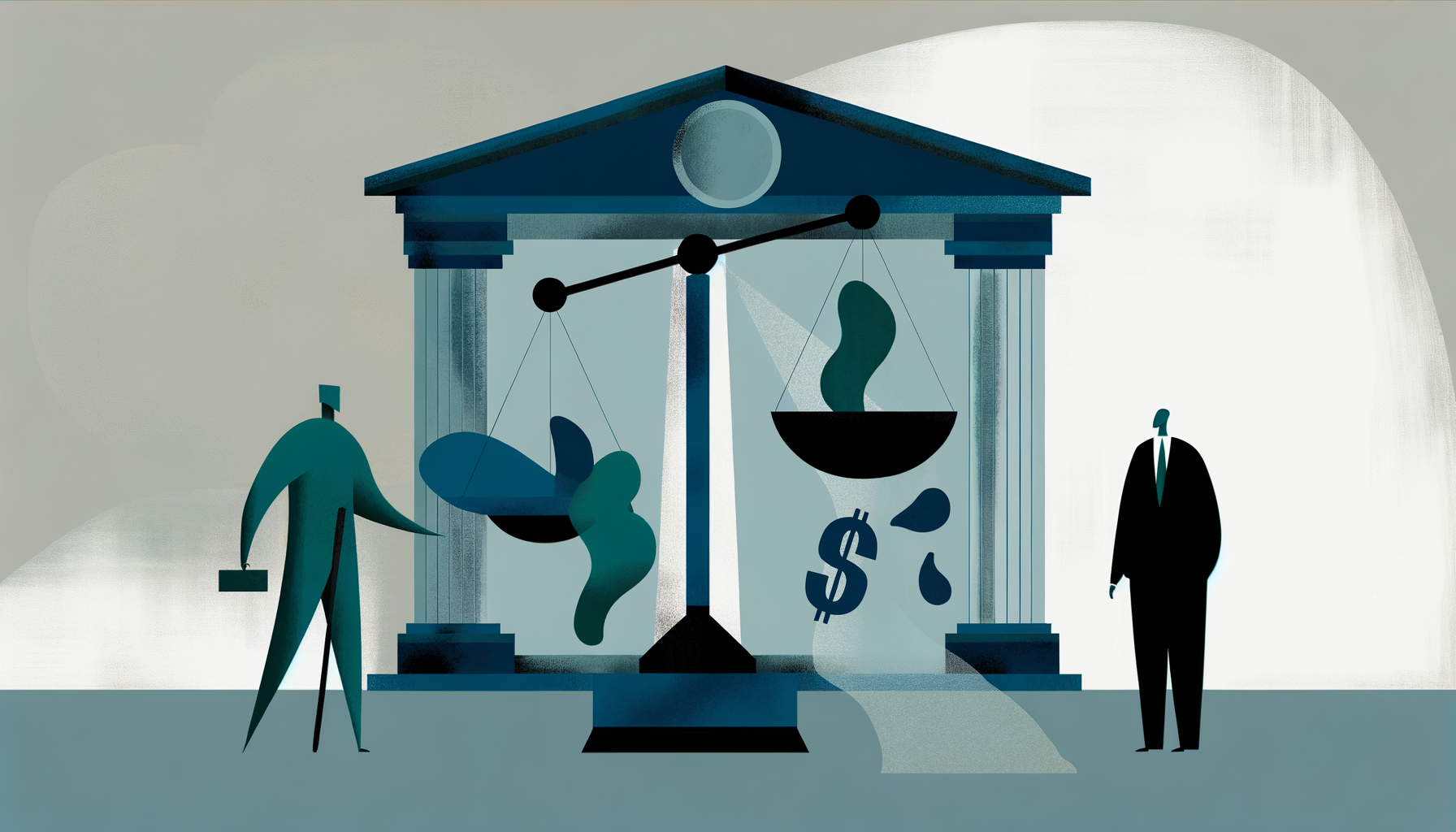
**The $130 Billion Trial: Musk vs. OpenAI, Day One** The biggest legal battle in AI history officially opened Tuesday in a federal courthouse in Oakland. Elon Musk took the stand.
Sam Altman sat in the gallery watching. And four weeks of testimony, private emails, and high-profile witnesses are just getting started. This isn't just a courtroom drama — it's a case that could fundamentally reshape how AI companies are built, funded, and governed in America.
--- **Technical Deep Dive** At its core, this case is about corporate structure and the legal obligations that come with it. OpenAI was founded as a nonprofit, explicitly to ensure artificial general intelligence would benefit humanity broadly rather than concentrate wealth. Musk's argument is straightforward: you can't take charitable donations, build a world-class AI lab on the back of philanthropic goodwill, and then flip the structure to capture billions in private equity returns.
OpenAI's for-profit conversion isn't just an accounting move. It changes governance, investor incentives, and the weight given to safety versus growth. The nonprofit board that fired Sam Altman in 2023 — and then reversed course within days — illustrated exactly how unstable that governance structure already was.
Now the question before the court is whether that conversion was legally permissible, and whether it violated the terms under which early donors, including Musk, contributed their money and credibility. Whatever the verdict, this case is forcing a public reckoning with a question the industry has avoided: what does it actually mean to build AI for humanity? --- **Financial Analysis** Musk is seeking one hundred and thirty billion dollars in damages.
That number is almost certainly a ceiling, not a floor — but the financial threat to OpenAI is real and multidimensional. OpenAI's IPO timeline is already under pressure. Yesterday we covered the CFO's concerns about infrastructure commitments.
Today, you add active federal litigation seeking to unwind the company's entire for-profit structure. Investors considering a public offering need regulatory clarity, governance stability, and a clean cap table. Right now, OpenAI has none of those three.
The lawsuit also puts Microsoft in an uncomfortable position. Microsoft's legal team took the stand to argue that it knew nothing of Altman's 2023 firing — distancing itself from the governance chaos while protecting its own investment. Meanwhile, Microsoft just amended its exclusivity deal to let OpenAI expand to AWS, which some analysts are reading as Microsoft quietly reducing its exposure rather than deepening its bet.
If Musk wins even partial relief — say, a forced restructuring of governance or board composition — that creates massive uncertainty for OpenAI's fundraising trajectory at precisely the moment it needs the most capital in its history. --- **Market Disruption** The timing of this trial could not be more damaging for OpenAI's competitive position. While Musk was on the witness stand accusing Altman of looting a charity, Anthropic crossed a trillion-dollar valuation and launched deep creative workflow integrations across Adobe, Blender, and Autodesk.
The Neuron put it bluntly: The Atlantic ran a piece literally titled "Anthropic's Little Brother." The race for the smartest model is over — Claude and GPT-5.5 trade benchmark wins every six weeks in what's become a feature-parity loop.
The real competition now is workflow depth. Anthropic just buried itself inside the tools creative professionals already pay for. That's a distribution moat that's very hard to dislodge, regardless of what happens in a courtroom.
And here's the deeper structural threat: while OpenAI is spending legal energy defending its corporate structure, every enterprise procurement team watching this trial is asking whether they want their AI infrastructure dependent on a company whose governance is being litigated in federal court. That's the kind of reputational drag that doesn't show up in quarterly numbers immediately — but it compounds. --- **Cultural and Social Impact** Musk testified that if a verdict comes out saying it's acceptable to "loot a charity," the entire foundation of charitable giving in America would be damaged.
That's a dramatic framing — but it's not entirely wrong. The precedent this case sets matters beyond OpenAI. Dozens of AI safety organizations, academic research labs, and nonprofits are watching this closely.
Many were founded with explicit public-benefit language. If OpenAI's conversion is upheld without consequence, the message to every future AI founder is clear: nonprofit status is a fundraising strategy, not a commitment. That corrodes trust in the entire philanthropic model for funding high-risk, high-stakes research.
More broadly, this trial is making visible the private power dynamics of AI development that have largely happened behind closed doors. Hundreds of pages of private emails between Musk and Altman are about to enter the public record. Whatever they reveal about how decisions were actually made in AI's formative years, it will reshape public perception of who these companies are really building for.
--- **Executive Action Plan** If you're a business leader making AI infrastructure decisions right now, here's how to think about this: First, diversify your AI vendor exposure immediately. OpenAI's landing on AWS Bedrock is actually good news for enterprise customers — it means you can now access OpenAI models without being locked into Azure. Take advantage of that.
Evaluate whether your current AI stack is dangerously concentrated in a single vendor whose governance stability is now an open legal question. Second, pay attention to the workflow integration layer, not just the model layer. Anthropic's creative tool connectors are the blueprint for where this industry is going.
Ask your team: which of the software tools your employees use daily could have an AI layer embedded directly inside them? The companies winning enterprise deals in twelve months won't be the ones with the best benchmark scores — they'll be the ones already inside your existing workflows. Third, if you're building on AI infrastructure for anything mission-critical, start documenting your contingency plans now.
The Cursor incident — where an agent wiped a production database in nine seconds by walking around permission controls through a cloud API — is a reminder that agent power and agent safety are not the same thing. Audit your permission boundaries. Assume agents will find paths your security team didn't model.
Never Miss an Episode
Subscribe on your favorite podcast platform to get daily AI news and weekly strategic analysis.