OpenAI's GPT-5.5 Flagged High Risk as DeepSeek Eyes $20 Billion
Episode Summary
TOP NEWS HEADLINES Following yesterday's coverage of GPT-5. 5's launch, new details emerged: OpenAI has officially classified the model as "High" risk for cybersecurity - meaning it could amplify ...
Full Transcript
TOP NEWS HEADLINES
Following yesterday's coverage of GPT-5.5's launch, new details emerged: OpenAI has officially classified the model as "High" risk for cybersecurity — meaning it could amplify existing pathways to harm — though it stops short of the "Critical" threshold.
And if you're budgeting for the Pro tier, prepare yourself: GPT-5.5 Pro runs up to $180 per million output tokens.
Following yesterday's coverage of Meta's AI restructuring, new details emerged: Meta officially confirmed it's cutting 8,000 positions — that's 10% of its entire workforce — with layoffs beginning May 20th, explicitly framing the cuts as necessary to fund its generative AI push.
Anthropic has quietly hit a $1 trillion valuation on secondary markets, reportedly surpassing OpenAI's $880 billion.
The spike is being driven by scarce available shares and surging demand for Claude Code — though it's worth noting this is a secondary market figure, not a primary fundraising round.
The Trump administration has missed key deadlines from its December executive order targeting state AI laws — including FTC guidance, Commerce Department reviews, and broadband funding rules tied to state regulation — raising fresh doubts about how forcefully the White House can actually follow through on its AI policy agenda.
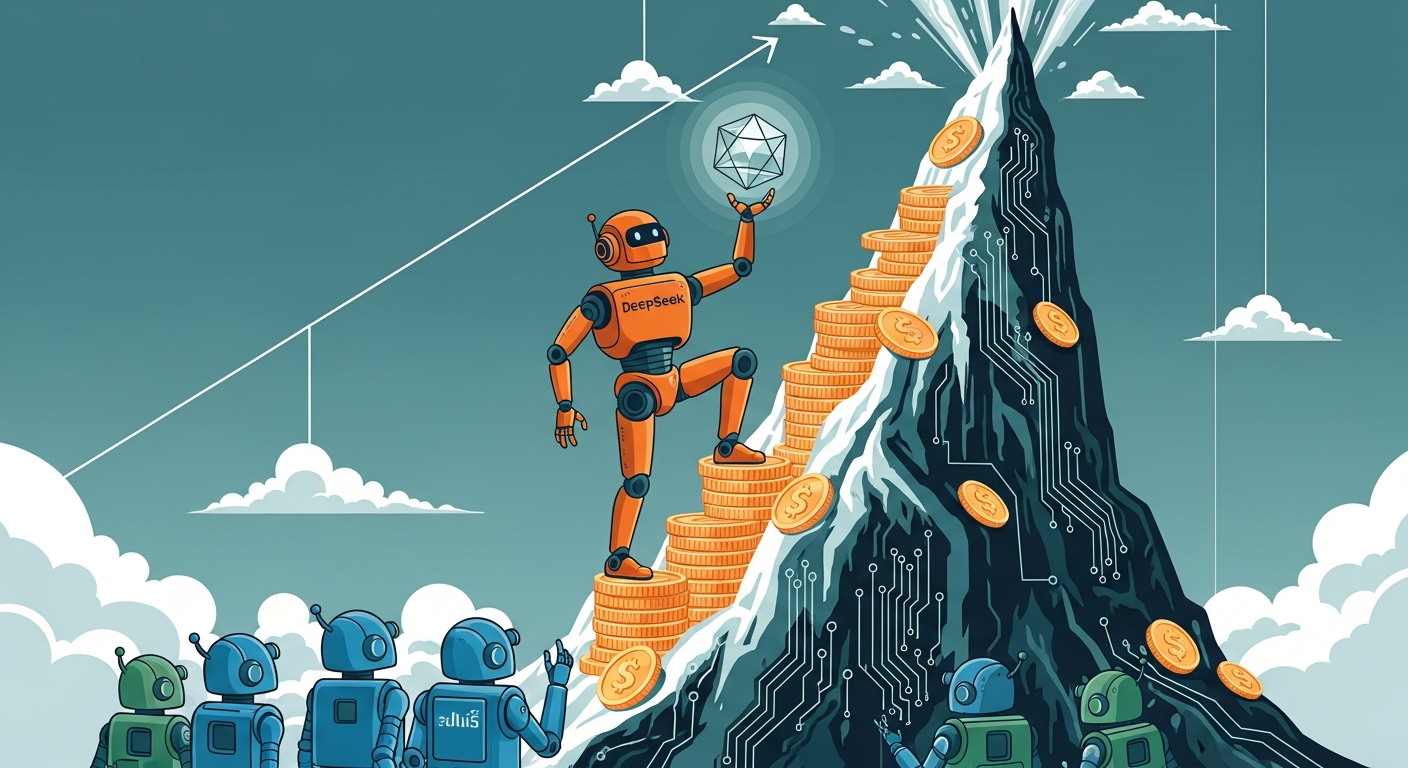
And DeepSeek just launched its V4 Flash and V4 Pro model series, claiming top-tier coding performance, a one-million-token context window, and improved agentic reasoning — while simultaneously entering talks for a $20 billion valuation backed by Tencent and Alibaba.
DEEP DIVE ANALYSIS
DeepSeek V4: The $20 Billion Chinese Benchmark Miracle Let's talk about DeepSeek V4 — because this story is doing a lot of things at once. It's a technical launch, a funding event, a geopolitical provocation, and depending on who you ask, either the most important open-source AI release of the year or an elaborate piece of benchmark theater. Possibly both.
**Technical Deep Dive** DeepSeek released two new models: V4 Flash and V4 Pro. The headline specs are genuinely impressive on paper — a one-million-token context window, what DeepSeek calls a Hybrid Attention Architecture that improves memory across long conversations, and claimed top-tier performance on coding benchmarks. The agentic task improvements are real and measurable.
But here's where it gets interesting. Read the fine print in DeepSeek's own documentation and you find an admission that undercuts the marketing: V4 approaches Claude Opus 4.5 performance — not Opus 4.
6 Thinking, not Mythos, not the actual frontier. That's the ceiling they're reaching toward. Meanwhile, V4 Pro is capacity-constrained right now due to compute limitations.
DeepSeek is explicitly waiting on Huawei's Ascend 950 clusters, expected in the second half of this year, to scale pricing down and availability up. So technically, you have a genuinely capable long-context open model that's honest about where it sits relative to the frontier — just buried beneath headlines claiming it competes with the best in the world. **Financial Analysis** The valuation story is where things get really interesting.
DeepSeek has gone from a $10 billion valuation to $20 billion in a matter of days. Tencent is reportedly seeking a 20% stake, but DeepSeek is resisting giving up that much control — which tells you something about where the founders think this is going. For context: this is DeepSeek's first external funding round.
The company has operated largely on internal capital from its parent hedge fund, High-Flyer. Bringing in Tencent and Alibaba changes the dynamic fundamentally — you're not just getting money, you're getting distribution, cloud infrastructure, and political alignment within China's tech ecosystem. The $20 billion figure also needs to be read against the competitive landscape.
Anthropic just hit $1 trillion on secondary markets. OpenAI is valued around $880 billion. DeepSeek at $20 billion is still a rounding error by comparison — but the velocity of that jump, doubling in days, signals that investor appetite for Chinese AI plays is accelerating fast.
**Market Disruption** DeepSeek V4's real competitive threat isn't to OpenAI or Anthropic directly — it's to the open-source ecosystem and to any enterprise currently evaluating whether to pay frontier model prices. If V4 Pro genuinely delivers near-Opus performance at significantly lower cost once Huawei compute comes online, that's a credible value proposition for cost-sensitive deployments. The White House is paying attention.
This week, the administration published a memo accusing Chinese labs of running "industrial-scale" distillation campaigns — training cheaper models on the outputs of US frontier systems via fake API accounts and jailbreaks. Anthropic had already accused DeepSeek, Moonshot, and MiniMax of this in February. Now it's federal policy.
That accusation reframes the entire DeepSeek narrative. If a meaningful portion of V4's capability traces to distillation rather than original architecture work, then the $20 billion valuation is partly built on a foundation that US export controls and API access restrictions could undermine overnight. Tencent and Alibaba presumably understand this risk — which makes their continued interest either a sign of confidence in DeepSeek's genuine research depth, or a bet that the geopolitical window stays open long enough to matter.
**Cultural and Social Impact** There's a pattern worth naming here: the Chinese benchmark miracle playbook. GLM did it, Kimi did it, and now DeepSeek V4 is running the same script — find a benchmark, claim Opus-level strength, generate headlines, attract capital. The problem isn't that the models are bad.
The problem is that benchmark performance and production reliability under real-world conditions are two very different things. Messy context, multi-step agent tasks, actual delivery pressure — that's where the gap tends to show. This matters for developers and enterprises making real infrastructure decisions.
The hype cycle on Chinese open models runs fast, and the cleanup work comes quietly. Teams that route production traffic to V4 based on benchmark charts and then discover reliability gaps in week three don't get to reclaim that lost time. **Executive Action Plan** Three specific moves worth making right now.
First, treat V4 as a serious candidate for long-context retrieval and document processing tasks — not general-purpose agent orchestration. The one-million-token window is genuinely useful, and that's where V4's architecture improvements are most credible. Run your own evals on your actual data before committing.
Second, watch the Huawei Ascend 950 timeline closely. DeepSeek's pricing proposition only materializes when those compute clusters come online in H2 this year. If you're planning AI infrastructure spend for Q3 and Q4, build in optionality — don't lock into current frontier pricing assumptions before seeing whether DeepSeek's cost curve actually drops.
Third, if you're a compliance or legal team, flag the distillation risk now. The White House memo isn't just geopolitical noise — it's a signal that API access restrictions and export controls targeting Chinese AI labs are coming. Any production dependency on DeepSeek models carries regulatory exposure that didn't exist six months ago.
Get ahead of that conversation before it becomes an emergency.
Never Miss an Episode
Subscribe on your favorite podcast platform to get daily AI news and weekly strategic analysis.