Anthropic Launches Claude Design, Targeting Adobe and Figma's Core Business
Episode Summary
TOP NEWS HEADLINES Following yesterday's coverage of Claude Opus 4. 7, new details emerged: Anthropic launched Claude Design, a dedicated UI/UX tool powered by the Opus 4. 7 vision model, letting ...
Full Transcript
TOP NEWS HEADLINES
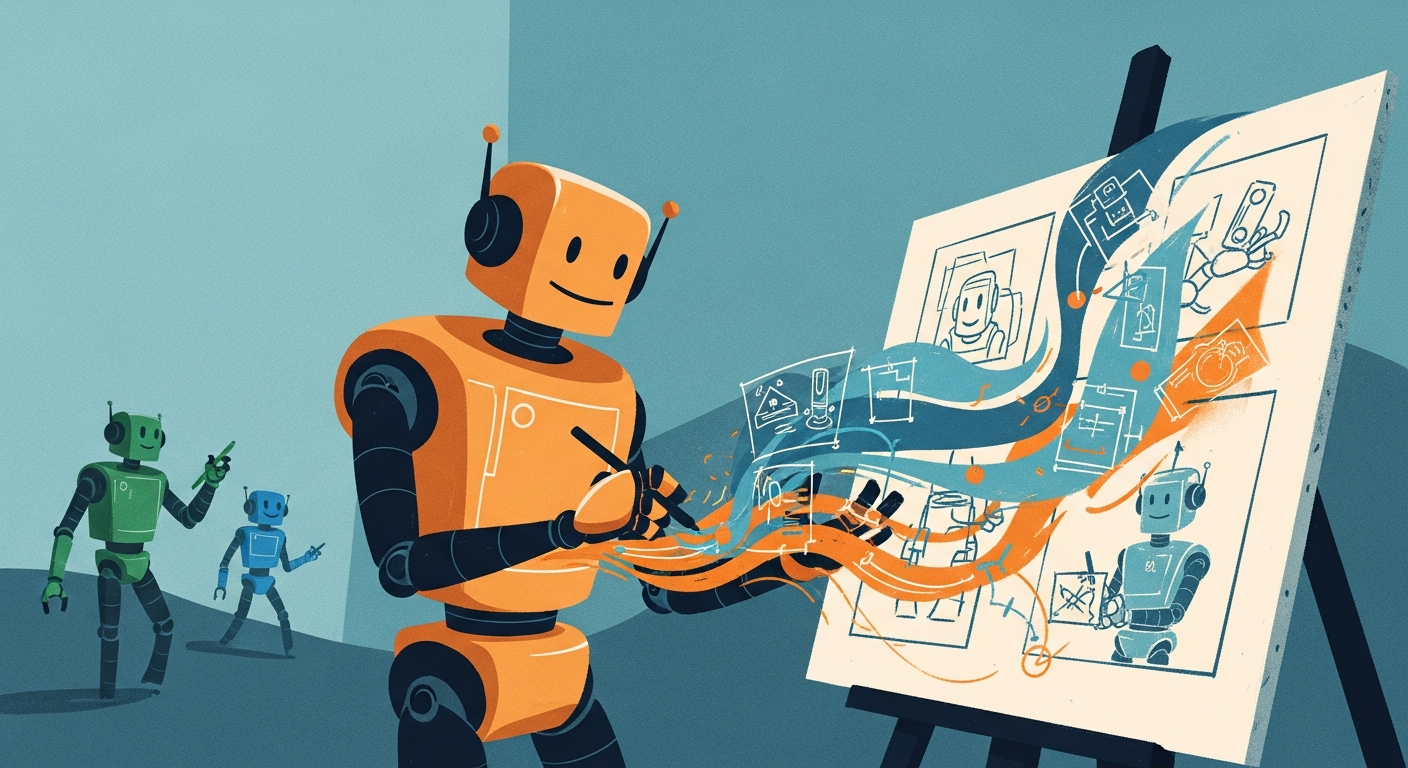
Following yesterday's coverage of Claude Opus 4.7, new details emerged: Anthropic launched Claude Design, a dedicated UI/UX tool powered by the Opus 4.7 vision model, letting users create designs, prototypes, slides, and marketing materials — and sending Adobe and Figma shares lower on the news.
Cursor is in talks to raise at least two billion dollars at a fifty billion dollar valuation, nearly doubling its previous valuation from just six months ago — with Thrive, Andreessen Horowitz, and reportedly Nvidia all expected to participate.
Three senior OpenAI executives announced departures in a single weekend — former CPO Kevin Weil, Sora lead Bill Peebles, and enterprise apps chief Srinivas Narayanan — as the company continues trimming what Sam Altman called "side quests" to focus on its core platform.
DeepSeek is reportedly seeking outside funding for the first time, targeting at least three hundred million dollars at a valuation above ten billion — a significant shift for a lab that built its brand on staying lean and independent.
A humanoid robot named Flash won the Beijing Half Marathon in fifty minutes and twenty-six seconds — more than six minutes faster than the human world record — though it did require battery swaps and a dry-ice backpack to stay cool. ---
DEEP DIVE ANALYSIS
**Claude Design: Anthropic's Quiet Land Grab on the Creative Stack** Let's talk about what actually happened here, because the headlines are calling this a "Figma killer" and the Reddit crowd is calling it a glorified template generator — and both of those takes miss the bigger picture. **Technical Deep Dive** Claude Design is powered by Claude Opus 4.7's vision capabilities — the same model Anthropic launched earlier this week.
The key technical differentiator isn't the output quality on day one. It's the architecture underneath. Claude Design reads your actual codebase and existing design files during setup to build a persistent brand system that then auto-applies to every future project.
It can also scrape elements directly from a live website using a web capture tool. Finished outputs aren't dead exports — they ship as handoff bundles directly into Claude Code, Anthropic's coding agent, creating a closed loop from first sketch to deployed product. Three specific capabilities stand out technically: the codebase-aware brand system builder, the live site capture tool, and that Claude Code handoff bundle.
Unlike Figma, which produces design artifacts that engineers then have to interpret and rebuild, Claude Design produces HTML and JavaScript all the way down. As one commentator put it — this is not an image generator, it's a working prototype machine. That distinction matters enormously for what comes next.
The weakness, which we'll get to, is that the model has strong aesthetic opinions baked in — and right now those opinions look like teal gradients and serif fonts on everything. **Financial Analysis** The financial signal here isn't Claude Design in isolation — it's the ecosystem play. In the span of roughly six months, Anthropic has shipped Claude Code, Cowork, browser agents, office integrations, and now Claude Design.
Each product targets a different budget line inside an enterprise: engineering, operations, productivity, and now design. Adobe, Figma, and Wix all saw stock movement on the announcement. Anthropic CPO Mike Krieger — who is, notably, Instagram's co-founder — resigned from Figma's board three days before launch.
That's not coincidence, that's a declaration. And Canva's CEO actually endorsed the Claude Design integration at launch, which tells you that Canva sees this as complementary, not competitive — at least for now. The revenue model is straightforward: Claude Design is available to Pro, Max, Team, and Enterprise subscribers.
But the real monetization is lock-in. Once a company's brand system, codebase, and design workflow all live inside the Claude ecosystem, switching costs become enormous. That's the business model — not per-design fees, but captured enterprise relationships.
**Market Disruption** Here's what Anthropic is actually building, and it's worth saying plainly: a full-stack software company operating system. Design goes in one end, working code comes out the other, and Claude agents handle everything in between. Figma's moat has always been collaboration and developer handoff.
Claude Design attacks both simultaneously. The competitive response is going to be fascinating to watch. Figma has been working on AI features for months, and its "Make" tool also produces HTML — so the technical battleground is already defined.
Adobe has Firefly and a massive asset library but no coherent agentic story. Canva just pivoted to calling itself an AI platform, and their CEO's endorsement of Claude Design suggests they're betting on integration rather than competition. The more interesting disruption might be upstream: what happens to Lovable, Replit, and the vibe-coding platforms when the world's most trusted AI coding tool also generates the front-end designs?
The middleware layer keeps compressing. **Cultural & Social Impact** The Reddit reaction — "Gaslightus 4.7" trending in the Claude Code community, seventeen hundred upvotes on a thread calling Opus 4.
7 legendarily bad — tells you something important about where we are culturally with AI tools. The user community has developed serious expectations. They're not impressed by "it kind of works.
" They're debugging hallucinated test results, documenting model behavior across ten-turn conversations, tracking when the AI invents files. This is a sophisticated, demanding user base — and they feel entitled to be demanding, because they're paying for Pro and Max subscriptions and building real businesses on top of these tools. The aesthetic homogenization complaint is also culturally significant.
When every AI-generated design looks identical — same teal gradient, same blinking status dot, same container-soup layout — it signals something uncomfortable about what "AI creativity" actually means in practice. The tool encodes the aesthetic preferences of whoever wrote the default prompts. That's not neutral.
It's a design opinion at industrial scale. **Executive Action Plan** Three moves for leaders watching this space. First, if you're a design-heavy organization, run a structured pilot of Claude Design this quarter — but do it properly.
The community has already figured out the workaround: upload reference screenshots and define your design tokens before you generate a single screen. Build the system first, then build the screens. Don't let your team evaluate it based on cold-prompt outputs, because that's not how the tool is meant to be used.
Second, if you're evaluating AI vendor risk, the fintech story buried in today's newsletters is a warning you shouldn't ignore. An entire company lost Claude access for fifteen hours with no explanation and no appeal process. If Claude is a core operational layer in your business — not a nice-to-have — you need a redundancy plan.
That means either multi-vendor AI infrastructure or contractual SLA guarantees, which most companies haven't negotiated. Third, if you're a Figma, Adobe, or design-tool vendor: the threat isn't Claude Design's current output quality. The threat is the ecosystem gravity.
Every week Anthropic ships another product that makes it slightly more painful to leave. The response isn't to match features — it's to deepen the integrations and collaboration capabilities that a single-player AI tool structurally cannot replicate. Speed matters here.
The window to differentiate on what AI can't do is narrowing fast.
Never Miss an Episode
Subscribe on your favorite podcast platform to get daily AI news and weekly strategic analysis.