GPT-5.4 Solves 60-Year-Old Math Problem, Allbirds Pivots to AI
Episode Summary
TOP NEWS HEADLINES Following yesterday's coverage of GPT-5. 4, new details emerged: GPT-5. 4 Pro may have just earned a place in mathematical legend - mathematician Przemek Chojecki used it to cra...
Full Transcript
TOP NEWS HEADLINES
Following yesterday's coverage of GPT-5.4, new details emerged: GPT-5.4 Pro may have just earned a place in mathematical legend — mathematician Przemek Chojecki used it to crack Erdős problem number 1196, a 60-year-old conjecture that stumped the field for decades.
Yale mathematician Jared Lichtman called the three-page proof, built around a single von Mangoldt function trick, "a Book Proof" — the highest honor in mathematics.
Anthropic just dropped Claude Opus 4.7, a direct upgrade from 4.6 at the same price point of five dollars per million input tokens, now shipping with automatic cyber safeguards tied to last week's Project Glasswing announcement — The Neuron is running a live stress test right now.
Google finally has a native Mac app for Gemini, arriving about a year behind Claude and ChatGPT, with screen sharing, Drive access, and image and video generation built in — confirmed by both TechCrunch and The Verge.
Snap is cutting one thousand jobs — sixteen percent of its workforce — with CEO Evan Spiegel pointing directly at AI efficiency gains.
And Elon Musk's Terafab chipmaking project is accelerating, with his team contacting semiconductor suppliers for price quotes and asking them to move at, quote, "light speed." ---
DEEP DIVE ANALYSIS
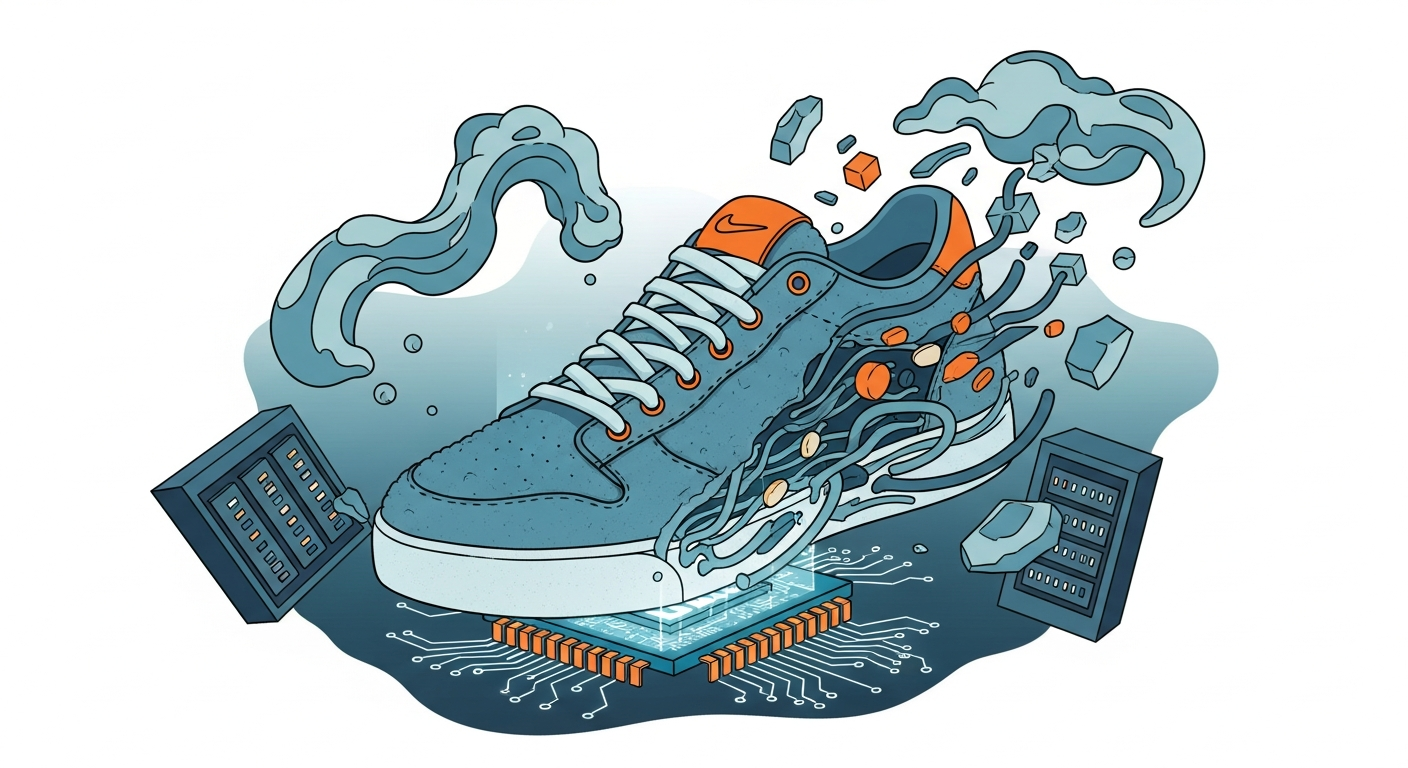
The Allbirds Story Is Not About Shoes Let's talk about the wildest business story of the year — and honestly, possibly the most revealing single data point about where we are in the AI economy right now. Allbirds, the wool sneaker brand that became the unofficial footwear of Silicon Valley optimists circa 2019, has pivoted to GPU compute infrastructure and is renaming itself NewBird AI. The stock rose over 600% in a single day.
A company that closed Tuesday with a market cap of 22 million dollars briefly crossed 160 million. On the back of what, exactly? A 50-million-dollar convertible financing facility and a press release saying they're going to buy GPUs and rent them out.
That's it. That's the whole thing. Let's dig in.
--- **Technical Deep Dive** The business model NewBird is pitching is GPU-as-a-Service — buy GPUs, rack them somewhere, sign enterprises to long-term compute contracts, and clip the spread. It's a real business. CoreWeave does it.
Lambda Labs does it. It's not fictional. But here's the technical reality check: this is also one of the most capital-intensive, operationally complex businesses you can enter in 2026.
You need data center relationships or your own colocation space. You need power contracts — and large GPU clusters eat megawatts. You need networking infrastructure, cooling, and the operational expertise to keep utilization rates high enough to make the unit economics work.
CoreWeave spent years building that stack before it was credible. Allbirds — sorry, NewBird — has 50 million dollars in convertible debt, no existing data center infrastructure, no compute operations team on record, and until about six weeks ago, was primarily focused on liquidating wool sneaker inventory. The distance between "we will buy GPUs" and "we are a functioning cloud compute provider" is not a press release.
It is years of infrastructure build, and the market doesn't seem to care about that gap right now. --- **Financial Analysis** The financial story here is almost perfectly analogous to the 2017 blockchain rebrand wave — and The Neuron called it out explicitly, pointing to Long Blockchain Corp, which pumped 200% on a name change, got charged with fraud by the SEC, and was delisted by Nasdaq within 18 months. Allbirds sold its actual shoe brand — the thing with customers and revenue and brand equity — to American Exchange Group in March for 39 million dollars.
That's a fall from a four-billion-dollar IPO peak in 2021. So the underlying operating business was worth less than 40 million dollars at arm's length. The public shell is now worth multiples of that purely on the word "AI.
" Anthropic is also reportedly shifting Claude Enterprise pricing to token consumption billing, which could significantly raise costs for heavy users. That's a separate but related signal: the companies actually building AI infrastructure are monetizing harder because compute costs are real and rising. NewBird is entering that market as a buyer competing with AWS, Google, and CoreWeave.
The margins available to a late entrant with no scale are thin at best. Wall Street is currently rewarding two moves above everything else: wholesale AI pivots and AI-driven headcount reductions. Both Allbirds and Snap got stock pops this week.
The market is pricing narrative, not fundamentals. --- **Market Disruption** What this episode actually reveals about market structure is more interesting than Allbirds itself. We are in a period where "AI compute exposure" functions as a currency that can be manufactured by any publicly traded entity willing to say the right words.
That is not a stable equilibrium. The real GPU infrastructure market is tightening, not loosening. Anthropic's compute supply reportedly doesn't materially expand until 2027.
OpenAI is tied to multi-gigawatt buildouts targeting hundreds of billions in infrastructure. Jane Street just committed six billion dollars to CoreWeave and took a one-billion-dollar equity stake. The serious players are locking in supply years in advance at scale.
A 50-million-dollar late entrant with no operational history in this space is not going to compete with that. What they might do is distort retail investor capital allocation and trigger regulatory scrutiny. The SEC has shown it moves on crypto rebrands.
AI rebrands are next. For legitimate cloud compute providers, the Allbirds story is actually useful noise — it signals how much retail demand exists for AI infrastructure exposure, which validates the category even as it embarrasses it. --- **Cultural & Social Impact** There's a deeper cultural story here that goes beyond one sneaker brand.
The Allbirds pivot is a symptom of a broader repricing of identity in the AI economy. Companies — and people — are scrambling to position themselves as AI-native because the market is currently paying a premium for the label regardless of substance. Allbirds was a Certified B Corp.
Environmental conservation was written into its corporate charter. It had a founding mission to reverse climate change through better business. That same entity is now pivoting into GPU cloud — one of the most electricity-hungry, water-cooled industries humans have invented.
The irony is almost too clean to be real. But it is real, and it matters because it reflects a values vacuum at the center of the current AI boom. We're watching companies shed their stated missions at speed because the financial incentives are overwhelming.
That creates cynicism — among employees, among customers, and eventually among investors when the rebrands don't deliver. The Snap layoffs are part of the same pattern. One thousand jobs cut, CEO credits AI efficiency, stock pops.
Workers absorb the cost, shareholders collect the benefit, and the narrative machine keeps running. The disconnect between what markets cheer and what workers fear is widening fast. --- **Executive Action Plan** Three things executives should take from this week's news: First, if you're considering an AI pivot for your company, the question to ask is not "will this pop the stock?
" — it's "do we have the operational infrastructure to actually deliver?" The gap between AI narrative and AI execution is where companies die. NewBird may get a short-term boost, but without real compute infrastructure, customer contracts, and operational expertise, the story collapses.
Build substance before you build the pitch. Second, for companies already in the AI infrastructure supply chain — whether you're a buyer of compute or a provider — now is the time to lock in long-term arrangements. Supply is constrained through at least 2027 by every credible account.
The companies signing multi-year contracts today, like Jane Street with CoreWeave, are buying optionality that will be unavailable at any price in 18 months. If you haven't modeled your compute costs through 2028, do it this week. Third, watch the regulatory environment on AI rebrands closely.
The SEC moved on crypto name changes. The pattern here is identical — distressed public companies attaching "AI" to their ticker to manufacture a stock catalyst. If you're an investor, the due diligence question is simple: what is the actual operational plan, what is the timeline to revenue, and who on the team has done this before?
If those answers are thin, the narrative is doing all the work. And narratives don't pay server bills.
Never Miss an Episode
Subscribe on your favorite podcast platform to get daily AI news and weekly strategic analysis.