OpenAI Shuts Down Sora, Redirects Resources to Mystery Model Spud
Episode Summary
TOP NEWS HEADLINES OpenAI just killed Sora - its flagship video generator that topped the App Store just six months ago is being shut down completely, app, API, and all, with compute being redirec...
Full Transcript
TOP NEWS HEADLINES
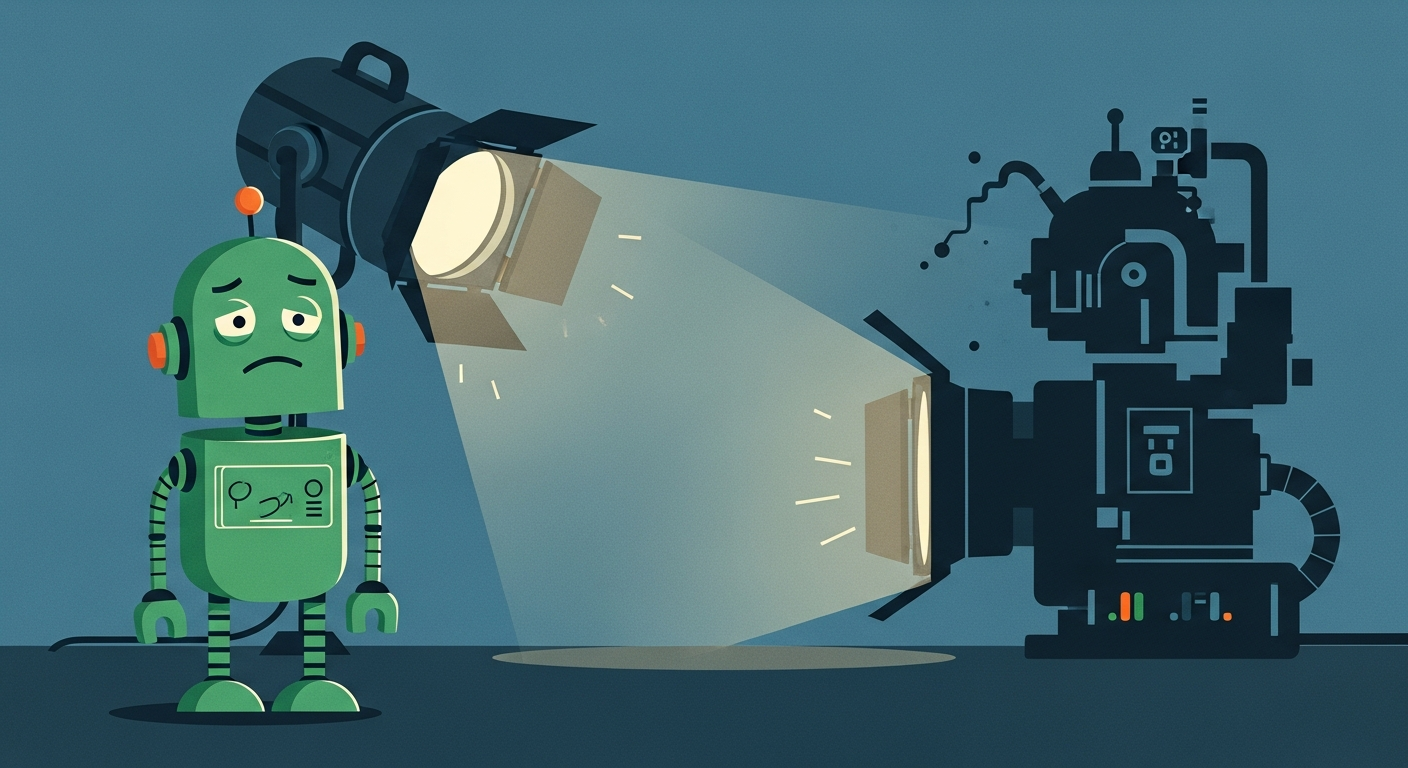
OpenAI just killed Sora — its flagship video generator that topped the App Store just six months ago is being shut down completely, app, API, and all, with compute being redirected toward a new model codenamed "Spud" that Sam Altman says could be ready within weeks.
Following yesterday's coverage of Claude's remote Mac control via Dispatch, new details emerged on three fronts: Anthropic released "Auto Mode" for Claude Code in research preview, new multi-agent architecture details surfaced using planner, generator, and evaluator agents, and Claude Code has reportedly captured between 42 and 54 percent of the coding market — compared to roughly 20 percent for OpenAI.
Apple is reportedly testing a standalone Siri app with an "Ask Siri" chatbot experience, slated to debut at WWDC on June 8 as part of iOS 27 — the company's most significant Siri overhaul in years.
Arm unveiled the AGI CPU, its first ever in-house chip after 35 years of pure licensing, with Meta as launch customer and OpenAI, Cerebras, and Cloudflare also signed on.
And in a signal of how deep AI is penetrating capital markets, Norway's two-point-one trillion dollar sovereign wealth fund is preparing to let AI systems make limited investment decisions under human supervision — with about half its 700 employees already using Claude internally. ---
DEEP DIVE ANALYSIS
The Death of Sora — and What "Spud" Tells Us About OpenAI's Real Strategy Let's be direct about what happened here. Sora wasn't just a product getting quietly sunset. It was OpenAI's most visible consumer bet outside of ChatGPT itself — a model that generated genuine cultural buzz, hit number one on the App Store at launch, and landed a billion-dollar partnership with Disney.
And it is gone. In six months. That is not a pivot.
That is a retreat. So let's unpack what's actually happening, because the surface story — "OpenAI kills video app" — misses the structural shift underneath it. **Technical Deep Dive** The core issue with Sora was never quality.
The model itself was genuinely impressive. The problem was compute economics. Video generation is catastrophically expensive relative to text.
Every second of generated video consumes GPU resources that could be serving thousands of ChatGPT queries or hundreds of Codex sessions. When you are in an arms race with Anthropic and Google, burning your GPU budget on a product that doesn't drive recurring enterprise revenue is a strategic liability. The compute being freed up goes toward "Spud" — a model Altman says can "really accelerate the economy.
" That framing is deliberate. He's not pitching Spud as a creative tool. He's pitching it as a productivity engine.
Meanwhile, Sora's team isn't being disbanded — they're pivoting to "world simulation" for robotics, targeting what team lead Bill Peebles called "automating the physical economy." So the underlying research continues, just reframed toward a more defensible long-term market. The technical lesson here is that model capability without deployment efficiency is a dead end.
Sora was a capability showcase that never found a compute-sustainable business model. **Financial Analysis** The Disney dimension is where this story gets genuinely painful for OpenAI. Three months ago, that billion-dollar investment and the 200-character IP licensing agreement was presented as OpenAI's breakthrough into mainstream media.
It validated Sora as a professional creative tool. Now Disney has issued a statement saying it "respects OpenAI's decision to exit the video generation business." When a partner uses the word "respect" in a press statement, that's a diplomatic way of saying they've been left holding the bag.
Meanwhile, OpenAI just added another ten billion dollars to its latest funding round — bringing the total to approximately 120 billion dollars, with a16z, DE Shaw, MGX, TPG, and T Rowe Price all participating. The company is simultaneously raising record capital and killing high-profile products. That combination tells you everything about the IPO pressure shaping decisions right now.
Fidji Simo, OpenAI's Applications CEO, told staff weeks ago to stop chasing "side quests." Sora was the largest side quest on the board. The financial imperative is clear: consolidate around ChatGPT as a super-app, generate predictable enterprise revenue, and get to IPO with a clean story.
**Market Disruption** The competitive consequences here favor Anthropic in a concrete and immediate way. While OpenAI was licensing Disney characters, Anthropic was quietly capturing the coding market — and that market turns out to be the most valuable layer of the entire AI stack. The 42 to 54 percent coding market share number for Claude Code, versus roughly 20 percent for OpenAI, isn't just a product metric.
It represents where daily active usage, enterprise contracts, and continuous workflow integration live. The coding layer is sticky in a way that video generation simply isn't. A developer who builds their entire workflow around Claude Code doesn't switch easily.
A user who generated a few videos with Sora has no switching cost at all. OpenAI is now attempting a late catch-up in coding with Codex, but catching up in a market where the competitor has structural workflow integration is genuinely hard. For Runway, Pika, and other video generation players, the Sora shutdown is a short-term gift — one less well-funded competitor.
But it also signals that even with OpenAI's resources, video generation economics don't work at scale yet. That's a warning shot for the entire sector. **Cultural and Social Impact** There's a broader signal here about what "AI" means to most people.
Sora captured public imagination in a way that text models rarely do. Video is visceral. Watching AI generate a realistic scene from a text prompt hits differently than reading a generated paragraph.
The cultural story of "AI can do anything" was partly built on Sora demos. Its shutdown quietly walks back that narrative. It's a reminder that wow-factor demos and sustainable products are different things.
For everyday users, the lesson is that AI's real penetration into daily life is happening in less flashy places — in coding tools, in productivity workflows, in the kind of agentic computer use that Claude Cowork and Dispatch represent. The exciting demos get the headlines. The boring enterprise tools get the revenue.
**Executive Action Plan** Three specific moves for anyone operating in this space right now. First, if you are building on any single AI provider's creative or media capabilities, build abstraction layers today. Sora's shutdown with minimal warning is a case study in platform risk.
Your video generation feature, your image pipeline, your audio tooling — none of it is safe if it's entirely dependent on a provider making rational business decisions. Diversify your model dependencies before you're forced to. Second, if you haven't audited your team's coding tool stack against Claude Code, do it this week.
The market share data suggests Anthropic has built something with genuine workflow stickiness. If your engineering team is still defaulting to older tools out of habit rather than active evaluation, you may be leaving meaningful productivity on the table — and falling behind competitors who've already made the switch. Third, watch Spud closely.
The name is almost aggressively unimpressive, but Altman's framing — a model that can "accelerate the economy" — suggests this is OpenAI's attempt to reclaim the productivity narrative from Anthropic. If Spud lands well, today's pruning looks prescient. If it doesn't, OpenAI will have killed its most culturally resonant product, lost a major media partner, and handed off safety oversight, all for a model that underdelivers.
The next few weeks will define whether this was strategy or panic.
Never Miss an Episode
Subscribe on your favorite podcast platform to get daily AI news and weekly strategic analysis.