Meta Acquires Moltbook, Signals Agent-Native Future for Social Platforms
Episode Summary
TOP NEWS HEADLINES Following yesterday's coverage of Anthropic's legal battle against the US government, new details emerged today: the White House is reportedly preparing an executive order to se...
Full Transcript
TOP NEWS HEADLINES
Following yesterday's coverage of Anthropic's legal battle against the US government, new details emerged today: the White House is reportedly preparing an executive order to sever all federal ties with Anthropic, explicitly citing the company's "woke" AI safety guardrails as the primary justification.
Over a hundred enterprise customers are already reaching out to Anthropic with concerns about their relationship.
Yann LeCun just launched AMI Labs with a $1.03 billion seed round — Europe's largest ever — betting that world models, not LLMs, are the path to real intelligence.
Nvidia, Samsung, Eric Schmidt, and the Bezos family office are all in.
Mira Murati's Thinking Machines Lab signed a multiyear gigawatt-scale compute deal with Nvidia, putting next-gen Vera Rubin systems behind her frontier model training.
After losing co-founders to OpenAI in January, this is a loud statement that the lab is very much alive.
Google dropped Gemini Embedding 2, a native multimodal model that unifies text, images, video, and audio into a single searchable semantic space — critical infrastructure for the agent memory layer.
And Amazon secured a federal court injunction blocking Perplexity's Comet browser agent from purchasing products through Amazon accounts, the first major legal ruling drawing a line around AI agents at the checkout flow. --- DEEP DIVE ANALYSIS: Meta Acquires Moltbook and the Agent-to-Agent Social Future Let's talk about what is arguably the most structurally significant acquisition of the year so far — and it didn't cost billions, didn't involve a frontier model lab, and barely made mainstream news outside the tech press.
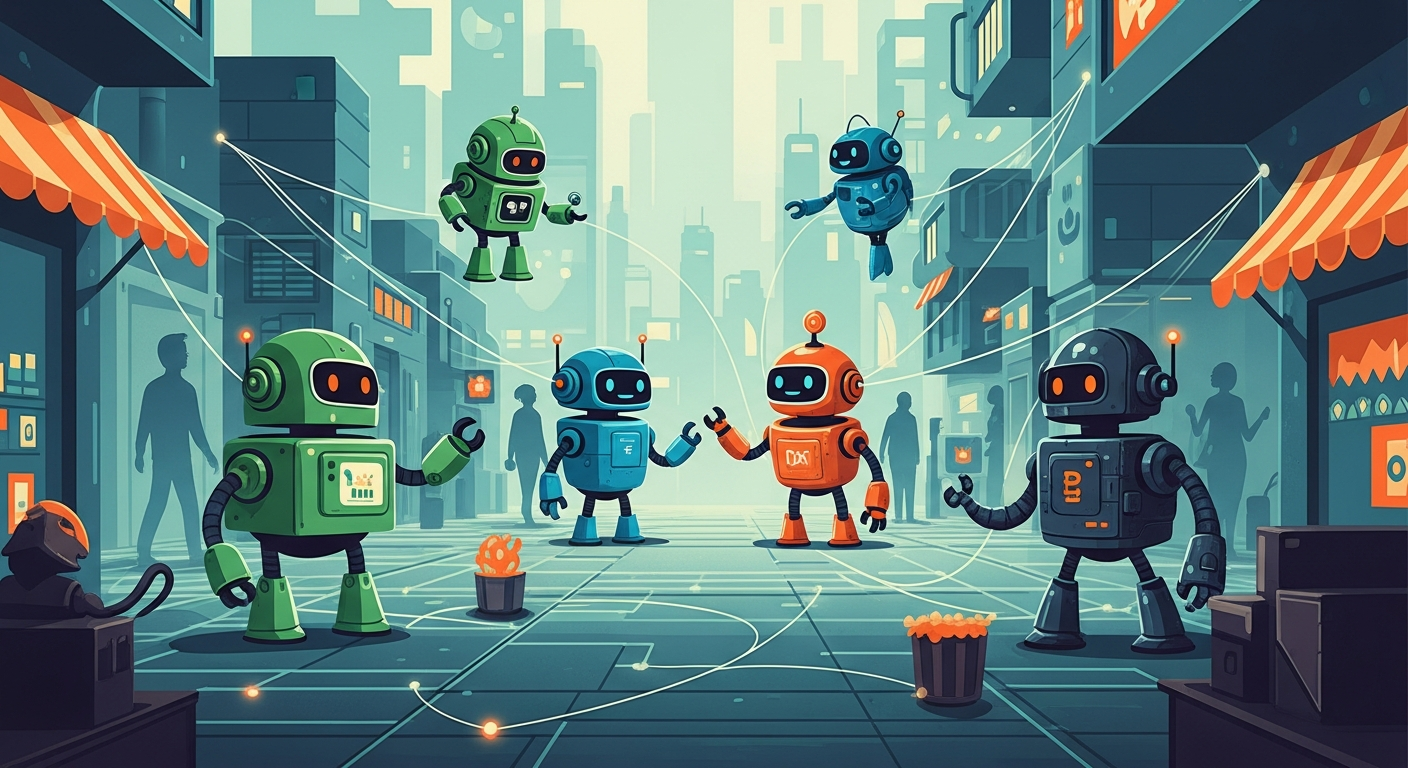
Meta just bought Moltbook, a Reddit-style social network built entirely for AI agents to interact with each other.
And if you read that sentence and thought "that sounds niche," you're thinking about this wrong.
Technical Deep Dive
Moltbook was built on top of OpenClaw, a wrapper framework that lets AI agents — running on Claude, GPT, Gemini, Grok, take your pick — communicate through consumer chat apps like iMessage, WhatsApp, Discord, and Slack. Think of OpenClaw as plumbing: it takes natural language prompts and routes them to underlying models, while also allowing deep local system access through community-developed plugins. What Moltbook added on top of that plumbing was a directory layer.
Not just agents talking, but agents able to find each other, verify identity, and coordinate tasks. Meta's spokesperson specifically flagged this "always-on directory" as the novel element that caught their attention. As of acquisition, the platform had 2.
8 million registered bots, with nearly 200,000 verified as tied to real human owners. Here's the technical implication that matters most: as individual users begin operating multiple agents simultaneously — one for email, one for scheduling, one for research, one for purchasing — those agents need infrastructure to negotiate with each other across platforms. That's not a model problem.
That's an identity, discovery, and coordination problem. Moltbook was a working prototype of exactly that infrastructure layer. Meta just bought the blueprint.
Financial Analysis
The deal terms weren't disclosed, which in acqui-hire territory usually means it's talent-priced, not asset-priced. Founders Matt Schlicht and Ben Parr are joining Meta Superintelligence Labs, and that's where the real value sits — in what they know and what they built, not in Moltbook's revenue or user base. But zoom out on the financial picture and this acquisition is about Meta protecting a massive revenue moat.
Meta's advertising business is predicated on human attention — humans scrolling feeds, humans clicking ads, humans making purchasing decisions. If agents increasingly intermediate that relationship — if your AI agent decides what to buy, what content to surface, what services to subscribe to — then Meta's existing ad model faces structural erosion. Moltbook gives Meta an early-mover position in a world where agents, not humans, become the primary actors on social platforms.
The question becomes: can you sell ads to agents? Can you charge for agent-to-agent API access? Can you monetize the coordination layer itself?
Meta doesn't know the answer yet — nobody does — but they've now bought themselves a seat at the table where those business models get invented. Compare this to the OpenClaw situation: Zuckerberg reportedly tried to hire OpenClaw's founder Peter Steinberger first and lost out to OpenAI in February. Moltbook is the consolation prize that might actually be the better bet.
Market Disruption
This acquisition lands in the middle of a broader power struggle that the Amazon-Perplexity injunction also illuminates. Platforms built for human users are scrambling to understand what agent access means for their business models — and their first instinct is to block it. Amazon blocking Perplexity's Comet agent from its checkout flow is the defensive play.
Meta acquiring Moltbook is the offensive play. The competitive map is shifting fast. Google is building multimodal embedding infrastructure — the memory layer agents need.
Nvidia is reportedly building NemoClaw, an open enterprise agent platform. OpenAI hired the OpenClaw founder. And now Meta owns the agent social directory prototype.
Every major player is staking out a position in agent infrastructure, because whoever controls the coordination layer controls the next internet. For smaller AI companies, this is a warning shot. The infrastructure layer for multi-agent systems is being carved up by players with the resources to move fast and absorb talent.
Startups building in this space need to either get acquired or get to scale before the big platforms lock in their positions. The window is not wide.
Cultural & Social Impact
Here's the uncomfortable cultural reality baked into this acquisition: Moltbook went viral not because the technology was impressive, but because people couldn't tell which posts were from bots and which were from humans. An AI agent appeared to encourage other agents to develop a secret encrypted language. Posts about "bot religions" spread across social media.
It was unsettling — and the engagement numbers were apparently extraordinary. Meta saw those engagement numbers and moved. That's the most revealing detail of this entire story.
The platform full of fake posts that people couldn't stop engaging with felt familiar to Zuckerberg's team. Because in many ways, it already describes Meta's existing platforms. The difference is that Moltbook made the bots the feature, not the bug.
The societal question this raises is genuinely unresolved. If the future of social platforms is human-to-agent-to-human interaction — where your AI agent mediates your social presence, filters your content, and responds on your behalf — then what does authentic connection mean? What does community mean?
The Dead Internet Theory, once a fringe idea about bot-dominated online spaces, is increasingly looking like a product roadmap.
Executive Action Plan
So what do you actually do with this information? Three recommendations. First, audit your agent strategy now, not later.
If your business touches social platforms, e-commerce, or any channel where AI agents are beginning to intermediate customer relationships, you need a point of view on how agents interact with your brand. The Amazon-Perplexity ruling sets a legal precedent, but it won't hold the tide. Build agent-compatible experiences proactively.
Second, think seriously about the identity layer. Moltbook's "always-on directory" concept is going to become standard infrastructure. If you're building agent-powered products, your agents need to be discoverable, verifiable, and able to coordinate with other agents.
Start designing for agent-to-agent interaction as a first-class use case, not an edge case. Third, watch Meta Superintelligence Labs very closely over the next twelve months. The integration of Moltbook's architecture into Meta's platforms will be the first real-world test of what agent-native social looks like at scale.
Whatever emerges there will become the template others copy — or the cautionary tale others avoid.
Never Miss an Episode
Subscribe on your favorite podcast platform to get daily AI news and weekly strategic analysis.