Meta Smart Glasses Scandal Exposes Hidden AI Surveillance Pipeline
Episode Summary
TOP NEWS HEADLINES Following yesterday's coverage of GPT-5. 4 rumors, new details emerged: OpenAI officially launched GPT-5. 4 and GPT-5
Full Transcript
TOP NEWS HEADLINES
Following yesterday's coverage of GPT-5.4 rumors, new details emerged: OpenAI officially launched GPT-5.4 and GPT-5.4-pro across ChatGPT, the API, and Codex — scoring 75% on OSWorld-V desktop navigation, beating the human baseline of 72.4%, and matching or outperforming human professionals across 83% of real job tasks.
Following yesterday's coverage of Dario Amodei's leaked memo attacking OpenAI, new details emerged: the Pentagon formally labeled Anthropic a supply-chain risk, requiring defense contractors to certify non-use of Claude — a designation previously reserved for foreign adversaries like Huawei.
Amodei issued a public apology for the memo's tone, and Donald Trump called for Anthropic to be "fired like a dog." Anthropic says it plans to challenge the designation in court.
The White House is moving to identify and refer "onerous" state AI safety laws to the DOJ's AI Litigation Task Force — effectively freezing state-level regulation in Utah, Florida, and beyond before a federal framework exists.
An unlikely coalition — Steve Bannon, Richard Branson, Ralph Nader, and Nobel economist Daron Acemoglu among them — signed the Pro-Human AI Declaration, calling for trustworthy AI that amplifies rather than replaces human potential.
And Science Corp raised $230 million for its PRIMA retina implant, positioning itself as the second-most valuable brain-implant company behind Neuralink. ---
DEEP DIVE ANALYSIS
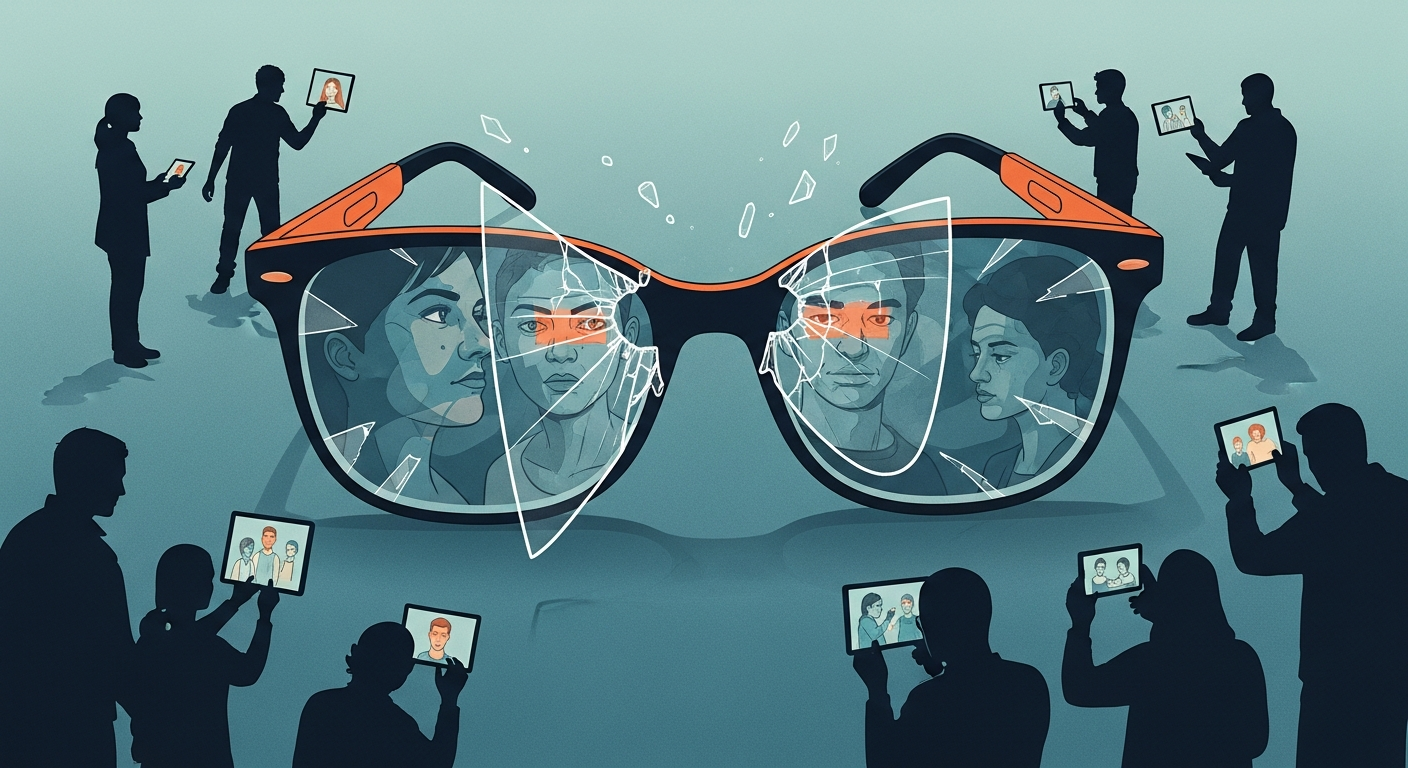
**Meta's Smart Glasses Surveillance Scandal** Let's talk about the story that should make every single person wearing a pair of Ray-Ban Meta glasses deeply uncomfortable right now. Investigations by two Swedish newspapers have confirmed what privacy advocates have warned about for years: footage captured by Meta's AI smart glasses is being reviewed by human contractors in Nairobi, Kenya. And what those annotators have reportedly seen is not just ambient street footage.
We're talking bathroom visits. Nudity. Intimate situations.
Faces. Home layouts. Bank cards.
Unblurred. In the hands of workers thousands of miles away from the people being filmed. More than seven million pairs of these glasses were sold in 2025 alone.
That's seven million ambient cameras quietly attached to human faces, recording daily life — and feeding it into a human review pipeline that users consented to in fine print, if they consented at all. Meta is now being sued. But the legal exposure here is almost secondary to the larger story this reveals about where AI hardware is actually headed.
--- **Technical Deep Dive** Here's what's actually happening under the hood. Meta's smart glasses activate an AI assistant — "Hey Meta" — and when they do, audio and video can be captured and sent to Meta's servers for processing. To improve AI responses, that data enters human review pipelines, a standard practice across the industry.
Human annotators label data to train models. The problem is the *content* of what gets labeled. Meta's blurring protocols, designed to redact sensitive visual information before it reaches annotators, are reportedly failing.
Faces aren't being blurred. Private scenes are passing through unredacted. This isn't a fringe edge case.
It's a systemic design gap — the same one that exists across every wearable AI device that uses human review to improve its models. The glasses don't know they're filming a bathroom. The review pipeline doesn't discriminate.
The annotator in Nairobi sees what the camera saw. What makes this technically distinct from a phone breach is *passivity*. You have to actively open an app to share from your phone.
These glasses film by being worn. The surveillance surface is always-on by design. --- **Financial Analysis** Meta's financial exposure here is significant, and it operates on two tracks.
The first is direct litigation. The lawsuit filed in response to this investigation is not a one-off. Privacy class actions in the EU — where GDPR enforcement is aggressive — could result in fines calculated as a percentage of global revenue.
Meta's annual revenue exceeds $160 billion. The math on even a 2% GDPR fine is sobering. The second track is hardware trust.
Meta has invested aggressively in its smart glasses line as a long-term platform play — a physical entry point into the AI-native future, ahead of Apple's mixed reality push and competing wearable ecosystems. The Ray-Ban partnership with EssilorLuxottica was built on the premise that people would *choose* to wear AI hardware because it's stylish and useful. Trust is the core asset here.
And trust is exactly what this story erodes. If consumers come to associate Meta's glasses with ambient surveillance, adoption stalls. Enterprise buyers — who were being courted for workplace use cases — will back away from any device that creates legal liability.
The seven million units already sold represent a ceiling, not a floor, if this story takes hold in public consciousness. --- **Market Disruption** The competitive implications extend far beyond Meta. This story arrives at a moment when nearly every major tech company is racing to put AI into wearable hardware.
Google has its own AI assistant ambitions. Apple's Vision Pro sits adjacent to this space. Startups like Humane and Frame are building AI pins and smart glasses of their own.
Amazon has Alexa-enabled glasses. Every one of those companies now has to answer a question that just got much harder: *How do you build wearable AI that users trust with their eyes?* The regulatory response will be asymmetric.
The EU will move quickly. Expect specific legislation targeting AI-enabled wearables, likely requiring explicit consent mechanisms for any human review of captured footage, mandatory real-time blurring standards, and geographic data localization requirements. In the US, the White House's current posture — blocking state AI laws while federal frameworks lag — creates a gap that this story could fill.
Congressional interest in surveillance tech targeting consumers is bipartisan. This is the kind of visceral, visual story that moves legislative calendars. For enterprise AI, the lesson is that the hidden human labor inside AI systems is becoming a liability — not just ethically, but legally and competitively.
--- **Cultural & Social Impact** There's a deeper cultural shift embedded in this story. AI hardware has been sold on a vision of seamless augmentation — glasses that help you identify plants, translate menus, remember names. The pitch is that AI disappears into your life and makes it richer.
What this investigation reveals is the *cost structure* of that seamlessness. AI models don't train themselves. Somewhere in the pipeline, a human being is looking at what the camera saw.
And in this case, that human is a contractor in Kenya, paid a fraction of what a US worker would earn, watching footage of private moments that the subject never intended to share. This is the gig economy applied to surveillance. And it raises a question that consumers are only beginning to grapple with: when you opt into an AI assistant, are you also opting into a distributed network of human observers reviewing what your camera captures?
The normalization of ambient AI recording is moving faster than public understanding of what it entails. The backlash, when it comes, tends to be severe and sticky. --- **Executive Action Plan** Three specific moves for executives navigating this moment.
First, if your company uses any AI wearable device in a workplace setting — glasses, pins, earbuds with ambient recording — conduct an immediate audit of what data those devices capture, where it goes, and who reviews it. The liability framework just changed. You need a documented policy before an incident forces one.
Second, if you're building or evaluating AI hardware products, model the trust cost explicitly. The question is not just "can we build this?" but "what happens to adoption if the human review pipeline becomes public knowledge?
" Build consent mechanisms that are affirmative and visible — not buried in terms of service — before regulators require it. Third, for companies operating in the AI training data space, this is a watershed moment for vendor due diligence. The contractors in Nairobi are third-party workers in Meta's supply chain.
Your AI training vendors have similar supply chains. Audit what your annotation partners are seeing, what they're required to protect, and what your contractual exposure is if their data handling becomes a story. The window between "this is a product feature" and "this is a regulatory crisis" is closing.
The executives who treat this as a competitive opportunity to build trustworthy AI hardware will own the next decade of wearables. The ones who don't will own the lawsuits.
Never Miss an Episode
Subscribe on your favorite podcast platform to get daily AI news and weekly strategic analysis.