Google's Nano Banana 2 Dominates Image Generation While Cutting Costs in Half
Episode Summary
TOP NEWS HEADLINES Following yesterday's coverage of the Pentagon-Anthropic standoff, new details emerged: CEO Dario Amodei issued a formal statement refusing to remove safeguards for mass surveil...
Full Transcript
TOP NEWS HEADLINES
Following yesterday's coverage of the Pentagon-Anthropic standoff, new details emerged: CEO Dario Amodei issued a formal statement refusing to remove safeguards for mass surveillance or autonomous weapons — and Anthropic offered to help the Department of War transition to a different AI provider entirely to avoid disrupting military planning operations.
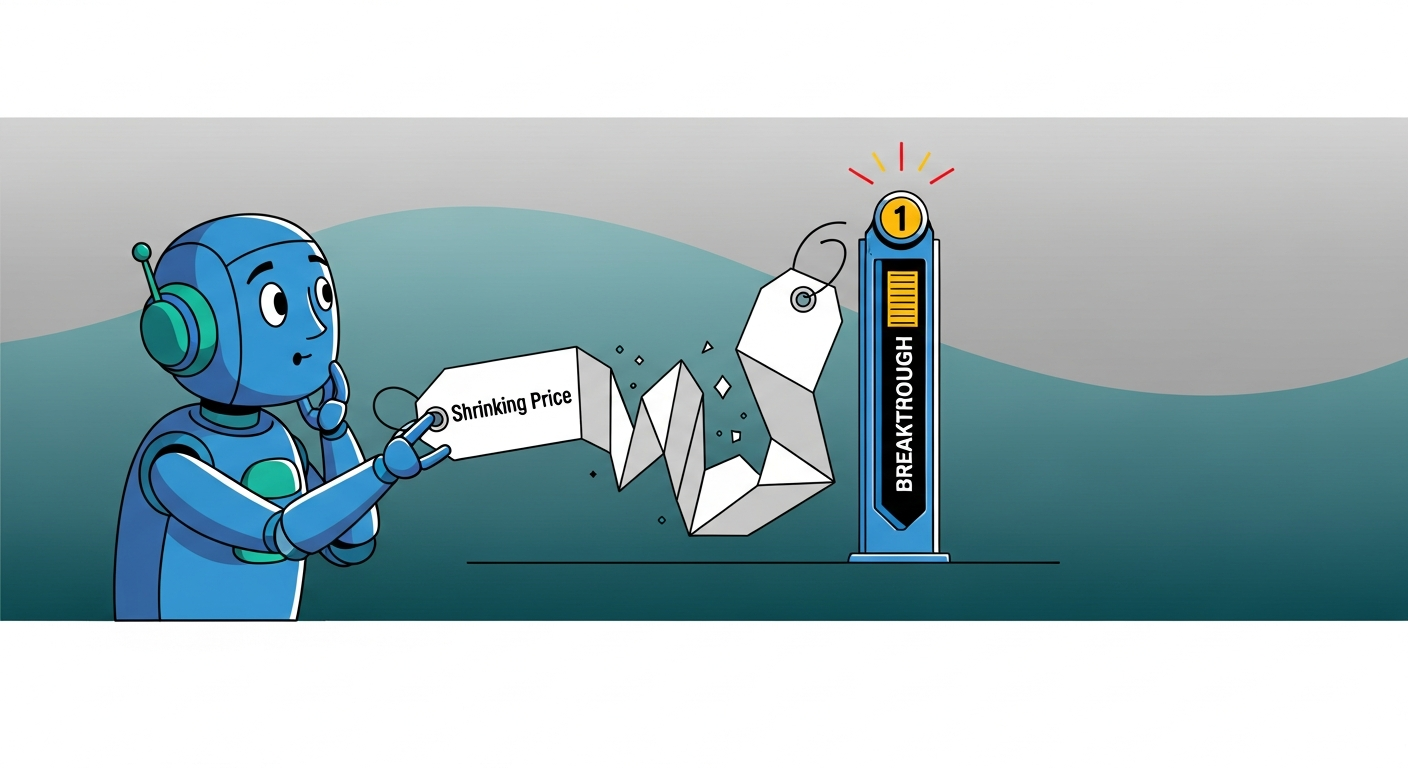
Google launched Nano Banana 2 — officially Gemini 3.1 Flash Image — claiming the number one spot on text-to-image leaderboards while cutting costs to roughly seven cents per image, about half the price of its predecessor.
Jack Dorsey announced Block will cut 40 percent of its workforce — more than four thousand employees — explicitly citing AI tools as the reason.
Stock jumped 24 percent on the news. xAI co-founder Toby Pohlen has departed the company, becoming the seventh of twelve original co-founders to leave xAI in under three years.
Pohlen led Macrohard, xAI's agent-focused software division.
Over 125 million dollars in tech money is flooding midterm elections, with pro-AI super PACs like Leading the Future — backed by OpenAI's Greg Brockman, Andreessen Horowitz, and Perplexity — competing directly against Anthropic-backed AI safety groups for regulatory influence.
Claude hit number four on the US App Store, an all-time high, with free users up 60 percent since January and daily signups tripling since November. ---
DEEP DIVE ANALYSIS
Google Nano Banana 2: When Speed Meets Quality and the Price Floor Collapses For the past year, every serious conversation about AI image generation came with an asterisk. You could have quality, or you could have speed and affordability — but not both. Google just crossed that line out.
Nano Banana 2, technically Gemini 3.1 Flash Image, dropped this week and immediately claimed the number one position on both Artificial Analysis and LM Arena's text-to-image benchmarks, beating out Nano Banana Pro and OpenAI's GPT Image 1.5.
It also landed third on editing tasks. That's not incremental progress — that's a leaderboard sweep on debut day. **Technical Deep Dive** Here's what actually changed under the hood.
Nano Banana 2 is built on the Gemini 3.1 branch, stepping up from the 3.0 architecture that powered the original Nano Banana models.
The critical engineering move was pulling real-time world knowledge from Google Search directly into the image generation pipeline. That's what allows the model to render real subjects, current events, and factual infographics with accuracy — rather than hallucinating from stale training data. The practical results: text rendering across multiple languages is dramatically improved, which matters enormously for mockups, social posts, and marketing assets.
Subject consistency now holds across up to five characters and fourteen objects within a single workflow — a genuine breakthrough for anyone doing storyboards, ad campaigns, or branded content. Output resolution scales to full 4K across aspect ratios. And every image ships with a SynthID watermark plus C2PA Content Credentials, so provenance is baked in from generation.
The speed matches Gemini Flash, meaning generation times that previously belonged to lower-quality models. The quality ceiling now sits where the Pro model was. That combination didn't exist before this week.
**Financial Analysis** Seven cents per image. That's the number that's going to reshape procurement conversations across every marketing department, design studio, and media company paying for image generation at scale. Nano Banana 2 undercuts both Nano Banana Pro and OpenAI's GPT Image 1.
5 by roughly two times on price — while delivering equivalent or superior quality. The economics cascade quickly. A company generating ten thousand images per month was previously facing meaningful cost decisions between quality tiers.
At seven cents, that's seven hundred dollars monthly for top-tier output. The tradeoff calculation evaporates. More critically, Google is deploying this as the default across the Gemini app, Google Search in 141 countries, Google Ads, AI Studio, and Vertex AI.
That's not a model launch — that's infrastructure replacement at planetary scale. Advertisers using Google's ecosystem get this automatically. Developers building on Vertex AI get this automatically.
The distribution moat Google holds means Nano Banana 2 doesn't need to win on benchmarks alone — though it did anyway. Pro and Ultra subscribers retain access to Nano Banana Pro for specialized high-fidelity work, which gives Google a clean upsell architecture while commoditizing the baseline. **Market Disruption** The competitive implications hit several players simultaneously.
Midjourney built a loyal base on quality at a premium — that positioning becomes harder to defend when the free-tier competition just matched its output quality. Adobe Firefly, integrated into Creative Cloud, now competes against a model that ships at a fraction of the cost and outperforms it on leaderboards. OpenAI's GPT Image 1.
5 just lost the number one text-to-image ranking it held, and at roughly twice the price per image. But the deeper disruption is structural. When Google makes Nano Banana 2 the default in Search across 141 countries, it's not just winning the enterprise market — it's setting the ambient expectation for what AI image generation looks like for a billion casual users.
The companies selling seat-based access to image generation tools now face the same pressure that the Ghost GDP thesis describes for SaaS broadly: why pay for a dedicated subscription when the capability is embedded in infrastructure you're already using? Standalone image generation tools that can't differentiate on workflow integration, fine-tuning, or proprietary style are now in genuine trouble. **Cultural and Social Impact** The subject consistency upgrade is the sleeper feature here.
For the past two years, one of the core frustrations with AI image generation has been character drift — your protagonist looks different in every frame, your brand mascot shifts between panels, your product shots are inconsistent across a campaign. Nano Banana 2's ability to maintain up to five characters and fourteen objects across a workflow changes the creative calculus for indie filmmakers, newsletter operators, game developers, and small marketing teams. The Neuron newsletter team noted they use Nano Banana for header images and called character consistency their biggest ongoing headache.
That's a real-world data point that thousands of content creators share. When that problem gets solved at the free tier, the barrier to professional-looking visual content drops to near zero. That has implications for everything from political messaging — suddenly every PAC has access to high-quality visual content generation — to education, to disinformation.
The C2PA provenance tagging is the countermeasure, but its effectiveness depends entirely on platform adoption of verification standards, which remains uneven. **Executive Action Plan** Three moves for leaders navigating this shift right now. First, audit your current image generation spend immediately.
If your team is paying for standalone image generation tools or API access at above seven cents per image, you have a cost optimization conversation to have this quarter. Run a benchmark comparison against Nano Banana 2 on your actual use cases — not synthetic benchmarks — before renewing any contracts. Second, if you're building products that include image generation as a feature, reprice your assumptions.
The floor on image generation cost just dropped significantly. Competitors who integrate Nano Banana 2 via the Gemini API can undercut you on cost while matching you on quality. Either integrate faster or identify the workflow, fine-tuning, or vertical-specific capability that justifies your margin.
Third, for marketing and creative teams: invest time this month in learning the prompting framework Google published alongside this launch. The six-element structure — subject, composition, action, location, style, and editing instructions — combined with reference image uploads for character consistency, represents a genuine skill gap between teams that get good outputs and teams that get great ones. The model ceiling just rose significantly.
The limiting factor is now prompt quality, not model capability.
Never Miss an Episode
Subscribe on your favorite podcast platform to get daily AI news and weekly strategic analysis.