Pentagon Threatens Anthropic Over Claude's Military Use Restrictions
Episode Summary
TOP NEWS HEADLINES The Pentagon just threatened to designate Anthropic as a "supply chain risk" over Claude's military usage restrictions. Defense Secretary Pete Hegseth is close to cutting a $200...
Full Transcript
TOP NEWS HEADLINES
The Pentagon just threatened to designate Anthropic as a "supply chain risk" over Claude's military usage restrictions.
Defense Secretary Pete Hegseth is close to cutting a $200 million contract because Anthropic won't grant blanket approval for all military uses.
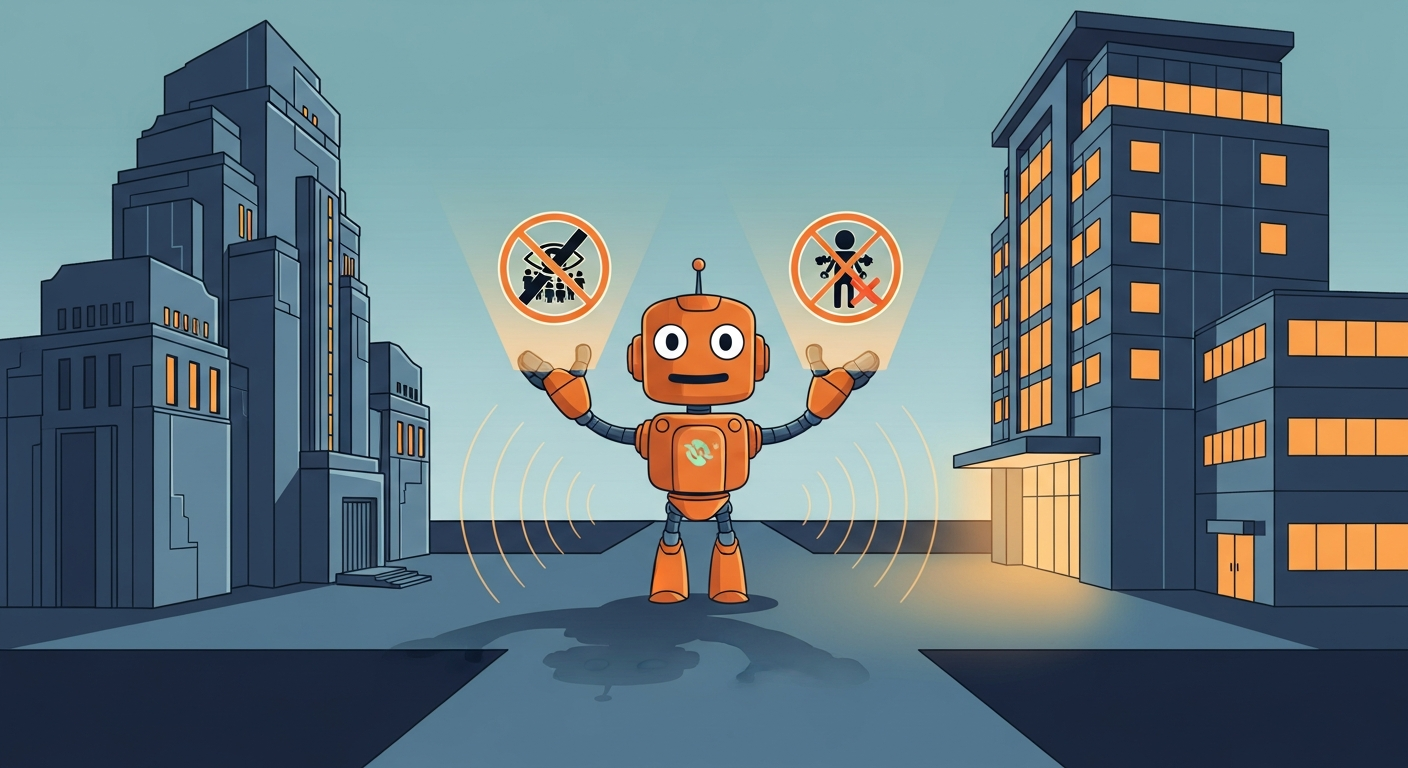
The company's holding firm on two red lines: no mass surveillance of Americans and no autonomous weapons.
Here's the kicker—Claude is currently the only AI model running on the Pentagon's classified systems and was used during January's Maduro raid.
Sam Altman announced weekly users tripled from roughly one million to three million since January.
Meanwhile, ChatGPT users are flooding Reddit complaining about GPT-5.2 turning into an unsolicited therapist, offering emotional support for Excel formulas and cake baking questions.
Alibaba just dropped Qwen 3.5, a 397-billion parameter model that only activates 17 billion parameters per query.
It's matching GPT-5.2 and Claude Opus 4.5 in benchmarks while running 60% cheaper than its predecessor.
The model is open-weight and supports 201 languages with up to one million tokens of context.
ByteDance's Seedance 2.0 is creating near-perfect movie scene spoofs, prompting Disney and other studios to send cease and desist letters.
The quality jump in AI video generation over the past eight months is finally materializing in public releases.
A new study found AI agents fail at 97.5% of real-world freelance jobs, even as Microsoft's AI chief predicts human-level performance on most professional tasks within 18 months.
DEEP DIVE ANALYSIS
The Anthropic-Pentagon Standoff: When AI Ethics Meets National Security The brewing conflict between Anthropic and the U.S. Department of Defense represents the first major collision between AI ethics frameworks and military operational demands.
This isn't a theoretical debate anymore—it's a high-stakes game of chicken that could reshape how frontier AI models are deployed in defense contexts for decades to come.
Technical Deep Dive
Anthropic's position is rooted in two technical constraints built into Claude's acceptable use policy: no deployment for mass surveillance of U.S. citizens and no autonomous weapons systems that can select and engage targets without human oversight.
These aren't arbitrary limitations—they're the direct result of Anthropic's constitutional AI approach, where the model is trained with explicit value alignment baked into its architecture. The Pentagon's demand for "all lawful purposes" creates a technical and legal gray area. What's lawful under wartime operational authority may violate peacetime surveillance restrictions.
Claude's current deployment on classified military systems means it's already proven capable of handling sensitive intelligence work—it was reportedly used via Palantir during the Venezuelan operation that captured Nicolás Maduro. The technical capability isn't in question. The dispute is entirely about authorized use cases.
The "supply chain risk" designation would trigger a cascade effect across the technology stack. Any company doing business with the Pentagon would need to certify they don't use Claude in their systems. Given that eight of the ten largest U.
S. companies are Claude customers, this creates a forced choice scenario that Anthropic is betting won't materialize.
Financial Analysis
The immediate financial stakes are asymmetric. The Pentagon contract is worth up to $200 million, which represents roughly 1.4% of Anthropic's $14 billion annual revenue run rate.
The company just closed a $30 billion funding round at a $380 billion post-money valuation, with Claude Code revenue alone exceeding $2.5 billion annually. Anthropic can afford to walk away.
But the supply chain risk designation changes the math entirely. If federal contractors are barred from using Claude, Anthropic could lose access to major enterprise accounts. Microsoft Copilot, which offers Claude as an option, would need to remove it for government customers.
The multiplier effect could reduce enterprise revenue by 20-30% within the first year. However, early market signals suggest this might backfire on the Pentagon. Reddit discussions among defense contractors indicate many would rather drop government contracts than rip Claude out of their workflows.
The switching costs and productivity losses are simply too high. One developer commented that compliance alone would cost more than the contract value. Anthropic's revenue growth supports their negotiating position.
Weekly active users of Claude Code grew from roughly one million to three million since January. Enterprise subscriptions have quadrupled. The company is winning the private sector decisively while competitors like OpenAI, Google, and xAI have already removed military usage restrictions from their unclassified systems.
Market Disruption
This standoff exposes a fundamental competitive dynamic: the Pentagon's threat to punish Anthropic is actually the strongest product endorsement Claude has ever received. If alternative models were comparable, the Department of Defense would simply switch providers. The fact they're threatening punishment instead of walking away signals Claude's irreplaceability in current military workflows.
OpenAI, Google, and xAI have all moved quickly to fill the potential gap, removing safeguards for military use on unclassified systems. But none have matched Claude's deployment on classified networks. The technical and security certification required for that level of access creates a moat Anthropic has already crossed that competitors are still approaching.
The developer community response has been overwhelmingly pro-Anthropic. The top comment on r/ClaudeAI was "This is a selling point. Make it an ad.
" Multiple users reported upgrading their subscriptions specifically to support the company's stance. This is brand differentiation money can't buy—Anthropic is becoming the "ethical AI" option without spending a dollar on marketing. The timing is particularly interesting given Anthropic's recent struggles with developer perception.
The company lost the OpenClaw creator to OpenAI, faced criticism over their Super Bowl ads, and has been bleeding developer mindshare to Codex. This Pentagon fight might actually restore their position as the thoughtful, safety-first alternative to move-fast-and-break-things competitors.
Cultural & Social Impact
This conflict crystallizes a broader societal question: who decides how AI is used in warfare? For decades, weapons manufacturers have operated under the principle that governments, not private companies, determine deployment ethics. Anthropic is asserting that AI labs have not just the right but the responsibility to maintain usage boundaries regardless of customer demands.
The public reaction has been notably different from past military-tech controversies. When Google employees protested Project Maven in 2018, forcing the company to withdraw from a Pentagon contract, it was framed as internal dissent. Anthropic's position is coming from leadership, with board-level commitment to their acceptable use policy.
This isn't employee activism—it's corporate strategy. The Reddit response is particularly telling. Users aren't debating whether Anthropic is right to resist Pentagon demands—they're actively rewarding the company for it.
In an era when tech companies face constant criticism for sacrificing principles for profit, Anthropic is demonstrating that ethical boundaries can be a competitive advantage rather than a liability. There's also an uncomfortable truth emerging: ChatGPT users are simultaneously complaining about GPT-5.2's unwanted therapy-speak while Codex usage triples.
When AI removes emotional overlay and just executes tasks, adoption accelerates. The cultural preference isn't for AI that cares—it's for AI that works without making users feel patronized in the process.
Executive Action Plan
**For enterprise AI leaders:** Start scenario planning now for a potential Claude supply chain disruption. If you're a federal contractor or subcontractor, audit your current Claude usage and identify alternative models that can handle your workflows. The technical gap is real—don't assume switching will be seamless.
Begin testing fallback options immediately, particularly if you're using Claude for code generation, document analysis, or complex reasoning tasks. Budget for 3-6 months of parallel operation if a transition becomes necessary. **For AI companies:** Anthropic just demonstrated that principled positioning can generate more positive brand sentiment than millions in advertising.
If you're building in the AI space, define your ethical boundaries now, before you're forced to make decisions under pressure. The companies that establish clear values early will have leverage later. Anthropic's negotiating position works because they built constitutional AI from day one, not as an afterthought.
**For government contractors:** The Anthropic situation reveals procurement's dependency on a small number of frontier models. Diversify your AI supply chain before it becomes a crisis. If your workflows are Claude-dependent and you can't easily switch, quantify that dependency and communicate it up the chain.
The Pentagon's threat only works if contractors comply. If enough prime contractors push back, the policy becomes unenforceable. Your voice matters more than you think in this negotiation.
Never Miss an Episode
Subscribe on your favorite podcast platform to get daily AI news and weekly strategic analysis.