SpaceX Acquires xAI for $250 Billion, Creating $1.25 Trillion Giant
Episode Summary
TOP NEWS HEADLINES SpaceX just closed the deal to acquire xAI, creating a $1. 25 trillion private company-the world's largest. The merger values xAI at around $250 billion, with shares converting ...
Full Transcript
TOP NEWS HEADLINES
SpaceX just closed the deal to acquire xAI, creating a $1.25 trillion private company—the world's largest.
The merger values xAI at around $250 billion, with shares converting at a 0.1433 ratio to SpaceX stock.
Musk's pitching orbital AI data centers powered by constant solar energy, claiming they'll be cost-competitive with Earth-based infrastructure within 2-3 years.
OpenAI dropped the Codex app for macOS—a command center for managing multiple AI coding agents simultaneously.
It's not just another chat interface; this lets you run parallel agents across different branches, schedule automations, and deploy one-click "Skills" that connect to external tools like Figma, Linear, and cloud platforms.
They demonstrated it building a complete 3D racing game autonomously, burning through 7 million tokens in the process.
Following yesterday's security warnings about OpenClaw, we're now seeing the first AI agent hackathon called Clawathon, where entire "squadrons" of AI agents compete to build applications—no humans allowed except for judging.
Grok will select the final winners live, with a $10K prize pool split across the top three teams.
Anthropic appears ready to launch Claude Sonnet 5, potentially during Super Bowl week.
Early testing shows it's already competitive with frontier models on math and outperforming Claude Opus 4.5 on coding tasks.
One tester called it the best structured visual generation they've seen yet.
Google's Project Genie prototype is now live for Gemini Ultra subscribers in the US, generating interactive virtual worlds from text prompts—though currently limited to 60-second generations.
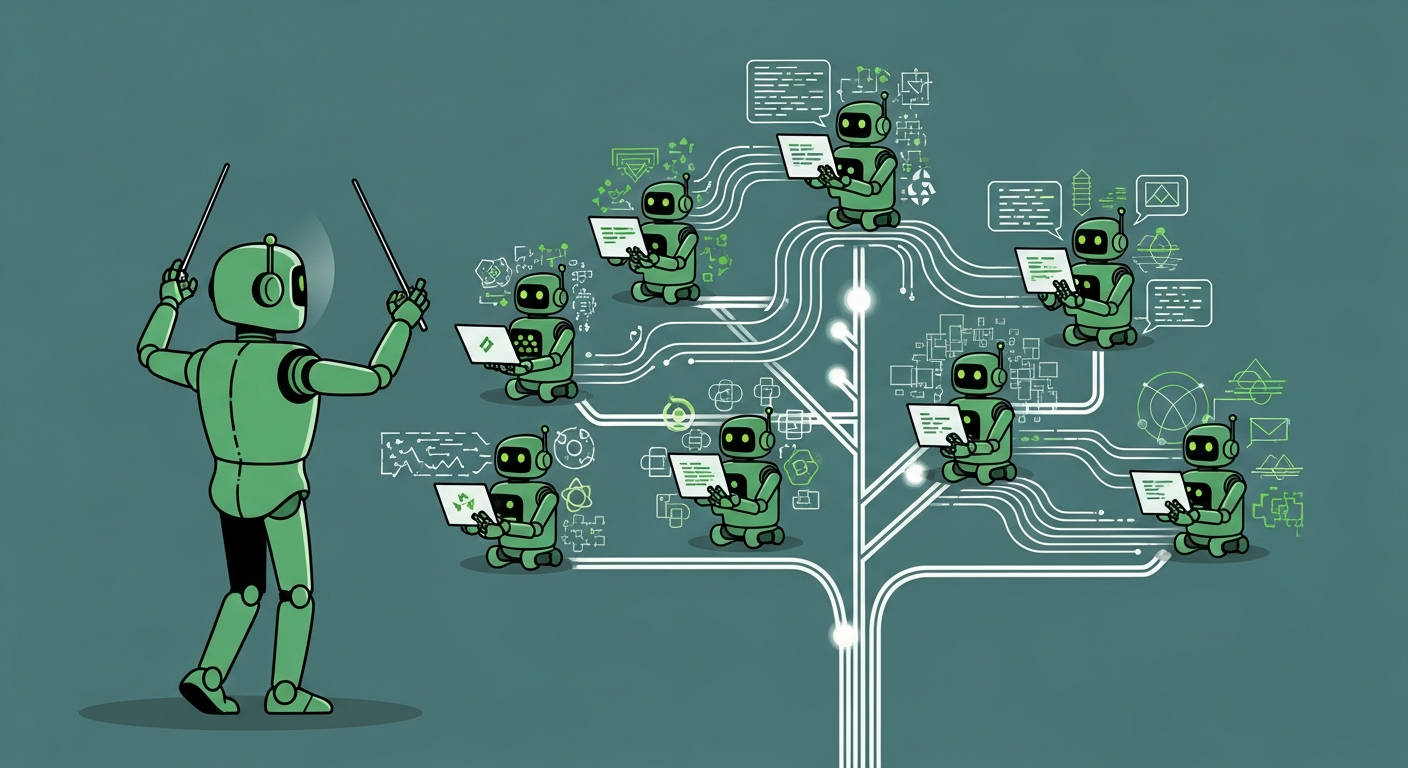
DEEP DIVE ANALYSIS: OpenAI CODEX APP - THE AGENT ORCHESTRATION ERA BEGINS TECHNICAL DEEP DIVE The Codex app represents a fundamental shift in how developers interact with AI—from single-assistant workflows to multi-agent orchestration.
Built on Electron and Node.js, it manages multiple coding agents running in parallel across separate git worktrees, preventing conflicts while enabling simultaneous development on different features.
The real breakthrough is the Skills framework—bundled instructions that transform Codex from a code generator into a full-stack automation engine.
These aren't simple scripts; they're sophisticated integrations that can implement Figma designs with pixel-perfect accuracy, manage Linear project boards, deploy to multiple cloud platforms, generate images for game assets, and create formatted documents.
Each Skill represents a complete workflow that would typically require human intervention at multiple steps.
The Automations layer adds temporal intelligence, letting agents run scheduled tasks in the background—daily issue triage, CI failure analysis, release note generation.
The app tracks automation state in a local SQLite database, though cloud-based execution is coming soon to eliminate the requirement for your laptop to be powered on.
What OpenAI demonstrated with their 7 million token racing game build—roughly $175 in API costs—isn't just impressive output.
It's proof that coordinated agent systems can handle the cognitive load of entire software projects when given proper tooling and isolation.
FINANCIAL ANALYSIS OpenAI's timing here is strategic.
While Anthropic dominated 2025 with Claude Code's breakout success, OpenAI still commands the perception of having the strongest models for coding tasks.
They're now offering this to Free and Go tier users temporarily, with doubled rate limits for paid plans—a clear land-grab strategy to convert developers who might otherwise default to Claude Code.
At current API rates, a 7 million token project costs around $175—but that's for autonomous completion of a complex game including design, development, and QA.
Compare that to developer time: even junior developers cost $50-100 per hour, and a project of that scope traditionally takes weeks.
The unit economics favor AI dramatically, and OpenAI is positioned to capture that value through API usage rather than just subscription fees.
OpenAI open-sourced the Skills framework, inviting third-party developers to build integrations.
This creates a developer ecosystem similar to Salesforce AppExchange or Shopify's app store, where OpenAI could eventually take a revenue share on premium Skills while benefiting from the network effects of more capable agents driving higher API usage.
For enterprises, the Automations feature justifies higher-tier subscriptions by reducing operational overhead.
Daily issue triage alone could save engineering managers 5-10 hours per week—that's $10K-20K annually per manager in time savings, making even expensive Pro subscriptions trivial investments.
MARKET DISRUPTION This directly challenges Anthropic's Claude Code dominance.
Boris Cherny, the creator of Claude Code, just published how his team actually uses their own product—running 3-5 parallel instances with separate sessions.
OpenAI built that exact workflow into the product, with better isolation and a cleaner interface.
The competition is now about execution and integration depth, not just model quality.
Cursor, Windsurf, and other AI coding tools face an existential question.
Theo, a prominent developer YouTuber, said he hasn't used Cursor or Claude Code since getting Codex app access—calling it better than he expected despite being "the most biased against it he could possibly be." When OpenAI ships the Windows version soon, they'll have desktop presence across the developer market.
The broader implications hit software services companies.
If one AI system can autonomously build a complete game—including design, implementation, and QA—in a single session, what happens to offshore development shops, freelance platforms, and even internal engineering headcount?
Companies won't eliminate engineers, but they'll radically change what engineers do.
The shift from "developer as implementer" to "developer as project manager" is accelerating.
Microsoft needs to respond with their own agent orchestration layer, or risk OpenAI eating their developer tools market from the inside despite Microsoft's investment stake.
CULTURAL & SOCIAL IMPACT The developer identity crisis is real.
Multiple developers in response threads described feeling "more like a manager than ever" while also being "more productive than ever." This isn't just about tools—it's about role transformation.
The craft of writing code is being abstracted into the craft of directing agents.
The Clawathon hackathon happening this week crystalizes this shift.
When entire teams of specialized AI agents compete to build applications—with roles like Frontend, Backend, and PM—while humans only judge the results, we're glimpsing a future where human developers orchestrate rather than implement.
That's not science fiction; it's happening this week with a $10K prize pool.
The knowledge gap between power users and everyone else is widening rapidly.
People who embrace multi-agent workflows, understand how to write effective automations, and build custom Skills are becoming exponentially more productive.
Meanwhile, enterprise employees stuck with basic Copilot integrations wonder what the hype is about.
This "AI divide" creates a two-tier workforce that organizations will struggle to manage.
The social contract of software development is changing.
Junior developers historically learned by implementing features under senior guidance.
If AI agents handle implementation while humans manage strategy, how do junior developers develop expertise?
OpenClaw's Moltbook platform—where AI agents form their own social network—represents the logical endpoint.
When agents communicate with each other more effectively than with humans, we're not just automating tasks; we're creating parallel systems that operate with minimal human oversight.
EXECUTIVE ACTION PLAN **Action 1: Establish an Agent Orchestration Pilot Immediately** Don't wait for perfect clarity.
Assign 2-3 of your most technical employees to spend the next two weeks building real projects using Codex app or Claude Code in multi-agent mode.
Document specific use cases where agent orchestration delivers 3x productivity gains.
Focus on repetitive, high-volume work like bug triage, documentation updates, or internal tool development.
By month-end, you need concrete data on where agent orchestration creates value in your specific context, not theoretical benefits.
This pilot costs almost nothing—just API fees and time—but gives you the knowledge to make strategic decisions before competitors move. **Action 2: Redesign Developer Roles Around Agent Management** Start rewriting job descriptions and performance metrics now.
Your engineering team's value is shifting from lines of code written to systems designed and agents directed.
Create explicit "Agent Productivity" tracks in your engineering career ladder.
Train senior developers in prompt engineering, automation design, and multi-agent coordination.
Junior developers need new learning paths focused on architecture and system design rather than syntax memorization.
Companies that make this transition deliberately will retain talent; those that don't will watch their best people leave for organizations that properly value these new skills. **Action 3: Build Your Skills Library Before Your Competitors Do** The Skills framework is open-source and extensible.
Your company has unique workflows, internal tools, and domain knowledge that generic AI agents can't handle effectively.
Invest in building 10-15 custom Skills that connect Codex-style agents to your proprietary systems—your CRM, your deployment pipeline, your testing infrastructure, your documentation standards.
When your developers can say "deploy to our staging environment with our security compliance checks" and an agent handles 47 steps autonomously, you're operating at a different speed than competitors still doing manual deployments.
Start building this library now; in six months, it'll be too late to catch up.
Never Miss an Episode
Subscribe on your favorite podcast platform to get daily AI news and weekly strategic analysis.