Anthropic Warns: AI Will Replace Software Engineers in Six to Twelve Months
Episode Summary
TOP NEWS HEADLINES Following yesterday's coverage of Elon Musk's $134 billion lawsuit against OpenAI, new details emerged: over 200 internal documents have been leaked revealing Microsoft's extens...
Full Transcript
TOP NEWS HEADLINES
Following yesterday's coverage of Elon Musk's $134 billion lawsuit against OpenAI, new details emerged: over 200 internal documents have been leaked revealing Microsoft's extensive influence on OpenAI's strategic direction over the past decade.
The files include emails, slide decks, and deposition transcripts showing how Microsoft pursued, rebuffed, and ultimately shaped the lab that launched the generative AI era.
At the World Economic Forum in Davos, Anthropic CEO Dario Amodei delivered a stark warning, stating we may be just six to twelve months away from AI systems that can handle "most, maybe all" of what software engineers do end-to-end.
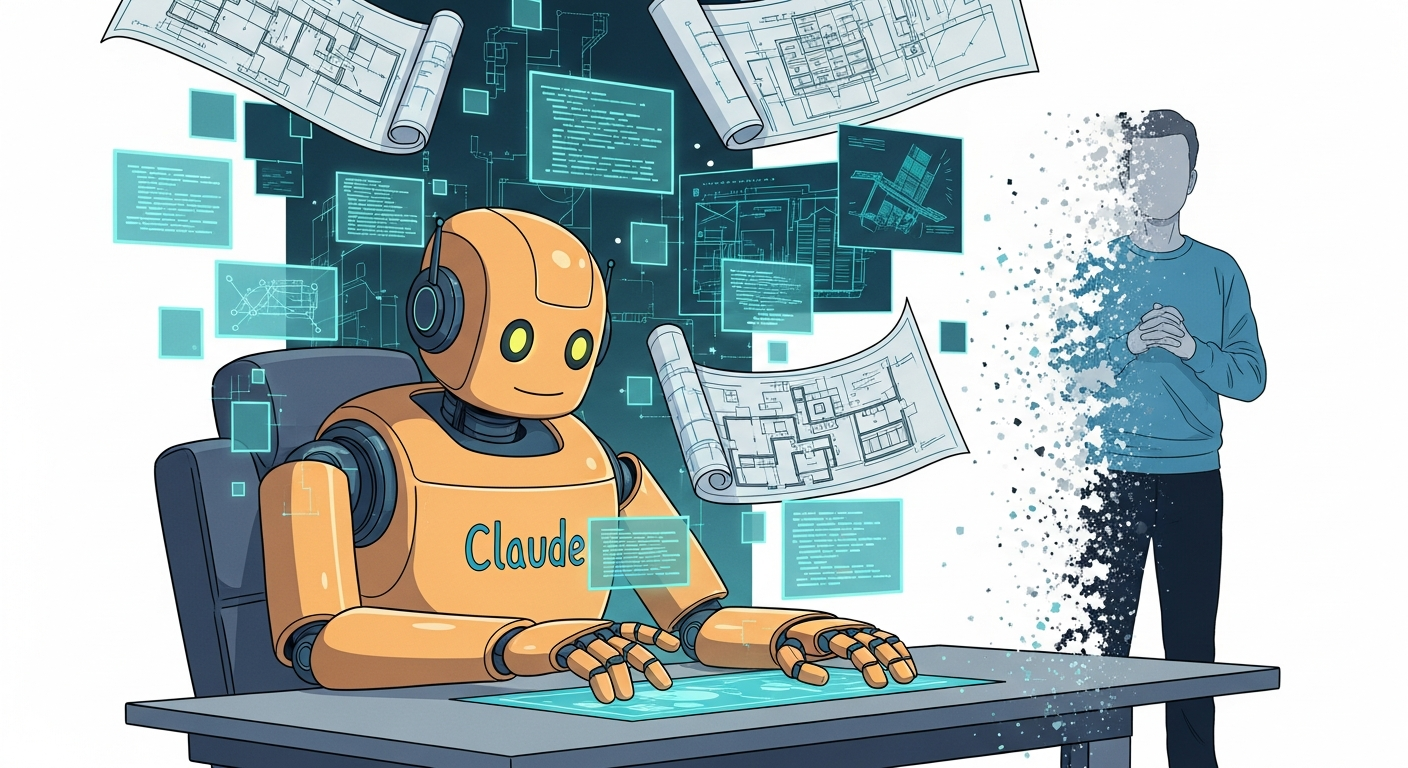
He revealed that engineers at Anthropic have already stopped writing code themselves—they now just edit what Claude produces.
In a surprising funding announcement, Humans&, a new AI startup founded by researchers who left Anthropic, xAI, and Google, just raised $480 million in seed funding at a $4.5 billion valuation.
The company is positioning itself as building "human-centric" AI focused on collaboration rather than full automation—a direct shot at the autonomy-driven approach of most frontier labs.
PwC released survey results showing that 56% of CEOs report seeing neither increased revenue nor decreased costs from their AI investments, despite massive spending.
Only 12% experienced both lower costs and higher revenue simultaneously.
Liquid AI released a new reasoning model small enough to run entirely on smartphones with less than 900 megabytes of memory, yet it outperforms larger models on math and problem-solving tasks—marking a significant breakthrough in on-device AI capabilities.
DEEP DIVE ANALYSIS: Anthropic's Timeline to Full AI Coding Capability
Technical Deep Dive
Dario Amodei's prediction that we're six to twelve months from AI systems handling complete software engineering workflows represents the culmination of several converging technical trends. The key breakthrough isn't just in coding ability—it's in the capacity for end-to-end project execution. Current models like Claude can already generate substantial code blocks, but what Amodei describes is qualitatively different: systems that can understand requirements, architect solutions, implement features, debug issues, write tests, and iterate based on feedback without human intervention at each step.
The technical foundation comes from advances in context windows, allowing models to maintain awareness across entire codebases rather than isolated functions. Anthropic's development of Claude Cowork—built almost entirely by AI in just a week and a half—serves as proof of concept. The system combines extended context, tool use, and what Amodei calls "thinking traces," where models generate internal reasoning steps before producing code.
This isn't about writing more lines of code faster; it's about replicating the complete cognitive loop that software engineers perform: understanding problems, evaluating tradeoffs, implementing solutions, and validating results. When models can reliably execute this loop autonomously, the traditional definition of software engineering fundamentally changes.
Financial Analysis
The economic implications are staggering and immediate. Anthropic has grown from zero to approximately $10 billion in revenue in just three years, projecting $70 billion in annual recurring revenue by 2028. This trajectory suggests the market is already pricing in a massive productivity shift.
Software engineering represents roughly 4.4 million jobs in the United States alone, with median compensation exceeding $120,000 annually. If AI systems can truly handle "most, maybe all" of software engineering work within a year, we're looking at potential cost savings in the hundreds of billions of dollars across the global economy.
However, Amodei's warning about "five to ten percent GDP growth with ten percent unemployment" reveals the darker side of this equation. This would be historically unprecedented—we've never seen simultaneous high growth and high unemployment. Traditional economic theory suggests these move inversely.
The financial models that underpin everything from corporate valuations to government fiscal planning assume human labor as a primary input. When that assumption breaks, we enter uncharted territory. Companies like Anthropic are essentially betting that productivity gains will create new forms of value and employment, but the transition period could be brutal.
The PwC survey showing 56% of CEOs seeing no ROI from AI spending suggests many organizations are still struggling to capture these theoretical gains, indicating significant friction in the adoption curve.
Market Disruption
The competitive landscape is being redrawn in real-time. Anthropic is deploying approximately one million TPU chips independently rather than renting from Google Cloud, signaling a strategic shift toward vertical integration. This move has implications far beyond one company—it suggests that leading AI labs believe controlling their compute infrastructure is a competitive necessity.
The $480 million seed round for Humans& at a $4.5 billion valuation, despite being only three months old with no product, demonstrates investors' appetite for any team with frontier lab pedigree. The disruption extends beyond AI companies to the entire software industry.
If coding becomes effectively commoditized within a year, the value chain shifts dramatically. Software companies will compete less on engineering capacity and more on product vision, user experience, and market positioning. Consulting firms and outsourcing providers face existential threats—why pay for offshore development teams when AI can handle implementation?
Meanwhile, companies like Microsoft and Google that control both AI models and development platforms are positioning themselves to capture value at multiple layers of the stack. The revelation that OpenAI's trajectory was heavily influenced by Microsoft, as shown in the leaked documents, underscores how critical these partnerships have become. The market is consolidating around companies that can integrate AI capabilities into existing workflows, not just those building the most powerful models.
Cultural & Social Impact
The cultural shift is already underway in unexpected ways. Amodei's revelation that Anthropic engineers have stopped writing code themselves represents a profound change in professional identity. Software engineering has been among the most stable and lucrative career paths for the past three decades.
When Demis Hassabis warns that "we're going to see this year the beginnings of maybe impacting the junior level entry level kind of jobs," he's describing the collapse of the traditional apprenticeship model that has sustained the industry. The advice from both Amodei and Hassabis to young people—spend time becoming "unbelievably proficient" at using AI tools—reveals a fundamental reorientation of how we think about skill development. The goal is no longer to master the underlying craft but to become expert directors of AI systems.
This mirrors historical transitions: accountants adapted to spreadsheets, graphic designers to Photoshop, but those tools augmented human capability rather than replacing it. The current shift feels qualitatively different because AI systems are targeting cognitive work at its core. The social implications extend beyond employment.
Amodei's warning about a "zeroth-world country" of 10 million tech workers experiencing 50% GDP growth while everyone else stagnates describes a dystopian scenario of unprecedented inequality. When productivity gains accrue primarily to capital rather than labor, societies face profound questions about distribution, purpose, and social cohesion that our current institutions aren't equipped to address.
Executive Action Plan
Organizations need to act immediately on three fronts. First, conduct an urgent audit of software development workflows to identify which tasks AI can already handle reliably. Don't wait for perfect solutions—the gap between current capability and full autonomy is closing rapidly.
Companies should establish dedicated teams to experiment with tools like Claude Code, focusing initially on isolated, well-defined projects where AI can operate with minimal human oversight. The goal is building institutional knowledge about what works and what doesn't before competitors do. Second, reimagine hiring and talent development strategies now.
If junior positions become obsolete within a year, companies face a pipeline problem—where will senior engineers come from in five years? Organizations should shift resources toward upskilling existing teams on AI collaboration and product vision while creating alternative pathways for talent development that don't rely on traditional junior roles. Companies like Anthropic are already hiring for new positions in prompt engineering, AI oversight, and system architecture that didn't exist two years ago.
Forward-thinking organizations should define these roles before the labor market becomes competitive. Third, address the governance and risk implications of AI-generated code. When systems produce thousands of lines of code without human authorship, questions of liability, security, and maintainability become critical.
Executives should establish clear policies around AI code review, testing standards, and accountability frameworks. This isn't just about technical quality—it's about establishing organizational responsibility when AI systems make decisions that affect product direction, user experience, or business outcomes. The companies that solve these governance challenges first will have significant competitive advantages as AI capabilities continue to expand.
Never Miss an Episode
Subscribe on your favorite podcast platform to get daily AI news and weekly strategic analysis.