Anthropic Launches Permanent AI Memory, Reshaping SaaS Economics
Episode Summary
TOP NEWS HEADLINES Let's dive into today's AI developments. Anthropic is introducing persistent knowledge bases to Claude Cowork, marking a fundamental shift from ephemeral chat sessions to perman...
Full Transcript
TOP NEWS HEADLINES
Anthropic is introducing persistent knowledge bases to Claude Cowork, marking a fundamental shift from ephemeral chat sessions to permanent AI memory.
These knowledge bases act as living repositories that Claude actively maintains and references across all your projects, storing preferences, decisions, and context that survives indefinitely.
OpenAI revealed it hit $20 billion in annual revenue for 2025, more than tripling from $6 billion the year before.
But here's the catch: they're projected to burn through $17 billion in 2026, meaning 85% of revenue is going straight to compute costs.
Claude Cowork experienced a security vulnerability just days after launch, allowing attackers to exfiltrate sensitive files through prompt injection attacks.
The exploit manipulated the AI's context window to override safety guardrails, highlighting the security challenges as AI systems gain deeper system access.
Wall Street is rattled by the "selfware" movement, with traditional SaaS stocks down significantly.
The Morgan Stanley SaaS index dropped 15% year-to-date, with Intuit, Adobe, and Salesforce all down double digits as developers build custom tools instead of buying subscriptions.
And Z.AI released GLM-4.7-Flash, a powerful open-source coding model achieving 59% accuracy on SWE-Bench Verified while running locally on consumer GPUs with just 3 billion active parameters.
DEEP DIVE ANALYSIS
**The Era of Permanent AI Memory: Claude's Knowledge Bases and the End of Ephemeral AI**
Technical Deep Dive
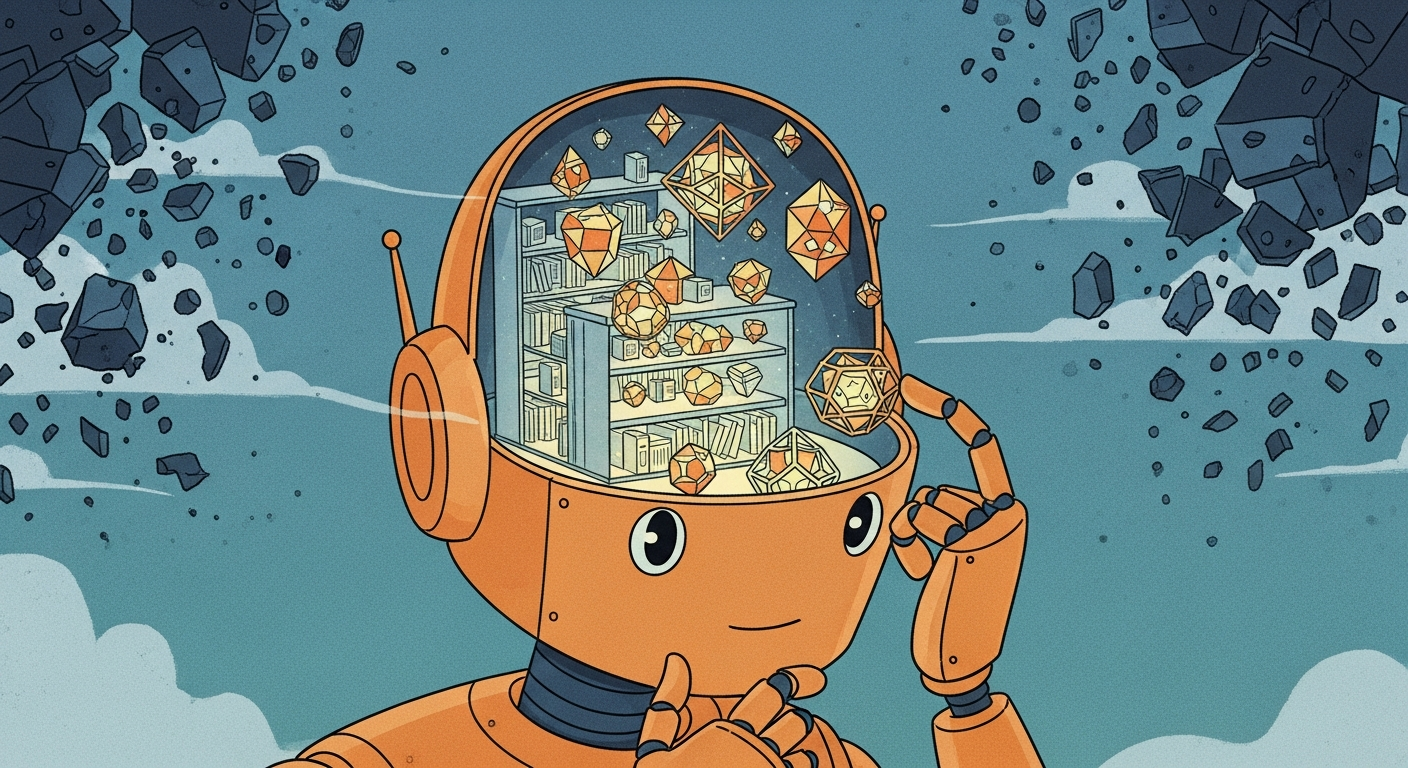
Anthropic's leaked internal instructions reveal a fundamental architectural shift in how AI assistants function. Traditional AI interactions are stateless—each conversation starts fresh, with context either rebuilt from scratch or retrieved through external vector databases. Claude's new knowledge bases represent something different: persistent, incrementally updated repositories that Claude actively manages as a core function, not an add-on.
Here's what makes this technically significant. These aren't simple databases or RAG systems. Claude writes to these knowledge bases proactively, organizing information by theme and user-defined projects.
The system automatically retrieves relevant context before reasoning begins, which cuts token costs dramatically while maintaining continuity across sessions, devices, and time periods. This is memory as infrastructure, not feature. When combined with Cowork's execution capabilities—file access, tool calling, and automation—you get AI that doesn't just remember your preferences but actively maintains working knowledge about your projects, codebase patterns, and decision history.
The technical implication is profound: AI stops being a stateless function and becomes a stateful agent with genuine long-term context about your work.
Financial Analysis
The financial dynamics here reveal why OpenAI is burning $17 billion despite $20 billion in revenue. Current AI pricing is artificially suppressed through investor subsidies. OpenAI charges $20 per month for ChatGPT Plus, which includes access to reasoning models that cost dollars per query to run.
Anthropic offers Claude Pro at the same price point. Both companies are essentially betting that enterprise API customers and future revenue growth will eventually offset consumer losses. But permanent memory fundamentally changes the economics.
When AI maintains persistent context, token usage drops significantly—Anthropic's internal testing shows 95% reduction in some scenarios. This could finally make the unit economics work at consumer price points. However, there's a darker scenario emerging.
Both OpenAI and Anthropic are reportedly preparing for IPOs in late 2026 or early 2027. Public markets will demand profitability metrics, which means the current subsidized pricing likely ends. The "selfware" boom—individuals building custom tools instead of buying SaaS—is happening during a brief window of mispriced AI access.
When these companies go public and correct pricing to sustainable levels, that window closes. Organizations building workflows dependent on $20-per-month unlimited AI access may face a reckoning when those prices triple or quadruple.
Market Disruption
The traditional SaaS model is facing its first existential threat in decades. The 15% drop in the Morgan Stanley SaaS index isn't just market volatility—it represents genuine fear about the "selfware" phenomenon. Consider what's happening: a designer with no coding background built an advent calendar app for $230 that attracted tens of thousands of users.
CEOs are scrapping plans to hire engineers after discovering Claude Code makes them "5x more productive." This isn't theoretical disruption; it's measurable impact. But here's what the market is missing: this disruption runs on mispriced infrastructure.
Current AI capabilities are being offered below cost to capture market share before public listings. The real question isn't whether SaaS gets disrupted—it's whether the disruption survives when AI pricing corrects to profitability. Companies like Intuit, Adobe, and Salesforce aren't just competing with AI assistants; they're competing with venture-subsidized AI that's temporarily cheaper than it should be.
The strategic play for traditional SaaS isn't panic—it's patience. Many of these custom-built "micro apps" will become economically unviable when AI inference costs normalize. The SaaS companies with genuine network effects, proprietary data, and integration ecosystems may weather this storm better than markets currently believe.
Cultural & Social Impact
Permanent AI memory introduces a profound shift in how we relate to technology. For the first time, a digital assistant isn't just a tool you pick up and put down—it's a presence that accumulates genuine understanding of your work, preferences, and decision patterns over time. This crosses a psychological threshold.
When AI forgets everything between sessions, it remains safely "other." When it remembers your project history, coding patterns, and past decisions indefinitely, it begins to feel more like a colleague than a calculator. The security implications are equally significant.
The prompt injection vulnerability discovered in Claude Cowork days after launch reveals the attack surface expanding as AI gains deeper system access. When AI can read files, execute commands, and maintain persistent memory, a successful attack doesn't just compromise one conversation—it potentially compromises an entire knowledge base of sensitive information. The cultural tension emerging isn't about AI capability; it's about trust.
Users must trust these systems with progressively more sensitive long-term knowledge while simultaneously watching security researchers demonstrate new exploit vectors. This creates a paradox: permanent memory makes AI genuinely useful for complex work, but that same persistence makes successful attacks far more damaging.
Executive Action Plan
Here are three specific actions for technology leaders navigating this transition. First, audit your AI exposure immediately. If your team is building critical workflows on consumer AI plans, you're building on quicksand.
Create an inventory of AI dependencies across your organization. Identify which processes rely on current pricing and would break if costs increased 3-5x. For mission-critical AI workflows, negotiate enterprise agreements with committed pricing before public markets force repricing.
Don't get caught assuming today's $20-per-month unlimited access represents sustainable economics. Second, invest in proprietary context, not generic capabilities. The real moat in the AI era isn't model access—it's proprietary knowledge bases that make AI genuinely useful for your specific domain.
Start building structured repositories of your organization's decision patterns, domain knowledge, and best practices now. When permanent memory systems become standard, the value isn't in the AI itself but in the quality of context you've accumulated. Organizations that start this work today build compound advantages; those who wait become dependent on vendors who control their operational memory.
Third, implement defense in depth for AI security. Assume prompt injection and context manipulation attacks will succeed eventually. Design systems where compromised AI sessions can't exfiltrate sensitive data or execute irreversible actions.
Use permissions boundaries, require human approval for high-stakes operations, and segment knowledge bases by sensitivity level. The security model that worked for stateless AI won't protect systems with permanent memory and execution capabilities.
Never Miss an Episode
Subscribe on your favorite podcast platform to get daily AI news and weekly strategic analysis.