Google Transforms Gmail with Gemini AI for 3 Billion Users
Episode Summary
TOP NEWS HEADLINES Google just dropped its biggest Gmail update in years, integrating Gemini AI across the platform with features like AI Overviews that let you search your inbox using natural lan...
Full Transcript
TOP NEWS HEADLINES
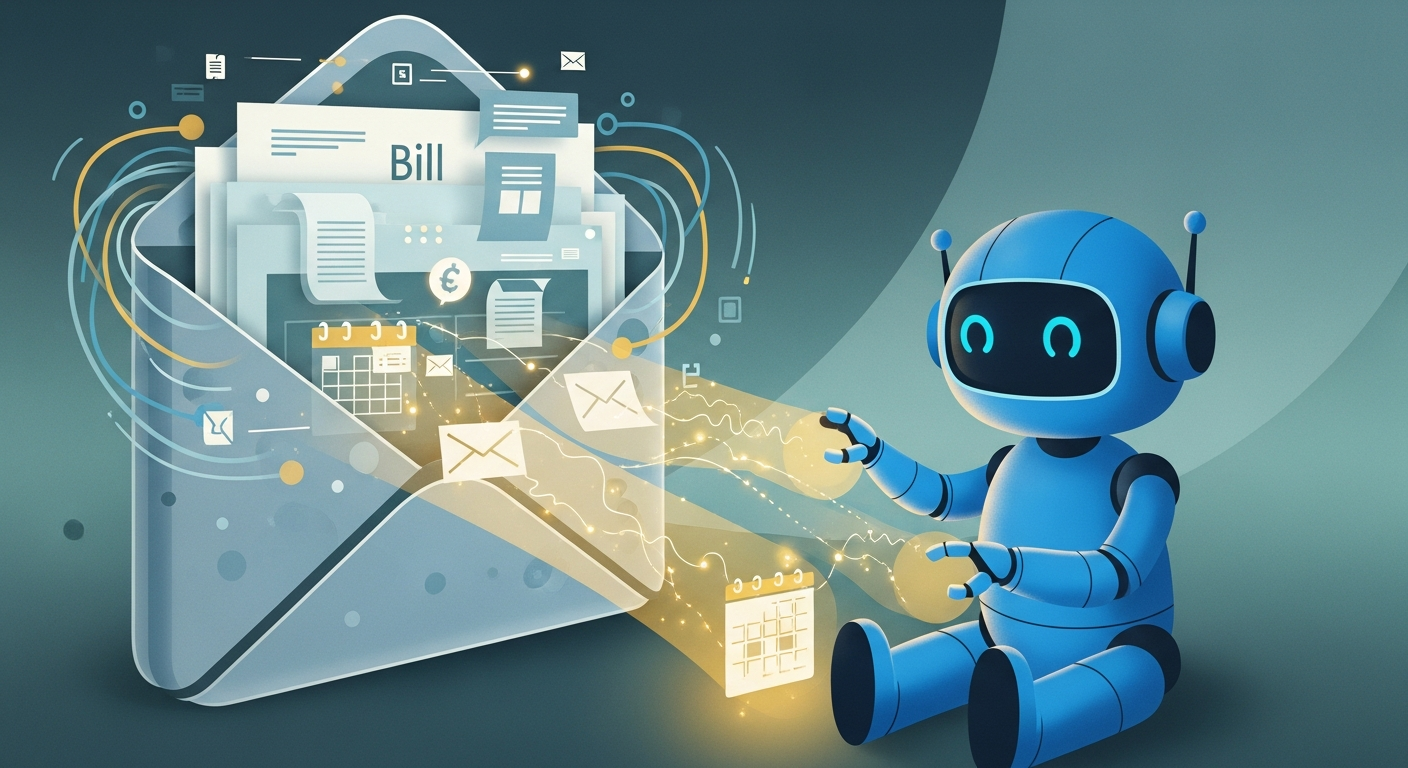
Google just dropped its biggest Gmail update in years, integrating Gemini AI across the platform with features like AI Overviews that let you search your inbox using natural language questions—think "Who was that plumber who quoted me last year?" without opening a single email.
The new AI Inbox automatically surfaces urgent bills, pending appointments, and organized catch-up topics, while writing features like Help Me Write and Suggested Replies are now free for all 3 billion Gmail users.
Following yesterday's coverage of xAI's $20 billion raise, leaked financials reveal the company burned through $7.8 billion in cash during the first nine months of last year while revenue hit $107 million in Q3, nearly doubling quarter-over-quarter.
They're racing to expand their Memphis data center and develop software for Optimus humanoid robots.
Two major Chinese AI companies went public in Hong Kong this week.
Zhipu AI raised $558 million at a $6 to 8 billion valuation with shares jumping 13%, while MiniMax raised $619 million and saw shares surge 109% on its debut.
Both companies are pricing their AI services at a fraction of what OpenAI and Anthropic charge, with Zhipu's chairman explicitly stating this price war will force Western competitors to slash their rates.
Microsoft launched Copilot Checkout, turning their AI assistant into a full shopping experience where users can browse, select, and complete purchases entirely within the chat window.
Early data shows users are twice as likely to buy through Copilot versus traditional search, with sessions seeing 53% more purchases within 30 minutes.
DEEP DIVE ANALYSIS: Gmail's Gemini Era - The AI Overhaul That Changes Everything
Technical Deep Dive
What Google's rolling out here represents a fundamental architectural shift in how email clients work. Traditional email has always been a passive repository—you search using keywords, you manually organize folders, you open individual messages. Gmail's Gemini integration flips this to an active, intelligent layer that understands context and intent.
The AI Overviews feature uses natural language processing to parse not just keywords but the semantic meaning behind your questions. When you ask "What restaurants did my friends recommend last month?" the system needs to understand temporal context, relationship mapping from your contacts, and extract recommendations buried in conversational threads.
This requires multi-hop reasoning across potentially thousands of emails. The AI Inbox feature is even more sophisticated. It's performing real-time triage on your incoming messages, identifying actionable items like bills with due dates, appointments requiring confirmation, and grouping related conversations thematically.
This isn't simple rule-based filtering—it's understanding the intent and urgency of each message and predicting what you'll need to act on. The technical infrastructure to do this at Gmail's scale, processing billions of emails daily while maintaining privacy and encryption standards, is genuinely impressive engineering. What's particularly noteworthy is that Google made Help Me Write and other composition tools free for all users.
This democratizes AI writing assistance in a way that impacts 3 billion people overnight.
Financial Analysis
This move is a calculated bet worth billions for Google. Gmail has always been free at the point of use, monetized through ads and as a gateway to Google's broader ecosystem. By embedding Gemini deeply into Gmail, Google is creating sticky AI engagement at unprecedented scale.
The financial logic is threefold. First, it drives adoption of Gemini AI Premium tiers—while basic features are free, advanced capabilities like the AI Inbox and enhanced proofreading require Pro or Ultra subscriptions at $20 to $30 monthly. With 3 billion users, even a 1% conversion rate to paid tiers generates $600 million to $900 million in annual recurring revenue.
Second, this deepens the moat around Google Workspace. Enterprise customers already paying for Gmail, Docs, and Drive now get AI capabilities that would require separate subscriptions with competitors. This makes switching costs prohibitively high and justifies price increases across the Workspace suite.
Third, the data advantage is massive. Every interaction with these AI features trains better models and reveals user intent patterns. Google can monetize this through more targeted advertising and by licensing improved models to enterprise customers.
Microsoft's revealing stat—that Copilot users are twice as likely to make purchases—shows the commercial power of AI-native interfaces. The timing matters too. Google was widely seen as behind in the AI race despite creating the transformer architecture that powers modern AI.
This Gmail integration is their "we're not just in the game, we're changing it" moment, directly countering Microsoft's Copilot integration across Office and OpenAI's growing enterprise presence.
Market Disruption
Gmail's Gemini integration creates immediate pressure across multiple markets. Email clients like Outlook, Apple Mail, and Superhuman now face a stark choice: integrate comparable AI or watch users migrate. Microsoft already has Copilot in Outlook, but Apple's relative AI silence becomes more glaring by the day.
The productivity software market faces consolidation pressure. Standalone tools that summarize emails, extract action items, or draft responses—think SaneBox, Boomerang, or various AI writing assistants—just became redundant for Gmail users. These companies either need to find differentiated value propositions or face obsolescence.
Enterprise communication platforms are affected too. Slack and Microsoft Teams position themselves as email replacements, but if Gmail becomes genuinely intelligent and proactive, the friction that drove users to these platforms diminishes. Why switch contexts if your inbox automatically surfaces what matters?
The competitive dynamic with Microsoft is fascinating. Both companies are racing to make AI the default interface for productivity. Gmail's 3 billion users versus Outlook's roughly 400 million enterprise users means Google can potentially shape how a generation expects email to work.
If people get used to asking their inbox questions in natural language, that becomes table stakes, forcing everyone else to catch up. Perhaps most importantly, this validates the shift to conversational interfaces as the future of software. We're moving from apps you navigate through menus and buttons to assistants you talk to.
Gmail isn't just adding features—it's pioneering a new interaction paradigm that will ripple through every category of software.
Cultural & Social Impact
The societal implications of this shift are profound and multifaceted. First, there's the cognitive offloading effect. When AI can surface what's important and answer questions about your email history, we're outsourcing another chunk of our memory and attention management.
This has genuine benefits—reduced cognitive load, faster information retrieval—but also raises questions about what happens when these systems fail or when we're forced to operate without them. Privacy concerns intensify significantly. For AI to provide these capabilities, it must read and analyze everything in your inbox.
Google insists processing happens with encryption and privacy protections, but we're essentially inviting AI to be an omniscient observer of our digital communications. The trust required is enormous, and breaches or misuse could be catastrophic. The accessibility implications are fascinating.
Natural language interfaces dramatically lower the technical barrier to email management. Users who struggled with search operators, filters, and folder hierarchies can now just ask questions. This could be genuinely empowering for less tech-savvy users, elderly populations, or people with cognitive differences.
There's also a subtle but important shift in email etiquette and expectations. If everyone has AI that can draft responses and summarize threads, communication patterns will evolve. We might see more verbose emails since AI can extract key points, or conversely, more terse communication since AI can elaborate.
Response times could accelerate since drafting is easier, creating new pressure around always-on availability. The democratization of writing assistance has equity implications too. Previously, polished professional communication was a skill that created advantages in hiring and advancement.
When AI levels that playing field, what becomes the new differentiator? Likely authenticity, strategic thinking, and relationship building—skills that are harder to automate but also harder to develop.
Executive Action Plan
For business leaders, this Gmail transformation demands immediate strategic response across three dimensions. First, evaluate your communication infrastructure within the next 30 days. If your organization uses Gmail or Google Workspace, you need a clear policy on AI feature adoption.
Will you enable AI Inbox for all employees, or limit it to specific roles? What guidelines govern using AI-drafted responses in customer communications versus internal emails? The default position of letting individuals decide creates inconsistent customer experiences and potential compliance risks.
Appoint a working group to establish guidelines before employees start using features haphazardly. Second, reassess your productivity tool stack and budget allocation for Q2. If Gmail's AI capabilities eliminate the need for standalone tools your organization pays for—email management apps, AI writing assistants, scheduling tools—reallocate that budget toward differentiating capabilities.
More strategically, evaluate whether Microsoft 365's advantages still justify premium pricing if your team primarily needs email, documents, and collaboration. For some organizations, switching to Google Workspace with integrated AI might deliver better value. Third, and most critically, invest in training your workforce not on the tools themselves, but on AI-augmented communication strategy.
The competitive advantage won't come from using AI to draft emails—everyone will do that. It will come from knowing when AI-generated content is appropriate versus when authentic, personal communication matters. Train managers on reviewing AI-drafted customer communications to ensure they align with brand voice.
Establish clear guidelines on transparency—should emails disclose AI assistance? For client-facing roles, this isn't optional; it's a core competency that will separate high performers from those who become commoditized by automation. The organizations that thrive in this shift won't be those that adopt AI tools fastest, but those that most thoughtfully integrate them into their communication culture and strategy while maintaining the human judgment that technology can't replicate.
Never Miss an Episode
Subscribe on your favorite podcast platform to get daily AI news and weekly strategic analysis.