OpenAI Launches ChatGPT Health with Encrypted Medical Records Integration
Episode Summary
TOP NEWS HEADLINES OpenAI just launched ChatGPT Health, a dedicated space within the chatbot that lets you connect your medical records and fitness apps for personalized health guidance. It's not ...
Full Transcript
TOP NEWS HEADLINES
OpenAI just launched ChatGPT Health, a dedicated space within the chatbot that lets you connect your medical records and fitness apps for personalized health guidance.
It's not meant to diagnose or replace doctors, but 40 million people already ask ChatGPT health questions daily, and now those conversations get stronger encryption and won't be used for training.
In a landmark move, Utah became the first state to let AI autonomously approve prescription refills for chronic conditions.
The system covers 191 medications, matched physician decisions 99% of the time in testing, and charges just four dollars per refill.
Texas, Arizona, and Missouri are already interested in following suit.
Anthropic is raising 10 billion dollars at a 350 billion dollar valuation, nearly doubling its worth from just three months ago.
This comes right after xAI announced their 20 billion dollar Series E, putting both companies in a heated race for frontier model supremacy.
Google unveiled their Willow quantum chip, which solved a benchmark problem in minutes that would take classical computers 10 septillion years.
This marks a genuine breakthrough in proving quantum computers can accomplish tasks impossible for traditional machines.
And Waymo introduced the Ojai, a new autonomous van built by Chinese manufacturer Zeekr that cleverly sidesteps import restrictions by shipping just the body to the US before Waymo installs the sensors and software here. --- DEEP DIVE ANALYSIS: THE AI DOCTOR WILL SEE YOU NOW TECHNICAL DEEP DIVE ChatGPT Health represents a fundamental architectural shift in how AI handles sensitive data.
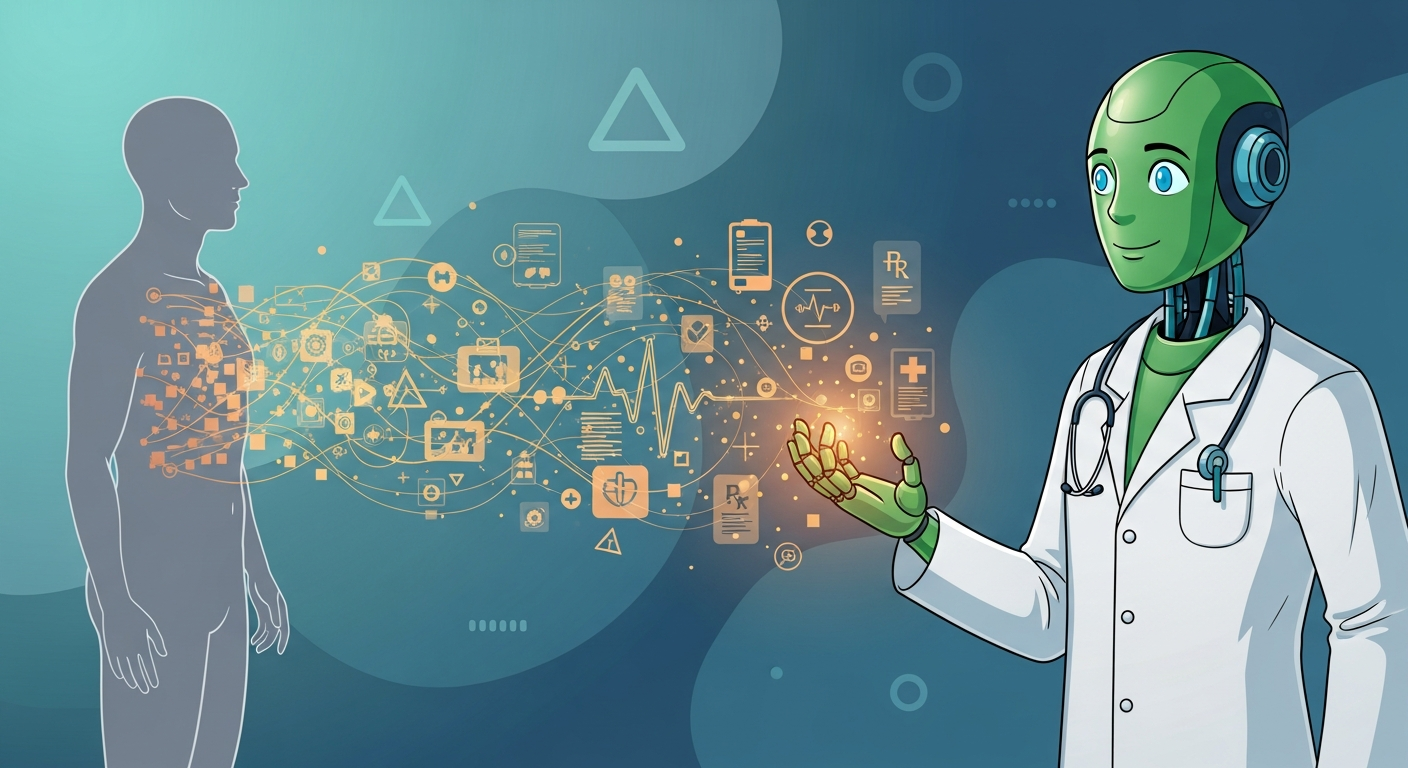
OpenAI has created what they're calling a "purpose-built encryption" system with completely isolated storage.
Your health conversations live in a separate memory space that doesn't cross-pollinate with your regular chats, and critically, this data never touches the model training pipeline.
ChatGPT Health connects to platforms like Apple Health, MyFitnessPal, Peloton, and through a partnership with b.well, it can pull actual medical records from healthcare providers.
This isn't just accessing fitness data, it's ingesting lab results, medication lists, and treatment histories to ground its responses in your actual medical context.
What makes this timing significant is the convergence.
OpenAI worked with 260 physicians across 60 countries who provided over 600,000 feedback iterations to shape how the model responds to health queries.
Meanwhile, Stanford just published research showing their SleepFM AI can predict dementia, heart attacks, and mortality years before symptoms appear, with accuracy rates above 80 percent.
The FDA also just relaxed oversight on low-risk health wearables, signaling regulatory acceptance of AI medical tools.
The technical infrastructure here isn't revolutionary on its own, but the combination of privacy architecture, data integration, physician-guided training, and regulatory timing creates something genuinely new.
FINANCIAL ANALYSIS The healthcare AI market is exploding with unusual momentum.
According to the Wall Street Journal, 27 percent of US health systems now pay for commercial AI licenses, three times the rate in the broader economy.
That's not experimental budget, that's operational spending, which means AI has crossed from pilot projects to production systems.
OpenAI's move into health makes financial sense when you look at their existing usage data.
With 40 million users already asking health questions daily, and 230 million weekly users overall engaging with health content, they've essentially been running an unpaid beta test at massive scale.
Now they're monetizing that proven demand with a feature that justifies ChatGPT Plus subscriptions and potentially opens enterprise health system contracts.
Utah's Doctronic charges four dollars per refill, and if they expand to a dozen states as predicted, they're tapping into billions of routine prescription transactions annually.
Compare that to traditional urgent care visits that cost patients 100 to 200 dollars, and the cost disruption becomes clear.
For pharmaceutical companies and insurance providers, this creates both threat and opportunity.
AI that monitors medication adherence and flags interactions could reduce the 300 billion dollars in annual costs from medication non-adherence.
But it also threatens the current fee-for-service model that profits from repeated doctor visits for routine renewals.
Epic's AI appeal tool now runs in 1,000 hospitals, and Northwestern Medicine cut radiology report times from 75 to 45 seconds.
That's not marginal improvement, that's a 40 percent productivity gain in a field where time directly equals capacity.
MARKET DISRUPTION The competitive dynamics here are fascinating.
OpenAI isn't competing with doctors, they're competing with the 15-minute wait on hold with your insurance company, the three-month delay to see a specialist, and the fact that your primary care physician has five minutes to review your chart before your appointment.
Traditional telehealth companies like Teladoc and Amwell should be concerned.
Their business model charges 50 to 75 dollars for a virtual doctor visit that often consists of routine questions an AI could handle.
If ChatGPT Health can triage symptoms, explain lab results, and help users understand their conditions for the cost of a 20-dollar monthly subscription, that's a direct substitution for millions of routine consultations.
The prescription refill market is about to fragment.
CVS and Walgreens have built their retail model around the friction of in-person pickups and phone calls to doctors for renewals.
Utah's autonomous AI approval system removes that friction entirely.
When patients can get refills approved instantly through an AI for four dollars instead of scheduling doctor appointments or navigating pharmacy phone trees, the traditional gatekeepers lose leverage.
For health insurance companies, this is existential.
Their profit model depends on complexity and information asymmetry.
AI that helps patients understand their coverage, appeal denials, and navigate care options threatens to collapse those margins.
Epic's AI appeal tool in 1,000 hospitals isn't just a productivity feature, it's a direct assault on the insurance denial infrastructure.
Google already integrated Gemini into medical workflows and acquired health AI companies.
Amazon has been quietly building its healthcare presence.
Apple controls the health data on a billion devices.
Microsoft backs OpenAI but also has its own healthcare AI initiatives.
The question isn't whether AI will transform healthcare, it's which platform captures the patient relationship.
CULTURAL & SOCIAL IMPACT We're witnessing a fundamental shift in how people relate to medical information and authority.
You couldn't access your own medical records easily, interpreting lab results required specialized knowledge, and second opinions meant scheduling another appointment.
ChatGPT Health democratizes medical knowledge in ways that make healthcare professionals uncomfortable.
When Fidji Simo shared that ChatGPT once flagged a dangerous antibiotic interaction her hospital's resident missed, she illustrated both the promise and the threat.
The promise is catching errors and filling gaps in an overworked system.
The threat is patients trusting AI over trained physicians.
People don't hate the concept of a doctor in their pocket, they hate the idea that corporations are surveilling their health data and that AI might make dangerous mistakes.
OpenAI's separate encryption and no-training commitment directly addresses these concerns, but trust takes time to build.
Younger people already trust AI for health information, they've grown up googling symptoms and watching medical TikTok.
Older populations, who actually use healthcare more frequently, remain skeptical.
Premium AI health tools require smartphones, internet access, and digital literacy.
Rural areas with the worst healthcare shortages often have the worst broadband access.
If AI becomes the primary way to get timely medical guidance, the digital divide becomes a health outcome divide.
The cultural shift toward preventive medicine accelerates with AI.
When Stanford's SleepFM can predict disease years before symptoms appear from a single night's sleep recording, we move from reactive to predictive healthcare.
That's transformative for outcomes but raises uncomfortable questions about genetic discrimination, insurance pricing, and who owns your predictive health data.
EXECUTIVE ACTION PLAN First, healthcare organizations need to treat AI integration as infrastructure investment, not experimental budget.
The 27 percent of health systems already paying for commercial AI licenses aren't early adopters anymore, they're establishing competitive advantage.
Hospitals should immediately pilot AI tools in three areas: administrative workflows like prior authorizations, clinical documentation to reduce physician burnout, and patient communication to handle routine inquiries.
The ROI is measurable and immediate, Northwestern's 40 percent reduction in radiology report time translates directly to increased capacity without hiring additional staff.
Second, pharmaceutical and insurance executives should scenario plan for a world where AI intermediates the patient relationship.
When patients can instantly check if their medications interact, understand why a claim was denied, and get explanations of treatment options, the traditional information asymmetry collapses.
Smart insurers will embrace this by building their own AI tools that genuinely help patients navigate care rather than gatekeep access.
The alternative is watching OpenAI, Google, and Amazon capture that relationship and turn insurers into commodity backends.
Third, investors should recognize that healthcare AI has crossed from potential to operational reality.
The safe bet is infrastructure plays like Epic Systems that provide the data pipes, semiconductor companies supplying the compute for edge AI medical devices, and cybersecurity firms protecting health data.
The risky but high-upside plays are startups attacking specific workflows like Doctronic's prescription refills or companies building predictive health models like Stanford's SleepFM.
The market is big enough for multiple winners, and the regulatory environment just shifted permissive with the FDA's relaxed oversight announcement.
Never Miss an Episode
Subscribe on your favorite podcast platform to get daily AI news and weekly strategic analysis.