Google Partners with Energy Dome on Revolutionary CO2 Battery Technology
Episode Summary
TOP NEWS HEADLINES Google just inked a groundbreaking deal with Energy Dome to deploy CO2 batteries for their data centers-a thermodynamic storage system that compresses carbon dioxide into liquid...
Full Transcript
TOP NEWS HEADLINES
Google just inked a groundbreaking deal with Energy Dome to deploy CO2 batteries for their data centers—a thermodynamic storage system that compresses carbon dioxide into liquid form, stores the heat, then releases it back through turbines when the grid needs power.
We're talking 75% round-trip efficiency, 30-year lifespan with zero degradation, and roughly half the cost of lithium-ion at scale.
The AI research community is having a very public meltdown over credit and terminology.
Meta's Yann LeCun called the concept of general intelligence "complete BS" on a podcast, which prompted DeepMind CEO Demis Hassabis to fire back publicly, saying LeCun is "just plain incorrect." Elon Musk jumped in backing Hassabis, because of course he did.
Meanwhile, German computer scientist Jürgen Schmidhuber—the LSTM inventor who's been claiming "I did it first" at AI conferences for decades—got photoshopped onto Time Magazine's Person of the Year cover by a Reddit user.
The AI community has literally coined a term for his behavior: getting "schmidhubered." New research shows that slapping an "AI-generated" label on advertisements cuts click-through rates by 31%.
Consumers are developing a pretty strong aversion to knowing their content came from a machine.
NVIDIA just dropped a comprehensive guide on fine-tuning language models on RTX GPUs using Unsloth, covering everything from LoRA training methods to memory requirements—basically democratizing custom AI for anyone with a decent gaming rig.
DEEP DIVE ANALYSIS
Technical Deep Dive
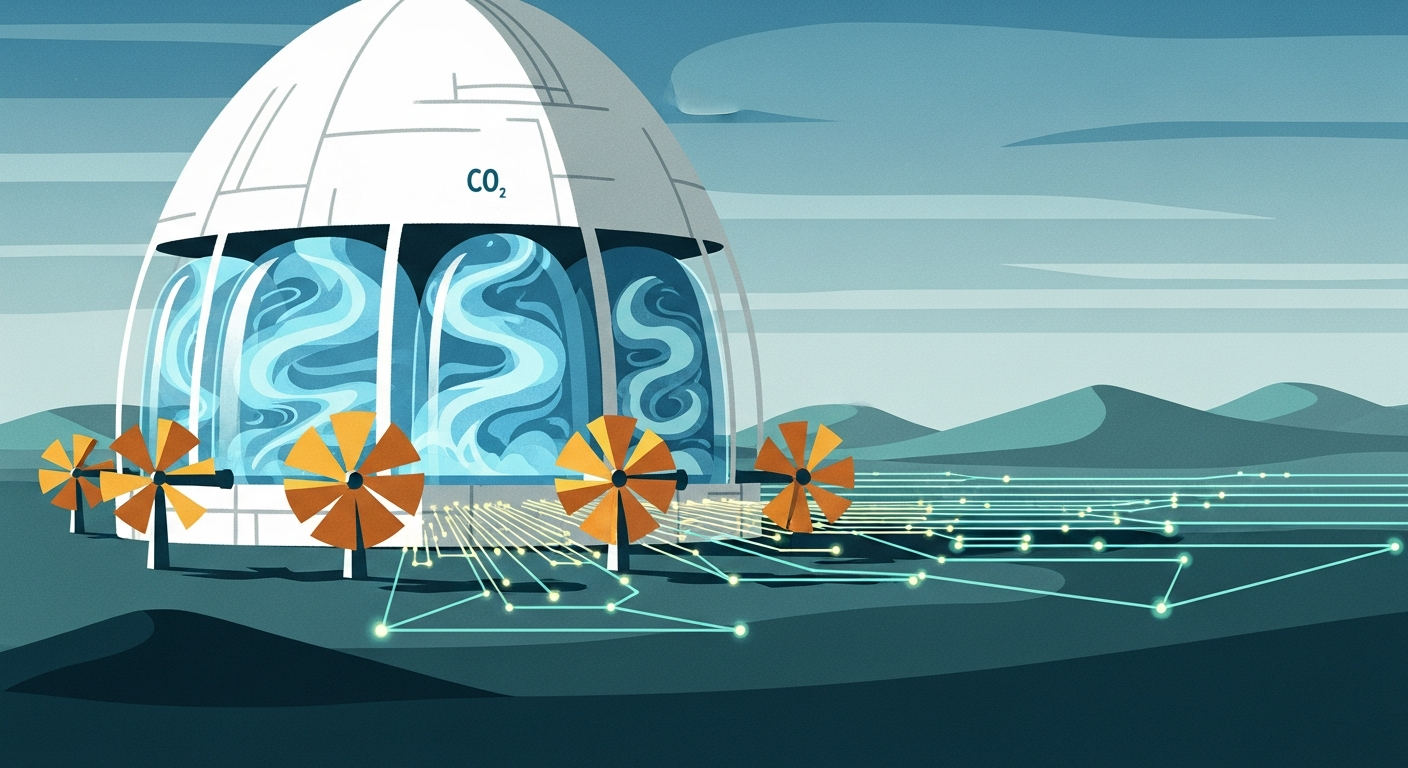
Let's dig into why Google's CO2 battery partnership matters for AI infrastructure. This isn't your typical lithium-ion battery setup. Energy Dome's technology is essentially thermodynamic energy storage disguised as a giant white dome in the desert.
Here's the elegant part: when you have excess renewable energy—say, solar at midday—the system uses that electricity to compress CO2 gas into liquid form. That compression generates heat, which gets stored separately. When the grid needs power hours later, you release that liquid CO2, it evaporates back into gas, and that phase change spins a turbine to generate electricity.
The specs are genuinely impressive. We're looking at 75% round-trip efficiency, which means for every 100 units of energy you put in, you get 75 back out. That's competitive with pumped hydro storage, which has been the gold standard for decades.
The discharge duration ranges from 8 to 24 hours—critical for bridging the gap when solar goes offline at sunset and doesn't come back until morning. One Reddit commenter nailed the comparison: "It's like pumped-storage hydro but with gas instead of water." What makes this particularly relevant for AI is the materials requirement—or rather, the lack thereof.
No lithium, no rare earth minerals, no cobalt supply chain nightmares. Just CO2, steel, and water. In an era where battery supply chains are geopolitically fraught and environmentally problematic, using an abundant industrial waste product as your storage medium is borderline genius.
The system promises zero performance degradation over 30 years, which means predictable economics for data center operators planning decade-long infrastructure investments.
Financial Analysis
The economics here are what really caught Google's attention. Energy Dome claims their system costs roughly 50% less than lithium-ion batteries for utility-scale storage. When you're planning data centers that will consume gigawatts of power for AI training runs, that cost differential becomes billions in capital expenditure over time.
Google made a strategic investment in Energy Dome alongside the commercial agreement, signaling they're betting on this technology becoming infrastructure backbone, not just a pilot project. The financial calculus for hyperscalers is straightforward but brutal. AI training is energy-constrained, not compute-constrained.
You can buy all the H100 GPUs you want, but if you can't power them consistently, they're just expensive paperweights. Current grid-scale batteries typically offer 4-hour discharge duration. That's fine for smoothing out demand spikes, but it's inadequate for running 24/7 AI workloads on intermittent renewables.
Nuclear would solve this, but new plants take a decade to build and cost tens of billions. Small modular reactors are promising but unproven at scale. CO2 batteries occupy a sweet spot: commercially proven technology, faster deployment than nuclear, and costs that pencil out against both lithium-ion and the alternative of just buying fossil fuel peaker plant electricity.
For Google's stated goal of running on 24/7 carbon-free energy by 2030, this might be the only viable path that doesn't require waiting on nuclear approvals or bankrupting themselves on battery costs. The investment thesis extends beyond Google. If Energy Dome's technology proves out at scale, every hyperscaler faces the same build-or-buy decision.
Microsoft, Amazon, and Meta are all in similar positions—massive AI infrastructure buildouts constrained by grid reliability and carbon commitments. That's a total addressable market measured in hundreds of billions over the next decade.
Market Disruption
This partnership fundamentally changes the competitive dynamics in AI infrastructure. Right now, proximity to reliable power is dictating where data centers get built. Microsoft is restarting Three Mile Island.
Amazon is buying nuclear-powered data centers. The current bottleneck isn't chips or talent—it's electricity that doesn't brown out and doesn't wreck your carbon accounting. If CO2 batteries work as advertised, suddenly renewables-heavy regions become viable for massive AI infrastructure.
West Texas wind farms, Arizona solar arrays, offshore wind in the North Sea—locations that were previously unsuitable because of intermittency become attractive. That redistributes where the AI buildout happens geographically, which cascades into labor markets, real estate, and regional economic development. The lithium-ion battery industry should be nervous.
Utility-scale storage was supposed to be their growth market as renewables proliferated. If thermodynamic storage undercuts them on price and duration, that's a multi-billion dollar addressable market that evaporates. Tesla's Megapack, Fluence, and other players banking on lithium chemistry dominating long-duration storage suddenly have a credible competitor that doesn't depend on mining supply chains or battery chemistry breakthroughs.
For AI companies specifically, this is about competitive moat. Whoever secures reliable, cheap, carbon-free power first can scale faster. If Google locks up Energy Dome's early production capacity, they potentially gain a 12-to-24-month advantage in AI infrastructure deployment over rivals still negotiating with nuclear plant operators or paying premium rates for grid power.
In a market where model capabilities are advancing monthly, infrastructure advantage translates directly to product advantage.
Cultural & Social Impact
The broader implication here is what AI infrastructure demands from our energy system. We're essentially re-industrializing the grid to feed computation. Data centers are projected to consume 8% of US electricity by 2030, up from 3% today.
That's not abstract—that's the equivalent of powering every home in Texas and California combined. The CO2 battery approach represents a particular vision of how to handle that demand: build more renewables, store the excess, smooth out intermittency. The alternative vision is nuclear everywhere, which has its own cultural and political baggage.
How we power AI becomes a referendum on energy policy more broadly. Do we bet on thermodynamic storage and renewables, or do we restart and build out nuclear? Different countries will make different choices, and those choices will determine where AI development concentrates.
There's also a subtle shift in how we think about AI's environmental impact. For the past few years, the narrative has been "AI training uses as much electricity as a small country." True, but incomplete.
If that electricity comes from dedicated renewable-plus-storage systems, the carbon accounting looks radically different. Google is explicitly positioning this as enabling carbon-free AI, not just cheaper AI. That reframes the conversation from "AI is environmentally irresponsible" to "AI is driving renewable energy innovation.
" For communities near data centers, CO2 batteries change the calculus too. Giant white domes are visible, but they don't emit radiation, don't need spent fuel storage, and don't create long-term environmental liabilities. Compared to nuclear, they're easier to permit and less contentious politically.
That could accelerate AI infrastructure buildout in regions where nuclear would face organized opposition.
Executive Action Plan
First, if you're responsible for AI infrastructure or strategic planning at any company with serious computational needs, you need to immediately assess your power roadmap for the next five years. Don't just ask "Can we get enough electricity?" Ask "Can we get enough reliable, carbon-accountable electricity that doesn't expose us to fossil fuel price volatility or regulatory risk?
" If your answer relies on grid power from mixed sources, you're building on sand. Start conversations now with renewable developers, storage providers, and possibly Energy Dome directly if you're operating at hyperscale. The window to lock in advantageous power purchase agreements is narrowing fast as competitors recognize the same constraint.
Second, for investors and corporate development teams, the entire energy storage value chain just became strategically relevant to AI in ways it wasn't 12 months ago. Look at companies working on long-duration storage—not just CO2 batteries, but liquid air, iron-air, compressed air, thermal storage, you name it. The technology that wins this race will capture enormous value because it unlocks the AI infrastructure build.
Energy Dome is proven but small. Who else is positioned to scale? Where are the bottlenecks in manufacturing, deployment, permitting?
Those are the chokepoints where strategic investments or partnerships create competitive advantage. Third, if you're in policy or regulatory affairs, understand that AI is about to become the single largest driver of energy policy for the next decade. The companies that successfully navigate permitting, interconnection queues, and renewable energy credits will build faster.
Get ahead of this by engaging with utilities, regional grid operators, and state energy offices now. Google didn't just write a check to Energy Dome—they're architecting a regulatory and commercial framework that lets them deploy this at scale. If you're not doing similar groundwork, you'll be two years behind when you try to follow their playbook.
Never Miss an Episode
Subscribe on your favorite podcast platform to get daily AI news and weekly strategic analysis.