UPS Deploys 400 Robot Arms in $120 Million Logistics Automation Bet
Episode Summary
TOP NEWS HEADLINES NotebookLM just dropped a massive feature suite that transforms it from a note-taking app into a genuine AI workspace. We're talking Gemini integration, data tables for organizi...
Full Transcript
TOP NEWS HEADLINES
NotebookLM just dropped a massive feature suite that transforms it from a note-taking app into a genuine AI workspace.
We're talking Gemini integration, data tables for organizing insights, chat history syncing across mobile and web, and direct exports to Google Docs and Sheets.
The timing is strategic—Google is positioning this as a productivity powerhouse just as enterprise adoption of AI tools accelerates into 2025.
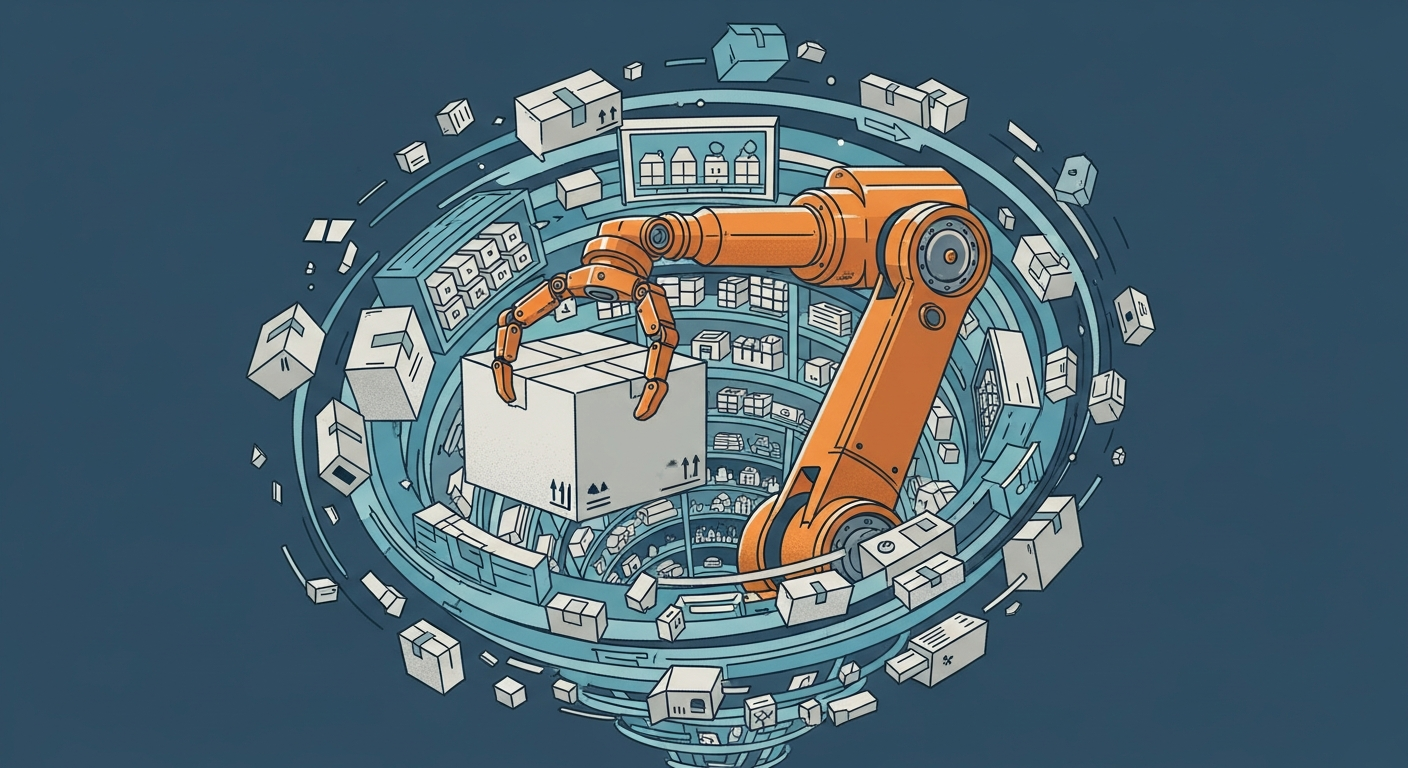
UPS is making a $120 million bet on embodied AI, purchasing 400 Pickle Robot arms that can unload trailers in about two hours.
These robots handle 50-pound boxes and represent a major push into warehouse automation.
This isn't experimental anymore—this is production-scale deployment of AI-powered physical robotics in logistics.
TSMC is accelerating overseas chipmaking in response to geopolitical tensions.
The world's leading chip manufacturer is diversifying away from Taiwan as concerns about Chinese invasion scenarios grow.
This strategic shift affects every AI company relying on cutting-edge semiconductors.
Researchers claim a breakthrough in "analog training" that could slash AI training energy consumption by up to 1,000 times.
The technique uses in-memory analog computing combined with residual learning to correct for analog noise.
If validated, this could fundamentally change the economics of training large models.
Meta partnered with the Universities Space Research Association to deploy SAM 2 for real-time flood detection.
They're fine-tuning the Segment Anything Model to identify water in drone and satellite imagery, creating automated emergency response systems.
DEEP DIVE ANALYSIS: UPS's $120 Million Robot Army and the State of Embodied AI in Logistics
Technical Deep Dive
Let's talk about what makes the Pickle Robot arms significant beyond just "robots unloading trucks." These systems represent a convergence of computer vision, force control, and real-time decision-making that's only recently become commercially viable. Traditional warehouse automation relied on highly structured environments—conveyor belts, standardized packaging, predetermined paths.
The Pickle Robot operates in chaos. It walks into a trailer packed by humans, encounters boxes of varying sizes, weights, and orientations, and figures out grasp points, lift trajectories, and placement strategies on the fly. The 50-pound weight capacity might not sound impressive, but it hits a sweet spot in logistics.
Most e-commerce packages fall under this threshold, and 50 pounds is where human injury rates spike dramatically. The two-hour unload time for a trailer compares favorably to the three to four hours typical human teams require, especially factoring in fatigue and safety breaks. What's happening under the hood is sophisticated sensor fusion—combining 3D depth cameras, force sensors, and likely tactile feedback to make hundreds of micro-adjustments per second.
The AI isn't just identifying boxes; it's predicting structural stability, calculating center of mass, and planning multi-step sequences. When a robot decides whether to pull the box on the left or stabilize the stack first, that's embodied reasoning in action. The real technical achievement is reliability.
Laboratory robots can do impressive things. Robots that work 16-hour shifts in dusty, temperature-variable, chaotic warehouses without constant human intervention—that's the engineering challenge UPS is betting $120 million they've solved.
Financial Analysis
The economics here tell a brutal story about labor costs and competitive pressure in logistics. At $300,000 per robot—simple division from the $120 million for 400 units—UPS needs these machines to pay for themselves within about three years to justify the investment at standard capital equipment return thresholds. Let's run the numbers.
A human unloading team of three workers making $20 per hour with full benefits might cost UPS $150,000 annually. If one robot replaces even two workers and operates two shifts, the ROI becomes obvious. But here's where it gets interesting: this isn't about cost savings on current operations.
This is about operational capacity during labor shortages. UPS and its competitors are hemorrhaging money during peak seasons when they literally cannot hire enough workers at any price. The 2024 holiday season saw logistics companies turning away business because they lacked the labor to handle volume.
When you can't fulfill contracts because you can't unload trucks fast enough, buying robots isn't about efficiency—it's about revenue preservation. The $120 million also signals something crucial to investors: this isn't a pilot program. UPS is deploying at scale, which means their internal testing validated the technology.
They're moving from "does this work?" to "how fast can we roll this out?" That confidence level suggests Pickle Robot's technology has crossed a meaningful threshold.
For context, UPS's annual capital expenditures run around $5 billion. This $120 million represents about 2.4% of their capex—significant enough to matter, small enough to absorb if it fails.
It's a calculated bet sized appropriately for emerging technology. The ripple effects hit labor markets hard. If this works, every major logistics company will face pressure to deploy similar technology or lose competitive ground.
That creates a gold rush for robotics companies and a reckoning for logistics labor markets.
Market Disruption
The competitive dynamics in logistics robotics just intensified dramatically. Boston Dynamics, Agility Robotics with their Digit humanoid, and Amazon's internal robotics division are all watching this deployment closely. UPS's purchase validates the market in a way that no amount of venture capital could—this is a Fortune 50 company writing nine-figure checks for embodied AI.
Amazon's been telegraphing this shift for years with their warehouse automation, but they've kept most technology internal. UPS buying from Pickle Robot creates a vendor market, which means smaller logistics companies can potentially access similar technology without building it themselves. That democratization of capability could compress profit margins across the industry.
For e-commerce companies, this is a mixed bag. Faster, more reliable logistics lowers costs and enables faster delivery promises. But it also means their logistics partners are spending billions on infrastructure upgrades, costs that will eventually flow through to shipping rates.
The question becomes whether efficiency gains outpace capital recovery costs. The warehouse real estate market faces interesting pressures. Automated facilities require different layouts—wider aisles for robot movement, different loading dock configurations, upgraded power infrastructure.
Landlords with modern Class A logistics properties can command premiums; owners of older facilities face obsolescence risk. Labor unions are positioning for this fight right now. The Teamsters saw this coming—it's why labor negotiations at UPS included automation language.
This deployment will become a rallying point for contract talks across the industry. Expect work rules, retraining programs, and attrition-based workforce reductions to dominate logistics labor relations for the next decade. The technology vendors suddenly have proof points for adjacent markets.
If robots can handle chaotic truck unloading, what about loading, cross-docking, or last-mile delivery? Pickle Robot and competitors will use this deployment as a wedge into every physical logistics function.
Cultural & Social Impact
We need to talk about what happens to the 500,000 Americans employed in warehouse and logistics jobs when this technology scales. The optimistic narrative says robots take the dangerous, repetitive work while humans move to supervisory and maintenance roles. The realistic assessment is messier.
Loading and unloading trucks isn't aspirational work, but it's accessible work. It requires physical capability, not specialized training or credentials. It's been a reliable path to middle-class wages for people without college degrees.
As those jobs automate, we're not just discussing employment statistics—we're discussing community stability in regions where logistics is the primary employer. The pace matters enormously. If this transition happens over 20 years, attrition and retraining can absorb the displacement.
If it happens over five years—which is plausible given competitive pressure—you're looking at acute regional unemployment crises. Towns built around distribution centers face the same existential questions that manufacturing towns faced in the 1980s. There's also a hidden demographic story.
Warehouse work has been a landing pad for recent immigrants, providing immediate employment while they establish themselves. Automating these roles constricts a traditional pathway for economic integration. That has implications for immigration policy, social mobility, and urban planning.
On the technology acceptance front, industrial robots provoke less anxiety than consumer-facing AI. People don't empathize with forklifts. But when workers see robots doing their specific job, the abstract debate about AI becomes viscerally personal.
How this deployment is communicated—and whether displaced workers receive genuine transition support—will shape public attitudes toward automation broadly. The environmental angle is underexplored. Electric robots powered by renewable energy could meaningfully reduce logistics' carbon footprint compared to diesel forklifts and the HVAC costs of human-comfortable warehouses.
But that only matters if companies actually pursue that path rather than just seeking cost minimization.
Executive Action Plan
If you're running operations at a logistics company, you need to move on this now, but move strategically. Start with a pilot deployment in your highest-volume, most labor-constrained facility. Don't try to automate everything—target the specific pain point where labor shortages cost you the most revenue.
Document everything: actual vs. projected ROI, maintenance requirements, integration challenges, worker response. That data becomes the foundation for scaling decisions and the business case for your board.
For technology and e-commerce companies, this is a supply chain resilience issue disguised as an automation story. Engage your logistics partners directly about their automation roadmaps. Build those timelines into your own capacity planning.
If your primary carrier is deploying robots that increase throughput by 30%, that's a competitive advantage—but only if you've structured contracts to capture those gains. Renegotiate agreements now before the efficiency improvements are proven and leverage shifts. The labor relations dimension requires executive attention, not just HR delegation.
If you're deploying this technology, bring workers into the conversation early. Not performative engagement—genuine input on implementation. Which shifts get automated first?
What retraining looks like? How job guarantees work? The companies that handle this transition thoughtfully will avoid the productivity losses and reputation damage that come from adversarial labor relations.
The robots will do the physical work regardless; whether your implementation becomes a case study in good automation or a cautionary tale about workforce displacement is entirely within your control.
Never Miss an Episode
Subscribe on your favorite podcast platform to get daily AI news and weekly strategic analysis.