OpenAI, Anthropic, Block Form AI Standards Foundation with Linux
Episode Summary
TOP NEWS HEADLINES OpenAI is testing Image-2 alongside GPT-5. 2, and early results show a massive leap in detail and color accuracy. The models, currently codenamed "Chestnut" and "Huzzlenut," are...
Full Transcript
TOP NEWS HEADLINES
OpenAI is testing Image-2 alongside GPT-5.2, and early results show a massive leap in detail and color accuracy.
The models, currently codenamed "Chestnut" and "Huzzlenut," are closing the gap with Google's Nano Banana 2, finally fixing that yellow tint problem that plagued Image-1.
Mistral just dropped Devstral 2, scoring 72.2% on SWE-bench Verified with only 123B parameters—that's five times smaller than competing models but nearly matching their performance.
They also launched Vibe CLI, their first autonomous coding agent that can handle multi-file changes across entire codebases.
Microsoft open-sourced GigaTIME, an AI model that extracts thousands of dollars worth of tumor analysis from a ten-dollar tissue slide.
Trained on 40 million cell samples, it's turning routine pathology into population-scale cancer research without the expensive lab work.
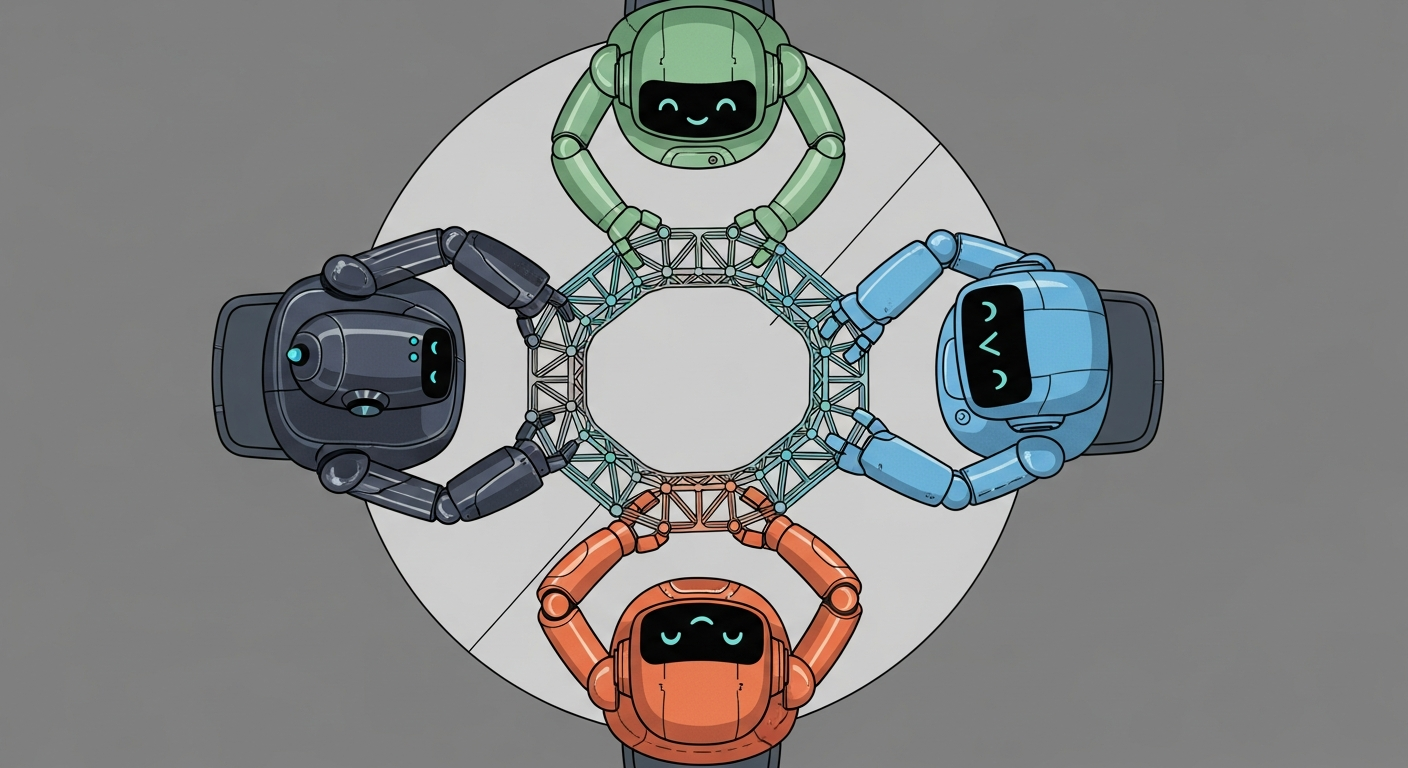
OpenAI, Anthropic, and Block just formed the Agentic AI Foundation under the Linux Foundation.
They're pooling their core frameworks—MCP, Agents.md, and Goose—to create industry standards before regulators step in.
Google, Microsoft, AWS, and Bloomberg have already joined as supporting members.
The Pentagon launched GenAI.mil with Google's Gemini as the first AI model available to military personnel.
Secretary of Defense Pete Hegseth says it's about making the force "more lethal," though Google insists it's limited to unclassified data and policy summarization.
Technical Deep Dive
The Agentic AI Foundation represents the most significant interoperability play in AI's short history. At its core are three donated frameworks: Anthropic's Model Context Protocol, which has already been integrated into ChatGPT, Cursor, Gemini, and VS Code with over 10,000 active servers; OpenAI's Agents.md specification for agent behavior documentation; and Block's Goose agent framework for practical implementation.
What makes this technically significant is that these aren't just API standards—they're attempting to create a universal language for how AI agents communicate, share context, and execute actions across platforms. The MCP specifically solves a critical problem: right now, every AI agent speaks its own dialect, meaning developers have to rebuild integrations for each platform. By establishing common protocols now, before agent deployment becomes widespread, the foundation is essentially building the TCP/IP of the AI agent world.
The Linux Foundation's governance model is crucial here. Unlike proprietary standards controlled by single companies, this neutral structure theoretically prevents any one player from weaponizing the protocols against competitors. The foundation will manage updates, resolve conflicts, and ensure the standards evolve without becoming battlegrounds for corporate interests.
Financial Analysis
This move is worth billions in avoided engineering costs alone. Consider that enterprises typically spend 30-40% of AI implementation budgets on integration work. If agents can communicate natively across platforms, that integration tax drops dramatically.
For the founding companies, this is strategic capital deployment—spend millions now on standardization to capture tens of billions in market expansion later. The timing isn't coincidental. The AI agent market is projected to hit 37 billion dollars by 2027, but fragmentation could strangle that growth.
By establishing standards before the market matures, these companies are essentially lowering the barrier to entry for enterprise adoption while simultaneously protecting their market positions. It's a brilliant play: appear collaborative while actually consolidating control over the infrastructure layer. For investors, watch who joins next and who stays out.
Companies that refuse to adopt these standards are either planning competing frameworks or believe they can win through proprietary advantages. That tells you everything about their strategic positioning. The supporting member list—Google, Microsoft, AWS—reveals that the hyperscalers understand the game theory here: better to have a seat at the table than to fight a standards war they might lose.
The revenue implications are massive. Standardized agents mean faster enterprise deployment, lower switching costs, and ultimately, higher consumption of AI services across the board. This isn't about dividing a fixed pie—it's about making the market ten times larger.
Market Disruption
This foundation fundamentally rewrites competitive dynamics in AI. Smaller players who previously couldn't afford to build integrations with every major platform now get free access to the same interoperability that only well-funded companies could achieve. That democratization will accelerate innovation but also intensify competition.
For enterprise software companies, this is existential. If AI agents can seamlessly integrate across platforms, the traditional moat of closed ecosystems evaporates. Salesforce, ServiceNow, Workday—any company that relied on data lock-in to maintain customer relationships now faces agents that can orchestrate actions across competing platforms without friction.
The cloud providers are playing a different game. AWS, Google Cloud, and Microsoft Azure joining as supporting members isn't altruism—it's infrastructure positioning. These standards will run on their compute, their storage, their networks.
They're betting that even in a standardized world, enterprises will pay premium prices for managed agent infrastructure. Watch for the companies that don't join. If major players like Apple or Meta stay out, that signals they believe proprietary agent ecosystems will win in consumer markets.
The enterprise versus consumer divide in AI strategy is about to become very visible, and this foundation is drawing that line in the sand.
Cultural & Social Impact
We're watching the rules of AI governance being written in real-time, and they're being written by corporations, not governments. This is a profound shift in how technological infrastructure gets regulated. The Linux Foundation provides democratic-looking governance, but make no mistake—the companies who donated the core protocols will have outsized influence over how agent technology evolves.
For end users, standardization means AI agents that actually work together instead of competing for your attention. Imagine your calendar AI talking directly to your email AI, which coordinates with your travel AI, all without you manually copying information between systems. That's the promise.
The risk is that standardization also means standardized vulnerabilities, standardized biases, and standardized failures that affect everyone simultaneously. The broader societal question is about concentrated power. Six companies just decided what the technical standards for autonomous AI will look like.
No public consultation, no democratic input, no government oversight. They're calling it "open" because the code is visible, but the decision-making process is anything but. This is private governance of public infrastructure, and we're accepting it because it's wrapped in the language of open source and collaboration.
For developers and researchers, this creates a new hierarchy. If your agent framework doesn't conform to AAIF standards, you're effectively building for a niche market. That will accelerate conformity but potentially stifle truly novel approaches that don't fit the standardized model.
Executive Action Plan
First, audit your AI strategy against these emerging standards immediately. If you're building proprietary agent systems, you need to decide now whether to conform to AAIF protocols or commit to a fully proprietary path. The middle ground is disappearing fast.
Companies that wait six months to make this decision will find themselves either rebuilding from scratch or locked out of the mainstream agent ecosystem. Second, accelerate your agent deployment timeline. The standardization play only works if there's rapid adoption, which means the founding companies will be pushing hard to get enterprises implementing agent systems in 2026.
Early adopters will have influence over how these standards evolve in practice. Late adopters will be stuck with whatever the early majority decided. If you were planning agent pilots for late 2026, move them to Q1.
The learning curve advantage of being early is about to become significant. Third, invest in technical talent who understand these specific protocols. The Model Context Protocol, in particular, is becoming the common language of AI agents.
Developers who deeply understand MCP implementation will be worth their weight in gold over the next eighteen months. Start training your teams now, or start recruiting people who've already worked with these frameworks. The talent market for agent-native developers is about to get very expensive.
Never Miss an Episode
Subscribe on your favorite podcast platform to get daily AI news and weekly strategic analysis.