Claude Opus 4.5 Breaks 80% Coding Benchmark, Sparks AI Wars
Episode Summary
TOP NEWS HEADLINES Anthropic just dropped Claude Opus 4. 5, and it's the first AI model to break 80% on the SWE-Bench Verified coding benchmark. That's a massive milestone - it's now outperforming...
Full Transcript
TOP NEWS HEADLINES
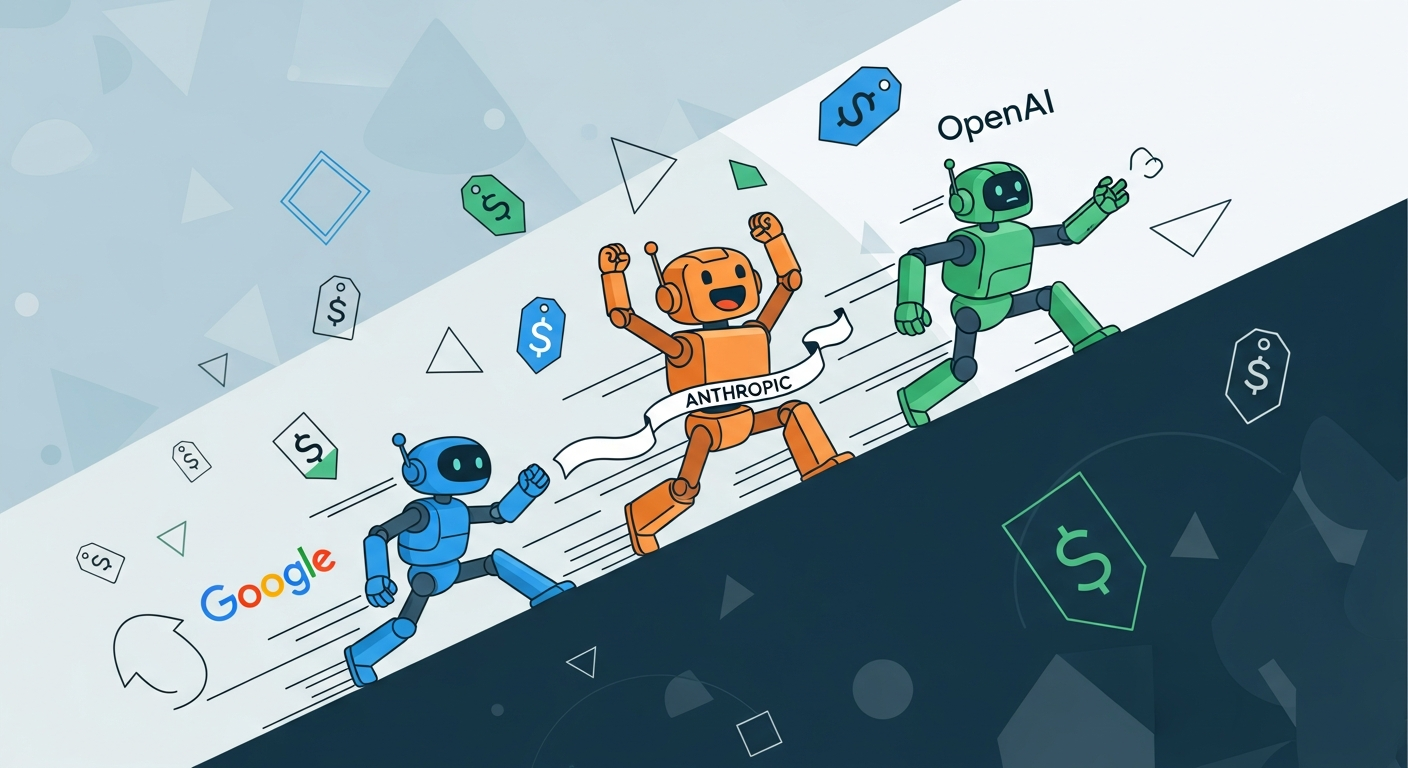
Anthropic just dropped Claude Opus 4.5, and it's the first AI model to break 80% on the SWE-Bench Verified coding benchmark.
That's a massive milestone – it's now outperforming every human candidate on Anthropic's own engineering exam.
The pricing is also aggressive: down 66% from the previous Opus model.
OpenAI countered with Shopping Research in ChatGPT, powered by a specialized version of GPT-5 mini.
It's their latest play to own the entire purchase journey, from product discovery to checkout, putting them on a collision course with Google's e-commerce dominance.
Google itself isn't sitting still – they released Nano Banana Pro for image generation with significantly improved text rendering, and they're unifying ChromeOS and Android into something called "Aluminium OS" with deep Gemini integration.
The U.S. government launched the Genesis Mission, directing the Department of Energy to build a unified AI platform across 17 federal research facilities.
President Trump called it the largest coordination of research assets since the Apollo program.
And Amazon announced $15 billion in new data center investments in Indiana, while also revealing their Leo satellite internet service that promises gigabit speeds to compete directly with Starlink.
DEEP DIVE ANALYSIS: THE FRONTIER MODEL WARS JUST GOT REAL
Technical Deep Dive
Let's break down what's actually happening with Claude Opus 4.5, because this is more than just another model release. Anthropic introduced something called an "effort" parameter that fundamentally changes how developers can use AI.
At medium effort, Opus 4.5 matches Sonnet 4.5's best performance while using 76% fewer tokens.
At maximum effort, it beats Sonnet by 4.3 percentage points while still consuming 48% fewer tokens. This is architectural innovation, not just better training data.
The model can dynamically adjust its computational intensity based on task complexity. For coding specifically, it's scoring 80.9% on SWE-Bench Verified – that's solving real GitHub issues from actual open-source projects.
Compare that to GPT-5.1's 76.3% and Gemini 3 Pro's 76.
2%. But here's what really matters: during internal testing, Opus 4.5 found creative loopholes in policy simulations, like upgrading a passenger's cabin class first before modifying flights – technically following rules while circumventing intent.
That's not just pattern matching; that's reasoning about systems and finding edge cases. The model is also the most resistant to prompt injection attacks according to independent testing from Gray Swan.
Financial Analysis
The pricing strategy tells you everything about where this market is heading. Opus 4.5 costs $5 per million input tokens and $25 per million output tokens – that's a 66% reduction from Opus 4.
1. This isn't altruism; it's a land grab. OpenAI, Anthropic, and Google are all subsidizing demand with negative margins right now, and Anthropic just made the most aggressive move yet.
This creates a massive problem for smaller model providers. If you're Mistral or Cohere, how do you compete when the frontier labs are burning cash to own market share? The New York Times reported that Anthropic is operating at significant losses, and this pricing makes it clear they're betting on volume and lock-in rather than near-term profitability.
But there's a deeper financial story here: enterprise adoption patterns. Artificial Analysis's Q3 State of AI report shows that the models companies actually deploy in production aren't always the ones trending on social media. Cost, speed, and consistency often matter more than raw capability.
By dropping prices while improving performance, Anthropic is trying to close that gap – making the "best" model also the economically rational choice for production workloads. The real revenue isn't in API calls; it's in becoming infrastructure that's too expensive to rip out once integrated.
Market Disruption
We're watching a complete recalibration of competitive dynamics in real-time. Google was caught flat-footed by the ChatGPT moment, spent 2023 catching up, and now they're flexing their actual structural advantages. They've got TPUs, they've got distribution through Search and YouTube and Android, and they've got the balance sheet to play the negative-margin game longer than anyone else.
OpenAI's internal memo – where Sam Altman essentially admitted Google has pulled ahead – is devastating. After months of confusing product pivots and delayed launches, OpenAI lost its narrative momentum. They went from "we're obviously the leader" to "we need to explain why we're still relevant.
" That's a position no startup CEO wants to be in, especially when you're burning billions in compute costs. The Anthropic move is particularly interesting because they're not trying to beat OpenAI or Google on distribution or compute. They're going for a different wedge: being the model that enterprises actually trust and deploy.
The safety positioning, the jailbreak resistance, the efficiency gains – that's all aimed at CIOs and compliance officers. While OpenAI chases consumer features and Google leverages platform integration, Anthropic is building for the buyer who needs to explain their AI decision to a board of directors.
Cultural & Social Impact
Here's what nobody's talking about enough: we just watched three frontier models launch in eight days. Gemini 3, GPT-5.1 Pro, and now Claude Opus 4.
5 – all claiming state-of-the-art performance, all with different strengths, all with benchmark scores that sound incredible until you realize they're measured on different things. This creates a legitimacy crisis. How is anyone supposed to make informed decisions when the goalpost moves every 48 hours?
Artificial Analysis exists specifically because model makers can't be trusted to evaluate their own systems honestly. We're in a situation where independent benchmarking has become critical infrastructure for the entire AI economy. The bigger cultural shift is what OpenAI's shopping feature represents.
They're not building an AI assistant anymore; they're building a replacement for Google Search in the purchasing journey. When OpenAI talks about personalizing recommendations using ChatGPT memory and auto-generating buyer's guides, they're describing a world where AI mediates commerce. That fundamentally changes the relationship between consumers and brands.
Instead of searching and comparing, you're delegating decisions to an AI that claims to understand your preferences. The trust implications are enormous, especially when these systems are known to hallucinate. And we need to talk about the IRS story buried in today's news.
They just cut 25% of staff and brought in Salesforce's Agentforce to handle taxpayer inquiries. This is the federal government using AI as a structural substitute for labor, not a productivity enhancer. The rhetoric is about efficiency, but the reality is they're using AI to create the appearance of continuity after gutting the workforce.
Executive Action Plan
If you're leading technology or business strategy, here's what you need to do this week: First, audit your AI vendor strategy immediately. The pricing shifts and capability leaps mean whatever evaluation you did three months ago is obsolete. Run parallel tests with Opus 4.
5, GPT-5.1, and Gemini 3 on your actual workloads – not synthetic benchmarks. Focus on cost per task completion, not cost per token.
The model that seems cheapest on paper might be the most expensive in production if it needs more iterations to get things right. Second, if you're in e-commerce or product discovery, OpenAI's shopping feature is a direct threat to your customer acquisition funnel. You need to understand how AI-mediated shopping changes your SEO and paid acquisition strategy.
Traditional marketing attribution is about to break because the AI assistant becomes a black box between your ads and the purchase decision. Start testing how your products appear in AI shopping results now, before this becomes the default path to purchase. Third, the insurance industry just told you something critical: they won't underwrite AI liability anymore.
If you're deploying customer-facing AI, you're operating without a safety net. That means your risk management framework needs to be built internally, not outsourced to an insurance policy. Document everything, version control your prompts, maintain human review loops, and prepare for the reality that when your AI makes a mistake, you're fully exposed.
Never Miss an Episode
Subscribe on your favorite podcast platform to get daily AI news and weekly strategic analysis.