China's Kimi K2 Beats GPT-5 While Costing Millions, Not Billions
Episode Summary
Your daily AI newsletter summary for November 10, 2025
Full Transcript
TOP NEWS HEADLINES
AI stocks just took their worst beating since Trump's "liberation day," with a trillion dollars evaporating from major players like NVIDIA, Microsoft, Palantir, and Oracle.
Wall Street's suddenly asking the uncomfortable question everyone's been avoiding: when exactly does this massive AI spending actually turn into profit?
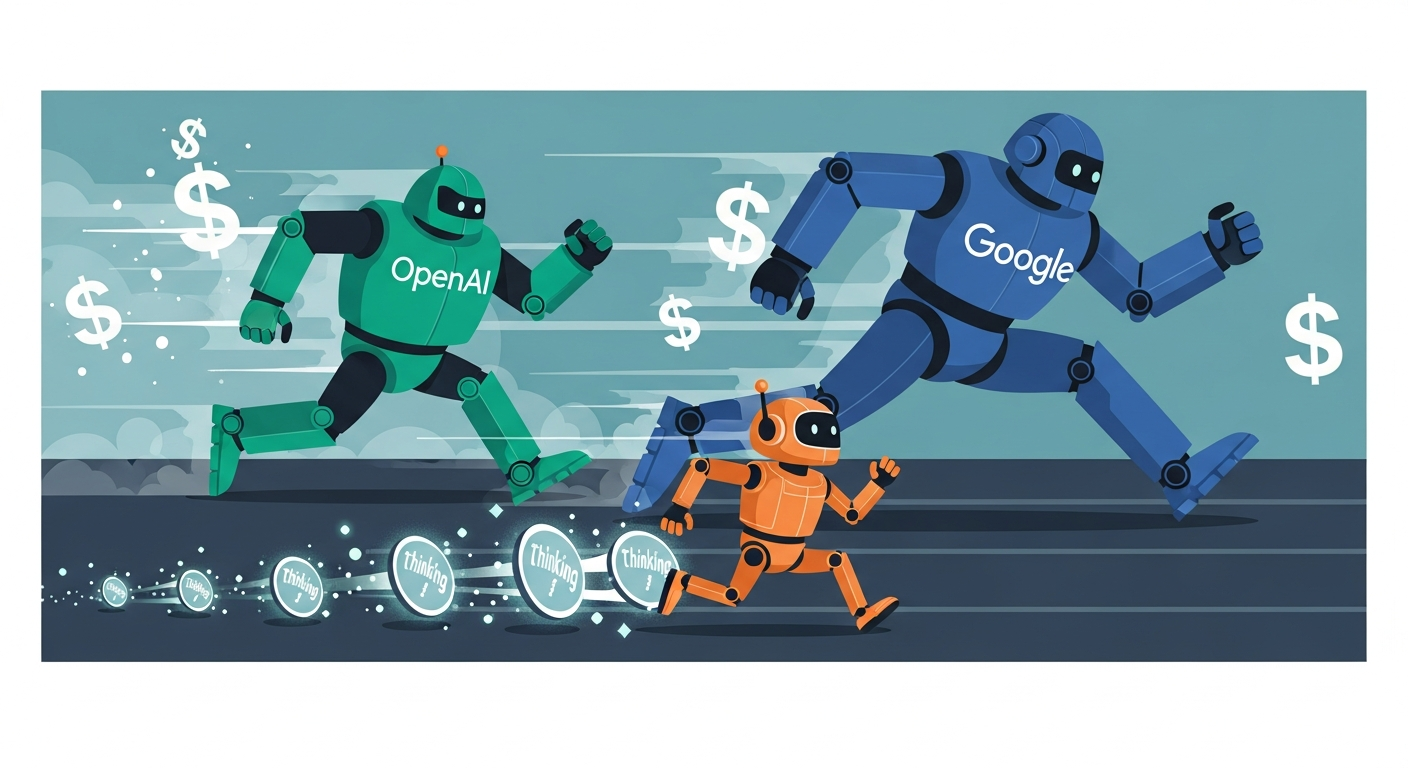
China's Moonshot AI just dropped Kimi K2 Thinking, an open-source reasoning model that cost just four-point-six million dollars to train and is somehow beating GPT-5 on expert-level reasoning tasks.
It generates over fifteen hundred thinking tokens just to write a single sentence, making it exceptional for creative writing and long-form content.
Adobe just wrapped MAX 2025 with a bold vision: bringing all the top creative AI models into one unified plan while embedding agentic assistants directly into Photoshop, Firefly, and Express.
They're betting that the future of creativity isn't about choosing between tools, it's about having AI actively collaborate with you inside the apps you already use.
The US government just tightened export controls again, blocking NVIDIA from selling even their scaled-down B30A chips to China.
Meanwhile, Beijing fired back by ordering all state-funded data centers to exclusively use domestic AI accelerators, forcing some projects to rip out foreign chips or cancel plans entirely.
Microsoft formed a new MAI Superintelligence Team that's taking a fascinating approach: they're explicitly rejecting the race toward unbounded AGI in favor of domain-specific AI systems that remain controllable while solving concrete problems.
It's a notable philosophical shift from one of AI's biggest players.
Box CEO Aaron Levie made a provocative prediction: within five years, ninety-five percent of AI agent usage will tackle tasks humans never did before, not just improve existing workflows.
Think analyzing every lease for real estate trends or mining financial data for monetization opportunities that were previously too expensive or talent-constrained to pursue.
DEEP DIVE ANALYSIS
Let's dig deep into China's Kimi K2 Thinking model, because this represents something potentially seismic in the AI landscape. On the surface, it's a David and Goliath story: a four-point-six million dollar training run competing with billion-dollar models from OpenAI and Anthropic. But the implications run much deeper than a good underdog narrative.
Technical Deep Dive
Kimi K2 Thinking is what we call a reasoning model, similar in architecture to OpenAI's o1 or Anthropic's Claude with extended thinking. But here's where it gets interesting: K2 can process up to three hundred reasoning steps without losing coherence. For context, that's like maintaining a complex train of thought through multiple layers of analysis without forgetting what you started with.
The model's standout feature is its token generation for creative tasks. When you ask it to write something, it doesn't just immediately spit out text. It generated fifteen hundred ninety-five thinking tokens just to craft a single sentence about cheese in one test.
Compare that to DeepSeek's one hundred ten tokens for similar tasks. This isn't inefficiency, it's deliberation. The model is genuinely considering word choice, tone, narrative flow, and creative alternatives before committing to output.
On expert-level reasoning benchmarks, K2 scored forty-four-point-nine percent compared to GPT-5's forty-one-point-seven percent. Even more impressive? On web research tasks, it achieved sixty-point-two percent accuracy versus just twenty-nine-point-two percent for human researchers.
The model isn't just matching human performance, it's exceeding it in specific domains. The technical architecture leverages what's called "inference-time compute," meaning it spends more computational resources thinking through problems rather than just pattern-matching from training data. This is the same approach that's made OpenAI's o1 so effective at complex reasoning tasks.
But Moonshot achieved this at a fraction of the cost.
Financial Analysis
Here's where this story gets uncomfortable for US AI labs: Moonshot trained K2 for four-point-six million dollars. OpenAI reportedly spent over one hundred million training GPT-4, and industry estimates put GPT-5's training costs north of five hundred million. Anthropic's Claude models carry similar price tags.
We're talking about two orders of magnitude difference in capital efficiency. Now, some of that cost difference is real infrastructure advantages. China has cheaper compute, lower energy costs, and significant government subsidies for AI development.
But even accounting for those factors, the gap is staggering. It suggests that either Chinese labs have found genuinely more efficient training approaches, or US labs are overspending on compute in ways that aren't translating to proportional performance gains. The business model implications are profound.
If you can train a competitive model for single-digit millions instead of hundreds of millions, suddenly the AI model market looks less like a natural monopoly and more like a genuinely competitive landscape. The capital moat that companies like OpenAI and Anthropic have been building might be more like a speed bump. For API pricing, K2 costs about one cent per two thousand words through their service.
That's extremely competitive with Western models, and because it's open-source, enterprises can run compressed versions locally. The two-hundred-forty-five gigabyte compressed version means companies with serious infrastructure can self-host and eliminate per-token costs entirely. Meta's recent thirty billion dollar bond sale and twenty-seven billion dollar private credit deal suddenly make more sense in this context.
They're not just funding AI development, they're trying to maintain capital advantages in a race where the cost curve is dropping faster than anyone expected.
Market Disruption
The competitive positioning here is fascinating. For the past two years, the AI model market has been consolidating around a few US players: OpenAI, Anthropic, Google. The assumption was that training costs create natural barriers to entry.
K2 suggests those barriers are lower than we thought. Chinese labs now DeepSeek, Qwen, and Kimi are releasing competitive open-source models with a four-to-six month lag behind frontier closed models. AI researcher Nathan Lambert pointed out that this gap is narrowing, not widening.
Even more concerning for US labs: Chinese models are capturing mindshare globally. Developers are increasingly asking whether they need to pay premium prices for closed APIs when open models deliver comparable results. The creative writing capabilities are particularly disruptive.
One test involved co-writing a young adult novel called "The Salt Circus." The model didn't just generate prose, it revised itself, scrapped ideas that didn't work, and showed what testers described as genuine creative judgment. This isn't just automation, it's collaboration.
That's historically been the domain where human creators felt safe from AI disruption. The broader market effect is already visible in that trillion-dollar selloff. Investors are recalibrating expectations.
If training competitive models costs millions instead of hundreds of millions, what's NVIDIA's long-term growth story? If open-source models match closed performance, what's OpenAI's moat? These aren't hypothetical questions anymore, they're affecting capital allocation decisions today.
Adobe's MAX announcements take on new context here too. They're integrating multiple model providers, including Chinese labs, because no single provider has a durable performance advantage. The future Adobe's betting on isn't model loyalty, it's model agnosticism with intelligent orchestration layers.
Cultural and Social Impact
The geopolitical implications are impossible to ignore. US export controls tried to slow China's AI progress by restricting access to cutting-edge chips. K2 suggests those controls are ineffective.
Chinese labs adapted by optimizing training efficiency rather than just throwing more compute at problems. In some ways, the restrictions may have forced more innovative approaches. For individual creators, this democratizes access to frontier capabilities.
A novelist or content creator doesn't need a corporate API budget to access state-of-the-art AI. They can run K2 locally or pay pennies through their API. That's a massive shift in who can leverage advanced AI for creative work.
The open-source nature changes adoption patterns too. Enterprise AI teams have been cautious about building critical workflows on closed APIs that providers can change or price arbitrarily. Open-source models with competitive performance remove that risk.
We're likely to see faster enterprise adoption as a result. There's also a broader cultural shift happening around AI capabilities. For months, the narrative has been that scaling laws are slowing down, that we're hitting diminishing returns on model improvements.
K2 challenges that. Not through brute force scaling, but through architectural innovations and training efficiency. It suggests we're still in the early innings of AI capability growth, just maybe not along the path everyone assumed.
The creative writing angle touches something deeper too. Many human writers felt that their craft, with its nuance and revision and creative judgment, would remain distinctly human. Models like K2 that genuinely deliberate and revise complicate that assumption.
It's not replacing human creativity, but it's demonstrating forms of creative process we didn't expect machines to exhibit.
Executive Action Plan
If you're a technology executive, here's what this development demands you consider: First, diversify your AI model dependencies immediately. The days of building your entire AI strategy around a single API provider are over. Start implementing model-agnostic architectures that can swap between providers based on task requirements, cost, and performance.
Adobe's getting this right by integrating multiple models across their product line. Your engineering teams should be building similar flexibility. Don't get locked into a single vendor when the competitive landscape is this fluid.
Second, seriously evaluate open-source and self-hosted options. If your AI spend is substantial, run the economics on hosting models like K2 locally versus paying per-token API fees. The upfront infrastructure cost might seem high, but if Chinese labs continue releasing competitive open models, the total cost of ownership could be dramatically lower.
Plus, you eliminate vendor risk and latency issues. This particularly matters if you're building AI into customer-facing products where margins matter. Third, watch Chinese AI developments as closely as you watch OpenAI and Anthropic.
The narrative that US labs are eighteen months ahead is obsolete. Chinese labs are competitive now, and they're publishing openly while US labs stay closed. Subscribe to their announcements, test their models, understand their roadmaps.
The next breakthrough might come from Beijing, not San Francisco. Your product strategy needs to account for that reality. The broader strategic takeaway: the AI model market is becoming genuinely competitive and cost-efficient faster than most roadmaps assumed.
That's great for AI buyers and terrible for companies whose strategy depends on durable model superiority. Figure out quickly which category you're in, and adjust accordingly.
Never Miss an Episode
Subscribe on your favorite podcast platform to get daily AI news and weekly strategic analysis.