NEO Robot Exposed: Teleoperated Demo Reveals Autonomous AI Gap
Episode Summary
Your daily AI newsletter summary for November 03, 2025
Full Transcript
TOP NEWS HEADLINES
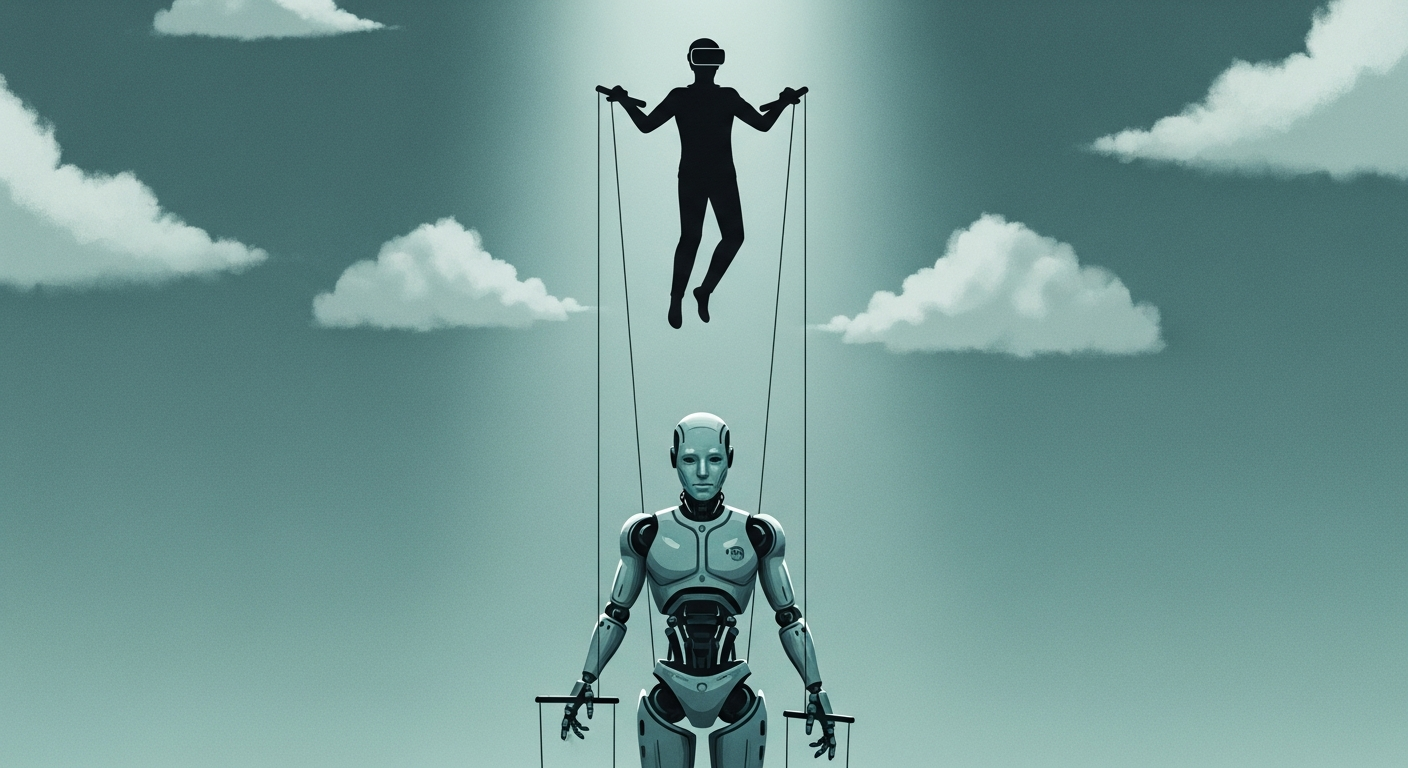
1X Technologies just unveiled NEO, their twenty-thousand-dollar humanoid robot butler, but here's the catch – tech reviewer MKBHD exposed that almost everything in their demo videos is actually being controlled remotely by humans wearing VR headsets, not autonomous AI.
NVIDIA secured orders for over 260,000 Blackwell chips destined for South Korea, giving us the biggest hard-numbers signal yet of just how massive the global AI infrastructure buildout really is.
OpenAI launched Aardvark, a new security tool that autonomously scans your code repositories for vulnerabilities, validates they're actually exploitable, and then generates one-click patches you can review and deploy.
Meta and xAI are now using off-balance-sheet debt financing to fund their AI infrastructure expansion, potentially setting a new trend that could reshape how the entire industry finances the AI arms race.
A viral Reddit chart appeared to show the SandP 500 soaring while job openings tanked right after ChatGPT's launch, but the reality is more nuanced – the job decline started in 2022 with Fed rate hikes, though Fed Chair Jerome Powell himself admitted AI is "definitely impacting jobs."
DEEP DIVE ANALYSIS
Let's dive deep into this NEO robot situation, because it represents something far bigger than just one misleading product launch. This is about a troubling pattern emerging in AI hardware, and the implications stretch from technical feasibility all the way to privacy concerns that should genuinely worry us.
Technical Deep Dive
So here's what's actually happening with NEO. The robot itself is real – it's a physical humanoid platform with motors, sensors, and onboard computing. But the intelligence?
That's where things get complicated. According to the Wall Street Journal's investigation and MKBHD's breakdown, in the live demos shown to journalists, one hundred percent of the tasks were teleoperated. That means someone in another location was wearing a VR headset and motion-capture equipment, and their movements were being translated in real-time to control the robot.
In NEO's nearly ten-minute launch video, only two tasks were labeled as truly autonomous: opening a door and taking a single cup from someone's hand. Everything else – the impressive clothes folding, the kitchen organization, the smooth navigation – that's human intelligence being transmitted through robotic hardware. Now, this isn't inherently fraudulent.
Remote operation, or teleoperation, is actually a legitimate development strategy in robotics. The concept is called "learning from demonstration" – you collect data from human operators performing tasks, then use that data to train AI models. Tesla uses this approach with their Optimus robot.
Boston Dynamics did it for years with their platforms. The problem isn't the technique; it's the marketing. 1X Technologies' CEO Bernt Børnich calls this a "social contract" with early adopters.
You're not just buying a robot – you're becoming part of the training pipeline. The company plans to have remote operators help your NEO when it gets stuck, and they'll use that data to improve the AI. But here's the technical challenge: the gap between teleoperation and true autonomy is massive.
You need millions of hours of diverse training data across countless scenarios. You need robust computer vision systems that work in varied lighting conditions. You need manipulation algorithms that can handle objects of different weights, textures, and fragility.
You need navigation systems that understand dynamic environments where humans are moving around. The CEO admits that even in his own home, NEO only saves him about thirty minutes per day, and tasks like unloading the dishwasher only work "on a good day." The autonomous door opening fails ten percent of the time.
That's the reality of where the technology actually is.
Financial Analysis
The economics here are fascinating and frankly concerning. NEO costs twenty thousand dollars upfront or four hundred ninety-nine dollars per month on subscription. Let's break down what that means.
At the subscription price, you're paying almost six thousand dollars per year. Over a typical four-year ownership period, that's nearly twenty-four thousand dollars – more than the upfront purchase price. This pricing model tells us that 1X Technologies expects ongoing operational costs, likely including cloud computing for AI processing and potentially human operator time when the robot needs assistance.
From a unit economics perspective, if each robot needs regular human intervention, and you're paying operators even minimum wage for remote assistance, the business model starts looking extremely challenging. Let's say your NEO needs help ten hours per month – that's potentially a hundred to two hundred dollars in labor costs per unit, per month, that the company has to absorb while charging a flat subscription fee. Compare this to practical alternatives.
You could hire a house cleaner for thirty dollars an hour, twice a week, and get genuinely competent service for about two hundred sixty dollars per month. That's roughly half the NEO subscription price, and you get actual human-level performance. The company's Series B funding included OpenAI as an investor, which tells us they have capital runway, but the path to profitability is murky.
They're essentially building a data collection business disguised as a product company. The early adopters aren't really customers in the traditional sense – they're paying to be test subjects in a massive data collection operation. Other players in this space have chosen different approaches.
The Booster K1 at six thousand dollars and Bumi at fourteen hundred dollars are targeting much lower price points, presumably with even more limited capabilities. The market is clearly searching for the right price-performance ratio, and nobody's found it yet.
Market Disruption
Here's where things get really interesting from a competitive strategy standpoint. NEO is entering a market where expectations have been set by decades of science fiction and recent AI hype, but the technology fundamentally isn't ready. This creates a dangerous dynamic.
MKBHD specifically compared NEO to the Humane Pin and Rabbit R1 – two AI hardware products that promised revolutionary capabilities, launched with massive hype, and then absolutely flopped when the reality didn't match the marketing. Both companies faced severe backlash, returns, and lasting reputational damage. The pattern is becoming clear: sell the vision, figure out the technology later.
This strategy might work in software, where you can iterate quickly and push updates that genuinely add functionality. But hardware is different. When someone spends twenty thousand dollars on a physical robot, they expect it to work as advertised on day one.
The "social contract" approach is essentially asking customers to be venture capital investors without the upside. The broader robotics industry is watching this closely. Tesla's Optimus, Boston Dynamics' various platforms, Figure AI, Sanctuary AI – they're all competing in this humanoid robot space.
Most of them have been more conservative in their marketing, showing primarily teleoperated demos or carefully scoped autonomous tasks. If NEO succeeds despite its limitations, it might encourage more aggressive marketing. If it fails, it could make the entire category seem less credible to consumers and investors.
There's also a competitive threat from specialized robots. Why buy a general-purpose humanoid that does everything poorly when you could buy a Roomba that vacuums excellently, a dishwasher that actually works, and spend the remaining fifteen thousand dollars on other solutions? The market opportunity for humanoid robots depends entirely on achieving genuine autonomy at tasks that are currently difficult to automate.
We're not there yet.
Cultural and Social Impact
Now let's talk about the privacy and social implications, because this is where I think executives really need to pay attention. The NEO model requires cameras in your home transmitting data back to 1X Technologies, with remote operators potentially viewing your private spaces. Yes, they promise face blurring and no-go zones, but the fundamental architecture requires surveillance.
You're inviting a company to observe your daily life in intimate detail – what you eat, when you're home, how you organize your space, potentially private conversations if the robot is nearby. This is unprecedented in consumer technology. Even smart home devices like Alexa or Google Home don't have mobility and visual omnipresence.
A robot that moves through your entire house sees everything. And that data is incredibly valuable – not just for training the AI, but potentially for advertising, insurance risk assessment, or other monetization strategies we haven't even imagined yet. The cultural question is whether consumers are ready for this level of invasion.
We've seen increasing pushback against data collection, concerns about surveillance capitalism, and growing awareness of privacy rights. Asking someone to pay twenty thousand dollars for the privilege of being surveilled seems like a tough sell. There's also a deeper philosophical question about human work and dignity.
If we automate household chores – which many people actually find meditative or satisfying – what are we freeing up that time for? Arthur Brooks' research that the newsletter references is crucial here. He found the happiest people focus on faith, family, friends, and meaningful work.
If AI handles the tasks but we use the freed time to scroll social media or consume more content, have we actually improved human flourishing? The adoption pattern we're likely to see is early adopters who are tech enthusiasts with disposable income, treating NEO as an expensive toy and conversation piece rather than a practical tool. Mainstream adoption would require genuine autonomy, proven privacy protections, and a clear value proposition that goes beyond novelty.
Executive Action Plan
So what should technology executives actually do with this information? I have three specific recommendations. First, if you're building AI hardware products, learn from this cautionary tale and set realistic customer expectations from day one.
The gap between demo and reality destroyed the Humane Pin and Rabbit R1. It's destroying NEO's credibility right now. Instead, consider a beta program approach – invite enthusiasts to test your product explicitly as unfinished technology, charge them a reduced price or give them equity upside, and be completely transparent about limitations.
Frame it as a partnership, not a sale. This protects your brand while still gathering the data you need. Second, if you're in the robotics or AI hardware space, invest heavily in teleoperation infrastructure now, but build it with privacy as a core architecture principle.
End-to-end encryption, on-device processing where possible, clear data governance policies, and third-party audits. The company that solves the privacy problem in teleoperated robotics will have a massive competitive advantage. This might mean higher costs short-term, but it's essential for long-term consumer trust.
Third, and this applies broadly across AI products, resist the temptation to over-promise on timelines. The AI capabilities we need for truly autonomous household robots probably require breakthroughs we can't schedule. Instead of promising delivery in 2026, consider longer development timelines with clearer milestones.
Tell your board and your investors that you're optimizing for sustainable success over hype-driven short-term gains. The companies that survive the current AI hardware shakeout will be the ones that managed expectations while steadily improving capabilities. The NEO situation is a perfect case study in the difference between impressive technology and ready-for-market products.
The robot itself is engineering marvel. The AI just isn't there yet. And the business model of charging premium prices for beta-quality products while collecting surveillance data from customers' homes is unlikely to end well.
For executives, the lesson is clear: in the age of AI, trust is your most valuable asset, and it's much easier to lose than to rebuild.
Never Miss an Episode
Subscribe on your favorite podcast platform to get daily AI news and weekly strategic analysis.