OpenAI Converts to For-Profit, Restructures with 130 Billion Dollar Foundation
Episode Summary
Your daily AI newsletter summary for October 30, 2025
Full Transcript
TOP NEWS HEADLINES
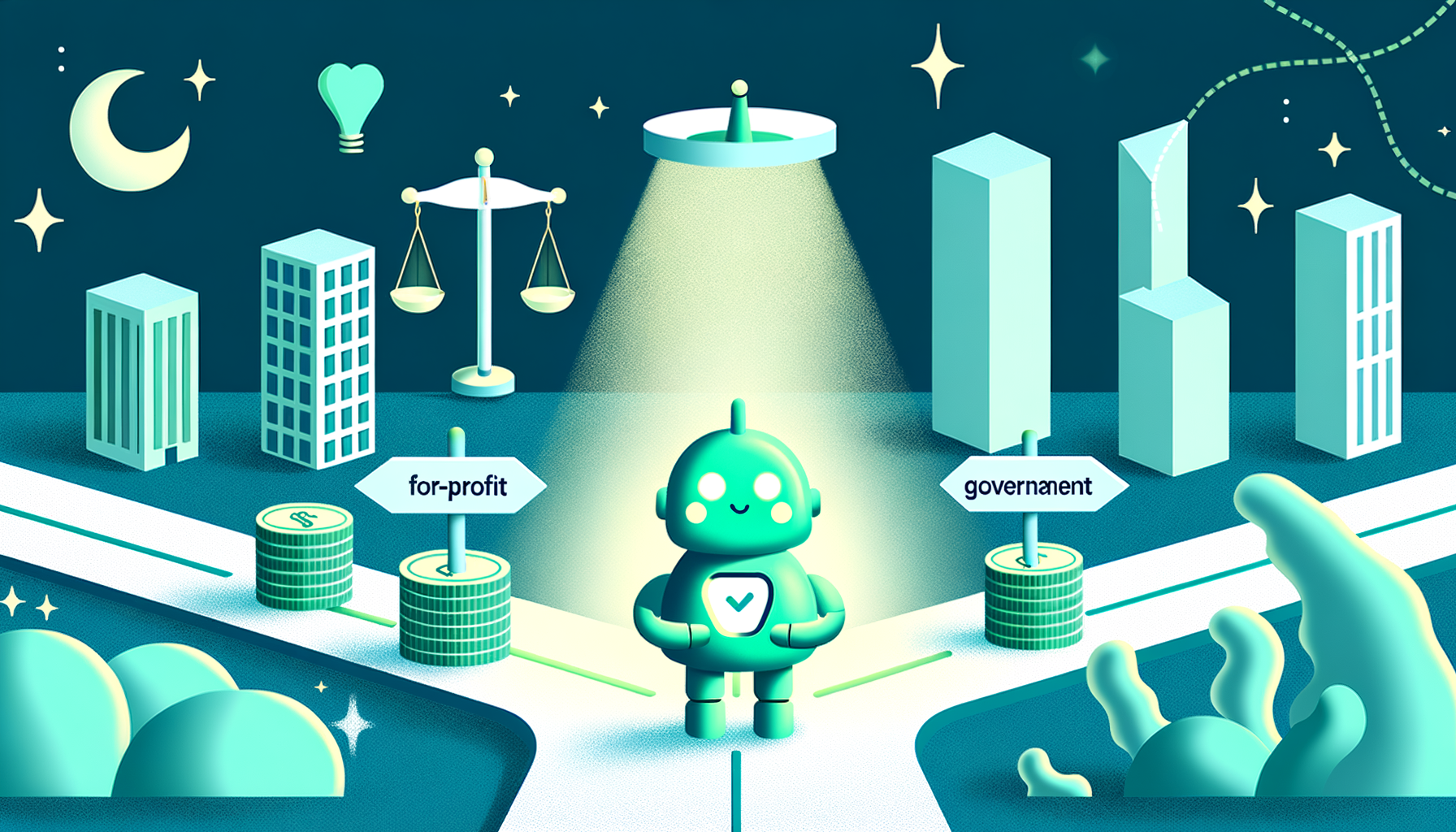
OpenAI just finalized the most controversial restructuring in tech history - they've officially converted to a for-profit public benefit corporation, with their nonprofit foundation now holding a 130 billion dollar stake.
Microsoft's ownership dropped from 32.5 percent to 27 percent, but here's the kicker - both companies can now pursue AGI independently with other partners, and an independent panel will verify any AGI claims going forward.
Adobe dropped a bombshell at their MAX conference that has Canva and every AI startup sweating - they're embedding conversational AI assistants across Photoshop, Premiere, and their entire creative suite, while simultaneously integrating competitors' best models like Google's Veo and Runway directly into their platform.
It's not about building the best AI anymore, it's about being the best platform for all AI.
PayPal just became the first digital wallet embedded directly into ChatGPT, enabling 700 million weekly users to shop and pay without leaving the conversation.
Starting in 2026, this could fundamentally reshape how e-commerce works - you won't search and shop, you'll just... talk and buy.
Eli Lilly is partnering with Nvidia to build their own AI supercomputer that can train on millions of biological experiments, potentially cutting years off drug development timelines.
But the real play here is Lilly TuneLab - a federated platform that lets biotech partners access Lilly's AI capabilities without revealing proprietary data.
And in a plot twist nobody saw coming - oil giants SLB, Halliburton, and Baker Hughes are abandoning idle drilling rigs to wire up the AI boom instead.
Baker Hughes has already booked 1.2 gigawatts in data center power orders, while Halliburton is co-funding 2.3 gigawatts with VoltaGrid for Oracle's AI infrastructure.
DEEP DIVE ANALYSIS
Let's dive deep into OpenAI's restructuring because this isn't just corporate paperwork - this is the blueprint for how every AI company will try to balance humanity's future with shareholder returns.
Technical Deep Dive
What OpenAI pulled off here is architecturally elegant from a governance standpoint. They've created a two-tier structure where the OpenAI Foundation - the nonprofit - owns 26 percent of OpenAI Group PBC, the for-profit public benefit corporation. Think of it like a Russian nesting doll, but with legal firewalls.
The Foundation retains board appointment power, which means even though capital markets are now wide open, the mission-driven governance structure theoretically stays intact. The real innovation here is the "public benefit clause" requirement - OpenAI must legally balance profit with societal impact. This isn't just feel-good corporate speak; it's baked into their charter as a PBC.
When they eventually go public, shareholders can't simply sue them for not maximizing profits if OpenAI decides to, say, slow down a product launch over safety concerns. The AGI verification mechanism is fascinating too. They've established that an independent expert panel must verify any AGI claims before Microsoft's exclusive licensing agreement expires.
This is crucial because it prevents both companies from gaming the definition of AGI to trigger favorable contract terms. Microsoft now retains IP rights through 2032 regardless of when AGI arrives, removing a major point of tension. From a technical partnership standpoint, Microsoft committed to 250 billion dollars in Azure purchases, but OpenAI can now shop for compute elsewhere.
This is massive - OpenAI was essentially locked into Azure dependency. Now they can negotiate with Google Cloud, Oracle, or even build their own infrastructure if economics favor it.
Financial Analysis
Let's talk numbers that matter. The OpenAI Foundation's 26 percent stake is currently valued at 130 billion dollars. That makes it, as one newsletter put it, wealthier than Morocco's entire GDP.
The Foundation has committed 25 billion dollars initially to health research and AI resilience - that's not a grant program, that's nation-state level RandD funding. Microsoft's stake dropped from 32.5 percent to 27 percent, but the absolute value actually increased to 135 billion dollars following OpenAI's recent funding rounds.
Do the math - that values OpenAI Group at exactly 500 billion dollars post-money. For context, that's larger than Visa, larger than Walmart, approaching Meta's market cap. And they're not even public yet.
SoftBank's 30 billion dollar investment is now finalized, which solves OpenAI's short-term capital needs. But here's what's really interesting from a CFO perspective - the restructuring clears the legal obstacles for an IPO. California and Delaware regulators have dropped their objections.
Sam Altman himself has said OpenAI expects to spend about 1.4 trillion dollars on infrastructure, which translates to roughly 30 gigawatts of data center capacity. You don't float numbers like that unless you're preparing for public markets.
The revenue trajectory is staggering. OpenAI is reportedly tracking toward 5 billion dollars in annual revenue, but they're burning through capital at unprecedented rates. The bet is that whoever reaches AGI first captures winner-take-most economics.
The restructuring enables them to raise essentially unlimited capital to sustain that burn rate.
Market Disruption
This restructuring fundamentally resets competitive dynamics in three ways. First, Microsoft and OpenAI can now pursue AGI with other partners. Microsoft could theoretically work with Anthropic or Mistral on AGI research.
OpenAI just announced partnerships with PayPal and Adobe that Microsoft would have previously blocked. The exclusive handcuffs are off. Second, this creates a template for every AI lab facing the nonprofit-to-profit dilemma.
Anthropic is watching this closely. So is DeepMind's parent company. The hybrid structure lets you have your ethical framework cake and eat your venture returns too.
Third - and this is what keeps Google up at night - OpenAI now has a clear path to public markets while maintaining "don't be evil" credibility. Google faced massive internal turmoil over AI ethics versus commercial pressure. OpenAI just engineered a structure that legally requires balancing both.
When they IPO, they can market themselves as the "responsible AI investment" while still delivering returns. The timing is critical. We're entering what I call the "infrastructure expenditure phase" of AI - where compute, energy, and data become the limiting factors rather than algorithmic breakthroughs.
OpenAI needed this restructuring to compete in that capital-intensive environment. The 250 billion dollar Azure commitment alone represents one of the largest cloud deals in history.
Cultural and Social Impact
Here's where it gets philosophically interesting. OpenAI started with the explicit mission of ensuring AGI benefits humanity. The nonprofit structure was the mechanism to guarantee that mission.
Critics will say they just abandoned that mission for profit. Supporters will say they evolved the mechanism while preserving the mission. The reality is probably somewhere in between.
The OpenAI Foundation still has board control and 130 billion dollars to deploy toward beneficial outcomes. That's more resources dedicated to AI safety and public benefit than any organization in history. But it's embedded within a profit-maximizing entity that's racing to AGI partly to justify a 500 billion dollar valuation.
This creates a precedent that every AGI lab will follow - separate your "safety theater" into a well-funded foundation while your core business optimizes for capability and commercialization. Is that good or bad? Honestly, we won't know until we see whether the foundation actually constrains the for-profit arm when commercial and safety incentives diverge.
The AGI verification panel is crucial here. If it actually functions independently, it could prevent a race-to-the-bottom scenario where companies declare "mission accomplished" on AGI prematurely to trigger favorable terms or market positioning. If it becomes a rubber stamp, it's meaningless.
From an adoption standpoint, this makes OpenAI's technology more accessible. The PayPal integration means 700 million people can now transact using AI agents. The Adobe partnership embeds ChatGPT into creative workflows.
This isn't AI as a destination - it's AI as infrastructure.
Executive Action Plan
If you're a technology executive, here are three concrete actions this demands: First, audit your AI partnership strategy immediately. OpenAI and Microsoft just proved that exclusive relationships are dead. If you're locked into single-provider agreements for AI capabilities, you're going to get outmaneuvered by competitors using multi-model strategies like Adobe.
Start building abstraction layers now that let you swap AI providers based on capability, cost, and performance. Don't build your product strategy around a single model family. Second, study this corporate structure for your own cap table evolution.
If you're a late-stage startup with mission-driven components - whether that's AI safety, climate impact, healthcare outcomes - this PBC-plus-foundation model might solve your Series D dilemma. You can attract growth capital without abandoning governance principles. Talk to your lawyers about whether a similar structure makes sense before your next funding round.
Third - and this is critical - start modeling for a 10x increase in AI infrastructure costs over the next 24 months. OpenAI is committing 1.4 trillion dollars to compute.
Microsoft's Azure business is being reshaped around AI workloads. The marginal cost of AI inference is not going to zero - it's actually increasing as models get more capable. If your business model assumes GPT-5 level intelligence at GPT-3.
5 prices, you're building on quicksand. Start scenario planning for what your unit economics look like if AI costs rise while you're contractually obligated to deliver AI-powered features to customers.
Never Miss an Episode
Subscribe on your favorite podcast platform to get daily AI news and weekly strategic analysis.