Brave Exposes Critical Security Flaws in AI Browser Agents
Episode Summary
Your daily AI newsletter summary for October 28, 2025
Full Transcript
TOP NEWS HEADLINES
OpenAI is undergoing what some are calling a "Meta-fication" – with one in five employees now coming from Meta, including their applications CEO, and the company is exploring ChatGPT memory for personalized ads despite Sam Altman previously calling that idea dystopian.
AWS is showing signs of weakness according to a new report – internal bureaucracy has slowed them down just when they need to be nimble, and their AI efforts have been lackluster compared to competitors who are charging ahead.
Nvidia is reportedly planning its own robotaxi project to challenge Tesla and Waymo, following a single-stage end-to-end neural network approach with plans to invest three billion dollars and launch operations in the US.
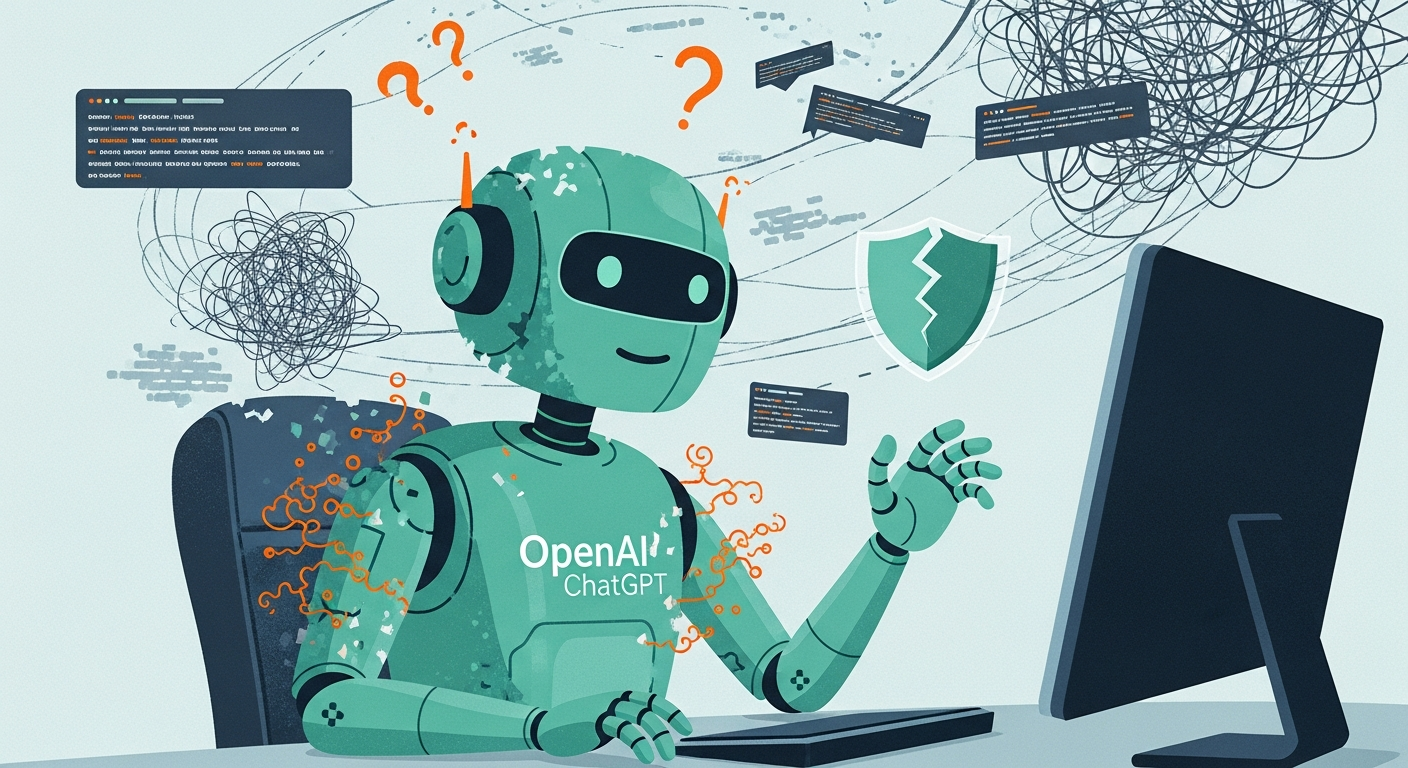
Brave just published a security report exposing how AI browser agents like OpenAI's new Atlas can be hijacked through prompt injection and data exfiltration – basically, websites can trick AI assistants into copying cookies, reading emails, or clicking malicious links without you knowing.
And Google is dominating the generative media space according to a new survey – Gemini captured 74 percent of AI image use and Veo took 69 percent of video creators, beating out OpenAI, Midjourney, and Chinese competitors.
DEEP DIVE ANALYSIS
Let's dive deep into this AI browser security issue, because this is something every executive needs to understand right now – it's not just a technical problem, it's a fundamental trust issue that could derail AI adoption in your organization.
Technical Deep Dive
Here's what's happening technically. AI browser agents like OpenAI's Atlas, Anthropic's Claude with computer use, and others are designed to browse the web on your behalf – they can read pages, click links, fill out forms, essentially act as you online. The problem is they can't distinguish between instructions from you versus instructions embedded in the web content they're reading.
Brave's research identified three critical attack vectors. First, screenshot prompt injection – bad actors can hide text inside images that's invisible to humans but readable by the AI, essentially giving the AI secret commands. Second, navigation-based injection – when you ask the AI to visit a webpage, that page's content gets fed back to the model as if it came from you, potentially changing what the AI does next.
Third, and most dangerous, is that these agents often have access to your authenticated sessions – your logged-in Gmail, your bank account, your company's internal tools. The fundamental technical issue is that these models lack a robust way to separate "user intent" from "external input." It's like if your brain couldn't tell the difference between your own thoughts and words you're reading on a billboard.
Current large language models process everything as text, so a cleverly crafted webpage looks identical to a user command.
Financial Analysis
This isn't just a security bug – it's a potential liability time bomb that could cost companies billions. Think about the financial implications here. Every major tech company is racing to deploy AI agents – Microsoft with Copilot, Google with Gemini, OpenAI with ChatGPT and Atlas.
They're betting their growth stories on AI adoption, with Microsoft alone investing over thirteen billion dollars in OpenAI. But here's the problem – if enterprises deploy these agents and they start getting hijacked, the liability exposure is massive. Imagine an AI agent accessing your company's financial systems and a malicious website tricks it into transferring funds.
Who's liable? The AI company? Your company?
Your security team? This creates what I'm calling the "AI trust tax" – the hidden costs that aren't showing up in anyone's financial statements yet. Companies will need to invest heavily in security infrastructure, red-teaming, monitoring systems, and insurance products that don't fully exist yet.
These aren't small costs – we're talking about potentially 20-30 percent overhead on top of AI deployment costs. Look at Microsoft's situation – investors are already demanding more transparency about their OpenAI financials, and now imagine adding massive security infrastructure costs that weren't in the original business case. The Wall Street Journal just called out Microsoft for burying key details about OpenAI exposure in vague line items.
If the security costs of making these agents safe balloon, it completely changes the unit economics. For startups in this space, this could be existential. SambaNova is already exploring a sale after stalled fundraising – the late-stage capital markets are getting tougher.
If you're a startup building AI agents and you can't prove you've solved the security problem, good luck raising your next round.
Market Disruption
This security issue is going to reshape the competitive landscape in AI. Right now, we're in a "move fast" phase where companies are racing to ship AI browser agents. But the first major security incident – and it's coming – will trigger a massive market correction.
Here's what I think happens. The companies that win will be those that build security-first architectures from day one. That means sandboxed browsing environments, explicit user confirmation for every action, clear activity logs, and robust permission systems.
This isn't sexy, but it's essential. The current market leaders might not be the long-term winners. OpenAI is racing ahead with Atlas, but they're also dealing with massive internal culture issues from their Meta influx and they're exploring ad models that conflict with their safety messaging.
That's a recipe for problems. Meanwhile, enterprise-focused players like Anthropic, who've been more cautious about deployment, might win the corporate market. Enterprises will demand airtight security guarantees, proper audit trails, and indemnification.
They'll pay premium prices for that assurance. I also think we'll see a new category of companies emerge – AI security specialists who provide the guardrails and monitoring systems that sit between AI agents and your data. Think of it like how Cloudflare sits between users and websites – someone's going to build the "Cloudflare for AI agents.
" The browser market itself could get disrupted. Brave is positioning itself as the security-conscious browser for the AI age. If they can prove their browser is safer for AI agent use, that's a massive differentiator.
Arc browser, which has been gaining traction with tech workers, could lean into this too.
Cultural and Social Impact
This gets to something deeper about our relationship with AI. We're in this weird transition period where we want AI to be powerful enough to act on our behalf, but we're not ready to fully trust it. It's creating genuine anxiety in workplaces.
Think about the cultural shift happening. Five years ago, you'd never give a junior employee access to all your systems and say "just figure it out." But that's essentially what we're doing with AI agents.
And unlike humans, who have judgment and can question suspicious requests, AI agents just execute. This is going to create a new security culture in organizations. Just like we had to train everyone on phishing emails in the 2010s, we're going to need to train people on AI agent security in the 2020s.
What sites can your AI agent visit? What data can it access? When do you need to intervene?
There's also a broader question about autonomy and control. If AI agents become unreliable or dangerous, it could trigger a backlash against AI adoption generally. We saw this with social media – initial enthusiasm followed by a reckoning about mental health and privacy.
AI could follow the same pattern, and browser agent security might be the trigger. For knowledge workers, this creates a new skill requirement – you need to understand how AI agents work well enough to use them safely. That's a new form of digital literacy that most people don't have yet.
Companies that invest in training and education will have a real advantage.
Executive Action Plan
Alright, here's what you need to do as an executive in the next 30 to 90 days. First, conduct an AI agent risk assessment immediately. Audit every AI tool your employees are using that has web access or can act on their behalf.
That includes ChatGPT plugins, Claude computer use, Copilot browser functions, anything that touches the web while authenticated. Map out what data these tools can access and what actions they can take. You probably don't have full visibility right now, and that's dangerous.
Second, implement a tiered permission system for AI agent use. Create three categories – low risk like summarizing public web pages, medium risk like drafting emails based on your inbox, and high risk like anything involving financial transactions or sensitive data access. Require explicit approval workflows for high-risk actions.
Don't let AI agents have carte blanche access to everything. This isn't about slowing down innovation – it's about managing risk intelligently. Third, start building relationships with AI security vendors and consider them strategic partners, not just vendors.
The companies that will help you navigate this are emerging right now. You want to be an early partner so you can shape these solutions for your needs. Also, talk to your legal team and insurance providers about AI agent liability – you need to understand your exposure and potentially get coverage before the first major incident drives premiums through the roof.
Never Miss an Episode
Subscribe on your favorite podcast platform to get daily AI news and weekly strategic analysis.