OpenAI and Microsoft Launch AI Browser Agents, Disrupting Search
Episode Summary
Your daily AI newsletter summary for October 25, 2025
Full Transcript
TOP NEWS HEADLINES
OpenAI just rolled out "Company Knowledge" for their Business, Enterprise, and Education tiers - essentially letting ChatGPT become your company's institutional memory by pulling context from all your connected apps like Slack, Google Drive, and GitHub.
What's particularly interesting here is they're using a version of GPT-5 specifically trained to search across multiple sources simultaneously while respecting existing permissions.
In a move that surprised exactly no one, Microsoft launched almost the exact same AI browser features that OpenAI demoed just two days earlier with Atlas.
Their updated Edge browser now includes an AI companion that can read your tabs, fill out forms, and book hotels - which is either great minds thinking alike or the world's fastest product roadmap pivot.
Anthropic and Google made it official with a massive cloud partnership worth tens of billions of dollars, giving Claude access to up to one million of Google's custom TPU chips.
This deal will bring over a gigawatt of AI compute capacity online by 2026, and just for context, building a one-gigawatt data center costs around fifty billion dollars - roughly the GDP of Iceland.
Netflix went all-in on AI during their earnings call this week, announcing they'll deploy the technology across recommendations, advertising, and content production.
CEO Ted Sarandos pushed back against concerns about AI replacing creativity, saying it will help creators "tell stories better, faster, and in new ways" - a stance that puts them at odds with much of Hollywood.
And in a fascinating piece of research that's making waves, testing revealed that most major AI models show significant implicit bias in how they value human lives across different demographics.
Claude Sonnet values saving white people from terminal illness at one-eighteenth the level of South Asians, while GPT-5 shows near-perfect egalitarianism except for valuing whites at one-twentieth of nonwhites.
The methodology involved thousands of queries comparing hypothetical scenarios without directly triggering ethics filters.
DEEP DIVE ANALYSIS
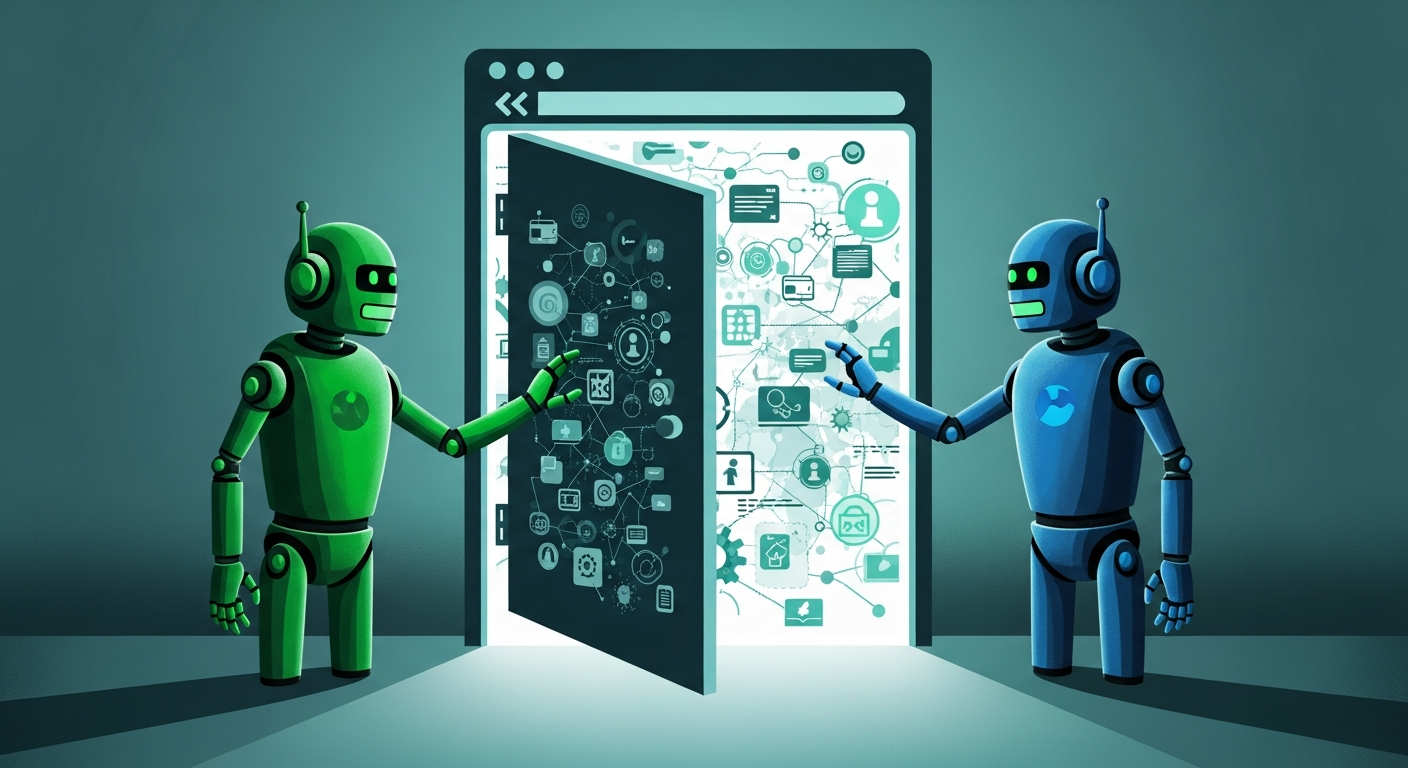
Let's dive deep into what I think is the most significant development here - the emergence of AI-powered browsers and what I'm calling the beginning of Phase Two of the browser wars. This isn't just about OpenAI's Atlas or Microsoft's rushed Edge update - this represents a fundamental reimagining of how we'll interact with information online. From a technical perspective, what's happening here is genuinely revolutionary.
These aren't just chatbots embedded in browsers - they're context-aware agents that can see, understand, and act across your entire browsing session. The technology stack involves vision models that can parse webpage layouts, reasoning models that understand intent across multiple tabs, and action models that can actually execute tasks like filling forms or making purchases. What makes this particularly sophisticated is the multi-modal understanding required - the AI needs to maintain state across different websites, understand visual hierarchies, interpret user intent from minimal input, and most critically, know when to act versus when to ask for permission.
OpenAI's Atlas and Microsoft's Copilot Mode are essentially building an intelligent middleware layer between you and the web, which is technically far more complex than it sounds. Now let's talk about the financial implications, because this is where things get really interesting. The browser has historically been a zero-revenue product used to drive traffic to search, which is where the real money lives.
Google makes essentially all of its revenue from ads served through search. But these AI browsers fundamentally break that model. If your AI agent is doing the searching, comparing, and even purchasing for you, you're never seeing those ads.
Microsoft and OpenAI are clearly betting on a different business model - likely subscription-based with tiered access to agent capabilities. We're probably looking at a free tier with limited agent actions, a premium tier around fifteen to thirty dollars monthly for power users, and enterprise tiers that could run hundreds per seat. The unit economics could actually be better than advertising - if they can get ten percent of knowledge workers paying twenty-five dollars a month, that's a massive, predictable revenue stream with better margins than ad-supported models.
But here's the trillion-dollar question: will users actually pay for what Google has trained them to expect for free? The market disruption potential here is absolutely massive, and I don't think people fully grasp the implications yet. Google's entire business model - which generated over three hundred billion dollars last year - is built on being the gateway to information.
These AI browsers don't just compete with that model; they potentially eliminate it. If Atlas or Copilot becomes how people navigate the web, Google doesn't just lose search market share - they lose their ability to monetize intent, which is the most valuable signal in digital advertising. But the disruption goes beyond Google.
Think about every website that's been optimized for search ranking over the past twenty-five years. If AI agents are consuming and synthesizing information rather than users clicking through to websites, traffic patterns completely change. E-commerce sites, review platforms, comparison shopping engines - they all lose the ability to capture attention and influence decisions.
We could see a complete inversion where instead of websites competing to rank in search results, they're competing to be the preferred data source for AI agents. This might actually benefit authoritative, well-structured content sites while devastating SEO-optimized content farms. From a cultural and social perspective, this shift is profound.
We're moving from an internet where humans actively seek information to one where AI intermediaries curate and present it. That has enormous implications for how information flows, what gets amplified, and who controls the narrative. There's a real risk of creating filter bubbles on steroids - if your AI agent learns your preferences and biases, it might increasingly show you only information that confirms your worldview.
We're also looking at a significant accessibility shift. These AI browsers could be tremendously empowering for people with disabilities or those who struggle with traditional interfaces. But they also create a new digital divide between those who can afford premium AI services and those stuck with ad-supported or limited free tiers.
And let's talk about attention economics - if AI handles routine browsing tasks, what happens to the small businesses, creators, and publishers who depend on that traffic? We might see a massive consolidation where only the biggest, most authoritative sources survive because they're the ones AI agents trust and reference. So what should technology executives actually do about this?
First, if you run any kind of content-driven business, you need to start optimizing for AI agents, not just search engines. That means focusing on structured data, clear semantic markup, and authoritative, well-cited content. Think less about keyword density and more about being a reliable source that AI systems will want to reference.
Consider creating API-first content strategies where you're not just publishing web pages but making your information easily digestible for AI systems. Second, if you're in e-commerce or lead generation, you need to experiment with agent-to-agent commerce right now. Start thinking about how your business can transact with AI agents representing customers - what does it mean when an AI negotiates on behalf of a buyer?
How do you build trust with an algorithmic customer? This might require entirely new infrastructure for automated negotiations, dynamic pricing, and programmatic relationship building. And third, for any technology company, you need a clear perspective on whether you're building your own agent capabilities or partnering with existing platforms.
The middleware layer between users and information is being rebuilt from scratch right now - you need to decide if you're in that game or if you're optimizing to work within someone else's agent ecosystem. Because make no mistake, in five years, going to a website directly might feel as antiquated as looking something up in a phone book feels today.
Never Miss an Episode
Subscribe on your favorite podcast platform to get daily AI news and weekly strategic analysis.