Anthropic Launches Claude Code Web with Revolutionary Sandboxing
Episode Summary
Your daily AI newsletter summary for October 22, 2025
Full Transcript
TOP NEWS HEADLINES
Anthropic just launched Claude Code on the web, letting developers run coding tasks directly from their browser instead of the command line.
The real innovation here is their new sandboxing system that cut permission prompts by 84 percent while actually making the whole thing more secure.
OpenAI is facing serious heat over Sora's celebrity deepfake problem.
Bryan Cranston found AI videos of himself circulating without consent, leading to a joint statement with SAG-AFTRA and Hollywood agencies demanding stronger guardrails.
The virality that made Sora popular is quickly becoming a legal liability.
DeepSeek just open-sourced a 3-billion parameter OCR model that compresses text into images with up to ten-fold lossless compression while maintaining 97 percent accuracy.
This isn't just an OCR upgrade - it's treating visual tokens as a new form of language, which could fundamentally reshape how AI models handle long-context memory.
Here's a bombshell from the financial side: Anthropic spent dollar 2.66 billion on AWS through September against an estimated dollar 2.55 billion in revenue.
That means they're spending more than 100 percent of their revenue just on compute, before accounting for Google Cloud costs or operations.
The path to profitability might require dramatic price increases.
And in a move that's either brilliant satire or terrifying honesty, a new site called Replacement.AI launched as "the only honest AI company," openly stating they're building AI to replace humans.
Their tagline? "Humans no longer necessary." It's the darkest comedy in tech right now, but uncomfortably close to real concerns.
DEEP DIVE ANALYSIS
Let me take you deep on this Claude Code announcement, because what Anthropic just did here is actually solving one of the most fundamental problems in AI agents - and they've open-sourced the solution.
Technical Deep Dive
Here's the core problem: AI coding assistants are stuck in a catch-22. To be useful, they need access to your files and terminal. But that access creates massive security vulnerabilities, especially from something called prompt injection attacks.
Think of it like this - a hacker could trick your AI into doing malicious things by hiding instructions in a file your AI reads. The old solution was permission prompts. Every single time Claude wants to run a command, edit a file, or run a test, you have to click approve.
Security experts call what happens next "approval fatigue" - you click so many times you stop paying attention, which ironically makes you less secure. The alternative is what some tools call "dangerously skip permissions," which is exactly as risky as it sounds. Anthropic's solution flips the entire model.
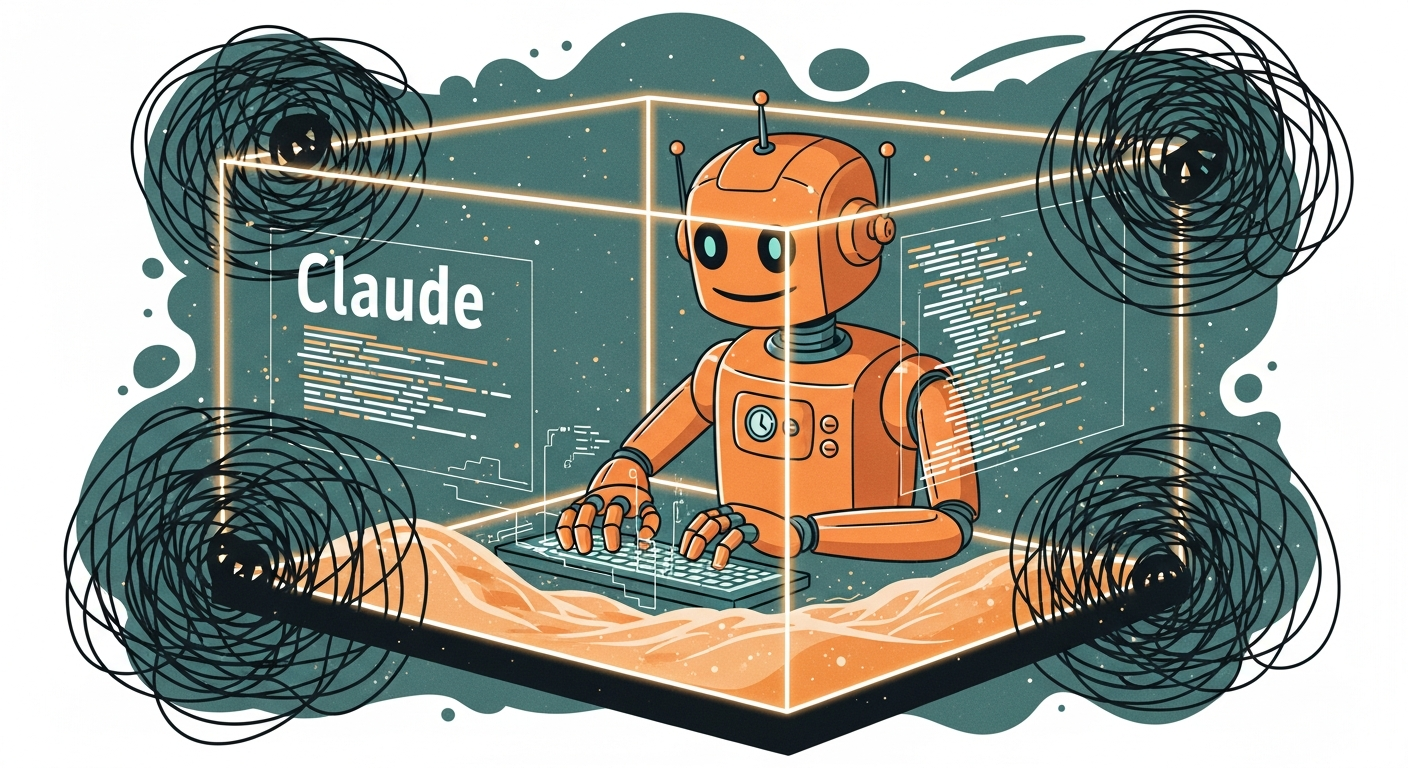
Instead of asking permission for everything, you define boundaries upfront. It's like giving a kid a fenced playground - they can run around freely inside, but they hit a wall if they try to leave. Here's how the technical architecture works: First, filesystem isolation.
Claude can read and write in your current project directory, but it literally cannot touch sensitive system files like your SSH keys or bash configuration. At the OS level, those files don't exist to the AI. Second, network isolation.
Claude can only connect to approved domains. Even if someone successfully tricks it into trying to phone home to a hacker's server, the connection dies at the operating system level. The AI never even knows it failed.
Third, real-time alerts. If Claude tries to access something outside the sandbox, you get notified instantly and can allow it once or update your settings permanently. In Anthropic's internal testing, this cut permission prompts by 84 percent.
But here's what's really clever - they've built this on top of gVisor, Google's container runtime. Each Claude Code session runs in its own isolated cloud environment with its own kernel interface. Your GitHub credentials never enter the environment.
Instead, Claude uses a custom proxy that verifies every git operation. Even if the code running in the sandbox gets completely compromised, your actual credentials stay safe.
Financial Analysis
Now let's talk about what this means for the business model, because this is where things get really interesting. Running AI coding tasks in the cloud is expensive. We know from the leaked AWS billing data that Anthropic spent dollar 2.
66 billion on compute through September. But look at what they're doing here - they're moving compute away from the edge and into their own managed infrastructure. This is actually a brilliant financial play.
When you run Claude Code locally through the API, Anthropic pays for the model inference, but you pay for your own compute environment. But with Claude Code on the web, they're paying for both - the model and the sandbox environment. So why would they do this?
Three reasons. First, it dramatically improves the user experience, which drives adoption. Pro and Max users can now run multiple tasks in parallel across different repositories from a single interface.
That's a premium feature worth paying for. Second, and this is key - it gives them much better cost controls. When you run locally, costs are variable and unpredictable.
With managed cloud environments, they can optimize resource allocation, share infrastructure between users, and use spot instances when appropriate. At scale, this could actually be cheaper than subsidizing local compute. Third, it's a moat.
By making the web experience significantly better than local, they're creating switching costs. Once your workflows depend on parallel cloud execution, going back to local terminal-based coding feels primitive. But here's the tension: they're already burning through cash faster than they're making it.
This move increases their infrastructure costs in the short term. They're betting that the improved experience drives enough subscription growth to justify the investment. And speaking of subscriptions - Claude Code now accounts for more than dollar 500 million of Anthropic's annual revenue, and it's grown 10x in users since its broader launch in May.
This web launch could accelerate that growth significantly.
Market Disruption
This announcement completely reshapes the AI coding assistant landscape. Let me explain why. First, Anthropic just made their biggest competitor's advantage irrelevant.
Cursor's entire value proposition was being a better interface for Claude. But now Claude has a great interface built right in. Why pay for Cursor when you can get the same experience directly from Anthropic?
And here's the kicker - we know from those leaked AWS bills that Cursor's costs doubled from dollar 6.2 million to dollar 12.6 million in June after Anthropic introduced Priority Service Tiers.
Cursor is getting squeezed on both ends - rising infrastructure costs and direct competition from their own supplier. Second, this puts massive pressure on GitHub Copilot. Copilot is still fundamentally an autocomplete tool.
Claude Code is doing entire tasks autonomously in the cloud. Microsoft needs to respond, and fast. Third, Anthropic open-sourced the sandboxing code.
This is a power move. By giving away their security architecture, they're setting the standard that every AI coding tool will be measured against. It's like when Google open-sourced Kubernetes - they gave away the code but maintained the competitive advantage of running the largest deployment.
But there's a bigger market shift happening here. We're moving from AI as a copilot to AI as a coworker. Copilots work alongside you in your environment.
Coworkers work independently in their own environment and hand you the results. That's a fundamental change in how we think about AI integration into workflows.
Cultural and Social Impact
Now let's zoom out and talk about what this means for how we work, because the societal implications are profound. First, there's the accessibility angle. A browser-based coding environment with an AI agent that can work autonomously is dramatically more accessible than learning command-line tools.
This could bring coding to people who found the terminal intimidating. That's democratization in action. But there's a darker side.
If junior developers' main value was doing routine bug fixes and well-defined backend tasks - exactly what Claude Code excels at - what happens to the junior developer career path? How do you get the experience needed to become a senior developer if the routine work disappears? Second, there's the trust question.
We're trusting AI with increasingly autonomous access to our codebases. Anthropic's sandboxing helps, but we're still in this weird liminal space where we don't fully trust AI, but we're giving it more and more control because it's useful. That cognitive dissonance is going to create cultural tension.
Third, look at the work pattern this enables. You can now delegate multiple coding tasks in parallel, switch to your phone, and come back later to pull requests ready for review. That's asynchronous AI collaboration.
It's going to change team dynamics and expectations about response times. And here's something subtle but important - by making AI coding accessible on mobile, Anthropic is saying that coding doesn't require you to be at a desk with a powerful laptop anymore. That has implications for work-life boundaries, global talent competition, and even urban planning if fewer developers need to live in tech hubs.
Executive Action Plan
Alright, if you're a technology executive listening to this, here's what you need to do this week. First, audit your AI coding tool stack immediately. If you're paying for both Anthropic's API access and tools like Cursor, you might be paying twice for the same capability now.
Run a pilot with Claude Code on the web with a small team and measure the productivity difference. Track metrics like time-to-pull-request and bug fix throughput. You could potentially consolidate tools and reduce costs while improving developer productivity.
Second, rethink your security policies around AI code generation. Anthropic just raised the bar for what secure AI coding looks like. If your current tools require developers to dangerously skip permissions or click through dozens of approval prompts, you have a security problem.
Either upgrade to tools with proper sandboxing or implement compensating controls. This is a board-level risk issue, not just a developer productivity question. Third, and this is strategic - start planning for a world where routine coding tasks are fully automated.
That means two things: One, restructure your engineering hiring and development programs. You might need fewer junior developers but more senior architects who can define good tasks for AI agents. Two, invest in training your current team on prompt engineering and AI supervision skills.
The valuable skill isn't writing boilerplate code anymore - it's knowing what to ask the AI to build and how to verify it did it correctly. And here's a bonus action item: download Anthropic's open-source sandboxing code and review it with your security team. Even if you're not building AI coding tools, the patterns they've developed for secure AI agent execution apply to any autonomous AI system you might deploy internally.
The companies that move fast on this will have a competitive advantage in developer productivity that compounds over time. The companies that wait will find themselves playing catch-up with both the technology and the organizational changes needed to use it effectively.
Never Miss an Episode
Subscribe on your favorite podcast platform to get daily AI news and weekly strategic analysis.