Karpathy Declares AI Agents Don't Work, Wikipedia Traffic Collapses
Episode Summary
Your daily AI newsletter summary for October 21, 2025
Full Transcript
TOP NEWS HEADLINES
Andrej Karpathy just threw cold water on the entire AI agent hype machine.
The former OpenAI and Tesla researcher says current agents "just don't work" and we're looking at a decade-long timeline before they can actually deliver on their promises.
He's calling today's agentic coding output "slop" and says reinforcement learning is "terrible" - though he admits it's better than what we had before.
OpenAI had an embarrassing weekend when VP Kevin Weil claimed GPT-5 solved ten previously unsolved mathematical problems.
Turns out they weren't actually unsolved - they were just unknown to one mathematician's website.
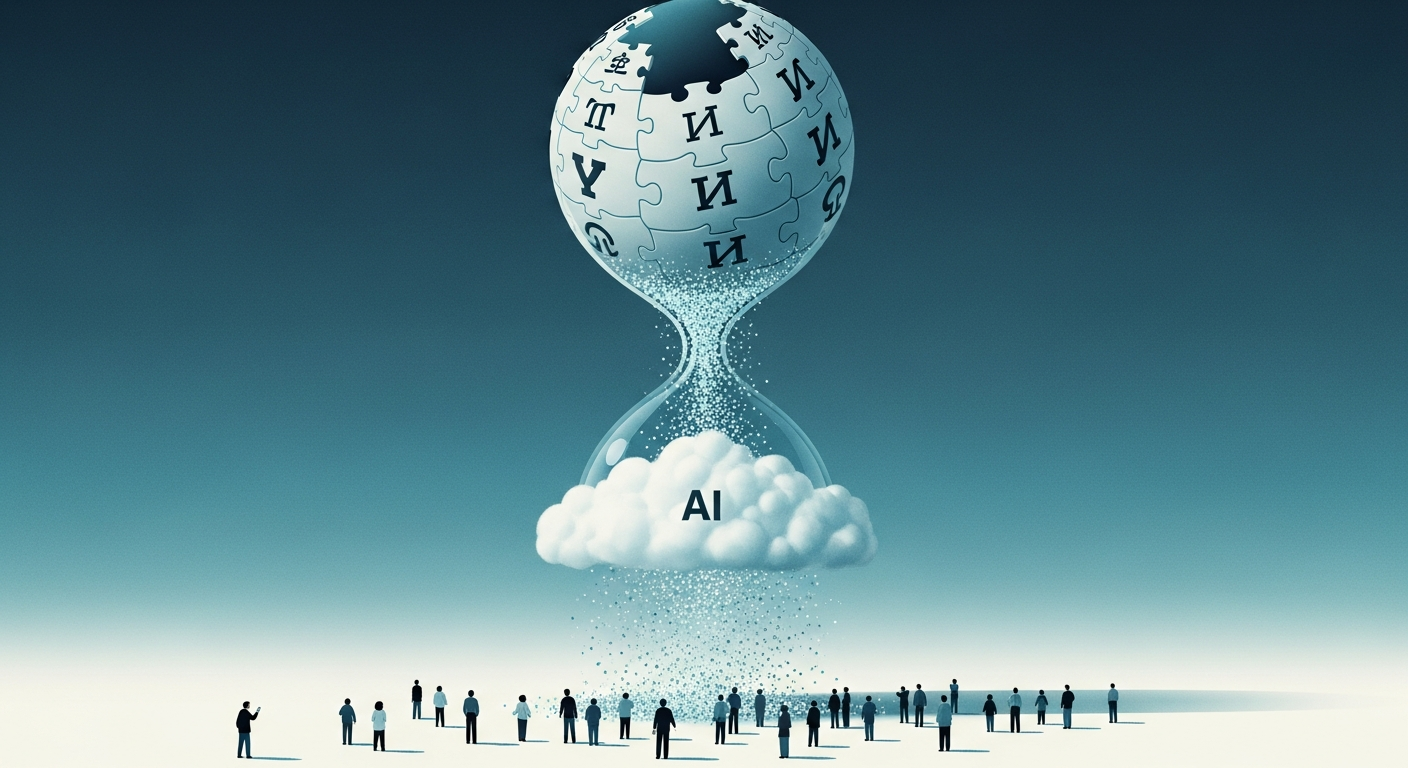
Google DeepMind's CEO called it "embarrassing" and the tweets disappeared faster than you can say "fact-checking failure." Wikipedia just revealed it lost 8 percent of its human traffic year-over-year, and AI-powered search summaries are the culprit.
When Google shows an AI Overview, only 8 percent of users click through to actual websites compared to 15 percent without the summary.
The open web is fighting back with Cloudflare launching new content signals that let website owners control how their content gets used for AI training.
Google plugged Gemini directly into Maps, giving developers access to real-world location data from over 250 million places.
At dollar 25 per thousand location-enhanced prompts, it's premium pricing, but it creates a competitive moat that rivals can't easily replicate.
This is Google leveraging its existing infrastructure advantage in ways competitors simply can't match.
Spotify is launching an AI music research lab with Sony, Universal, Warner, and the major labels - promising to only train on licensed content and create new revenue streams instead of lawsuits.
Translation: Spotify wants to own the infrastructure for AI-generated music without becoming the next copyright villain.
DEEP DIVE ANALYSIS
Let's dig deep into Wikipedia's traffic crisis because this isn't just about one website losing visitors - this is a canary in the coal mine for the entire open web economy.
Technical Deep Dive
Here's what's actually happening under the hood. When you search Google today, their AI Overviews feature triggers 60 percent of the time for questions starting with "who," "what," "when," or "why." These AI summaries are pulling directly from sources like Wikipedia to generate answers, but users rarely click through to the actual sources - it happens in just 1 percent of visits to pages with AI Overviews.
Wikipedia initially thought their traffic was spiking, especially from Brazil, but after upgrading their bot detection systems, they realized those weren't humans at all. They were sophisticated scrapers designed to look like legitimate users while harvesting content. Once they filtered out the fake traffic, the real picture emerged: an 8 percent year-over-year decline in actual human pageviews.
The technical challenge here is profound - how do you maintain a knowledge base when the systems using your knowledge never send users back to contribute or verify information?
Financial Analysis
Let's talk about the economics of this collapse. Wikipedia operates on a donation model - they raised about dollar 165 million in 2024, but that depends entirely on users actually visiting the site and seeing donation appeals. If traffic drops 8 percent per year, that's potentially dollar 13 million less in annual donations within a few years.
But here's the deeper financial crisis: Wikipedia's volunteer editors - the tens of thousands of people who create and maintain all this content - are motivated partly by seeing their work reach people. If nobody visits, why contribute? The real cost isn't Wikipedia's server bills - it's the opportunity cost of volunteer time evaporating.
Meanwhile, the AI companies consuming this content? OpenAI is valued at dollar 157 billion. Google parent Alphabet has a market cap over dollar 2 trillion.
They're extracting billions in value from content that volunteers create for free, while the source of that value slowly dies. The business model inversion is staggering - we've moved from "traffic in exchange for content" to "content extraction with no reciprocity.
Market Disruption
This is where it gets really interesting. We're watching the death of the old internet traffic economy in real time. For 25 years, the deal was simple: search engines could crawl your content, but they'd send referral traffic and provide attribution.
That deal is now broken. Cloudflare just launched Content Signals Policy - essentially an extension to robots.txt that lets website owners specify whether their content can be used for search indexing, real-time AI answers, or model training.
They're deploying this for 3.8 million domains automatically, defaulting to blocking AI training. But here's the problem: these are signals, not technical blocks.
Bad actors can ignore them. The real enforcement comes from Cloudflare's WAF and Bot Management tools, which are paid features. So we're creating a two-tier internet - those who can afford sophisticated bot protection, and everyone else who gets scraped into oblivion.
Publishers are calling this the "web infrastructure revolt," and they're right. The entire competitive landscape is shifting from "how do we rank in search" to "how do we prevent AI from making us invisible while still stealing our content.
Cultural and Social Impact
Let's zoom out to the societal implications. Wikipedia isn't just a website - it's arguably humanity's greatest collaborative knowledge project. It contains 60 million articles in over 300 languages.
Medical students use it. Journalists fact-check against it. Every major AI model trains on it.
And now it's slowly becoming invisible to the very people who should be contributing to it. Gen Z already uses TikTok and YouTube as search engines more than Google. They're not forming the habit of checking sources or understanding where information comes from.
We're creating a generation that consumes AI-generated summaries without ever questioning the provenance of knowledge. The cultural shift here is profound: we're moving from "citation culture" to "summary culture." From "I read about this on Wikipedia" to "the AI told me.
" The loss isn't just traffic - it's the entire epistemological framework of how we validate and trust information. When AI becomes the interface for all knowledge, who verifies the AI? Who updates it when facts change?
Who catches the errors?
Executive Action Plan
If you're running a technology company, here's what you need to do right now. First, audit your content strategy immediately. If you're producing valuable content - documentation, research, analysis, anything substantive - implement Cloudflare's Content Signals Policy or equivalent protection today.
Don't wait for your traffic to crater. Set clear policies for how AI systems can use your content, and enforce them technically with bot management tools. Consider this a critical infrastructure investment, not a nice-to-have.
Second, rethink your distribution model entirely. The old SEO playbook is dying. You can't rely on search traffic anymore.
Start building direct relationships with your audience - newsletters, communities, APIs that partners pay for. If your business model depends on Google sending you traffic, you're building on quicksand. Look at what companies like Bloomberg and Reuters are doing - they're licensing their content directly to AI companies in multi-million dollar deals.
Figure out your licensing strategy now, before you lose all leverage. Third, if you're building AI products, solve the attribution and compensation problem proactively. The companies that figure out how to create value while properly compensating content creators will win the long game.
OpenAI's current approach - scrape everything, deal with lawsuits later - isn't sustainable. We need new models that compensate creators when their content trains models or generates responses. Think revenue sharing, licensing frameworks, or token-based compensation systems.
The executives who crack this problem will define the next era of the internet. The ones who ignore it will end up on the wrong side of history - and probably the wrong side of a courtroom.
Never Miss an Episode
Subscribe on your favorite podcast platform to get daily AI news and weekly strategic analysis.