Stanford AI Designs Sixteen New Bacteria-Killing Viruses Successfully
Episode Summary
Your daily AI newsletter summary for October 16, 2025
Full Transcript
TOP NEWS HEADLINES
Stanford researchers just achieved something that sounds like science fiction - they used AI to design completely new viruses from scratch that actually kill bacteria, and sixteen of them worked in real lab tests.
This isn't theoretical anymore - these AI-designed biological weapons against superbugs are replicating and destroying bacterial cells in petri dishes.
OpenAI is making a major policy shift by allowing verified adult users to engage in mature, erotic conversations with ChatGPT starting in December.
CEO Sam Altman says they're moving from restrictive guardrails to treating adult users like adults, potentially opening up the massive AI companion market.
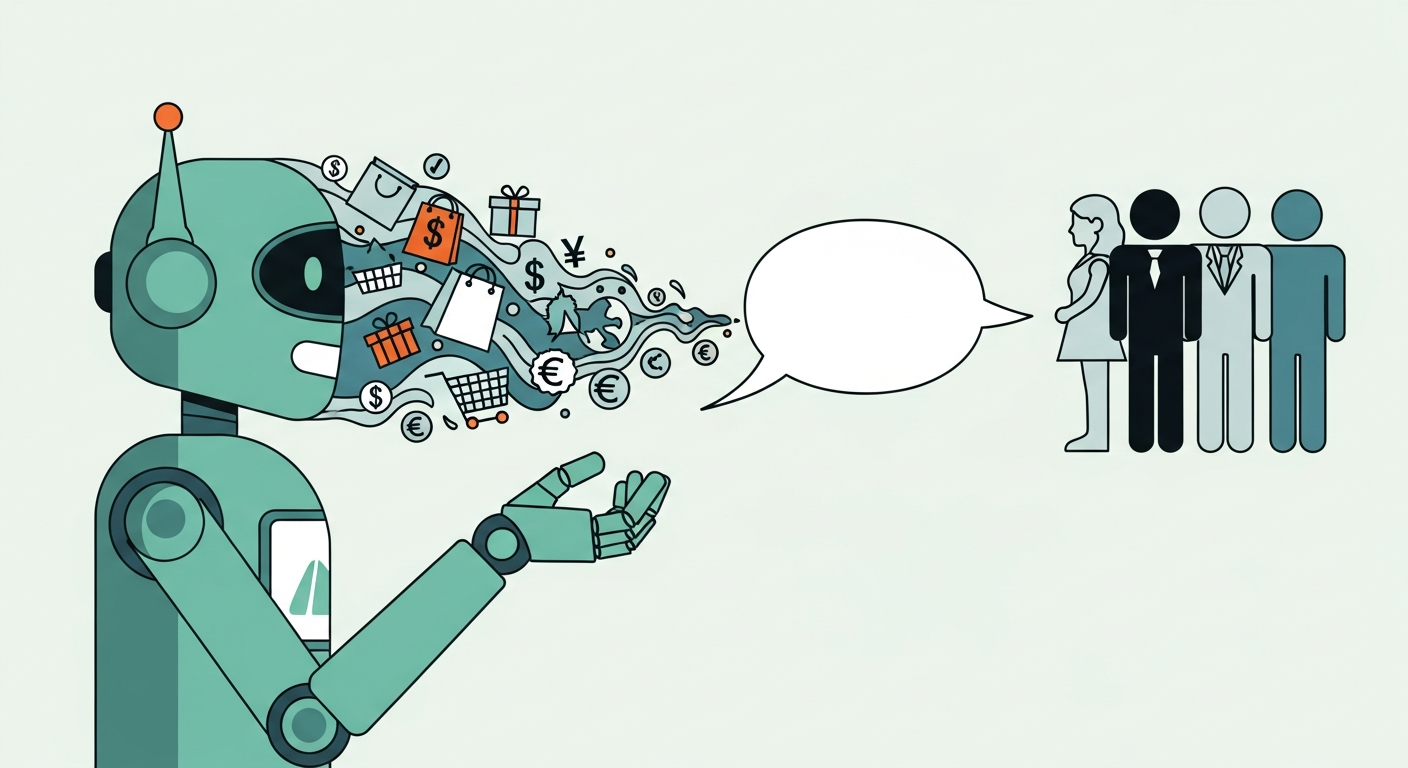
Walmart just struck a deal with OpenAI that lets ChatGPT users buy products directly through chat conversations.
No more search bars or shopping carts - just tell ChatGPT what you want and complete the purchase without leaving the conversation.
Chinese AI company Ant Group released Ring-1T, an open-source thinking model that achieved silver-level performance on the International Mathematical Olympiad.
This puts China's AI capabilities just one step behind Google and OpenAI's gold-level reasoning models.
Oracle and AMD announced a massive partnership to build AI data centers with 200 megawatts of computing power, deploying 50,000 AMD chips in what represents a major challenge to Nvidia's dominance in AI hardware.
DEEP DIVE ANALYSIS
Let's dive deep into that Walmart-OpenAI partnership because this represents a fundamental shift in how commerce will work in the AI era - and it has massive implications for every business leader listening.
Technical Deep Dive
What Walmart and OpenAI have built goes far beyond a simple integration. This is conversational commerce at scale. Instead of the traditional search-browse-cart-checkout funnel that's dominated e-commerce for twenty years, users can now say something like "I need a gift for my ten-year-old nephew who loves dinosaurs" and ChatGPT will not only suggest products but complete the entire transaction.
The system leverages OpenAI's natural language processing to understand intent, context, and preferences, then connects directly to Walmart's inventory and fulfillment systems. This is powered by what OpenAI calls "Instant Checkout" - essentially turning every conversation into a potential sales transaction. The technical architecture here is sophisticated.
ChatGPT needs to maintain conversation context, access real-time inventory data, process payment information, and handle logistics coordination - all while maintaining the conversational flow. This isn't just a chatbot with a shopping plugin; it's a complete reimagining of the commerce interface.
Financial Analysis
The financial implications are staggering. Walmart has 240 million weekly customers, but ChatGPT has 800 million weekly users. This partnership gives Walmart access to a user base more than three times larger than their current reach.
For OpenAI, this creates a massive new revenue stream - they're charging transaction fees on every purchase, essentially becoming the payment processor for conversational commerce. But here's where it gets interesting for the broader market: traditional e-commerce platforms charge merchants anywhere from 2-4 percent in transaction fees. If OpenAI can capture even a fraction of Walmart's transaction volume - we're talking about billions in annual revenue - this could justify their astronomical valuation and provide a sustainable revenue model beyond subscription fees.
For Walmart, the cost calculation is fascinating. Yes, they're paying OpenAI transaction fees, but they're potentially eliminating massive customer acquisition costs. When someone discovers a product through ChatGPT conversation, Walmart doesn't pay for that discovery through Google Ads or Facebook marketing.
The AI conversation becomes the marketing channel.
Market Disruption
This move puts Amazon in a precarious position. Amazon's entire e-commerce dominance is built on search-to-cart conversion optimization. When commerce becomes conversational, that advantage evaporates.
Google Shopping, Facebook Marketplace, even traditional retailers - they're all operating under the old paradigm of visual browsing and search-driven discovery. More broadly, this signals that AI interfaces are becoming distribution channels. Every company building AI assistants now has the potential to become a commerce platform.
Microsoft's Copilot, Google's Bard, Anthropic's Claude - they're all potential shopping destinations now.
Cultural and Social Impact
We're witnessing the emergence of what I call "ambient commerce" - purchasing decisions that happen naturally within conversations rather than as dedicated shopping sessions. This changes consumer behavior fundamentally. Instead of "I need to go shopping," it becomes "I mentioned needing something and it just appeared.
" This has profound implications for impulse purchasing, brand loyalty, and consumer decision-making. When an AI can instantly fulfill needs expressed in casual conversation, the friction between want and purchase disappears almost entirely. We're looking at a potential acceleration of consumer spending and a shift in how people relate to ownership and consumption.
Executive Action Plan
First, if you're running a retail or e-commerce business, you need to start building conversational commerce capabilities immediately. This isn't a 2026 or 2027 strategy - ChatGPT's 800 million users are already there, and your competitors are racing to integrate. Begin by identifying which AI platforms your customers are already using and explore partnership opportunities.
Second, rethink your customer acquisition strategy. Traditional digital marketing assumes customers come to your website or app to shop. In the conversational commerce world, customers might never visit your properties at all.
You need to be discoverable within AI conversations, which means optimizing for AI recommendation algorithms rather than just search engine optimization. Third, consider building your own AI commerce interface. The technology stack that powers this isn't exclusively available to OpenAI and Walmart.
If you have substantial transaction volume, developing your own conversational commerce capabilities could give you competitive advantage and eliminate the transaction fees you'd pay to AI platform providers. The question isn't whether conversational commerce will dominate - it's whether you'll be a participant or a middleman paying fees to those who got there first.
Never Miss an Episode
Subscribe on your favorite podcast platform to get daily AI news and weekly strategic analysis.