Google and Amazon Launch Enterprise AI Platforms, Disrupting Software Market
Episode Summary
Your daily AI newsletter summary for October 11, 2025
Full Transcript
TOP NEWS HEADLINES
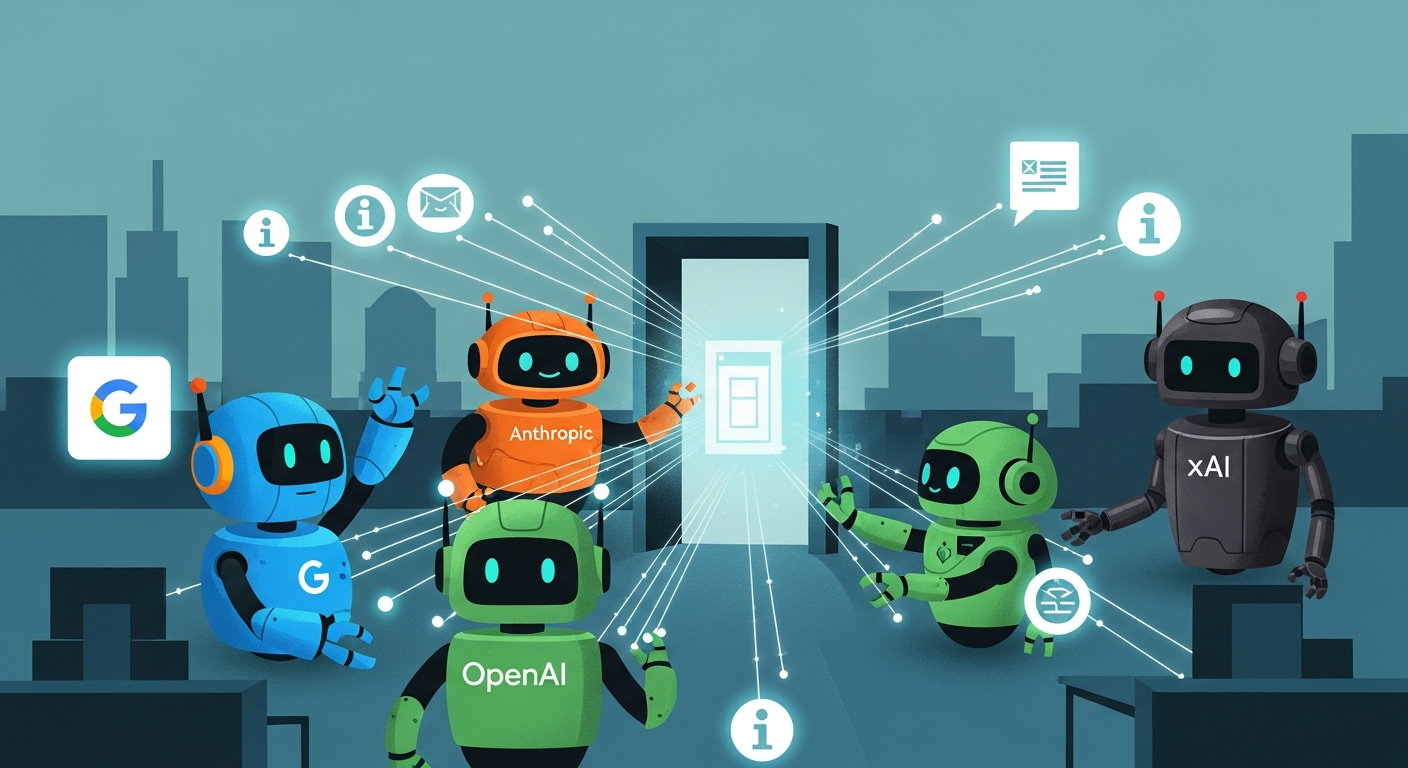
Google just launched Gemini Enterprise at thirty dollars per user per month, positioning itself as the "front door for AI in the workplace" with no-code agent builders and direct integration to company data.
Amazon fired back the same day with Quick Suite, their own enterprise AI platform priced between twenty and forty dollars per user.
Anthropic researchers discovered a terrifying security flaw - just 250 poisoned documents can backdoor AI models of any size, representing only 0.00016 percent of training data.
This completely overturns previous assumptions about data poisoning requiring millions of compromised documents.
Reflection AI raised a massive two billion dollars at an eight billion dollar valuation, positioning itself as America's answer to Chinese AI labs like DeepSeek with open-source frontier models.
The funding round included former Google CEO Eric Schmidt and Donald Trump Jr.-backed 1789 Capital.
OpenAI's Sora hit one million downloads in just five days, outpacing ChatGPT's initial growth despite being invite-only.
The AI video generation app is already facing copyright disputes and a flood of deepfake content that's testing their content moderation systems.
Figure AI unveiled their third-generation humanoid robot, the Figure 03, designed for mass production with a target of 100,000 units within four years.
The robot can fold laundry, load dishwashers, and runs for five hours on a single charge, though it's still not available for purchase.
Microsoft deployed the world's first production-scale NVIDIA GB300 cluster for OpenAI, marking a significant infrastructure milestone as these companies prepare for the next generation of AI models that will require unprecedented computing power.
DEEP DIVE ANALYSIS
The enterprise AI platform war that erupted today with Google's Gemini Enterprise and Amazon's Quick Suite launches represents the most significant shift in business software since the cloud migration began fifteen years ago. This isn't just about new productivity tools - it's about who will control the foundational layer of how companies operate in an AI-native world.
Technical Deep Dive
Gemini Enterprise fundamentally reimagines the enterprise software stack by creating a unified conversational interface that sits on top of all existing business applications. Instead of employees learning dozens of different software interfaces, they interact with AI agents that can access, manipulate, and synthesize data across their entire technology ecosystem. The platform uses Google's latest Gemini models to provide real-time access to documents, databases, and applications through natural language queries.
What makes this technically significant is the no-code agent builder that allows non-technical employees to create custom AI workflows. Think of it as democratizing automation - where previously you needed a development team to integrate systems or automate processes, now a marketing manager can create an agent that pulls sales data, analyzes customer sentiment, and generates campaign reports without writing a single line of code. The architecture also includes what Google calls "grounding in company context," meaning these agents understand your specific business terminology, processes, and data relationships.
This is a massive technical challenge that Google appears to have solved through advanced retrieval-augmented generation and fine-tuning on enterprise datasets.
Financial Analysis
The thirty-dollar-per-user monthly pricing for Gemini Enterprise is strategically positioned just below premium productivity suites while offering dramatically more value. For context, Microsoft 365 E5 costs about fifty-seven dollars per user per month, but provides traditional software applications. Google is betting that companies will pay half that price for AI agents that can replace multiple specialized software tools.
The total addressable market here is staggering. With over one billion knowledge workers globally and average software spending of about four thousand dollars per employee annually, the enterprise AI platform market could reach four trillion dollars. Google and Amazon aren't just fighting for market share - they're positioning to capture the entire productivity software stack.
From a cost perspective, this creates a fascinating dynamic. Companies could potentially reduce their software licensing costs while dramatically increasing productivity. A single AI agent that can perform tasks across CRM, analytics, project management, and communication platforms could eliminate the need for multiple specialized tools.
This represents a fundamental shift from per-application licensing to per-capability pricing.
Market Disruption
This launch directly threatens every enterprise software company, from Salesforce to ServiceNow to Workday. Why pay for specialized CRM software when an AI agent can manage customer relationships through natural language interactions with your existing data? The verticalization of enterprise software that's dominated the last two decades could reverse as AI platforms provide horizontal capabilities across all business functions.
The competitive positioning is particularly interesting. Google leverages its search and productivity expertise, while Amazon brings its AWS infrastructure and logistics optimization knowledge. Microsoft, notably absent from today's announcements, faces the challenge of protecting its Office 365 revenue while competing with these AI-native platforms.
For existing software vendors, the strategic response will likely involve rapid AI integration or strategic partnerships. Companies that can't quickly embed AI agents into their platforms risk becoming legacy systems that customers abandon for these comprehensive AI platforms.
Cultural and Social Impact
We're witnessing the potential end of the "software sprawl" era where employees juggle dozens of different applications daily. The cognitive load reduction from having a single AI interface handle complex multi-system tasks could fundamentally change how knowledge work gets done. Instead of employees becoming experts in specific software tools, they'll need to become skilled at directing AI agents and interpreting their outputs.
This shift also democratizes business intelligence and automation. Tasks that previously required specialized technical knowledge or expensive consulting engagements can now be handled by AI agents configured by domain experts. A finance manager can create sophisticated reporting workflows without involving IT departments, potentially accelerating business processes while reducing internal friction.
However, this concentration of capability in AI platforms also creates new dependencies and risks. Companies will need to carefully consider vendor lock-in implications when their entire operational workflow runs through a single AI platform provider.
Executive Action Plan
First, immediately begin pilot programs with both Google's and Amazon's platforms to understand their capabilities and limitations within your specific business context. Don't wait for full rollouts - the learning curve for effectively directing AI agents is significant, and early experience will provide competitive advantages as these platforms mature. Second, conduct a comprehensive audit of your current software stack to identify redundant applications and integration pain points that AI platforms could eliminate.
Map out which business processes require multiple system interactions and calculate the potential cost savings and efficiency gains from consolidating these workflows into AI agent-driven processes. Third, invest heavily in change management and AI literacy training for your workforce. The shift from application-specific expertise to AI direction skills represents a fundamental change in how employees interact with technology.
Companies that successfully navigate this transition will have significant advantages in productivity and operational efficiency over those that don't adapt quickly enough.
Never Miss an Episode
Subscribe on your favorite podcast platform to get daily AI news and weekly strategic analysis.