Google's Gemini 2.5 Automates Web Tasks Better Than Competitors
Episode Summary
Your daily AI newsletter summary for October 09, 2025
Full Transcript
TOP NEWS HEADLINES
Sam Altman just dropped some serious predictions about AI's future, talking about agents that could work autonomously for weeks and billion-dollar companies running with zero human employees.
This came from an exclusive interview at OpenAI's Dev Day 2025, where he painted a picture of work that might not even look like work anymore.
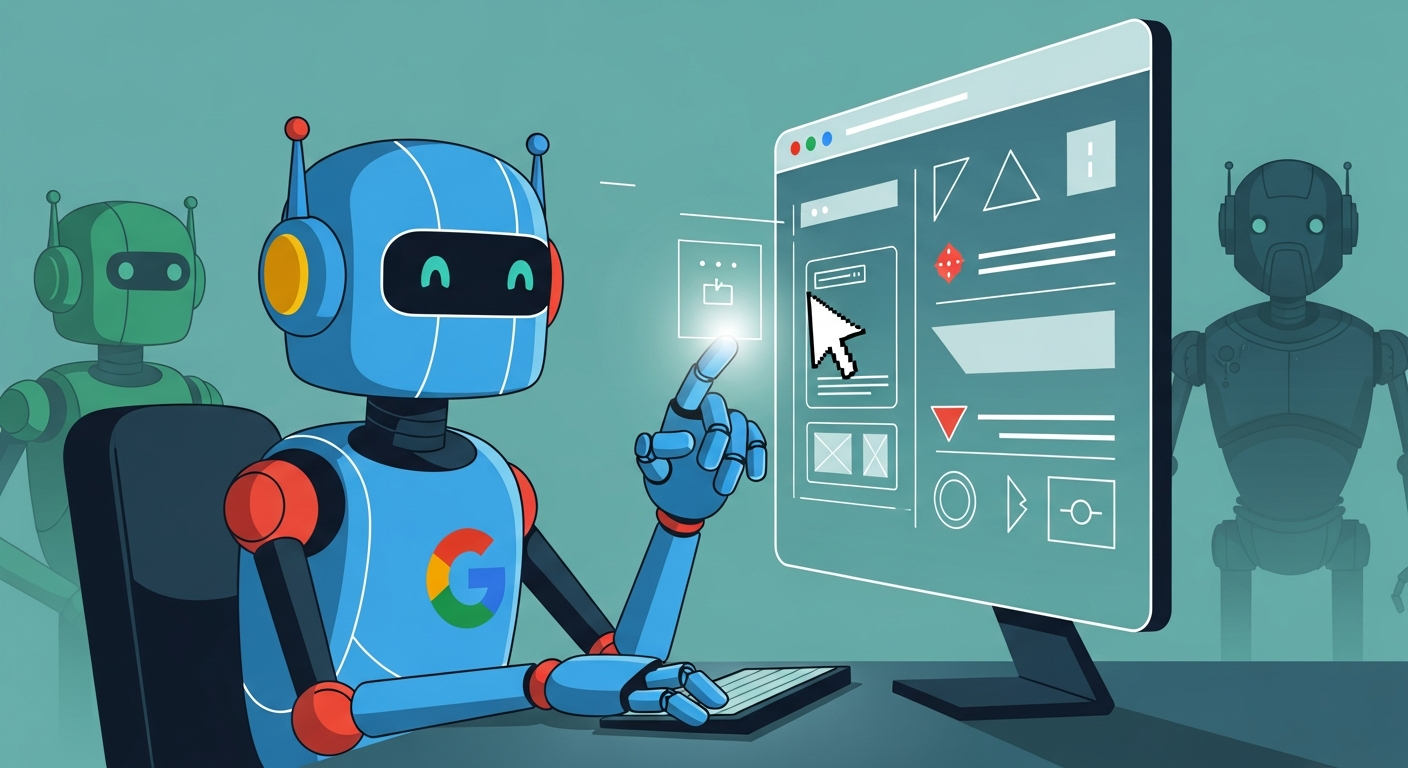
Google fired back in the AI agent wars with their new Gemini 2.5 Computer Use model, which can actually control your browser - clicking buttons, filling forms, and navigating websites just like a human would.
Early testing shows it's 50 percent faster than competitors and significantly more accurate than both Claude and OpenAI's offerings. xAI is raising a massive 20 billion dollar funding round, with Nvidia not just investing but actually financing the chip purchases through a special purpose vehicle.
This deal structure is fascinating - Nvidia puts in 2 billion in equity while also providing up to 12.5 billion in debt to buy their own processors.
The enterprise world is going all-in on AI integration, with Deloitte deploying Claude across 470,000 employees and IBM partnering with Anthropic to embed Claude into their enterprise software stack.
IBM's reporting 45 percent productivity gains across 6,000 early adopters.
Wall Street got spooked when OpenAI announced DocuGPT for contract processing, immediately tanking DocuSign's stock by 12 percent and triggering a broader SaaS selloff worth billions.
It's a stark reminder of how quickly AI announcements can reshape entire market sectors.
Duke University researchers unveiled TuNa-AI, an AI-powered system that's revolutionizing drug delivery by designing nanoparticles with 43 percent better success rates and cutting toxic ingredients by 75 percent while maintaining effectiveness.
DEEP DIVE ANALYSIS
Let's dive deep into what might be the most significant development we're seeing - the emergence of true computer-controlling AI agents, specifically Google's Gemini 2.5 Computer Use. This isn't just another chatbot upgrade; this represents a fundamental shift toward AI that can actually operate in our digital world.
From a technical perspective, this is remarkably sophisticated. The system works by taking continuous screenshots of whatever interface it's controlling, then using computer vision to understand what's on screen - identifying buttons, forms, menus, and text fields. But here's where it gets interesting: unlike previous attempts that relied on brittle API integrations or pre-mapped interface elements, Gemini 2.
5 Computer Use operates at the pixel level. It's literally seeing what you see and deciding where to click, just like a human would. The breakthrough is in pixel precision - most language models struggle with spatial reasoning, but Google trained this specifically to understand exact coordinates and visual layouts.
They've also optimized for parallel actions, meaning the AI can execute multiple steps simultaneously rather than waiting for each action to complete. The financial implications here are staggering. Third-party testing from Browserbase shows Gemini achieving 69 percent success rates on complex web navigation tasks versus Claude's 53 percent and OpenAI's 46 percent.
More importantly, it's doing this at lower latency and cost. For enterprises, this could eliminate entire categories of business process outsourcing. Think about it - companies spend billions on virtual assistants in the Philippines or India to handle form filling, data entry, and basic web tasks.
This technology could automate those jobs entirely. Google's own payments team recovered 60 percent of broken UI tests that previously took days to fix manually. When you scale that across enterprise IT operations, we're talking about massive cost savings.
But let's talk market disruption, because this is where things get really interesting. Google isn't just competing with other AI companies here - they're potentially disrupting the entire robotic process automation industry. Companies like UiPath and Automation Anywhere have built multi-billion dollar businesses on the premise that you need specialized software to automate repetitive computer tasks.
Gemini 2.5 Computer Use could make those tools obsolete overnight. Any task that involves clicking through web interfaces - from HR onboarding to customer service workflows to financial reconciliation - becomes automatable with simple natural language instructions rather than complex programming.
The cultural and social impact is profound and frankly a bit unsettling. We're looking at the potential elimination of an entire class of knowledge work - the kind of semi-skilled digital tasks that employ millions of people globally. But there's also an empowerment angle here.
Small businesses that couldn't afford expensive automation tools could suddenly access enterprise-level process automation through simple conversational interfaces. The democratization of automation could level the playing field between small companies and large enterprises in ways we haven't seen before. Here's what technology executives need to be thinking about right now.
First, audit your current automation stack - if you're paying for RPA tools that primarily handle web-based workflows, start planning your migration strategy. The writing is on the wall that conversational AI agents will be more cost-effective and easier to maintain than traditional automation platforms. Second, identify your most time-consuming web-based business processes and start experimenting with computer use models immediately.
Don't wait for the perfect solution - get your teams familiar with the technology now while it's still emerging. Third, and this is crucial - start thinking about how to redeploy human talent as these routine tasks get automated. The companies that thrive will be those that can quickly upskill their workforce to focus on higher-value activities while the AI handles the repetitive digital work.
This isn't a distant future scenario. Google is already using this internally for critical business operations, and they're making it available through their API today. The question isn't whether this technology will reshape how we work with computers - it's how quickly your organization will adapt to this new reality.
Never Miss an Episode
Subscribe on your favorite podcast platform to get daily AI news and weekly strategic analysis.