OpenAI Reaches $500 Billion Valuation, Surpassing SpaceX
Episode Summary
Your daily AI newsletter summary for October 04, 2025
Full Transcript
TOP NEWS HEADLINES
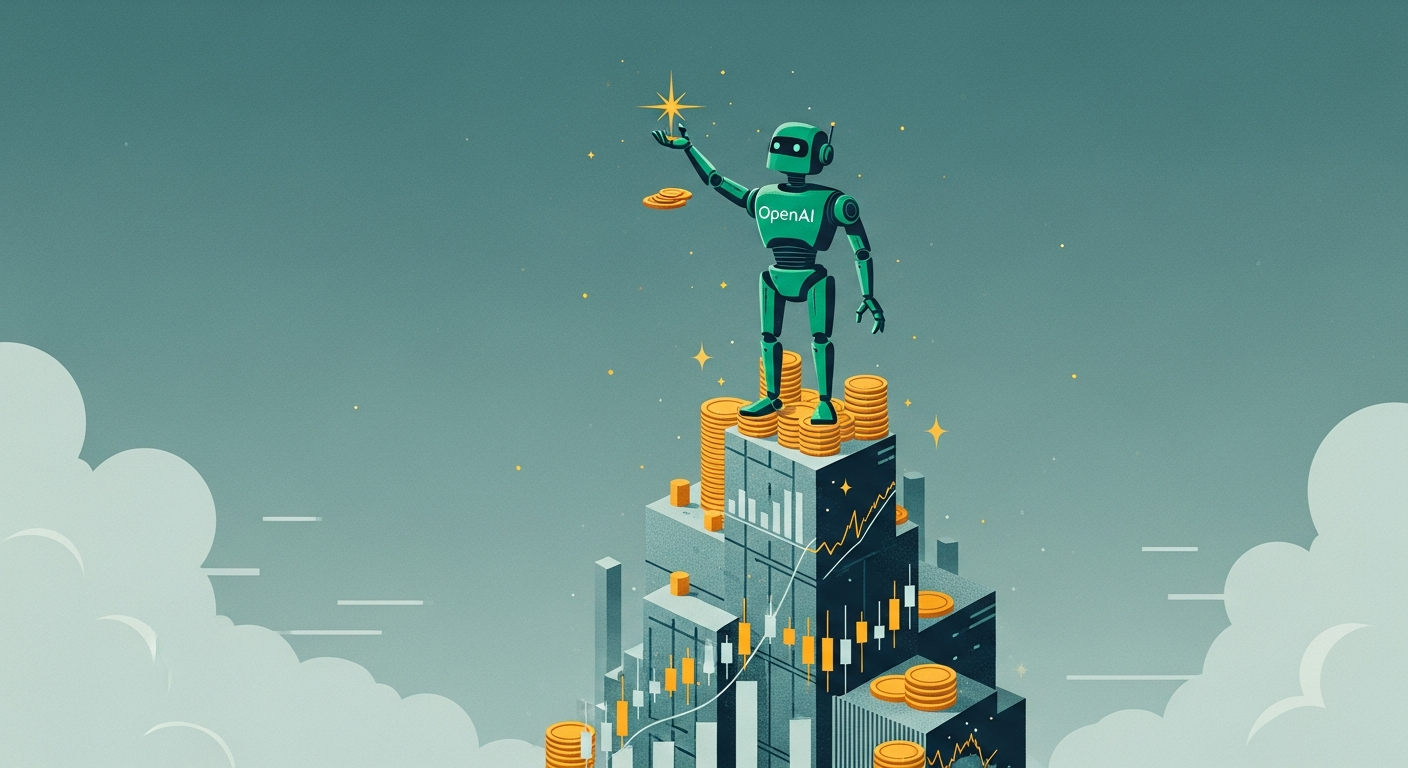
OpenAI just completed a massive dollar 6.6 billion employee stock sale, officially making it the world's most valuable private company at a dollar 500 billion valuation – that's larger than SpaceX and basically bigger than the GDP of most countries.
What's fascinating here is that employees only sold two-thirds of the available shares, suggesting they're betting on even higher valuations ahead.
IBM released Granite 4.0, an open-source AI model that's punching way above its weight class – their smallest version is beating models 12 times larger, including some from major players, while using 70 percent less memory.
This could be a game-changer for companies looking to run powerful AI without the massive infrastructure costs.
Apple just scrapped its Vision Pro overhaul plans to go all-in on AI smart glasses, directly taking aim at Meta's successful Ray-Ban partnership.
It's a clear signal that even Apple thinks the future of personal AI is glasses, not bulky headsets.
Ex-OpenAI CTO Mira Murati's new company, Thinking Machines, just unveiled Tinker – an API that lets researchers fine-tune massive AI models without managing the infrastructure nightmare themselves.
Early users at Princeton, Stanford, and Berkeley are already using it to build everything from theorem provers to chemistry reasoning systems.
China is mandating AI education for over 200 million children starting in 2025, creating what could be the world's first generation of true "AI natives" from age six onward.
This systematic approach could give China a massive long-term advantage in global AI development.
DEEP DIVE ANALYSIS
Let's dive deep into OpenAI's historic dollar 500 billion valuation because this isn't just a milestone – it's a seismic shift that every tech executive needs to understand.
Technical Deep Dive
: What makes this valuation so remarkable isn't just the number, but what's driving it. OpenAI generated dollar 4.3 billion in revenue in just the first half of 2025, already exceeding their entire 2024 revenue.
They're not just building language models anymore – they're creating an entire AI ecosystem. With Sora 2's viral launch creating TikTok-style AI video feeds, and their recent partnerships for AI-powered shopping through ChatGPT, they're proving that AI can drive massive consumer adoption beyond just productivity tools. The technical foundation they've built – from GPT to DALL-E to Sora – is now powering multiple revenue streams simultaneously.
Financial Analysis
: Here's what's fascinating from a financial perspective: this wasn't even a fundraising round. This was employees selling their shares, meaning the money didn't go to the company but to individuals. Yet investors including SoftBank, Thrive Capital, and others were eager to pay these prices just to get a stake.
The fact that employees only sold dollar 6.6 billion out of dollar 10.3 billion available suggests incredible confidence in future upside.
When you consider OpenAI has committed to spending dollar 300 billion on Oracle Cloud Services over five years, this valuation suddenly makes more sense – they're betting on infrastructure scale that could support revenue in the hundreds of billions. For comparison, Microsoft's entire revenue is around dollar 200 billion annually.
Market Disruption
: This valuation puts OpenAI ahead of SpaceX, which has been the private market darling for years. But more importantly, it signals that AI companies can achieve software-like scalability with unprecedented speed. We're seeing a compression of the traditional startup lifecycle – OpenAI went from research lab to the world's most valuable private company in less than a decade.
This creates massive competitive pressure. Google, Microsoft, and Meta are now competing with a company valued higher than most public corporations, yet one that's still technically a startup with startup speed and agility.
Cultural and Social Impact
: The cultural implications are staggering. OpenAI's Sora 2 launch, despite internal pushback from researchers worried about creating addictive social media patterns, shows the tension between advancing AI capabilities and social responsibility. The platform already has people creating everything from Sam Altman cat videos to AI-generated memes that are indistinguishable from human-created content.
We're witnessing the birth of the first truly AI-native social platform, which could fundamentally change how we think about authenticity, creativity, and human expression. The fact that this is happening at a dollar 500 billion company, not a small startup, means these cultural shifts will have massive scale and impact.
Executive Action Plan
: First, if you're a technology executive, you need to immediately assess your AI competitive positioning. OpenAI's valuation isn't just about their success – it's about the market's belief that AI will generate trillion-dollar outcomes. You cannot afford to be a fast follower anymore; the market has decided that AI winners will capture disproportionate value.
Start identifying where you can build AI-first products, not just AI-enhanced versions of existing offerings. Second, consider your talent retention strategy urgently. The OpenAI stock sale just created potentially thousands of millionaires overnight.
Your AI talent is watching this, and they're calculating their opportunity cost of staying at traditional tech companies. You need to either accelerate your own AI initiatives to create similar upside potential, or risk losing your best people to AI-first companies. Third, rethink your infrastructure investments.
OpenAI's dollar 300 billion cloud commitment shows they're betting on compute-intensive, scaled AI operations. If you're still thinking about AI as a nice-to-have feature, you're already behind. The market has decided that AI infrastructure is the new digital transformation, and companies that don't invest heavily will be left behind in what's shaping up to be the largest technological shift since the internet itself.
Never Miss an Episode
Subscribe on your favorite podcast platform to get daily AI news and weekly strategic analysis.