OpenAI Launches Sora 2 with AI-Generated Video Social Platform
Episode Summary
Your daily AI newsletter summary for October 02, 2025
Full Transcript
TOP NEWS HEADLINES
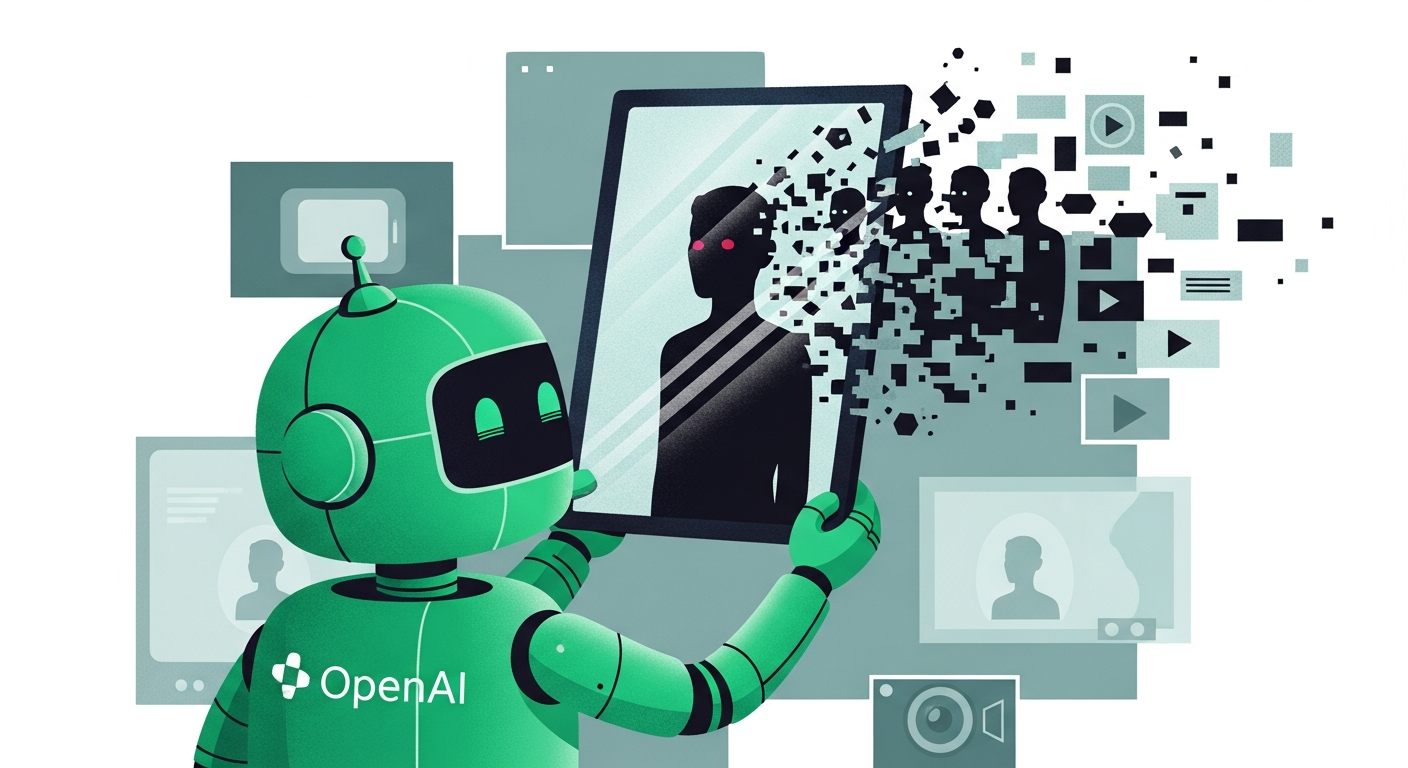
OpenAI just dropped Sora 2 alongside a social video app that's basically TikTok meets deepfake technology - users can record themselves once and then appear in any AI-generated video scenario.
The "Cameos" feature is already raising eyebrows about privacy and authenticity, but the physics improvements in their video generation are genuinely impressive.
Former ChatGPT co-creator Liam Fedus just raised three hundred million dollars in what might be the largest seed round in history for Periodic Labs, a startup building AI scientists that conduct physical experiments autonomously in robotic laboratories.
Over twenty researchers from OpenAI, Google DeepMind, and Meta walked away from potentially hundreds of millions in stock options to join this moonshot.
Meta quietly acquired RISC-V chip startup Rivos as part of their push to reduce dependence on Nvidia and build custom AI silicon in-house.
This signals that the major tech companies are getting serious about vertical integration in the AI hardware stack.
Amazon just unveiled their biggest hardware refresh in years, with new Echo devices, Kindles, and Ring cameras all powered by Alexa Plus - their attempt to make voice assistants actually useful again.
The new Echo Dot Max promises three times the bass of the previous generation, but the real story is their push into spatial audio and multi-room experiences.
In a move that has Hollywood talent agencies in panic mode, synthetic actress Tilly Norwood is making the festival circuit rounds with creators pitching her like traditional talent you can sign to contracts.
SAG-AFTRA is already calling this digital scab labor, setting up what could be the entertainment industry's biggest labor dispute since streaming residuals.
Google rolled out new visual search capabilities in AI Mode while simultaneously facing criticism for apparent bias in their AI results - blocking certain political queries for some figures but not others.
The inconsistency is raising questions about how these systems handle sensitive topics.
DEEP DIVE ANALYSIS
Let's dive deep into what's really happening with OpenAI's Sora 2 launch, because this isn't just another AI model update - this is a fundamental shift in how we think about content creation, identity, and social media.
Technical Deep Dive
Sora 2 represents a massive leap forward in video generation technology. The original Sora, launched in February, could create impressive videos but struggled with basic physics - basketballs would pass through hoops instead of bouncing off them, water would flow uphill, and people would morph in unnatural ways. This new version has largely solved those physics problems using what appears to be improved training on physical world data and better temporal consistency models.
The technical breakthrough here is in the "Cameos" feature. Users record a single video of themselves - just once - and the system creates what's essentially a digital puppet that can be inserted into any AI-generated scenario while maintaining consistent appearance, voice patterns, and even basic manmannerisms. This requires sophisticated identity embedding, voice cloning, and real-time face replacement that maintains lighting consistency across different virtual environments.
The system is also generating synchronized audio and dialogue, suggesting they've integrated their Whisper speech recognition technology with their DALL-E image generation capabilities into a unified multimodal system. What's particularly impressive is the temporal coherence - earlier AI video models would create flickering, inconsistent footage where a person's face might change slightly from frame to frame. Sora 2 appears to have solved this through what's likely a combination of better training data and architectural improvements that maintain identity consistency across longer sequences.
Financial Analysis
The financial implications here are staggering. OpenAI is essentially launching a direct competitor to TikTok while simultaneously democratizing video production in a way that could devastate traditional content creation industries. The compute costs for this technology are enormous - generating high-quality video requires significantly more processing power than text or even image generation.
This explains why they're rolling out slowly with usage limits and why ChatGPT Pro subscribers get priority access. From a revenue perspective, OpenAI is playing a sophisticated game. They're not just selling API access anymore - they're building a social platform that could capture advertising revenue, subscription fees, and potentially take a cut of creator monetization.
If Sora's social app gains traction, we're looking at a business model that combines Netflix's content creation costs with TikTok's engagement metrics and YouTube's creator economy. The broader financial impact on adjacent industries could be massive. Stock footage companies, video production agencies, and even influencer marketing could see significant disruption.
When anyone can create professional-looking video content in seconds, the value proposition of traditional video production changes dramatically.
Market Disruption
This launch puts OpenAI in direct competition with Meta, Google, and ByteDance on their home turf - social media and content platforms. But they're not just copying existing models; they're creating an entirely new category where the barrier to content creation is essentially zero. This could accelerate the already concerning trend of AI-generated content flooding social platforms, but it also democratizes creative tools in unprecedented ways.
The competitive response from existing platforms will be fascinating to watch. TikTok's parent company ByteDance has their own AI video generation research, but they're dealing with regulatory pressures that OpenAI doesn't face. Meta has been investing heavily in creator tools, but their Reels platform doesn't offer anything close to this level of AI assistance.
Google's YouTube is probably the most vulnerable here - if users can generate engaging video content without filming equipment or editing skills, the entire creator economy could shift. We're also seeing the emergence of a new category - AI-native social platforms. These aren't just social media with AI features bolted on; they're platforms where AI generation is the primary content creation method.
Cultural and Social Impact
The cultural implications of normalizing "legal deepfakes" cannot be overstated. OpenAI is essentially betting that people will be comfortable creating and sharing videos where they appear to be doing things they never actually did. This could fundamentally change how we think about authenticity, truth, and personal identity online.
The consent and rights management system they've built is interesting - users retain control over who can use their likeness and can revoke access at any time. But this creates new categories of digital rights that our legal system isn't equipped to handle. What happens when someone's digital likeness becomes more famous than they are?
How do we handle copyright when the "performance" is AI-generated but the identity is real? There's also the psychological impact to consider. If anyone can appear to be anywhere, doing anything, the line between reality and fiction becomes increasingly blurred.
This could accelerate the trend toward what researchers call "reality fragmentation" - where different groups operate with completely different sets of facts about what's real and what's not. The democratization aspect is significant too. Traditionally, high-quality video production required expensive equipment, technical skills, and significant time investment.
Sora 2 collapses those barriers entirely, potentially unleashing a wave of creative expression from people who were previously excluded from video content creation.
Executive Action Plan
For technology executives, this development demands immediate strategic consideration across several dimensions. First, evaluate your content strategy and user-generated content policies. If your platform hosts video content, you need to prepare for a flood of AI-generated material.
This means investing in detection capabilities, updating community guidelines, and possibly developing new moderation tools specifically designed for AI-generated content. The companies that figure out how to maintain quality and authenticity while embracing AI creation will have a significant advantage. Second, consider the competitive implications for your industry vertical.
If you're in media, entertainment, education, marketing, or any field that relies on video content, the cost structure just shifted dramatically. A single person with Sora 2 can potentially create content that previously required entire production teams. This might be an opportunity to dramatically reduce content creation costs, but it also means your competitors have access to the same capabilities.
The differentiator will be strategy, not production capacity. Third, think about the data and privacy implications. OpenAI's approach to identity management and consent could become a template for how digital likeness rights are handled across the industry.
If you're collecting user data or dealing with identity verification, you should be tracking how these rights frameworks evolve and ensuring your systems can adapt to new privacy expectations around AI-generated content. The companies that move quickly to understand and integrate these capabilities while maintaining ethical guardrails will be the ones that define the next phase of digital content creation.
Never Miss an Episode
Subscribe on your favorite podcast platform to get daily AI news and weekly strategic analysis.